Rifle Ranges Realistic in Lowcountry Woods
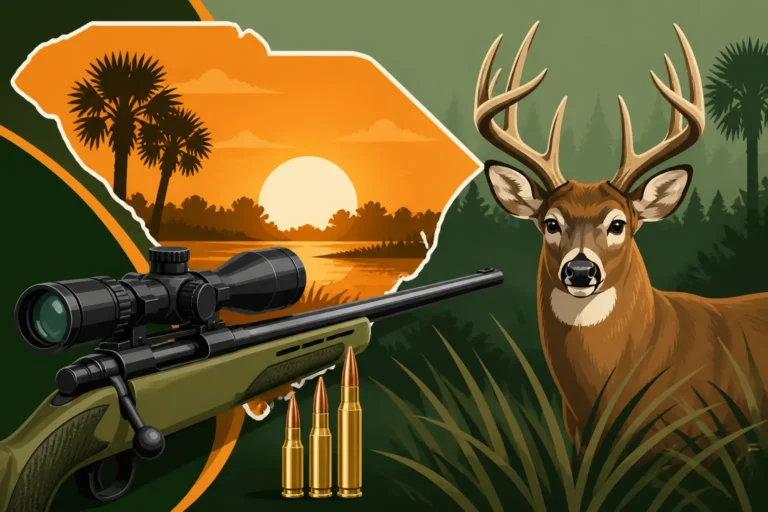
There's a common misconception, especially if you're new to the Palmetto State or primarily hunt more open terrain elsewhere, that deer hunting with a rifle means you'll be making those long, dramatic shots you see on TV. But if you’ve spent any time at all in South Carolina’s Lowcountry woods, you know that’s just not the reality. The thick, unforgiving vegetation and often flat, swampy ground make those picturesque 200-yard shots a rarity. This guide is here to shed some realistic light on what rifle ranges you can truly expect in our dense Lowcountry cover, helping you set up for success and make ethical shots when that moment of truth arrives.
The Unique Challenges of Lowcountry Terrain
Hunting in the Lowcountry is a whole different ballgame compared to the open fields of the Midwest or the expansive western mountains. Our unique ecosystem presents specific challenges that dictate how far you can realistically expect to shoot your rifle, often forcing us to adjust our tactics and expectations significantly.
Dense Vegetation and Limited Visibility
Imagine stepping into a dense stand of palmettos, interwoven with briars and young pine saplings, all under a canopy of mature oaks and cypress. It’s breathtakingly beautiful, but it's also a visual nightmare for a deer hunter. This is the reality of much of the Lowcountry. The thick undergrowth, often waist-high or taller, is a natural filter, turning what might be a wide-open view in other areas into a series of short, choppy shooting lanes. You might only be able to see 30 yards to your left, 50 directly in front, and 20 to your right, with pockets of absolute impenetrability just beyond.
This kind of cover isn't just a minor annoyance; it fundamentally changes your effective rifle range. A deer could be just 70 yards away, but because of a curtain of tangled vines or a stand of thick young pines, you might only see a flicker of its tail or a glimpse of an antler. Trying to force a shot through heavy brush is not only irresponsible but often futile, as even small twigs can deflect a bullet enough to wound an animal. It's frustrating, I know, when you hear a deer moving close but just can't get a clear line of sight. This constant battle with limited visibility is why hunters who truly understand the Lowcountry prioritize ethical shot distance over potential maximum range. It’s not about how far your rifle can shoot, but how far you can shoot it accurately and cleanly within the conditions.
Flat Terrain and Swampy Conditions
Unlike the rolling hills of the Upstate or the varied topography you might find in other regions, the South Carolina Lowcountry is, as its name suggests, largely flat. This lack of elevation change means fewer opportunities for long-range visibility from natural high points. You're rarely glassing across a canyon or sitting on a ridgeline overlooking miles of timber. Instead, you're often down in the thick of it, surrounded by vegetation that seems to absorb all light and sound. The flat nature of the land means deer aren't often moving across wide-open slopes where you can track them for an extended period before a shot. Their movements are usually quick, darting from one patch of cover to another.
Adding to this, the Lowcountry is synonymous with water. Swamps, marshes, tidal creeks, and seasonally flooded timber are common features. This means the ground underfoot can range from damp to outright boggy, making silent movement difficult and tracking a wounded animal even harder. Hunting near these wet areas, as many of us do when Hunting Lowcountry Swamp Deer or along Hunting Coastal Maritime Forest Edges, inherently limits your visibility and mobility. A deer might appear suddenly from a cypress stand 40 yards away, and you have mere seconds to react before it vanishes into another watery thicket. The dense, wet environment also affects how sound carries, often muffling distant movement and making it harder to judge where a deer might emerge. All these factors combine to shrink your realistic shooting window, emphasizing precision at shorter distances.
Understanding Your Rifle and Ammunition in This Environment
Before you even step foot into the woods, understanding how your chosen rifle and ammunition perform is paramount, especially when facing the unique challenges of the Lowcountry. It's not just about stopping power; it's about making sure your bullet does its job effectively at the distances you're most likely to encounter.
Caliber Choice for Short to Medium Ranges
In the Lowcountry, you're typically looking at shots that are under 100 yards, with many falling into the 50-yard or even closer category. This environment favors calibers that perform well at these shorter to medium distances, ensuring proper bullet expansion and energy transfer without excessive over-penetration. Common choices like the .30-30 Winchester are legendary for their performance in thick cover due to their knockdown power at these ranges. The classic .30-06 Springfield and .270 Winchester are still popular, of course, but you'll want to ensure your chosen bullet construction is designed for good expansion on deer at closer velocities, rather than being built purely for long-range, high-velocity performance.
Many hunters also gravitate towards the .308 Winchester or 6.5 Creedmoor, which offer a great balance of accuracy and power. For instance, the .308 provides ample energy and a good trajectory for the typical shots you'll find here, while the 6.5 Creedmoor, known for its accuracy, also delivers excellent terminal performance at close to moderate ranges with the right bullet. The key is to select ammunition with a bullet designed for deer-sized game that will expand reliably within 50 to 100 yards, rather than passing straight through without imparting maximum energy. Consider bullets with exposed lead tips or softer polymer tips that initiate expansion quickly, even at lower impact velocities. This ensures a more humane kill, which is always our top priority.
Bullet Performance Through Brush
Ah, the age-old debate about "brush-busting" bullets. Let's be realistic: there's no magic bullet that can reliably cut through dense brush and still maintain its trajectory and integrity to make an ethical kill. The idea that a heavier, slower bullet will "power through" small branches without deflecting is largely a myth. Even a tiny twig, just inches from your muzzle, can cause a bullet to yaw or tumble, sending it wildly off course. Imagine the devastation even a slight deflection at 50 yards can cause to your point of impact – it could mean the difference between a clean lung shot and a gut shot.
In the Lowcountry, where thick vegetation is the norm, the best strategy is to avoid shooting through any brush at all. This means being patient, waiting for a clear lane, and making sure your target is entirely visible. Instead of hoping your bullet will somehow defy physics, focus on precise shot placement when a window of opportunity presents itself. If you're Hunting a Funnel Between Two Swamps, for example, you might have a brief, clear shot as a deer crosses a narrow opening. That's the moment to take it. While some hunters prefer heavier, larger diameter bullets like those found in a .45-70 or .30-30, believing they might offer a marginal advantage if a stray twig is encountered, the most responsible approach is to always seek out a completely unobstructed shot. Your best bet for successful bullet performance through brush is simply to not shoot through brush.
Practical Shooting Distances for Lowcountry Woods
Let's talk brass tacks. What are the actual, real-world distances you'll likely be shooting at in the thick, beautiful, but challenging Lowcountry woods? It's probably shorter than you think, and that's perfectly okay. Adjusting your mindset to these realities will make you a more successful and ethical hunter.
The 50-Yard Sweet Spot
For most Lowcountry hunting scenarios, 50 yards is often the absolute sweet spot for a reliable, ethical rifle shot. Why 50 yards? Because in the dense cover we often navigate, a clear, unobstructed shot at this distance is far more common than anything longer. At 50 yards, you can get a crisp sight picture, quickly acquire your target, and place your bullet precisely where it needs to go. Deer at this range often appear suddenly, sometimes even stopping briefly to survey their surroundings, giving you a precious few seconds to aim.
Think about still-hunting through a mature pine stand with a thick palmetto understory, or sitting in a treestand overlooking a small clearing near a cypress swamp. These environments are tailor-made for close encounters. At 50 yards, factors like bullet drop are negligible for most common deer calibers, and wind deflection is almost a non-issue. Your focus can be entirely on a steady hold and a clean trigger break. This distance also gives you a bit more margin for error if a deer takes a quick step as you squeeze the trigger, still keeping your shot within the vitals. It allows you to use Rifle Scopes for Low-Light Swamp Edges to their fullest potential, gathering enough light to make a precise shot in dim conditions. Embracing the 50-yard shot means you're playing to the strengths of the Lowcountry, rather than fighting against its natural limitations.
Pushing to 100 Yards and Beyond (When to Consider It)
While 50 yards is a solid benchmark, there are certainly scenarios in the Lowcountry where you might stretch that range to 75, 100, or even 150 yards. These opportunities are less frequent but definitely exist. Picture hunting a powerline cut that slices through a block of timber, or a very wide, cleared logging road. Maybe you're perched on a strategically placed treestand overlooking a sprawling food plot on a private tract, or along a large agricultural field edge. In these specific situations, where you have an open view and a clear shooting lane, extending your range becomes a real possibility.
However, even when conditions allow for longer shots, caution is key. You need to be intimately familiar with your rifle's ballistics, especially if you've done your Zeroing a Rifle for Mixed Distances. A bullet that only drops an inch or two at 100 yards can still be thrown off significantly by a poor hold or a gust of wind if you’re not practiced. Rangefinders become invaluable here, allowing you to instantly confirm distances and adjust your aim accordingly. If you're considering a shot beyond 75 yards in the Lowcountry, ask yourself: Is the deer completely broadside? Is it standing still? Do I have a rock-solid rest? Is there absolutely no brush between me and the target? If the answer isn't a resounding "yes" to all of these, it's often best to wait for a closer, higher-percentage shot. It’s about knowing your personal limits and the limits of the environment, not just your rifle.
How Hunting Scenarios Impact Your Range
The way you choose to hunt in the Lowcountry—whether from a fixed position or by actively moving—plays a huge role in the shot distances you can realistically expect. Adapting your setup and strategy to the terrain and your chosen hunting method is crucial for success.
Treestand vs. Ground Blind Limitations
Choosing between a treestand and a ground blind drastically changes your perspective and, consequently, your effective shooting range in the Lowcountry. A treestand, especially one placed 15-20 feet up, offers a distinct advantage by getting you above much of the lower, denser undergrowth. This elevated position can literally extend your visible and shootable lanes by allowing you to shoot over palmettos, briars, and young pines that would completely obscure a ground-level shot. From a treestand, that 50-yard shot might open up to 75 or even 100 yards if you’re looking down a fairly clear lane or across a slightly more open timber stand. It’s like getting a peek behind the curtain.
On the flip side, hunting from a ground blind puts you right in the thick of it, experiencing the Lowcountry's dense cover at eye level. While ground blinds offer excellent concealment and can be very comfortable for long sits, your shooting lanes will almost certainly be shorter and more restricted. You'll be relying on natural breaks in the vegetation, or lanes you've painstakingly cut, often limiting your shots to 30-60 yards. The advantage of a ground blind, however, is being able to set up almost anywhere, adapting to subtle changes in deer movement. Many hunters choose ground blinds for situations where they expect deer to come very close, such as over a natural scrape line or a small, hidden water source. The key, no matter your choice, is to scout your location thoroughly and clear any necessary shooting lanes before opening day.
Hunting Over Food Plots vs. Still-Hunting
The difference in shot distance expectations when hunting over a food plot versus still-hunting is like night and day. When you're set up on the edge of a well-maintained food plot, especially one that's been planted specifically to draw deer, you're often anticipating longer shots. Deer will typically feed in these open areas, sometimes for extended periods, offering clear, broadside opportunities at distances that can range from 75 to 150 yards, or even more on larger plots. Here, your rifle's true potential for accuracy can be realized, as you're shooting across open ground with minimal obstruction. This is where your practice at the range pays off, and having a good set of 8×42 Versus 10×42 in the Woods binoculars really shines for evaluating deer before the shot.
Still-hunting, however, is a much more intimate, close-quarters affair. As you slowly and quietly move through the woods, pausing frequently to observe and listen, you're actively seeking out deer in their natural cover. Shot opportunities here are often sudden, fleeting, and at very close ranges—think 20 to 60 yards. You might spot a deer moving through a thick bottomland or slipping along a creek bank. These are reactionary shots, often taken quickly with little time for extensive ranging or careful setup. The deer might only be visible for a few seconds before disappearing again. This is where having a rifle that handles well and can be brought to bear quickly is a huge advantage. It requires a different set of skills, emphasizing quick target acquisition and a clean shot under pressure, rather than precise long-range marksmanship.
Technology and Tools for Assessing Range
In today's hunting world, we're fortunate to have a wealth of technology at our fingertips that can significantly improve our understanding of shooting distances and terrain, making us more prepared and ethical hunters, especially in challenging environments like the Lowcountry.
Rangefinders and Their Real-World Use
A good rangefinder has become an indispensable tool for many hunters, and for good reason. In the dense, often featureless expanse of Lowcountry woods, judging distance by eye can be incredibly deceptive. A deer that looks like it's 70 yards away might actually be 45 or 90. This misjudgment can lead to either a missed opportunity or, worse, a poorly placed shot. A rangefinder eliminates the guesswork. Before a deer even appears, you can range prominent landmarks around your stand—that big cypress tree, the bend in the logging road, a specific bush—giving you critical reference points for various distances.
When a deer does step out, you can often quickly range it, or at least use your pre-ranged landmarks to accurately estimate its distance. This is particularly vital in Lowcountry environments where every yard matters. Knowing the exact distance helps you confidently make that shot within your ethical window. For the typical short ranges found in these woods, even entry-level rangefinders are incredibly effective, as discussed in Rangefinders Under 100 Yards. They give you the confidence to know you’re not taking a poke in the dark, but a calculated, ethical shot. It’s not just about knowing how far to shoot, but where to shoot, and a rangefinder gives you that essential piece of information.
Mapping Apps for Pre-Scouting
Gone are the days when a paper map and compass were your only scouting companions. Modern mapping applications have revolutionized how we understand and approach hunting land, and they are incredibly powerful tools for planning your hunt in the Lowcountry. Apps like GoHunt allow you to virtually scout areas before you ever set foot on them. You can view detailed satellite imagery that reveals subtle changes in vegetation, identify potential travel corridors, pinpoint small clearings, and even mark potential stand locations.
For Lowcountry hunters, this means you can analyze tree cover density, locate natural pinch points or funnels, and identify potential shot lanes that might not be obvious on the ground. You can pre-measure distances between two points, giving you an idea of the maximum potential shot range from a particular stand. If you’re planning a still-hunt, GoHunt can help you identify areas of slightly thinner cover where visibility might be better, or dense thickets where deer are likely to bed. You can even drop pins at these spots and know exactly how far they are from your planned entry and exit routes. This level of pre-scouting is invaluable for maximizing your chances and ensuring you’re putting yourself in a position for a realistic, ethical shot. It allows you to develop a Warm-Weather Sitting Strategy in South Carolina by identifying shaded areas or spots with a consistent breeze, further enhancing your hunting comfort and success.
Ethical Considerations and Shot Placement
At the heart of all hunting lies a profound responsibility: to harvest game as quickly and humanely as possible. In the unique confines of the Lowcountry, understanding your realistic rifle ranges is not just about success; it's about upholding this ethical standard.
The Importance of a Clean Kill
Every hunter strives for a clean kill, but in the Lowcountry's dense cover, the consequences of a poor hit are amplified dramatically. A deer that isn't hit cleanly can quickly vanish into an impenetrable thicket, making tracking incredibly difficult, if not impossible. The combination of dense vegetation, often soft and muddy ground, and warm temperatures can turn a recovery effort into a nightmare. A deer might bleed out quickly, but finding it in a sea of palmettos and briars can take hours, or even days, by which point the meat may be compromised. Moreover, the thought of an animal suffering unnecessarily is something no responsible hunter ever wants to endure.
This is precisely why adhering to realistic rifle ranges is so critical. By limiting your shots to distances where you are absolutely confident in your ability to place the bullet precisely into the vitals—the heart and lungs—you dramatically increase the likelihood of a quick, humane harvest. It means foregoing those "maybe" shots through small gaps in the brush or at the edge of your maximum comfort zone. It’s about respect for the animal and the hunting tradition. A clean kill ensures the animal suffers minimally, the meat is salvaged, and you, as the hunter, have honored your commitment to ethical stewardship. And should you ever have to track a wounded animal, knowing what to expect is crucial, which is why topics like Blood Trailing After Dark in South Carolina are so important to understand.
Practice Makes Perfect: Drills for Close Quarters
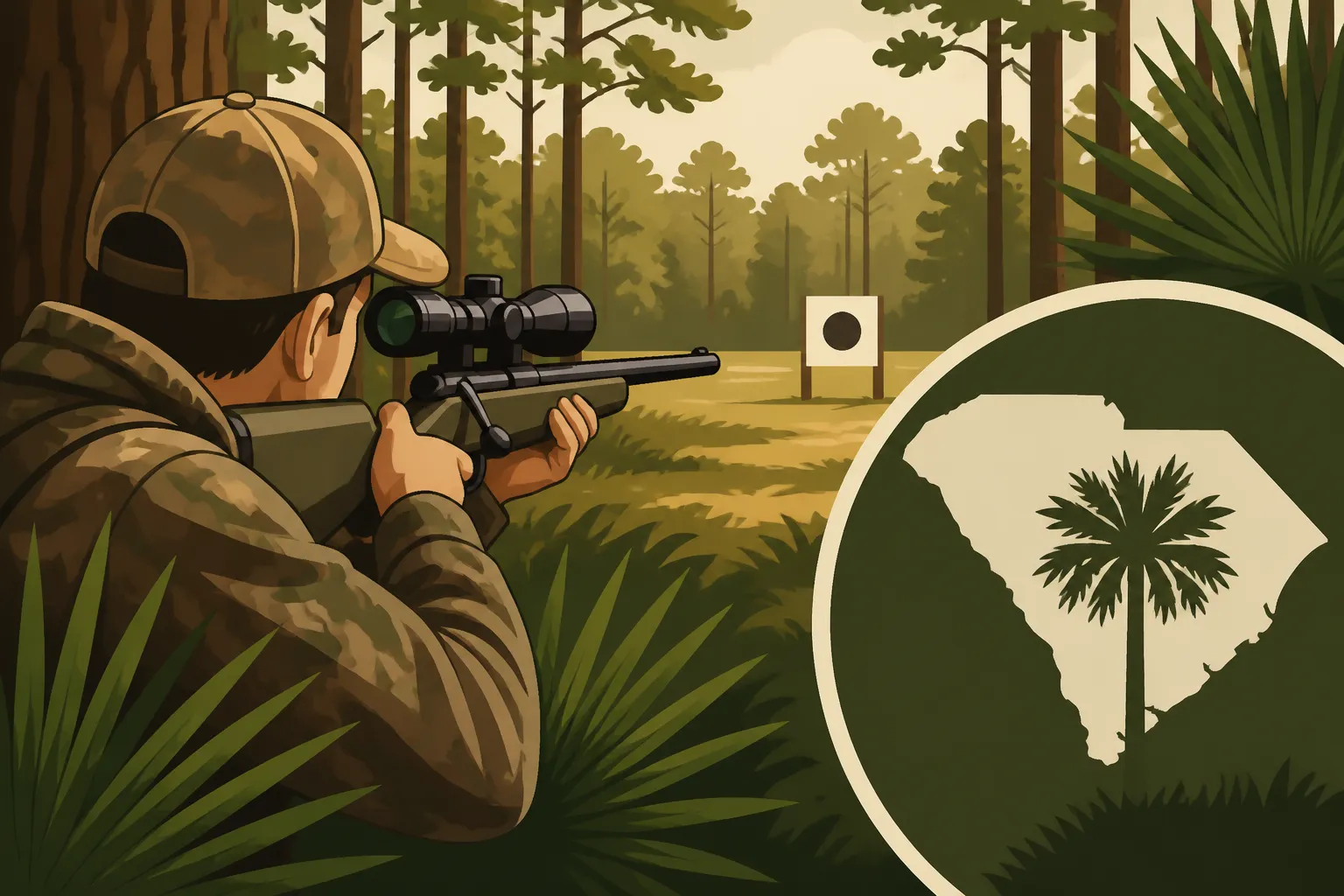
It's one thing to understand the theory of close-range shooting; it's another to execute it under pressure in the woods. While many hunters practice at 100 or 200 yards, very few dedicate enough time to practicing at 25, 50, or 75 yards, especially from hunting positions. For Lowcountry hunting, this close-quarters practice is invaluable. Spend time at the range simulating real-world scenarios. Practice shooting from a kneeling position, or even sitting, as you might in a ground blind. If you hunt from a treestand, consider practicing from an elevated platform, or at least simulating a downward angle.
Drills that emphasize quick target acquisition and steady aim at shorter distances are incredibly beneficial. Instead of taking all day to line up a shot, practice getting on target quickly, acquiring a good sight picture, and breaking the shot within a few seconds, just as you might need to do when a deer materializes unexpectedly. Focus on small, vital-zone sized targets. If you're struggling to consistently hit a four-inch circle at 50 yards off-hand, you know you need more practice. This isn't just about accuracy; it's about building muscle memory and confidence. The more comfortable you are with your rifle at these realistic distances, the better prepared you'll be to make that crucial, ethical shot when it counts. It will also help you confirm your rifle is truly ready after your Zeroing a Rifle for Mixed Distances session.
| Scenario Category | Typical Lowcountry Visibility Range | Realistic Ethical Rifle Range |
|---|---|---|
| Dense Thicket/Swamp | 10-40 yards | 25-50 yards |
| Thick Pine Plantation | 30-60 yards | 40-75 yards |
| Mature Hardwood Bottom | 40-80 yards | 50-100 yards |
| Food Plot/Field Edge | 75-200+ yards | 75-150 yards |
| Powerline/Wide Road | 100-300+ yards | 100-200 yards |
Disclaimer
This article is for general informational purposes only and does not constitute professional advice. Laws, prices and regulations vary by location and change over time. Consult a qualified professional for guidance on your specific situation.