South Carolina Nonresident Big Game Permit Cost
Navigating the ins and outs of a new state's hunting regulations can be downright bewildering, especially for nonresidents trying to plan a big game hunt. It's easy to get lost in a sea of different licenses, permits, and tags, all while trying to figure out how much it's actually going to cost you. This guide aims to clear up all that confusion, giving you a detailed breakdown of the South Carolina Nonresident Big Game Permit cost, so you can focus on the hunt itself, not the paperwork.
Unpacking the South Carolina Nonresident Hunting Landscape
Before we dive into the specific cost of the Big Game Permit, it's crucial to understand that this isn't a standalone item you can just pick up. South Carolina, like many states, operates on a tiered licensing system. You'll always need a foundational hunting license first, and then additional permits or tags layer on top, depending on what you plan to hunt and where. This structure helps the state manage its wildlife resources effectively and ensures that all hunters contribute to conservation efforts.
The Foundational Requirement: Base Hunting License
Every hunter, resident or nonresident, must first acquire a base hunting license in South Carolina. Think of this as your entry ticket to the general hunting world. For nonresidents, these costs are typically higher than for residents, reflecting the fact that residents contribute to state wildlife agencies through various other taxes and fees throughout the year.
You have a few options for this base license, depending on the length of your planned trip. There's an annual hunting license, which is the most comprehensive for longer stays or multiple trips throughout the year. For shorter trips, South Carolina offers temporary options, such as a 3-day or 10-day nonresident hunting license. While these temporary licenses might seem cheaper upfront, remember they only cover a specific period. If you plan to hunt for more than a few days, or make multiple trips in a year, the annual license often proves to be the better value. Getting familiar with all your South Carolina Nonresident Hunting License Options is the first step in planning your budget.
Beyond the Basics: What the Big Game Permit Covers
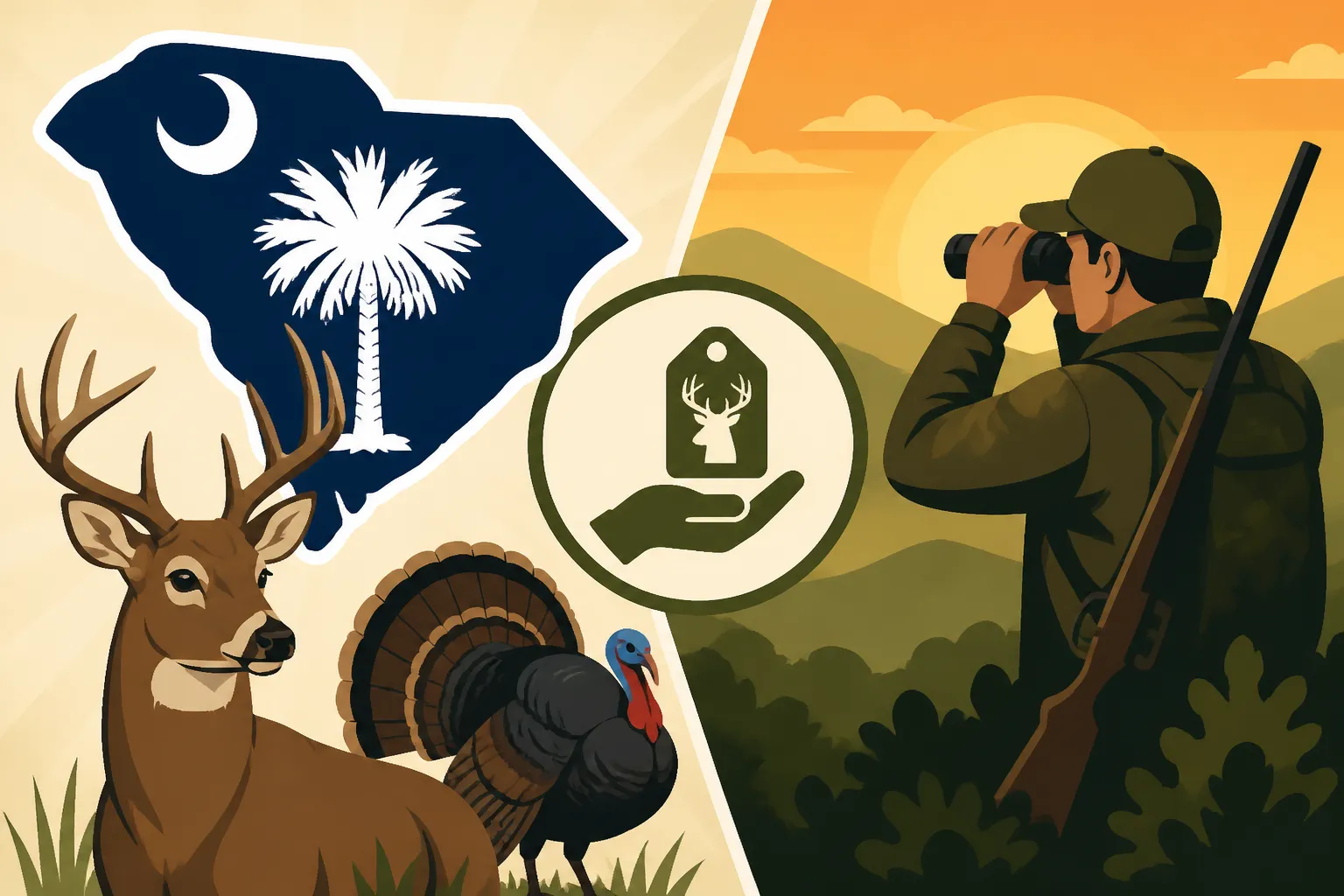
Once you have your base hunting license, the Nonresident Big Game Permit is the crucial next step if your sights are set on species like white-tailed deer, wild turkey, or black bear. Without this permit, your base license only grants you access to small game hunting. It’s important to clarify that "big game" in South Carolina primarily refers to deer, turkey, and bear.
This permit doesn't grant you an unlimited harvest of these animals, but rather allows you to pursue them within the specified bag limits and seasons. For instance, it allows you to hunt deer and turkey, but you'll still need a separate bear tag if you're specifically targeting black bear in the designated zones. While feral hogs are certainly large, they are not classified as "big game" for this permit and can be hunted year-round on private land without a specific permit (though a base hunting license is still required). Understanding these distinctions is key to avoiding any legal missteps in the field.
Decoding the South Carolina Nonresident Big Game Permit Cost
Now, let's get down to the numbers, because that's often where the real planning begins. Understanding the exact figures will help you budget accurately for your South Carolina hunting adventure. It's a common point of frustration for nonresidents, seeing the cost differences, but knowing what to expect is half the battle.
The Current Annual Cost Breakdown
As of the most recent information from the South Carolina Department of Natural Resources (SCDNR), the annual Nonresident Big Game Permit itself costs $100. This is a flat fee that you purchase in addition to your base hunting license. It's not a per-animal fee, meaning you pay it once, and it covers your big game hunting privileges for the duration of your base license, within the statewide bag limits.
This $100 permit allows you to pursue deer and turkey. If you're coming to hunt black bear, you’ll need to purchase an additional bear tag on top of both your base hunting license and the Big Game Permit. These separate bear tags also have their own costs and are subject to specific quotas and regulations in the state's two bear hunting zones.
Combining with Your Base License for the True Total
The real cost of big game hunting as a nonresident in South Carolina is the combination of your base hunting license and the Big Game Permit. Let's look at some common scenarios to give you a clear picture:
- Annual Hunter: If you opt for the Nonresident Annual Hunting License (currently around $125) and add the Big Game Permit ($100), your total for general big game hunting for the year would be approximately $225. This is a popular choice for those planning multiple trips or a longer season in the state.
- Short-Trip Hunter (3-Day): For a quick weekend hunt, you might choose the Nonresident 3-Day Hunting License (currently around $40). Adding the Big Game Permit ($100) would bring your total to approximately $140 for that brief period.
- Short-Trip Hunter (10-Day): If your trip extends a bit, the Nonresident 10-Day Hunting License (currently around $75) combined with the Big Game Permit ($100) totals about $175.
These figures are approximate and can change, so always check the SCDNR website or the Go Outdoors SC portal before you purchase. When you're ready to buy, the Go Outdoors SC website is the most convenient option, allowing you to purchase and print your licenses and permits right from home. You can find more detailed information on Buying a License on Go Outdoors SC through their platform.
Here's a quick summary table of common nonresident permit combinations:
| Permit Type | Estimated Cost (Approx.) | Covers | Notes |
|---|---|---|---|
| Nonresident Annual Hunting License | $125 | Small Game & General Hunting | Valid for 1 year from purchase. |
| Nonresident 3-Day Hunting License | $40 | Small Game & General Hunting | Valid for 3 consecutive days. |
| Nonresident 10-Day Hunting License | $75 | Small Game & General Hunting | Valid for 10 consecutive days. |
| Nonresident Big Game Permit | $100 | Deer, Turkey | Required in addition to a base hunting license. |
| Nonresident Bear Tag | $100 | One Black Bear | Required in addition to base license & Big Game Permit, if hunting bear. |
| Common Total (Annual) | $225 ($125 + $100) | Annual Base + Big Game (Deer/Turkey) | |
| Common Total (3-Day) | $140 ($40 + $100) | 3-Day Base + Big Game (Deer/Turkey) |
Additional Permits and Endorsements to Consider
Your total expenses might not stop at the Big Game Permit, especially if you're planning to hunt specific areas or species. South Carolina offers a wealth of public hunting opportunities, but many of these are managed as Wildlife Management Areas (WMAs). If you intend to hunt any WMA land, you will absolutely need a separate WMA Permit. This permit is an additional fee and is vital for accessing these public areas. You can learn more about the specific requirements for this permit by checking out South Carolina WMA Permit Requirements.
Beyond WMAs, if your primary target is black bear, remember that the Big Game Permit does not include the bear tag. That's a separate purchase, typically another $100 for nonresidents, which allows you to harvest one bear during the specific bear seasons. While turkey hunting is covered under the Big Game Permit, reporting your harvest through the Game Check system is mandatory, just like deer. Additionally, if you plan to hunt any migratory birds in South Carolina, you'll need to purchase a Migratory Bird Permit and be HIP (Harvest Information Program) certified, even if you're primarily a big game hunter. Platforms like GoHunt can be invaluable for navigating these complex layers of permits and ensuring you don't miss any crucial requirements before your trip.
Understanding the "Why" Behind Nonresident Fees
It’s completely understandable for nonresident hunters to sometimes feel the pinch of higher fees and wonder why states like South Carolina implement them. The truth is, these costs aren't arbitrary; they play a critical role in the larger picture of wildlife conservation and management within the state. It's a system designed to ensure the health of the resource and the quality of the hunting experience for everyone.
Funding Wildlife Conservation and Management
The primary reason for nonresident fees, and indeed all hunting license fees, is to fund wildlife conservation and management. Unlike many other government programs, state wildlife agencies like the SCDNR receive very little funding from general tax revenue. Instead, they rely heavily on the sale of hunting and fishing licenses, permits, and tags, along with federal excise taxes on hunting and fishing equipment through the Pittman-Robertson Act.
Nonresidents, by paying these higher fees, contribute to the conservation efforts that benefit the wildlife they come to hunt. This funding goes directly back into things like habitat improvement projects, disease surveillance (like ensuring Why South Carolina Stays CWD-Free), scientific research on game populations, law enforcement to prevent poaching, and public land access initiatives. Without these dedicated funds, the healthy deer herds, robust turkey populations, and managed public lands that draw hunters to South Carolina simply wouldn't exist as they do today. It's an investment in the future of the sport.
Managing Hunter Pressure and Resources
Another significant aspect of nonresident fees is their role in managing overall hunter pressure and maintaining a sustainable harvest of game animals. South Carolina is known for its relatively long deer seasons and generous bag limits compared to many other states. This makes it an incredibly attractive destination for hunters, but it also means the state must carefully manage its hunter numbers to prevent overharvesting and ensure quality experiences.
By having different fee structures, the SCDNR can balance the economic benefit brought by nonresident hunters with the ecological and social impacts on local resources. These fees help to cover the increased administrative costs associated with managing a larger and more diverse hunter base, from processing permits to conducting more extensive wildlife surveys. This management strategy also helps protect the state's valuable hunting heritage. Understanding South Carolina Deer Season Structure Explained and South Carolina's Four Game Zones reveals the careful planning that goes into sustaining the hunting tradition here.
Maximizing Your Investment: Planning Your South Carolina Hunt
Since you're making the investment to hunt in South Carolina, you want to make sure every dollar counts. Effective planning, leveraging available tools, and understanding the nuances of hunting in the Palmetto State will significantly increase your chances of a successful and enjoyable trip. Don't let the permit costs deter you; instead, use that motivation to become a more informed and prepared hunter.
Strategic Planning for Nonresidents
The first step in maximizing your permit investment is meticulous planning. South Carolina has a diverse landscape and varied season dates across its four game zones. What works in the Lowcountry might not apply in the Upstate. Therefore, it's vital to research the specific zone you plan to hunt and understand its unique regulations. For example, knowing Hunting the Earliest Coastal Zone Opener will be crucial if you're targeting that early August start, whereas if you're headed to the mountains, you'll need to know Hunting the Latest Upstate Zone Opener.
Beyond dates, study the bag limits for deer and turkey in your chosen zone. South Carolina's limits are often more generous than in many other states, but you still need to know them precisely. Utilizing advanced mapping and scouting tools can give you a significant advantage. Platforms like GoHunt offer detailed land ownership maps, aerial imagery, and public land boundaries, which are invaluable for non-residents scouting from afar. This digital preparation can save you countless hours of unproductive boots-on-the-ground scouting once you arrive.
Navigating Public Versus Private Land
A large part of your planning will involve deciding whether to hunt public or private land. If you're considering public land, which includes Wildlife Management Areas (WMAs) and National Forests, remember that your Nonresident Big Game Permit alone is not enough. You must also purchase a separate WMA Permit to legally hunt on these areas. South Carolina boasts over 1.4 million acres of Public Hunting Land in South Carolina, offering fantastic opportunities, but rules vary by area. Always check the specific WMA regulations for the area you intend to hunt.
For private land, the process involves obtaining permission from the landowner. This can be challenging for nonresidents, but a friendly, respectful approach often yields results. Knocking on doors well in advance of the season, offering to help with chores, or leasing access are common methods. Always understand What South Carolina Trespass Law Requires and ensure you have explicit permission. This is where detailed mapping tools, even a basic app that shows property lines, can be incredibly helpful. A platform like GoHunt, with its robust public/private land layers, can be an absolute game-changer for non-residents trying to identify potential access points or verify boundaries on unfamiliar terrain.
Essential Preparations Beyond Licensing
Beyond just getting your permits in order, there are several other critical preparations for a successful South Carolina hunt. First, if you were born after June 30, 1979, you generally need to complete a hunter education course to legally hunt in South Carolina. Make sure you meet the South Carolina Hunter Education Requirements well before your trip.
You'll also need to be aware of blaze orange requirements, which apply to deer hunting with firearms. Even if you're bowhunting during archery season, it's wise to carry some blaze orange for safety, especially if you're on public land. Most importantly, understanding and adhering to the mandatory South Carolina Deer Reporting Requirements is non-negotiable. After harvesting a deer or turkey, you are legally obligated to report it to the SCDNR through their online Game Check system. Finally, given South Carolina's warm climate, especially during early seasons, proper Field Dressing a Deer in Warm Weather and meat care are paramount to preserving your harvest. Don't forget to research specific opportunities, such as Hunting South Carolina's Year-Round Feral Hogs, which can add another exciting dimension to your trip.
Disclaimer
Please remember that hunting regulations and fees can change. While this guide provides the most current information available at the time of writing, it is always your responsibility to verify all licensing, permit, and season details directly with the South Carolina Department of Natural Resources (SCDNR) before engaging in any hunting activities.