Public Ground Near Aiken
Finding quality public hunting land near Aiken, South Carolina, can feel like a real treasure hunt, especially when so much of the surrounding area is private timberland, farms, or rapidly developing suburbs. It's a common frustration for hunters who don't have access to private leases or family property, leaving them wondering where they can actually go to pursue game. This guide is designed to cut through that confusion, helping you identify and effectively hunt the public lands accessible from the Aiken area, from vast national forests to smaller, managed wildlife areas.
Understanding Aiken's Hunting Landscape
When you look at a map around Aiken, it's easy to feel overwhelmed by the sheer amount of green that signifies private ownership. It's a unique part of South Carolina, sitting on the edge of the Midlands and the Sandhills, meaning you get a mix of dense pine plantations, rolling sandy hills, and hardwood bottomlands along the river systems. This diverse habitat is fantastic for deer, turkey, and small game, but knowing where you're legally allowed to set foot can be the biggest hurdle.
The Challenge of Finding Public Land
Many hunters in the Aiken area face a similar dilemma: they love the outdoors and the tradition of hunting, but they don't have a sprawling tract of private land to call their own. The land ownership patterns here often mean large timber company holdings, private hunting clubs, or family farms that have been passed down for generations. Knocking on doors for permission can yield results, but it's a time-consuming effort, and often, landowners are already at capacity or simply not interested in granting access. This makes public land a critical resource, but knowing which public land is truly viable for hunting, and how to access it, becomes paramount. You're not alone if you've driven countless miles, peering through fences, trying to spot a sliver of public access.
The urban sprawl from Augusta, just across the Savannah River, also plays a role, pushing development and increasing human presence in areas that might otherwise offer hunting opportunities. This means public land can be subject to higher pressure, requiring hunters to be more strategic and willing to go the extra mile, literally, to find success.
Key Public Land Types in South Carolina
In South Carolina, public hunting opportunities generally fall into a few main categories, each with its own characteristics, rules, and management. Understanding these differences is the first step in planning your hunt near Aiken.
First up, and often the most extensive, are the National Forests. For Aiken, this primarily means sections of the Sumter National Forest. These are vast tracts of federally managed land, open to public recreation including hunting, usually under a mix of federal and state regulations. They offer a more traditional "backwoods" experience, often with less intensive management than other public areas but still providing significant habitat.
Next, you have Wildlife Management Areas, or WMAs. These are lands specifically set aside and managed by the South Carolina Department of Natural Resources (SCDNR) for wildlife and public recreation. WMAs can range widely in size and habitat type, from coastal wetlands to upland forests. They often have more specific and sometimes stricter rules regarding seasons, weapons, and access, often requiring a WMA permit in addition to your regular hunting license. South Carolina WMA Permit Requirements are important to understand before you head out.
Finally, while less common for general hunting, some State Parks or other state-owned lands might offer limited, quota-based hunting opportunities. These are typically very controlled and require advanced application, but they can be an option for specialized hunts. For the hunter near Aiken, the National Forest and various WMAs will be your primary focus.
Navigating the Sumter National Forest: Long Cane Ranger District
When most hunters in the Aiken area think of large-scale public land, their thoughts inevitably turn to the Sumter National Forest, specifically the Long Cane Ranger District. It's not right on Aiken's doorstep, but it's the closest substantial chunk of national forest land that offers diverse hunting opportunities.
The Long Cane's Proximity to Aiken
The Long Cane Ranger District of the Sumter National Forest lies to the northwest of Aiken, primarily spanning parts of McCormick, Edgefield, and Abbeville counties. Depending on which section you're heading to, you're looking at a drive of roughly 45 minutes to an hour and a half from downtown Aiken. It's a manageable distance for a day trip or even an overnight camp if you plan to immerse yourself deeper into the woods. While it requires a bit of a drive, the reward is often thousands of acres of contiguous forest land, a luxury not always found closer to the urban centers.
This proximity makes it a prime target for Aiken hunters seeking deer, turkey, or even small game. Understanding the scale of this resource is important; Sumter National Forest itself covers a substantial area, and the Long Cane section contributes significantly to that total. How Many Acres Sumter Forest Covers gives you a sense of the vastness you'll be exploring.
Hunting Opportunities and Challenges in Long Cane
The Long Cane Ranger District offers a robust hunting experience for various species. Deer hunting is popular, with a mix of pine plantations in different growth stages, mature hardwood drains, and creek bottoms providing excellent habitat. Hunters can find success still-hunting through the timber, setting up treestands along natural funnels, or focusing on food sources like acorns in the hardwood areas when they are available. The rolling terrain in some parts can be advantageous for identifying travel corridors and bedding areas.
Turkey hunting is another major draw. The varied landscape provides good roosting cover in mature hardwoods and foraging areas in more open pine stands. Scouting for turkey sign—scratchings, droppings, and dusting bowls—is crucial, especially in the weeks leading up to the season. Long Cane District Turkey Hunting provides specific insights for pursuing gobblers in this area. Small game like squirrels and rabbits are also abundant, offering enjoyable hunts, particularly in the fall and winter months.
However, hunting the Long Cane also comes with its challenges. Being a popular public land area, it can see significant hunting pressure, especially on opening days and weekends. This means that deer and turkeys can become warier and move to thicker cover. Hunters often need to be willing to hike deeper into the woods, away from easily accessible roads and trails, to find less disturbed animals. The terrain, while not mountainous, can be hilly, making for strenuous walks, especially if you're packing out a deer. It's essential to check the Sumter National Forest's specific regulations, as they sometimes differ from statewide rules, particularly concerning motorized vehicle use and camping.
Essential Tools for Long Cane Hunters
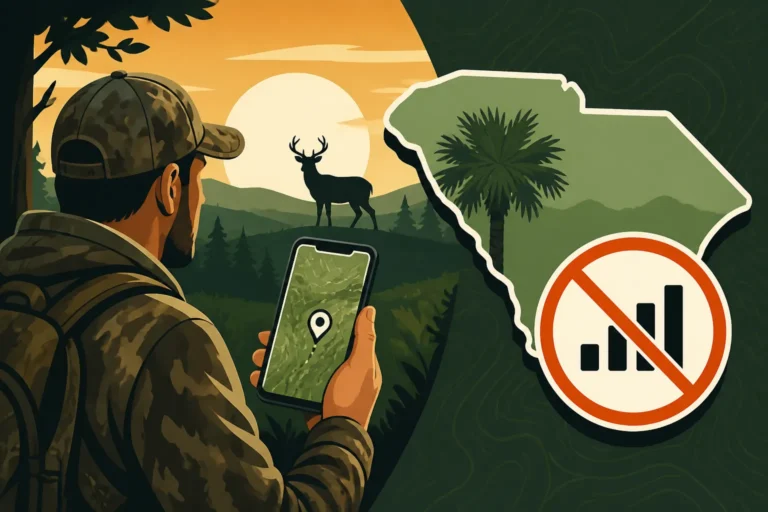
To effectively hunt the Long Cane Ranger District, you'll need more than just your rifle or bow. Navigation is paramount. A reliable GPS unit or, more commonly these days, a robust mapping app on your smartphone, is indispensable. Tools like onX Hunt have become game-changers for public land hunters. They allow you to clearly see property boundaries, forest roads, trails, topography, and even identify different timber stands that might hold game. Using Go Outdoors SC Without Cell Service is a great article to prepare for potential dead zones, as cell service can be spotty in some of the deeper sections of the National Forest. Downloading offline maps for your hunting area is a must.
Beyond mapping, understanding the lay of the land is critical. Satellite imagery, often available through these same apps, helps you identify potential bedding areas, pinch points, and water sources. Pre-season scouting, even if it's just a few trips without a weapon, can dramatically increase your chances of success. You'll want to look for deer trails, rub lines, scrapes, and turkey sign. Scouting South Carolina Public Land Before Season offers excellent advice for this crucial preparation. Don't forget the physical tools either: comfortable, sturdy boots for hiking, plenty of water, and a good pack for carrying your gear and, hopefully, your harvest.
Exploring Nearby Wildlife Management Areas (WMAs)
While the Sumter National Forest is a primary draw, South Carolina's Wildlife Management Areas (WMAs) offer additional, often more intensely managed, hunting opportunities that might be closer or provide different experiences.
Finding WMAs Closer to Aiken
While a major National Forest district like Long Cane is a great option, you might be wondering about smaller WMAs that are a bit closer to Aiken. The South Carolina Department of Natural Resources (SCDNR) manages a network of WMAs across the state, and some can be found in the counties surrounding Aiken, such as Edgefield, McCormick, or even closer to the Savannah River. The best way to locate these is through the SCDNR's online resources.
The "Go Outdoors SC" website and its accompanying app are invaluable for this. They feature interactive maps that allow you to filter by game zone, county, and WMA, showing you exactly where public hunting land is located. Using the Go Outdoors SC Map Tool outlines how to best leverage this resource. You can zoom in, see boundaries, and often find specific regulations pertaining to each WMA. Don't assume that just because a WMA isn't a massive forest, it's not worth your time. Smaller WMAs can sometimes offer fantastic, focused hunting, especially if they are well-managed for specific game. They might be river bottomlands, old agricultural fields, or diverse forest tracts that provide unique hunting scenarios.
Common WMA Regulations and What to Expect
Hunting on a WMA generally comes with a different set of rules compared to National Forest land or private property. These areas are actively managed for wildlife, and regulations are often more specific and sometimes more restrictive to ensure sustainable harvest and manage hunter pressure.
You'll almost always need a WMA permit in addition to your base hunting license and big game permit. These permits often come with specific sign-in and sign-out procedures, either at physical kiosks or sometimes through an online check-in system. It's crucial to always check the specific WMA regulations for your target area before you go, as season dates, weapon restrictions (e.g., archery-only, primitive weapons, specific rifle calibers), and bag limits can differ significantly from statewide rules or National Forest regulations. For instance, some WMAs might have different South Carolina Deer Season Structure Explained than the broader Zone you're hunting in.
Many WMAs also have specific rules regarding things like treestand placement, baiting, use of ATVs, and even non-toxic shot requirements for certain types of hunting, especially waterfowl. Quota hunts, which require applying and being drawn for a limited number of slots, are also common on some WMAs, particularly for high-demand species like deer or turkey. Always look for these details on the SCDNR website or within the Go Outdoors SC app to avoid any misunderstandings or violations. These rules are in place to ensure fair chase, manage populations, and spread out hunting pressure.
Specific WMAs to Consider
While I can't give you a definitive, real-time list of every WMA immediately adjacent to Aiken (as boundaries and programs can shift, and you should always verify current information directly with SCDNR), I can offer a general idea of what to look for and where to begin your search.
Look towards counties like Edgefield, McCormick, Saluda, and even some areas closer to the Savannah River. Many WMAs are located along river systems, offering prime habitat for deer and turkey in hardwood bottoms and associated uplands. For example, a WMA might encompass several thousand acres of diverse forest, featuring clear-cuts in various stages of regrowth, mature pines, and swampy creek drains. These areas can be fantastic for deer, as the varied habitat provides both cover and food. You might also find WMAs that are primarily managed for waterfowl, particularly closer to larger bodies of water, which would have very specific rules and seasons.
When researching, pay attention to the "Habitat" or "Management" descriptions for each WMA on the SCDNR site. This will give you clues about the type of hunting experience you can expect. Some WMAs are heavily timbered, others might have more open fields, and some might be swampy. Knowing what kind of terrain and cover to expect will help you prepare and decide if it's the right fit for your preferred hunting style. Always cross-reference your findings with the current year's SCDNR Hunting & Fishing Regulations booklet for the most up-to-date and accurate information.
Tips for Success on Public Land Near Aiken
Hunting public land successfully, especially in an area like Aiken with significant private holdings, requires a strategic mindset and a willingness to adapt. It's not just about showing up; it's about smart preparation and persistent effort.
Mastering Your Mapping Applications
Modern mapping applications are arguably the single most important tool for today's public land hunter. Services like onX Hunt and GoHunt provide detailed satellite imagery, topographic maps, and crucial property boundary lines. For public land near Aiken, where private parcels can abut public ground, knowing exactly where you stand is not just helpful—it's essential to avoid trespassing.
Go beyond just looking at the map. Use the layers to understand elevation changes, identify different vegetation types, and locate water sources. Mark potential stand locations, historical sign (like old rubs or scrapes), and travel corridors as waypoints. Before you leave home, always download offline maps for your entire hunting area. This ensures you'll have full functionality even if you lose cell service deep in the woods, which is a common occurrence in many parts of the Sumter National Forest or more remote WMAs. Understanding how to use the GPS features, track your path, and measure distances can help you find that "untouched" ground, as well as ensure you can navigate back to your vehicle safely after dark.
Scouting and Adaptability
The phrase "time in the woods" is never more true than when hunting public land. Pre-season scouting is not just an option; it's a necessity. Walk the terrain, look for natural funnels, pinch points between cover and food, and areas of dense bedding cover. Pay attention to transition zones where two different habitat types meet, as these are often high-traffic areas for deer. Finding Ground Others Walk Past is all about identifying those overlooked pockets that hold game because most hunters stick to the easy access points.
Public land animals, particularly deer and turkey, are acutely aware of hunting pressure. They will adjust their patterns quickly once the season opens. This means you need to be adaptable. If your initial spot isn't producing, don't be afraid to move. Have several backup locations scouted, or be willing to "run and gun" if you're turkey hunting. Understanding South Carolina's Four Game Zones and how their season dates might affect hunting pressure in neighboring areas can also give you an edge. The more time you spend observing and learning the specific nuances of your chosen public tract, the higher your chances of success will be.
Gear Considerations for Aiken's Terrain
South Carolina hunting, especially during the early season, means dealing with heat, humidity, and abundant insects. Your gear choices can make a huge difference in your comfort and endurance.
- Clothing: Lightweight, breathable, moisture-wicking clothing is critical. Even in October, temperatures can climb. Layering is always a good idea. Warm-Weather Clothing for South Carolina Hunters is a must-read for anyone heading into the woods.
- Footwear: Snake boots or snake gaiters are highly recommended, especially in swampy areas or dense undergrowth, given the prevalence of venomous snakes in the Lowcountry and Sandhills. Comfortable, broken-in boots that can handle long walks are also essential.
- Hydration: Always carry more water than you think you'll need. Dehydration can sneak up on you in the humid South.
- Bug Protection: Thermacells, head nets, and bug spray are invaluable, particularly during early archery season or while turkey hunting.
- Stands and Blinds: If using a treestand, make sure it's portable and easy to set up, and always use a safety harness. Treestand Rules on South Carolina Public Land will outline specific regulations regarding hanging stands. Ground blinds can also be effective, especially for wary deer that avoid elevated positions.
- First Aid: A small, well-stocked first aid kit should always be in your pack, especially when hunting alone or in remote areas.
Hunting public land near Aiken offers fantastic opportunities for those willing to put in the effort and preparation. By understanding the available resources, familiarizing yourself with regulations, and leveraging modern tools, you can enjoy successful hunts in the diverse South Carolina wilderness.
Comparison of Public Land Hunting Near Aiken
| Feature | Sumter National Forest (Long Cane Ranger District) | Wildlife Management Areas (WMAs) |
|---|---|---|
| Primary Access | Mostly open to general hunting with state license | Requires specific WMA permit in addition to state license |
| Typical Size | Very large, contiguous tracts of thousands of acres | Can vary from small parcels to thousands of acres, often scattered |
| Management Style | Federally managed, less intensive habitat work | State managed, often intensive habitat management (e.g., food plots, burns) |
| Regulations | General state hunting laws, some federal forest rules | Highly specific rules varying by WMA (seasons, weapons, check-ins) |
| Hunter Pressure | Can be high, especially near access points; lower in deeper areas | Varies greatly; some WMAs are very popular, others less so |
| Terrain | Rolling hills, pine plantations, hardwood bottoms | Extremely varied: swamps, river bottoms, upland pines, old fields |
| Required Tools | Mapping apps (onX Hunt), sturdy boots, water | Mapping apps (Go Outdoors SC), specific WMA maps, rule booklet |
| Best For | Hunters seeking solitude, long walks, diverse habitats | Hunters seeking managed populations, specific hunt opportunities, easier access to smaller tracts |
Disclaimer
This article is for general informational purposes only and does not constitute professional advice. Laws, prices and regulations vary by location and change over time. Consult a qualified professional for guidance on your specific situation.