South Carolina Waterfowl Banding Programs
There's nothing quite like the thrill of a flock of ducks cupping their wings, preparing to land in your decoy spread, or watching a swift-flying teal buzz across a lowcountry marsh. But sometimes, when you're out there, you might catch yourself wondering where these birds truly come from, how long they've been making this incredible journey, or what factors might be impacting their numbers. It can feel a bit like trying to solve a puzzle with half the pieces missing. That's where South Carolina's waterfowl banding programs come into play, providing crucial insights into the lives of these magnificent migratory birds and offering hunters a unique opportunity to become citizen scientists, helping to fill in those missing pieces.
The Purpose Behind Waterfowl Banding in South Carolina
Waterfowl banding isn't just about putting a little metal ring on a bird's leg; it's a deeply scientific endeavor with far-reaching implications for conservation and hunting management. Think of it as tagging wildlife so we can learn their secrets, one band at a time. Without this meticulous work, our understanding of duck and goose populations would be largely based on guesswork, which isn't a solid foundation for responsible management.
Understanding Migration Patterns and Flyways
One of the most immediate and impactful pieces of information we gain from banding is a clearer picture of migration. We often talk about the Atlantic Flyway, but what does that really mean on a bird-by-bird basis? When a hunter recovers a banded wood duck in a flooded timber hole in Sumter County, and that band originated in, say, northern Ontario, it provides a direct, undeniable link. This isn't just an anecdotal story; it's hard data points connecting breeding grounds to wintering grounds.
Over time, with thousands of these recovery records, biologists can map out the precise routes different species take. They can see if certain populations, like those that winter in the ACE Basin National Wildlife Refuge Hunting, always come from a specific region, or if they're a mix of birds from various northern territories. This understanding helps identify critical stopover points, feeding grounds, and safe havens along the entire migratory corridor. It’s like tracing an invisible highway in the sky, revealing the intricate paths our waterfowl travel each year. These patterns inform broader conservation strategies, ensuring efforts in one state or province benefit birds that will eventually arrive on our coastal marshes.
Assessing Population Health and Survival Rates
Beyond just knowing where birds go, banding helps us understand how well they're doing. Every time a banded bird is recovered, it tells a story about its survival. If a large number of bands from a particular year class are recovered in subsequent years, it suggests a healthy population with good survival rates. Conversely, a sharp drop in recoveries could signal a problem, perhaps a poor breeding season or increased mortality somewhere along the migratory path.
Biologists use sophisticated statistical models to analyze these recovery rates, looking at factors like age, sex, and species. For example, are juvenile mallards surviving their first migration as well as older, more experienced birds? Is a particular species, like the often-pressured pintail, showing declining survival rates that warrant closer examination? This data is incredibly valuable for spotting trends early. It allows wildlife agencies, like the South Carolina Department of Natural Resources (SCDNR), to assess the overall health and vigor of waterfowl populations wintering in or passing through the state, from the brackish impoundments of the coast to the inland beaver ponds of the Midlands.
Informing Hunting Regulations and Conservation Efforts
Ultimately, all this scientific data funnels directly into how we manage waterfowl populations, especially concerning hunting. SCDNR works closely with federal agencies and other states along the Atlantic Flyway to set season dates, bag limits, and other regulations that are designed to be sustainable. It's not just pulled out of thin air! The insights gleaned from banding programs are foundational to this adaptive harvest management strategy.
For example, if banding data suggests that a particular species' population is declining, managers might adjust bag limits downward or shorten seasons to reduce harvest pressure. Conversely, if a population is robust and showing strong survival, slight increases might be considered. This ensures that hunting remains a sustainable activity while safeguarding the future of the resource. Furthermore, knowing where birds are coming from and what their survival rates are helps conservationists prioritize habitat protection and restoration projects. If a specific breeding ground in Canada is producing a lot of the birds that end up in South Carolina, efforts to protect or enhance that habitat become even more critical. It’s a holistic approach, uniting science, hunting, and conservation in a shared mission. These programs are a cornerstone of understanding South Carolina Duck and Goose Bag Limits and how they're determined.
How Waterfowl Banding Programs Work on the Ground
Getting those tiny metal bands onto the legs of thousands of fast-flying waterfowl is no small feat. It requires skilled personnel, specialized equipment, and a deep understanding of bird behavior. It's truly a testament to the dedication of wildlife biologists and technicians.
The Capture and Banding Process
The actual capture process varies depending on the species and location, but one of the most common methods for ducks is bait trapping or cannon netting. Imagine dedicated teams setting up large, inconspicuous nets over baited areas, often using corn or other grains that ducks find irresistible. Once a sufficient number of birds are feeding, the nets are deployed, either manually or via small cannons that propel weights over the birds, bringing the net down safely. It's a precise operation, timed perfectly to minimize stress on the birds.
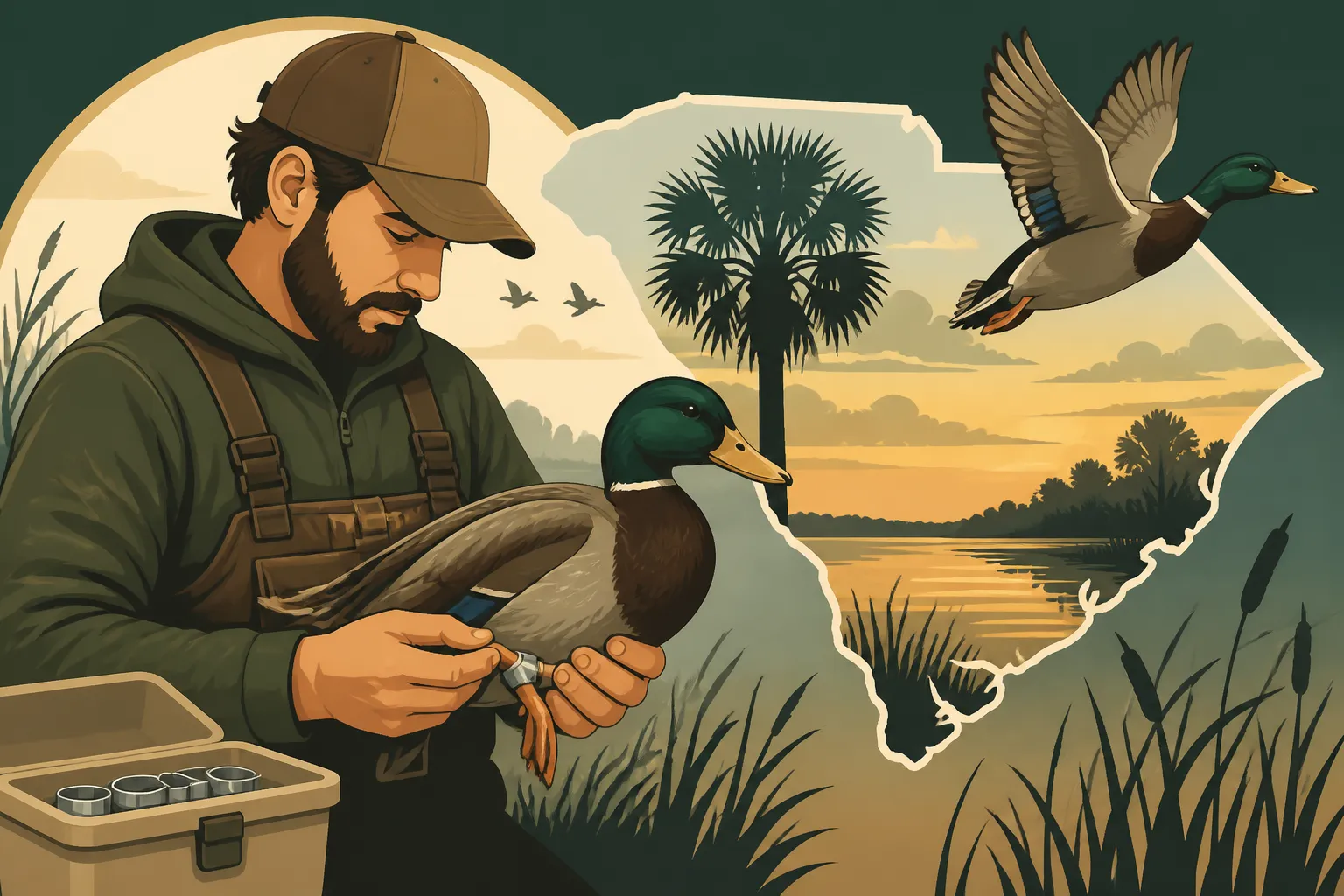
Once captured, the birds are carefully retrieved and brought to a processing station. Here, trained biologists and technicians quickly and efficiently gather crucial data. Each bird is identified by species, sex, and age. They are weighed, and measurements like wing chord length are taken. A small, lightweight aluminum band, engraved with a unique serial number and a contact website, is then carefully placed on one leg. The entire process is designed to be as swift and gentle as possible, ensuring the birds are released unharmed and can continue their journey. This labor-intensive field work often takes place during the late summer and early fall, just before or during the initial migratory movements, setting the stage for the hunting season and the valuable data it will yield.
What Happens When a Banded Bird is Recovered
This is where you, the hunter, become an indispensable part of the scientific process. The journey of a banded bird doesn't end when it flies off after being banded; it's really just beginning. If you're fortunate enough to harvest a banded duck or goose, you've essentially completed a vital circuit in the data collection process. The band on that bird's leg holds a story.
When you recover a banded bird, the information on that band — typically a unique nine-digit number and a web address (reportband.gov, historically) — is your key. You'll want to record that number, along with the date and location where you recovered the bird. This recovery data is absolutely critical. It closes the loop, linking the initial banding record (species, age, sex, banding location, banding date) with its ultimate fate. Without hunters reporting these bands, all the effort of the banding teams would be in vain. The recovery information helps confirm migration routes, calculates survival rates, and provides real-world data on harvest impacts. While you might be celebrating your successful hunt, perhaps even using an app like GoHunt to track your season's harvest, remember that reporting that band is one of the most important contributions you can make to waterfowl conservation.
Getting Involved and Reporting a Banded Bird
It's one thing to understand the science behind banding, and another to actively participate. As hunters, we have a direct connection to the resource, and our involvement in banding programs is invaluable.
The Hunter's Role in Data Collection
Every hunter who takes to the field has the potential to contribute significantly to waterfowl science. When you recover a banded bird, you're not just getting a cool keepsake; you're holding a piece of critical scientific data. Think about it: without hunters finding and reporting these bands, biologists would only have half the story. They'd know where and when they banded birds, but they wouldn't know where those birds went, or if they survived.
Your honest and accurate reporting of a band provides the "second half" of the equation, creating a complete data point that helps wildlife managers make informed decisions. This partnership between hunters and biologists is one of the longest-running and most successful examples of citizen science in wildlife management. It reinforces the idea that hunting isn't just a recreational pursuit; it's an active form of conservation, where participants directly contribute to the health and understanding of the game they pursue. It’s a responsibility and a privilege.
Reporting Your Banded Bird: Step-by-Step
So, you've shot a banded bird – congratulations! Now, what's next? The reporting process is thankfully straightforward, ensuring that your valuable data makes it into the national database.
Here's how to do it:
- Retrieve the Band: Carefully remove the band from the bird's leg. It's made to be durable, but handle it gently.
- Record the Information: Write down the unique band number, the exact date you recovered the bird, and the precise location (county, nearest landmark, GPS coordinates if possible). Note the species of the bird too, just to be sure.
- Go Online: The primary method for reporting is through the national bird banding lab website. Simply type "report bird band" into your search engine, and you'll easily find the official site.
- Enter Your Data: The website will guide you through entering the band number, species, date, and location of recovery. You'll also be asked how the bird was recovered (e.g., shot, found dead).
- Provide Your Contact Information: You'll need to provide your name and address. This isn't just for record-keeping; it's so you can receive your personalized certificate of appreciation!
- Receive Your Certificate: After reporting, you'll typically receive a certificate via email or postal mail that includes all the details of your bird: its species, where and when it was banded, and by whom. It's a fantastic memento of your contribution.
It's a small amount of effort for a significant contribution to wildlife management, directly informing decisions about South Carolina Waterfowl on the Atlantic Flyway and future hunting seasons.
The Impact of Banding on South Carolina Waterfowl Management
The collection of all this data through banding and recovery isn't just for academic interest. It has tangible, real-world impacts on how waterfowl are managed in South Carolina and across the continent.
Long-Term Data Trends and Insights
Imagine trying to understand the stock market without any historical data, or predicting weather patterns without decades of records. It would be nearly impossible. The same goes for wildlife management. Waterfowl banding programs have been in place for many decades, creating an incredible archive of long-term data. This allows biologists to track trends that might take years, or even generations, to become apparent.
For example, they can see if survival rates for wood ducks wintering in the Pee Dee River bottoms have changed significantly over the last 30 years. Has the distribution of certain species shifted due to habitat loss or changes in agricultural practices? Are populations rebounding or declining? This deep historical perspective is invaluable for understanding the complex dynamics of migratory bird populations. When SCDNR reviews South Carolina Duck Harvest Numbers, they are looking at these long-term trends alongside current year data, painting a comprehensive picture of the resource. Without this continuous, methodical data collection, our understanding would be fragmented, making effective management a constant uphill battle.
Future Directions for Waterfowl Conservation
The insights gained from waterfowl banding are not just about looking backward; they are critically important for charting the future of waterfowl conservation. This data directly informs decisions about everything from local wetland restoration projects in coastal areas to international treaties aimed at protecting breeding grounds in Canada. If banding data shows a particular bottleneck in a migration route or a significant decline in a specific population segment, conservation efforts can be precisely targeted to address those issues.
For instance, if studies show that certain age classes of birds are struggling, managers might focus on habitat enhancements that specifically benefit those age groups. The adaptive harvest management strategy, which adjusts hunting regulations in response to population fluctuations, relies heavily on this information. It ensures that conservation efforts are dynamic and responsive, rather than static. Hunters who participate in these programs, perhaps by using resources like GoHunt to stay informed about hunting opportunities and regulations, are directly contributing to the scientific foundation that secures strong waterfowl populations for generations to come. It's about ensuring that the sight of ducks silhouetted against a South Carolina sunrise remains a cherished experience.
| Data Type | Collected During Banding | Collected During Recovery (by Hunter) |
|---|---|---|
| Species | Yes | Yes |
| Age and Sex | Yes | Often inferred or estimated |
| Band Number | Yes | Yes |
| Banding Location | Yes | No (hunter reports recovery location) |
| Banding Date | Yes | No (hunter reports recovery date) |
| Recovery Location | No | Yes |
| Recovery Date | No | Yes |
| Cause of Recovery | No | Yes (e.g., hunter killed, found dead) |
| Hunter Information | No | Yes (for certificate) |
This collective effort, from the biologists banding birds in remote marshes to the hunter reporting a band from a favorite hunting spot, creates a powerful feedback loop that is absolutely essential for the sustained health of our incredible waterfowl resources here in South Carolina and beyond.
Disclaimer
This article is for general informational purposes only and does not constitute professional advice. Laws, prices and regulations vary by location and change over time. Consult a qualified professional for guidance on your specific situation.