Gray Versus Fox Squirrels in South Carolina
When you're out in the South Carolina woods, whether you're looking for deer, turkeys, or just enjoying the quiet, you're bound to cross paths with squirrels. But it's not always just "a squirrel." Our state is home to two distinct and incredibly engaging species: the ubiquitous gray squirrel and the often-misunderstood fox squirrel. Many hunters, especially those new to small game or even seasoned big game hunters who just casually observe, might not realize the significant differences in their appearance, behavior, and preferred habitats. This guide is here to unravel those distinctions, helping you identify, appreciate, and even successfully hunt both of these fascinating bushy-tailed residents.
The Distinctive Looks of South Carolina's Squirrels
At first glance, a squirrel is a squirrel, right? But take a closer look, and you'll quickly see that the gray squirrel and the fox squirrel have some remarkably different features. Understanding these visual cues is the first step to truly appreciating the biodiversity in our South Carolina forests.
The Agile Gray Squirrel: A Familiar Face
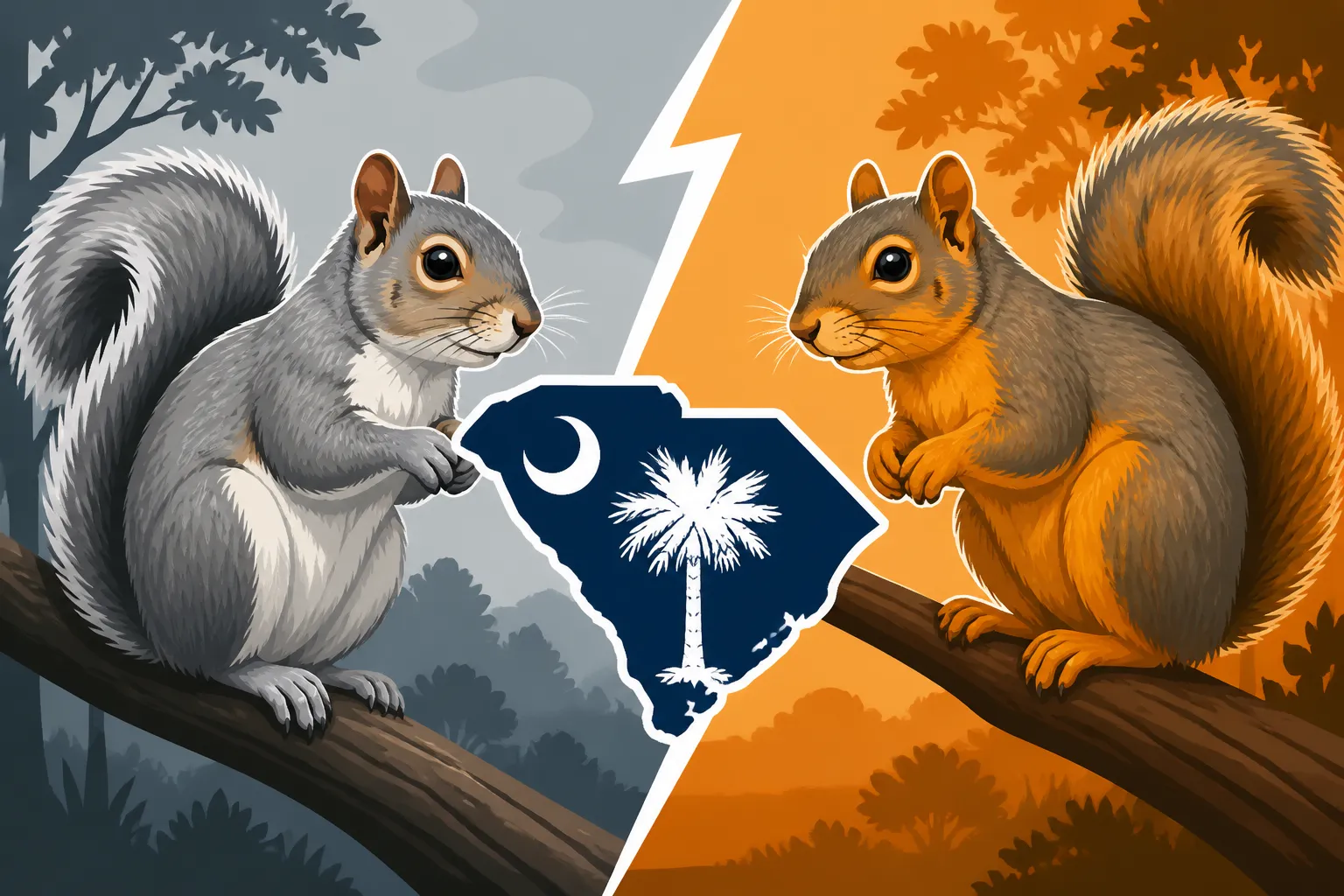
The eastern gray squirrel ( Sciurus carolinensis ) is probably the squirrel you picture when someone says "squirrel." They are abundant throughout South Carolina and are often seen scurrying across suburban lawns, raiding bird feeders, or chattering away in a hardwood tree. Their overall coloration is, as the name suggests, a grizzled gray, often with a brownish-red wash down their back, especially in the cooler months. Their belly is typically white or light gray. They have a prominent, bushy tail that is usually edged with white, and they use it constantly for balance, communication, and even as a bit of a sunshade.
These squirrels are relatively slender, with a body length typically ranging from 9 to 12 inches, not including their equally long tail. They weigh in at about 1 to 1.5 pounds, making them quite nimble. Their ears are moderately sized, and they have dark, bright eyes. While gray squirrels are generally uniform in appearance across their range, you might occasionally spot a melanistic (black) gray squirrel, though this is far more common in northern states than in our sunnier climes.
The Robust Fox Squirrel: A Splash of Color
Now, let's talk about the fox squirrel ( Sciurus niger ). If you haven't specifically looked for them, you might be surprised at how different they are. Fox squirrels are the largest tree squirrels in North America, and they absolutely dwarf their gray squirrel cousins. Imagine a squirrel that looks like it's been hitting the gym—that's a fox squirrel. They can reach body lengths of up to 15 inches, with a tail that adds another 10 to 14 inches. Their weight can easily tip the scales at 2 to 3 pounds, sometimes even more, making them twice the size of a typical gray squirrel.
What really sets them apart, though, is their color. Unlike the somewhat uniform gray, fox squirrels are famous for their incredibly variable and often striking coloration. In South Carolina, you'll commonly encounter the "traditional" fox squirrel, which has a reddish-brown or rusty-orange body, often with a dark head and a bright white nose and ear patches. You might also see those with a more grizzled gray back, but with a pronounced rusty-orange belly and tail. These color variations are part of what makes spotting a fox squirrel such a treat. Their tail is usually very thick and full, often appearing somewhat flattened, with a rich, uniform color or a distinct reddish hue that lacks the white fringe of a gray squirrel. Their ears are smaller in proportion to their head than a gray's, and their face often has a masked appearance.
Key Visual Cues to Tell Them Apart
When you're observing a squirrel, here’s a quick checklist to help you definitively identify whether it's a gray or a fox:
- Size: This is often the biggest giveaway. If it looks substantially larger and stockier than other squirrels you've seen, it's likely a fox squirrel. Think of a gray squirrel as a house cat and a fox squirrel as a small terrier—there's a noticeable difference.
- Coloration: Look for the vibrant, often contrasting colors of the fox squirrel: rusty reds, deep browns, black patches, and distinctive white markings on the nose or ears. Gray squirrels are predominantly gray with a lighter belly and white-edged tail.
- Tail: Gray squirrels have a very active, often twitchy tail with a white fringe. Fox squirrels have a thicker, fuller tail, often uniformly colored (usually rusty or brownish), and it's used more for balance than for flashy communication.
- Face: The fox squirrel often has a more "masked" appearance with white on the nose and ears, giving it a distinctive look that grays typically lack.
Here's a handy table to summarize the key differences:
| Feature | Eastern Gray Squirrel | Eastern Fox Squirrel |
|---|---|---|
| Size | Small to medium (1-1.5 lbs, 9-12" body) | Large (2-3+ lbs, 10-15" body) |
| Primary Color | Grizzled gray, brownish wash | Highly variable: rusty-orange, reddish-brown, black |
| Belly Color | White or light gray | Often rusty-orange, tan, or gray |
| Tail | Bushy, often twitchy, white-edged | Thick, very bushy, usually uniformly colored (rusty) |
| Head/Face | Dark eyes, moderately sized ears, plain face | Often has white nose/ears, smaller ears proportionally |
| Activity | Very agile, quick, often in groups | More deliberate, slower, often solitary |
| Habitat Incl. | Dense hardwoods, suburban areas, mixed forests | Open pine forests, mature hardwoods, forest edges |
Understanding these visual differences will not only enhance your appreciation for these animals but also guide your hunting strategies if you decide to pursue them.
Where They Live and How They Behave
Beyond their looks, gray and fox squirrels have distinct preferences for where they set up home and how they go about their daily lives. Knowing these ecological nuances is crucial, whether you’re simply observing them or trying to locate them for a hunt.
Gray Squirrels: Masters of the Canopy
Gray squirrels are truly arboreal, meaning they are primarily tree-dwelling. They thrive in mature, dense hardwood forests and mixed pine-hardwood stands where there's an abundance of nut-producing trees like oaks, hickories, and beeches. These trees provide not only their main food source (acorns, hickory nuts, etc.) but also crucial shelter. They prefer a thick canopy that allows them to travel extensively through the treetops, rarely touching the ground unless they're burying a nut or chasing another squirrel. Squirrel Hunting South Carolina Bottomland Hardwoods is a great example of a prime gray squirrel habitat.
In South Carolina, you'll find them almost everywhere there are mature trees, from the suburban parks of Columbia to the deep woods of the Sumter National Forest. They often build large, messy nests of leaves and twigs, called dreys, high in the branches, or they'll utilize natural tree cavities for shelter and rearing young. Gray squirrels are very social, and it's not uncommon to see several of them interacting, chasing each other up and down tree trunks, or squabbling over a dropped acorn. Their vocalizations are frequent and varied, from sharp barks to chattering alarm calls.
Fox Squirrels: Preferring Open Woods and Edges
Fox squirrels, on the other hand, have a different taste in real estate. They prefer more open, park-like mature forests, often with a significant pine component. Think longleaf pine savannas, mature pine plantations, or the edges of agricultural fields adjacent to woodlands. While they still rely on nut-bearing hardwoods, they are more terrestrial than gray squirrels, spending a good deal of time foraging on the ground. They are excellent climbers, of course, but you'll see them on the forest floor much more frequently. This preference for more open understories means they often share habitat with other ground-dwelling creatures, and their larger size makes them less vulnerable to some predators.
In South Carolina, good places to find fox squirrels include the Sandhills region, parts of the Francis Marion National Forest, and large, mature timber tracts in the Lowcountry where controlled burns are used to maintain an open understory. They also rely on tree cavities for dens but may construct dreys. Unlike the boisterous gray squirrel, fox squirrels tend to be more solitary and less vocal. When you spot one, it's often alone, moving deliberately and cautiously. Their larger size and slower movements make them stand out, especially with their distinctive coloration. If you're Squirrel Hunting a South Carolina Oak Ridge, you might encounter both, but the density of one over the other will often reflect the type of understory present.
Behavioral Differences You'll Notice Afield
Observing their behavior can also help in identification. Gray squirrels are notoriously quick and agile. When startled, they'll often "play dead" by freezing flat against a tree trunk on the side opposite you, slowly rotating around the trunk as you circle the tree. They are extremely energetic and can often be seen leaping impressive distances between branches.
Fox squirrels, due to their larger size, are generally slower and more deliberate in their movements. When they feel threatened, they might flatten themselves out on a limb or try to hide, but they don't have the same frenetic energy as a gray squirrel. They're less prone to the rapid, erratic darting that grays exhibit. They also tend to be less numerous than gray squirrels in any given area, so a sighting of a fox squirrel can feel more like a special treat. Their tendency to spend more time on the ground also means they’re often spotted foraging through fallen leaves or at the base of trees, rather than exclusively high up in the canopy. For scouting new areas, a tool like GoHunt can help you identify public land tracts that might hold the more open, mature timber favored by fox squirrels.
Hunting South Carolina's Bushy-Tails
Hunting squirrels in South Carolina is a fantastic way to enjoy the outdoors, hone your hunting skills, and put some delicious wild game on the table. Both species offer a fun challenge, but your tactics might shift slightly depending on which bushy-tail you're after.
General Squirrel Season and Regulations
South Carolina offers a very generous squirrel season, often running from early fall well into winter. This long season provides ample opportunities for hunters. It's always crucial to check the current South Carolina Department of Natural Resources (SCDNR) regulations for specific South Carolina Small Game Season Rules, dates, and bag limits before heading afield. Typically, there's a daily bag limit, and it applies to both gray and fox squirrels combined.
You'll need a valid South Carolina hunting license. For residents, various options exist, and it's wise to look into South Carolina Resident Hunting License Options to ensure you have the correct permits, especially if you plan to hunt on Wildlife Management Areas (WMAs). A basic hunting license is usually sufficient for private lands. Hunter education is also a requirement for many, so be sure to check South Carolina Hunter Education Requirements if you're new to hunting.
Common methods for hunting squirrels include still-hunting, sitting and waiting, and hunting with dogs. Firearms typically used are small-caliber rifles like a .22LR, shotguns (often .410 or 20 gauge with small shot), or even archery gear.
Tailoring Your Tactics for Gray Squirrels
Gray squirrels are abundant and often very active, making them a great target for still-hunting or sitting.
- Still-Hunting: This involves moving slowly and quietly through the woods, stopping frequently to scan the trees and ground ahead. Focus on mature hardwood bottomlands, oak ridges, and areas with a mix of nut-producing trees. Early mornings and late afternoons are prime times when squirrels are most active foraging. Look for movement, listen for their tell-tale barks, or the sounds of nuts being cut or dropped. Reading Cuttings Under an Oak can tell you if squirrels are actively feeding in an area. When you spot one, use available cover to get within range.
- Sitting: Find a productive area, perhaps near a group of acorn-laden oaks or hickory trees, and sit quietly. Many hunters use a small, comfortable stool or find a natural backrest against a tree. Patience is key. The woods will often come alive once you've been still for 15-20 minutes. This method is particularly effective in areas of dense cover where still-hunting might be too noisy.
- Hunting with Dogs: For a truly dynamic hunt, consider using a squirrel dog. Feists and curs are popular breeds. The dog will scent, locate, and tree squirrels, then bark persistently to alert you to its location. This is a very active and social form of hunting that can cover a lot of ground and be incredibly effective, especially for locating squirrels that might otherwise be overlooked in thick canopy.
- Gear: A .22 rifle is a popular choice for gray squirrels due to its accuracy and minimal meat damage. A 20-gauge shotgun with #6 shot is also effective, especially in dense woods where quick shots are often needed. Lightweight layering is important for comfort in South Carolina's often warm squirrel season, and a good daypack, like those mentioned in Packs Built for a Sumter Forest Day Hunt, is useful for carrying calls, water, and harvested game.
Pursuing Fox Squirrels: A Different Challenge
Hunting fox squirrels requires a slight adjustment in your approach. Their preference for more open woods and often solitary nature means different strategies can be more successful.
- Spot and Stalk: Because fox squirrels spend more time on the ground and prefer open timber, spot-and-stalk tactics can be very effective. Use good optics, like a pair of quality binoculars, to scan the forest floor and tree trunks ahead of you. Their larger size and often vibrant coloration can make them stand out against the grays and browns of the woods. Move slowly and deliberately, using trees and terrain for cover. When you spot one, plan your approach carefully to get within range.
- Targeting Open Areas: Focus your efforts on mature pine stands, areas with sparse undergrowth, or the edges of agricultural fields bordering suitable timber. These are the places where fox squirrels are more likely to be found. Hunting Longleaf Pine Savanna for Deer might give you an idea of the kind of habitat to look for, even though it's for a different species.
- Patience and Observation: Fox squirrels are often less numerous than grays, so you might not encounter as many in a day. Be patient, move slowly, and spend more time observing. Once you find one, they tend to be less frantic than a gray squirrel, which can sometimes allow for a more precise shot opportunity.
- Calls: While not as common as for deer or turkey, some hunters have success with various squirrel calls, including distress calls or barks, to get squirrels to reveal their location. These calls can sometimes pique the curiosity of a fox squirrel, causing it to move into a visible position.
- Gear: A .22 rifle is an excellent choice for fox squirrels, offering the precision needed for a clean kill. Since they are larger, you might also consider a slightly heavier projectile if using a shotgun, though #6 shot is still generally adequate. As with any hunting, a reliable map app like one showing onX Layers for South Carolina Land Status can be invaluable for navigating public lands and identifying potential fox squirrel habitat.
Remember, both species offer a rewarding hunting experience. The key is to understand their habits and habitats, adapt your tactics, and enjoy your time in South Carolina's diverse forests.
The Bigger Picture: Conservation and Management
Understanding the differences between gray and fox squirrels extends beyond just hunting; it touches on the broader aspects of wildlife conservation and habitat management in South Carolina. Both species play vital roles in our ecosystems, particularly in seed dispersal, but their needs and population trends can differ.
Population Status and Trends
The Eastern Gray Squirrel is an incredibly adaptable and successful species. Their populations are generally robust across South Carolina, thriving in a wide range of habitats, from dense forests to urban parks. Their high reproductive rate and ability to adapt to human-altered landscapes contribute to their widespread abundance. While local populations might fluctuate based on mast crop availability or disease, overall, the gray squirrel is not a species of conservation concern in South Carolina. In fact, South Carolina Squirrel Harvest Numbers consistently show strong populations.
The Eastern Fox Squirrel, however, tells a slightly different story. While still present across the state, their populations are often more localized and generally less dense than those of gray squirrels. In some areas, particularly where mature, open pine forests have been replaced by dense timber plantations or developed, fox squirrel numbers have seen declines. Their specific habitat requirements—mature, open woods with a good mast component and relatively open understory—make them more vulnerable to habitat alteration. The good news is that management efforts in places like the Francis Marion National Forest and some state WMAs are actively working to maintain and restore habitats that benefit fox squirrels.
Habitat Management for Squirrel Abundance
Effective habitat management benefits both squirrel species, though with slightly different focuses.
- For Gray Squirrels: The primary management strategy revolves around maintaining and promoting healthy, diverse hardwood forests. This includes ensuring a mix of nut-bearing trees of various ages and protecting mature timber. Minimizing clear-cutting in critical hardwood stands and promoting natural regeneration are beneficial practices. These efforts also aid many other wildlife species, including deer and turkeys, by providing essential food and cover.
- For Fox Squirrels: Management for fox squirrels often focuses on prescribed burning and thinning in pine forests, particularly longleaf pine ecosystems. Fire helps to reduce dense undergrowth, creating the open, park-like conditions that fox squirrels prefer, while also promoting the growth of certain food plants. This type of management also benefits iconic species like the bobwhite quail and red-cockaded woodpecker. Efforts to restore and maintain longleaf pine savannas, for instance, are crucial for supporting robust fox squirrel populations. Landowners interested in supporting fox squirrels can look into selective timber harvesting and prescribed fire regimes that mimic natural processes. A helpful resource for land management, like those found through GoHunt, can provide insights into maintaining healthy wildlife habitats.
Both species are a testament to the rich natural heritage of South Carolina. By learning to distinguish between them, understanding their ecological roles, and supporting responsible habitat management, we can ensure that future generations will continue to enjoy the sight of these active, intelligent creatures in our woods. The next time you're out, take a moment to really look at the squirrels you encounter – you might just be surprised by what you learn!
Disclaimer
This article is for general informational purposes only and does not constitute professional advice. Laws, prices and regulations vary by location and change over time. Consult a qualified professional for guidance on your specific situation.