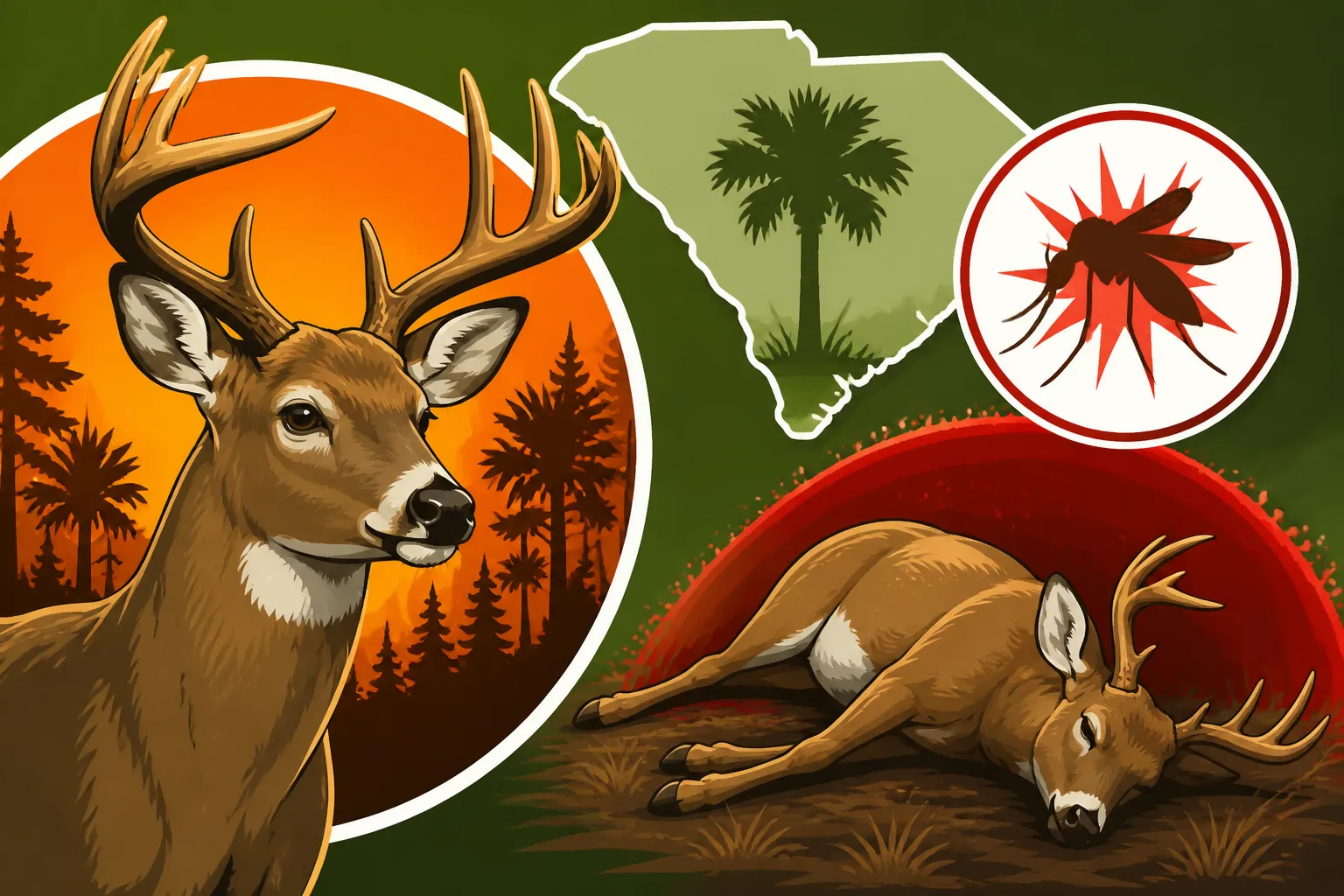
EHD Die-Offs in South Carolina Deer
For any South Carolina deer hunter, there's little that sinks your heart faster than finding a magnificent whitetail laid low by something other than a well-placed arrow or bullet. Epizootic Hemorrhagic Disease, or EHD, is a frustrating reality that periodically impacts our deer herds, particularly when late summer conditions align just right. This guide aims to demystify EHD, help you understand its signs, and equip you with the knowledge to react responsibly should you encounter it in the Palmetto State.
Understanding Epizootic Hemorrhagic Disease (EHD) in South Carolina Deer
EHD might sound like something out of a science fiction movie, but it's a very real and recurring challenge for white-tailed deer populations, including right here in South Carolina. It’s caused by a virus, specifically from the genus Orbivirus, and while it can be devastating to deer, it's crucial to understand that EHD is not transmissible to humans. You cannot contract EHD from handling an infected deer or eating its meat. This isn't like Chronic Wasting Disease (CWD), which poses different concerns and has specific regulations about which carcass parts South Carolina still allows.
The Viral Culprit and Its Carrier
At its core, EHD is a viral disease. Think of it like a really nasty flu for deer. The virus itself is transmitted by tiny, biting insects, often called midges, gnats, or "no-see-ums." These aren't your typical mosquitoes; they're much smaller, but they pack a punch. When a midge bites an infected deer, it picks up the virus. Then, when that same midge bites a healthy deer, it transmits the virus, completing the cycle. The symptoms develop rapidly, often within a week of infection.
The presence of these midges is the key factor in EHD outbreaks. They thrive in specific conditions—warm, humid environments with standing water, especially after a drought or a period of heavy rain following dry spells. This is why EHD often flares up in late summer and early fall, precisely when we're all gearing up for deer season. The population of the vector insects explodes, leading to more bites and a wider spread of the disease.
Why EHD is Seasonal and Not Always Widespread
EHD outbreaks are notoriously cyclical and localized. It's rare for the entire state of South Carolina to experience a widespread, severe EHD event simultaneously. Instead, you'll often hear reports from specific counties or even particular watersheds. This patchy distribution is directly linked to the habitat of the midges. Areas with numerous small, stagnant water bodies—drying ponds, muddy creek beds, flooded timber edges—become breeding grounds for the insects.
The first hard frost of the year is usually EHD's undoing. Cold temperatures kill off the adult midges, effectively stopping the transmission cycle. This is why, as frustrating as it can be to find deer dead from EHD in August or September, the problem typically subsides dramatically as we move deeper into autumn. Deer that survive an EHD infection develop antibodies and a degree of immunity to that specific strain of the virus, which can help protect them in future years, though new strains can always emerge.
Recognizing EHD Symptoms and Its Impact on Deer Herds
Spotting EHD can be heartbreaking, but knowing what to look for is important for both your safety and for helping wildlife officials track outbreaks. The disease progresses quickly, and affected deer can go from seemingly healthy to dead in a matter of days.
Visual Cues and Behavioral Changes
When a deer contracts EHD, the virus attacks the lining of blood vessels. This leads to internal hemorrhaging, swelling, and a high fever. Here are some common signs you might observe:
- Fever and Dehydration: Infected deer develop a high fever, which drives them to seek out water sources. You might find sick or dead deer near ponds, streams, or low-lying, wet areas. This is often the most noticeable sign.
- Swelling: As the disease progresses, deer often exhibit swelling of the head, neck, tongue, eyelids, and sometimes the legs and hooves. Their tongues can appear bluish or purplish.
- Lesions and Ulcerations: Internally, there can be hemorrhages in various organs. Externally, you might see ulcers or lesions in the mouth, on the tongue, or even on the hooves. If a deer survives the initial infection, it might shed its hooves later, leaving them permanently lame.
- Lethargy and Lameness: Infected deer will appear weak, listless, and disoriented. They may have trouble walking, appear stiff, or move slowly. They lose their fear of humans, making them seem "tame" or easily approached.
- Excessive Salivation: Due to lesions in the mouth and throat, deer might drool or have a foamy discharge around their mouths.
It's important to remember that not all deer show all symptoms, and some deer might die so quickly that outward signs are minimal. The crucial take-away for hunters is that any deer acting strangely, looking emaciated, or showing significant swelling should be approached with caution and not harvested.
The Immediate and Long-Term Effects on Deer Populations
The most immediate and obvious impact of EHD is a localized die-off. In severe outbreak years and areas, hunters might encounter multiple dead deer, often near water, which can be a grim sight. These die-offs can be quite dramatic in specific areas, leading to a noticeable drop in the local deer population, especially impacting adult bucks and fawns, which seem to be more susceptible to severe forms of the disease.
While EHD can be devastating locally, white-tailed deer populations are generally resilient. Unless an area experiences severe, widespread outbreaks year after year, the deer herd usually bounces back within a few seasons. Fawns born in subsequent years, and deer with natural immunity, help replenish the numbers. However, persistent, localized EHD activity can keep certain areas from reaching their full deer density potential. Understanding this natural ebb and flow is part of managing expectations for South Carolina Deer Population Estimate.
Geographical Factors and Hunter Responsibilities
EHD outbreaks aren't uniform across South Carolina. Our diverse landscape, from the Upstate mountains to the Lowcountry swamps, creates varying conditions that influence where and when the disease is most likely to strike. Hunter vigilance plays a critical role in monitoring and managing the impact of EHD.
Where and When EHD is Most Likely to Occur
South Carolina's climate and topography contribute significantly to EHD's prevalence. Midges, the vectors for the disease, thrive in warm, humid conditions and need standing water to reproduce. This means:
- Late Summer to Early Fall: This is prime EHD season. High temperatures, often following periods of drought and then intermittent rains, create ideal breeding grounds for midges. As drying creek beds and ponds recede, they often leave behind muddy margins where these tiny insects lay their eggs.
- Low-Lying Areas and River Bottoms: Parts of the Lowcountry and Pee Dee regions, with their extensive river systems, floodplains, and numerous ponds and swamps, can be particularly susceptible. The humid air and slow-moving or stagnant water bodies provide perfect midge habitat.
- Agricultural Areas with Ponds: Farm country with irrigation ponds, cattle ponds, or drainage ditches can also be hotbeds for EHD. Deer frequent these areas for food and water, increasing their exposure to midges.
- Drought Conditions Followed by Rain: A classic scenario for a severe EHD outbreak is a prolonged summer drought that forces deer to congregate around fewer remaining water sources. When that drought breaks with some rainfall, but not enough to flush out stagnant areas, the midge population explodes, and deer are already concentrated, leading to rapid transmission.
A hunter using a mapping application like GoHunt to analyze aerial photography might identify these types of low-lying areas or water sources, which could be potential EHD hotspots during the right conditions. Staying informed about local conditions can be as valuable as knowing Hunting the South Carolina Rut by Zone.
Your Role as a Responsible Hunter
Encountering a sick or dead deer due to EHD can be unsettling, but your actions matter.
Reporting Sightings to SCDNR
The most important thing you can do is report any suspected EHD cases to the South Carolina Department of Natural Resources (SCDNR). Wildlife agencies rely on these reports to track outbreaks, understand their spread, and assess their severity. This data helps them manage our deer herds more effectively. When you report, try to provide specific details:
- Exact Location: GPS coordinates are best, but detailed descriptions of landmarks or road names are also helpful.
- Date and Time of Sighting: When did you find the deer?
- Number of Deer: How many sick or dead deer did you observe?
- Observed Symptoms: What signs did you see (swelling, lethargy, near water)?
- Your Contact Information: So SCDNR can follow up if needed.
The SCDNR often has dedicated hotlines or online forms for reporting wildlife diseases. Don't assume someone else will report it; every piece of information helps. This aligns with overall South Carolina Deer Reporting Requirements for harvested animals too.
Carcass Handling and Hygiene
If you find a deer that has clearly died from EHD, it's best not to touch the carcass directly. While the virus doesn't affect humans, other bacteria can be present in decaying animals. If you need to move a carcass for disposal (e.g., if it's on your private land), wear gloves. The safest way to dispose of a carcass is to bury it deeply or contact your local SCDNR office for guidance.
If you harvest a deer that appears healthy but, upon field dressing, you notice internal hemorrhages or lesions that suggest EHD, it's generally still safe to consume the meat, as the virus does not affect humans. However, if the meat looks suspicious, has an abnormal odor, or if you're simply uncomfortable, it's always best to err on the side of caution and discard it. Always remember the importance of proper Field Dressing a Deer in Warm Weather to ensure meat quality regardless of EHD concerns.
EHD and Hunting Prospects
While an EHD outbreak can temporarily reduce deer numbers in a localized area, it doesn't necessarily spell doom for the entire hunting season. Deer populations are generally robust, and areas unaffected by the disease will continue to offer good hunting opportunities. Hunters might need to adjust their expectations for a specific property or section of woods if it was heavily impacted.
Using tools like the GoHunt app or other scouting resources to scout more widely can help you locate areas with healthy deer populations. Pay attention to community discussions or local wildlife reports to understand where EHD activity has been concentrated. Don't let the possibility of EHD deter you from Hunting South Carolina's Four Game Zones but simply factor it into your scouting and planning.
Here’s a quick summary of EHD symptoms and what to do:
| Symptom Category | Visible Signs | Hunter Action |
|---|---|---|
| Behavioral | Lethargy, disorientation, lack of fear, seeking water | Observe from a distance, do not approach closely. |
| Physical | Swelling (head, neck, tongue, eyelids, hooves), ulcers, bluish tongue, excessive salivation, emaciation | Do not harvest. Note location, take photos if possible. |
| Carcass | Found dead near water, no obvious injury, signs of decay | Do not touch without gloves. Report to SCDNR. |
| Harvested Deer | Appears healthy, but internal lesions upon dressing | Meat is generally safe for consumption; discard if in doubt or if meat quality is poor. |
Knowing about EHD is part of being an informed and responsible hunter in South Carolina. While it's an unfortunate natural event, it's not a reason for panic. By understanding the disease, recognizing its signs, and reporting your observations, you contribute to the health and management of our beloved whitetail resource. Keep an eye on local conditions, use your scouting tools, and enjoy your time afield, knowing that our deer herds are resilient.
Disclaimer
This article is for general informational purposes only and does not constitute professional advice. Laws, prices and regulations vary by location and change over time. Consult a qualified professional for guidance on your specific situation.