Why the Midlands Grows Older Bucks
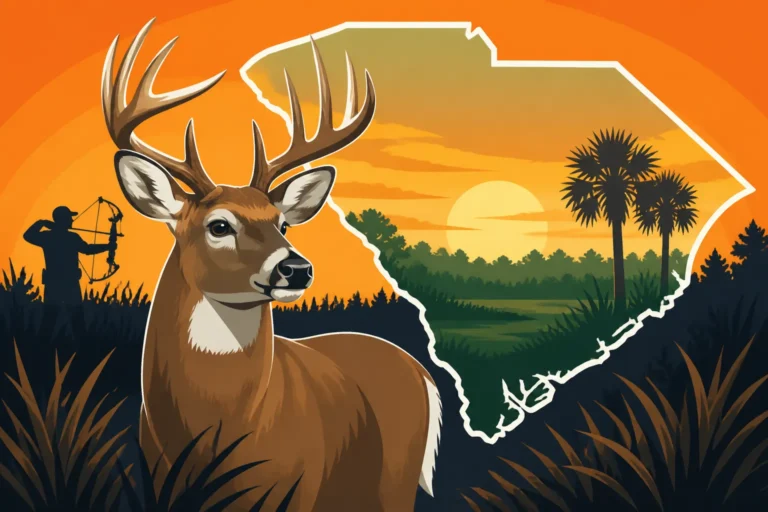
It can be incredibly frustrating to consistently see photos of mature bucks from other states or even other regions within South Carolina, while your local hunting grounds seem to only yield younger deer. You work hard, put in the hours, and still, those impressive antlers remain elusive. This guide is dedicated to exploring why the Midlands region of South Carolina consistently produces older bucks, delving into the unique environmental, social, and management factors that contribute to this phenomenon, and offering insights into how you might adapt your strategies to pursue them.
The Midlands: A Prime Environment for Mature Bucks
When we talk about hunting South Carolina, we often hear about the distinct characteristics of the Lowcountry swamps or the challenging terrain of the Upstate mountains. But the Midlands, a diverse area encompassing parts of the sandhills and the upper coastal plain, quietly holds a reputation for growing and retaining older whitetail bucks. It’s not just by chance; a confluence of factors makes this region a haven where bucks can actually reach an age class that allows for greater antler development and more elusive behavior. Hunters here often feel a sense of accomplishment in outsmarting a truly mature animal, an opportunity not always as abundant in areas with different pressures.
Understanding South Carolina's Deer Dynamics
South Carolina's deer herd is robust, but its management and population dynamics vary significantly across the state's four distinct game zones. These zones, each with its own season structure and bag limits, profoundly influence how deer populations are managed and how individual deer age. For instance, the earliest opening dates in the coastal Zone 4 mean a longer season, while the Upstate's Zone 1 opens much later, as explained in articles like South Carolina's Four Game Zones. Hunters frequently discuss how these regulatory differences play out on the ground.
The overall statewide picture of deer management is complex, aiming to balance recreational hunting, agricultural damage control, and herd health. This involves annual harvest data collection, monitoring for diseases like CWD (though South Carolina remains CWD-free), and setting appropriate harvest guidelines. The number of antlered deer hunters can take, for example, varies for residents and non-residents, as detailed in South Carolina Statewide Antlered Bag Limit. These overarching rules, while broad, create a framework that different regions interpret and respond to based on their local conditions.
How Regional Pressures Shape Deer Age
In many areas of South Carolina, particularly where public lands are easily accessible or private lands are smaller and more intensely hunted, bucks face significant pressure from their first year. This often means a high percentage of yearling bucks are harvested, simply because they are more susceptible and less wary. While perfectly legal and often part of overall population management, this high harvest of young deer inherently limits the number of bucks that can survive to older age classes, typically three, four, or even five years old and beyond. The constant challenge for hunters is to find unpressured pockets, a task made harder when there's a strong drive to fill tags quickly, especially on busy opening weekends.
Unpacking the Midlands' Habitat Advantage
The Midlands isn't just a geographical sweet spot; it's an ecological one. The diverse landscape offers a rich tapestry of habitats that provide everything a deer needs to thrive, mature, and elude hunters for years. This isn't your typical monoculture pine plantation; it's a dynamic mix that fosters resilience and growth.
The Abundance of Diverse Forage Sources
One of the primary drivers of healthy, aging bucks in the Midlands is the incredible diversity and abundance of food sources. Unlike areas dominated by single crop types or vast tracts of unbroken pine, the Midlands often features a patchwork of agricultural fields, mature hardwood forests, and bottomland swamps.
You’ll find vast soybean and corn fields providing high-energy late-season forage, often interspersed with pockets of wild muscadine vines, persimmon trees, and various acorns from numerous oak species. This variety means that even when one food source is scarce, another is typically available. This consistent, high-quality nutrition not only supports antler growth but also contributes to overall deer health, allowing bucks to recover quickly from the stresses of the rut and survive harsh winter periods, giving them a better chance to reach older age classes. A robust diet means stronger deer, and stronger deer are better equipped to withstand the rigors of life in the wild, including the hunting season.
Expansive and Varied Cover for Escape and Security
Just as crucial as food is cover, and the Midlands delivers this in spades. The region boasts a mix of dense regenerating clear-cuts, thick river bottom swamps, and expansive stands of mature timber. These varied cover types provide excellent sanctuary for deer, especially mature bucks, allowing them to escape hunting pressure and find secure bedding areas.
A mature buck knows every inch of his territory. He'll use the impenetrable thickets of a clear-cut to lay up during the day, moving to the edges of cornfields under the cover of darkness. In the low-lying areas, tangled river cane and dense undergrowth along creek bottoms offer perfect hiding spots. This diverse cover not only protects bucks from predators and hunters but also helps them thermoregulate during both the hot South Carolina summers and the occasional cold snaps. The ability to disappear into these varied landscapes makes them incredibly challenging to hunt, thereby increasing their chances of surviving multiple seasons and adding years to their life. This intricate blend of dense cover makes scouting tools like GoHunt invaluable for pinpointing potential bedding and travel corridors, even before you set foot in the woods.
How Hunting Pressure and Ownership Create Sanctuary
It's not just the habitat itself; it's how that habitat is managed and accessed by hunters that truly sets the Midlands apart for mature bucks. The dynamics of land ownership and the prevailing hunting culture play an enormous role in allowing bucks to grow old.
Large Tracts of Private Land and Managed Properties
Perhaps the most significant factor contributing to older bucks in the Midlands is the prevalence of large, privately owned land tracts. These aren't small, fragmented parcels; we're often talking about thousands of acres managed by individuals, families, or hunting clubs. These landowners and clubs often have a long-term vision for their deer herds, going beyond just filling tags each season. They understand that a healthy, older age structure leads to stronger, more impressive deer over time.
On these large properties, hunting pressure can be carefully controlled. There might be fewer hunters per acre, and those hunters might adhere to specific property rules regarding buck harvest. This contrasts sharply with smaller, more intensely hunted private properties or public lands where pressure is often much higher. This reduced and regulated pressure allows bucks to establish secure core areas and become more resilient to human disturbance. Without consistent intrusion, they revert to more natural behaviors, making them tougher to pattern but more likely to reach an impressive age. Gaining permission on such land is often the golden ticket, but it's a task that requires careful navigation, as discussed in Getting Private Land Permission in South Carolina.
The Influence of Quality Deer Management (QDM)
Many of these large private land holdings in the Midlands have embraced Quality Deer Management (QDM) principles, whether formally through organizations or informally through a shared understanding among hunters. QDM isn't just about growing big antlers; it's about managing the entire deer herd for optimal health and age structure. This often means voluntarily passing up younger bucks, even those that might be legal to harvest, to allow them to mature.
QDM initiatives typically focus on harvesting a sufficient number of does to keep the population balanced with the habitat, while also ensuring that younger bucks have the opportunity to age. When a large proportion of hunters in a given area adhere to these practices, the collective impact on the local buck population is profound. Bucks that would otherwise be harvested as yearlings or two-year-olds are given another year, or two, or three, to develop. This patience and foresight directly translate into a higher percentage of older, more experienced, and often larger-antlered bucks roaming the property. It’s a culture shift that prioritizes the long-term health and quality of the herd over immediate gratification. This commitment to managing for older bucks is why you see such impressive results in the Midlands.
Strategic Approaches to Hunting Midlands Giants
Hunting older bucks in the Midlands requires a different mindset and approach than simply heading out during opening weekend hoping to stumble upon a deer. These animals are survivors, honed by years of evading predators and hunters, and they won't make it easy for you.
In-Depth Scouting and Patterning Elusive Bucks
To consistently find older bucks in the Midlands, you have to become a master of scouting. This means more than just looking for tracks; it means understanding every nuance of the landscape and how deer use it. Focus on identifying remote, overlooked pockets of cover – areas that are difficult for other hunters to access. These are often the bedding sanctuaries for mature bucks.
Use tools like satellite imagery and topographical maps, perhaps even features found on apps like GoHunt, to identify potential travel corridors, pinch points, and funnel areas between food sources and bedding cover. Look for old rub lines, significant scrapes, and large tracks that indicate a mature buck is regularly using the area. Trail cameras are invaluable for this, but remember to respect Trail Camera Rules on South Carolina Public Land if you’re scouting a WMA, although most Midlands hunting occurs on private ground where you set your own rules. Pay close attention to how wind and thermals affect these areas, as older bucks are masters of using the elements to their advantage. Effective scouting during the off-season, as described in Scouting South Carolina Public Land Before Season, is paramount to success when the season rolls around.
Patience, Precision, and Adaptability
Hunting older bucks is often a game of patience. These deer are not easily fooled. They rarely make mistakes. You might sit for hours, or even days, without seeing the buck you're after. That's when patience becomes your greatest virtue. Be prepared to wait for the perfect shot opportunity, even if it means letting a younger deer walk.
Precision in execution is also key. Shot opportunities on older bucks are often fleeting and present at challenging angles or through small shooting lanes in thick cover. Practice your shooting diligently, whether with a rifle setup for longer ranges or a bow setup for those close-quarters swamp shots, as detailed in Rifle Setups for South Carolina Deer Hunting or Bow and Crossbow Setups for South Carolina. Be adaptable. If your initial plan isn't working, don't be afraid to change tactics. This might mean moving your stand, trying a different entry route, or adjusting your hunting times. The rut, for instance, offers a unique window of opportunity when older bucks might drop their guard slightly in pursuit of does, making knowledge of When the South Carolina Rut Peaks by Zone crucial for timing your hunts.
Table: Factors Contributing to Older Buck Harvest in the Midlands vs. Other Regions
| Factor | Midlands (Typical) | Other Regions (Varying) | Impact on Buck Age |
|---|---|---|---|
| Land Ownership | Large private tracts, managed properties | Smaller, fragmented parcels; more public land | Larger secure areas, controlled pressure, better survival |
| Hunting Pressure | Controlled, often low per acre, QDM-focused | Higher, often less regulated, more opportunistic harvest | Bucks less wary, higher harvest of younger deer |
| Habitat Diversity | Rich mix of agriculture, hardwoods, swamps, thickets | More homogenous (e.g., vast pines, urban fringe, pure swamp) | Consistent high-quality food, varied escape cover for years |
| Deer Management | Strong QDM adoption, focus on age structure | Often focused on tag filling or population control | Intentional passing of young bucks, allowing them to mature |
| Hunter Culture | Emphasis on quality, often generational knowledge | Mixed, sometimes driven by volume or accessibility | Shared values encourage long-term herd health |
Ultimately, the Midlands of South Carolina offers a challenging but incredibly rewarding experience for deer hunters. It's a region where the pursuit of an older buck isn't just a dream, but a tangible goal made possible by exceptional habitat, dedicated land management, and a hunting culture that values patience and quality. Understanding these dynamics is the first step toward connecting with one of these elusive giants.
Disclaimer
This article is for general informational purposes only and does not constitute professional advice. Laws, prices and regulations vary by location and change over time. Consult a qualified professional for guidance on your specific situation.