South Carolina’s Historic Quail Decline
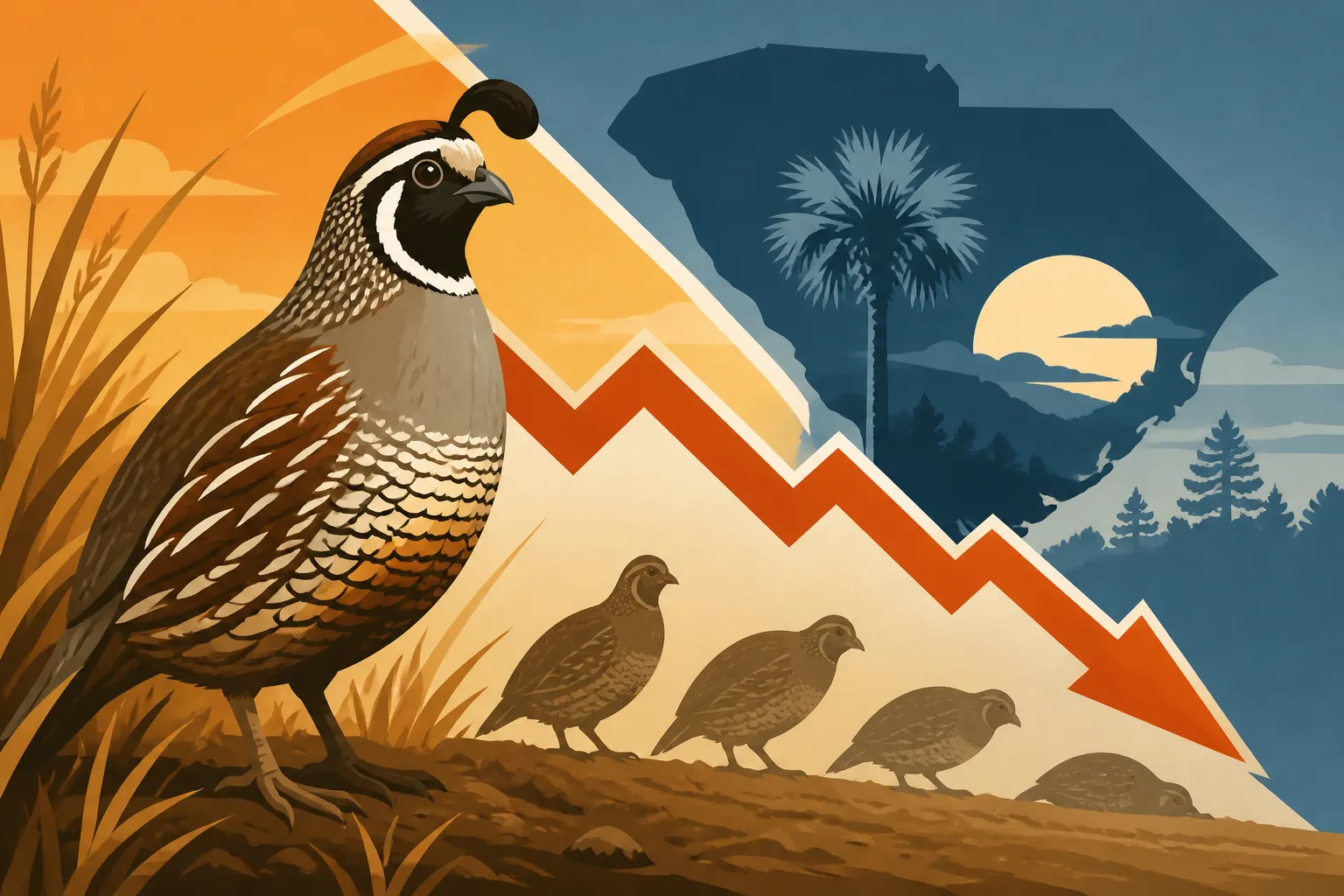
For many seasoned hunters and conservationists in South Carolina, the mention of wild bobwhite quail evokes a mix of fond memories and deep sadness. What was once an iconic symbol of the South Carolina hunting experience, the thrill of a covey flush and the distinct "bob-white!" call echoing through piney woods, has become a rarity for many. This guide dives deep into the heartbreaking reality of the bobwhite quail's historic decline in our state, exploring the complex reasons behind it and what efforts are being made to bring this cherished bird back from the brink.
A Bygone Era: South Carolina's Quail Hunting Heritage
It’s hard to imagine now, but there was a time when the sound of a bobwhite covey bursting from cover was a common occurrence across South Carolina’s landscape. Generations of hunters grew up with quail hunting as a central pillar of their outdoor lives, a tradition passed down from father to son, mother to daughter. This wasn’t just about putting meat on the table; it was about the dogs, the camaraderie, the crisp morning air, and the sheer joy of watching a well-trained pointer lock up on a hidden covey.
Remembering the Abundance
Ask any hunter who grew up in the mid-20th century, and they'll tell you stories of fields absolutely teeming with quail. You could walk a hedgerow or the edge of a cut cornfield and expect to flush multiple coveys in a single outing. Small farms dotted the landscape, creating a mosaic of agricultural fields, brushy fence rows, and open timber that was perfect for bobwhites. Back then, many folks didn't have to venture far from their homes to find birds; they were practically in their backyards. This era fostered a deep connection to the land and its wildlife, with quail being a readily accessible and highly prized game bird. It truly was a different world for those who experienced the peak of South Carolina Small Game Season Rules and the thrill of the hunt.
The Cultural Significance of Quail
Beyond the sheer numbers, quail held a significant place in the cultural fabric of South Carolina. Quail hunting wasn't just a sport; it was a way of life, especially in rural communities. Hunting clubs formed around the pursuit of bobwhites, fostering community bonds and providing shared experiences. The pursuit of quail often involved working bird dogs, an art form in itself, and the training and handling of these animals became a point of pride. This tradition instilled a strong conservation ethic in many, as hunters understood the need to manage habitat to ensure future populations. It’s no wonder that the decline of these birds leaves such a profound void, not just in the fields and forests, but in the hearts of those who remember what was lost. The skills learned and stories told during these hunts formed an integral part of South Carolina Hunter Education Requirements that went far beyond mere regulations, teaching respect for nature and wildlife.
The Perfect Storm: Unraveling the Causes of Decline
The disappearance of the bobwhite quail wasn't a sudden event, but rather a slow, creeping process driven by a confluence of factors, each exacerbating the others. It’s easy to point fingers, but the reality is complex, a tangled web of environmental, agricultural, and land-use changes that collectively created a hostile environment for a bird that once thrived in our state. Understanding these root causes is the first step toward any meaningful recovery.
Habitat Loss and Fragmentation
Perhaps the most significant blow to South Carolina’s quail population has been the dramatic loss and fragmentation of suitable habitat. The diverse landscapes that once provided everything a bobwhite needed—dense nesting cover, open brooding areas, ample food sources, and escape cover—have largely disappeared. Modern forestry practices, particularly the shift to vast, intensively managed pine plantations, create uniform stands that lack the varied understory and open spaces quail require. On the other hand, suburban sprawl continues to eat away at wildlands, turning prime quail country into housing developments and shopping centers. Even smaller, seemingly innocuous changes, like allowing old fields to revert entirely to dense forest without periodic disturbance, remove the early successional habitats that are critical for quail survival. This fragmentation creates "habitat islands" where small, isolated coveys struggle to survive and reproduce. We’ve changed the very face of the land that the bobwhite called home, and the birds simply couldn't adapt quickly enough. This issue is not unique to quail, as other small game like those discussed in South Carolina Squirrel and Rabbit Populations also face habitat pressures.
Predation Pressure on Nests and Broods
While predators have always been a natural part of the ecosystem, the landscape changes have amplified their impact on quail. When suitable habitat is scarce and fragmented, quail become more vulnerable. Nests are often laid in sparse cover, making them easier targets for a host of opportunistic predators like raccoons, opossums, snakes, and even domestic cats and dogs. The increase in coyote populations across the state, as discussed in Coyotes and Predators in South Carolina, also adds significant pressure on adult quail and their broods. Without sufficient escape cover, quail have nowhere to hide from these threats. Imagine a small covey trying to raise chicks in a field surrounded by thick woods, with very little in-between transition zone; they are exposed to dangers from all sides. A healthy, diverse habitat acts as a natural buffer, providing countless places to hide, but as that habitat shrinks, the balance tips heavily in favor of the predators.
Agricultural Shifts and Pesticide Use
The transformation of agricultural practices in South Carolina has also played a crucial role in the quail's decline. The small, diversified farms of yesteryear, with their hedgerows, fallow fields, and varied crops, provided an abundance of food and cover. Today, agriculture is largely dominated by vast monoculture fields—miles of corn, soybeans, or cotton—managed with industrial efficiency. These fields offer little in the way of cover, and their chemical inputs are a double-edged sword for quail. Modern pesticides, while effective for crop management, can drastically reduce insect populations, which are a vital food source for quail chicks in their first few weeks of life. Without protein-rich insects, chick survival plummets. Herbicides also eliminate the "weeds" and native plants that once provided seeds and berries for adult quail through the lean winter months. Essentially, the modern agricultural landscape has been sterilized of much of the diversity and natural food sources that bobwhites once relied upon, contributing significantly to How South Carolina Quail Numbers Fell Since the 1960s.
Beyond the Hunter's Bag: Ecological and Economic Impacts
The decline of the bobwhite quail isn't just a loss for hunters; it has far-reaching consequences that ripple through South Carolina's ecosystems and rural economies. When a foundational species like the bobwhite struggles, it often signals broader environmental health issues that affect many other creatures and even human communities. The absence of covey calls is more than just a silent field; it's a silent alarm.
Ripple Effects Through the Ecosystem
Bobwhite quail serve as an indicator species, meaning their health reflects the overall health of their habitat. Their decline suggests a significant degradation of the early successional habitats — fields, open woodlands, and brushy edges — that they and many other species depend on. When quail disappear, so do many other birds, insects, and small mammals that thrive in similar environments. Think of songbirds like indigo buntings, field sparrows, and Eastern meadowlarks, or even pollinators and beneficial insects that rely on the diverse plant life found in robust quail habitat. The intricate food web is disrupted: fewer quail means less food for their predators, which then must seek other prey, potentially putting pressure on other vulnerable populations. The ecosystem loses a vital component of its biodiversity, becoming less resilient and less able to support the full array of life it once did. It’s a stark reminder that everything is connected in nature.
The Economic Cost to Rural South Carolina
The economic impact of the quail's decline, while perhaps less obvious than a closed factory, is nonetheless real and significant for South Carolina’s rural areas. Historically, quail hunting brought substantial revenue to many small towns. Hunters would spend money on licenses, specialized gear like that discussed in Upland Guns for Quail Plantation Walks, lodging, meals, fuel, and dog supplies. Guide services, bird dog breeders, and feed stores all saw business from the quail hunting community. As the birds vanished, so did a portion of that revenue, further stressing rural economies already facing challenges. Landowners who once managed their properties for quail habitat, sometimes generating income from leases or hunts, found less incentive to do so. The loss is not just in direct hunting expenditures but also in the degradation of natural capital—the healthy ecosystems that provide countless "services" from clean water to wildlife viewing, which contribute to our state's overall appeal and value.
Fighting for Bobwhite: Current Conservation Initiatives
Despite the steep challenges, there is a dedicated community of conservationists, landowners, and agencies working tirelessly to bring back the bobwhite quail in South Carolina. Their efforts are often long-term and require significant investment, but the passion for this iconic bird remains strong, fueling projects across the state. It’s a testament to how much people cherish the bobwhite that these initiatives continue to gain momentum.
Longleaf Pine Restoration and Managed Burns
A cornerstone of quail recovery efforts in South Carolina, and throughout the Southeast, is the restoration of longleaf pine ecosystems. Historically, vast expanses of the state were covered in open, park-like longleaf savannas, maintained by frequent low-intensity fires. This habitat provided the perfect mix of open ground for movement, diverse herbaceous plants for food, and scattered cover for nesting and escape. Modern conservation programs are actively working to restore longleaf stands, often through replanting and, critically, through prescribed burning. Controlled burns are essential for reducing mid-story competition, stimulating the growth of native grasses and forbs that quail feed on, and creating the bare ground that chicks need to forage for insects. Organizations like the National Wild Turkey Federation and Quail Forever are key partners in these efforts, providing technical expertise and funding. For those interested in the specifics, understanding South Carolina Longleaf Pine and Quail Habitat is crucial to appreciating the scale of this work.
The Role of Private Landowners and Partnerships
Given that the vast majority of land in South Carolina is privately owned, the success of quail recovery hinges heavily on the willingness and ability of private landowners to implement habitat management practices. State agencies, like the South Carolina Department of Natural Resources (SCDNR), work to educate landowners and provide technical assistance, helping them develop habitat plans tailored to their specific properties. This might include planting native warm-season grasses, establishing beetle banks, creating brush piles, or implementing rotational disking to stimulate beneficial plant growth. Partnerships are vital, bringing together landowners, private conservation groups, and government agencies. Resources are available to help identify appropriate management strategies. For example, platforms like GoHunt often share articles or resources detailing best practices for habitat improvement, helping connect landowners with the information they need to make a difference on their own property. These collaborative efforts are essential to creating large enough tracts of managed habitat to support sustainable quail populations.
Your Part in the Comeback: How Hunters Can Help
While the challenges facing South Carolina's bobwhite quail are immense, individual hunters and outdoor enthusiasts are not powerless. In fact, our collective actions, from financial contributions to active participation and advocacy, are absolutely critical to the future of these birds. The future of quail hunting, and indeed the quail themselves, depends on us all stepping up to the plate.
Supporting Conservation Efforts
One of the most direct ways hunters can contribute is by supporting organizations dedicated to quail conservation. Groups like Quail Forever, the National Wild Turkey Federation, and other local conservation organizations funnel resources directly into habitat restoration projects, research, and landowner assistance programs. Your membership dues, donations, or participation in fundraising events directly translate into acres of managed habitat, prescribed burns, and scientific studies that inform better management practices. Even purchasing hunting licenses and stamps contributes, as a portion of those funds often goes towards wildlife management and habitat programs. Think about the impact if every hunter committed even a small amount to these efforts; the cumulative effect would be profound. Consider how these contributions can lead to better opportunities, potentially even managed hunts if populations rebound, similar to what you might see for big game with South Carolina Managed Hunt Sign-Up Deadlines.
Advocacy and Education for Quail Habitat
Beyond financial support, hunters can be powerful advocates and educators. Speak with landowners about the benefits of quail-friendly habitat, sharing success stories and readily available resources. Encourage your local communities to adopt land-use practices that support biodiversity and early successional habitats. Educate non-hunters about the ecological importance of quail and the vital role they play in the ecosystem. Participate in local conservation meetings, volunteer for habitat improvement workdays, or simply share what you've learned about quail needs with friends and family. Websites and resources found on platforms like GoHunt can provide excellent talking points and factual information to help you articulate the importance of these efforts. By being informed and vocal, we can help shift public perception and create a broader understanding of why saving the bobwhite is so critical, not just for hunters, but for the health of our state's natural heritage.
A Glimmer of Hope: The Future of South Carolina Quail
Despite the often bleak picture of the past decline, there are genuine reasons for optimism when it comes to the future of South Carolina's bobwhite quail. Recovery is not a quick fix; it's a marathon, not a sprint. But with continued dedication, science-based management, and the unwavering commitment of conservationists and landowners, we can see a future where the distinctive "bob-white!" call once again becomes a familiar sound across more of our state.
Promising Trends and Local Successes
While a statewide rebound to historic levels remains a monumental task, there are undeniable pockets of success across South Carolina where intensive habitat management has led to localized increases in quail populations. On properties where longleaf pine has been restored and regularly burned, where native grasses flourish, and where predation is managed, coveys are returning. These success stories, though perhaps isolated, serve as vital proof-of-concept. They demonstrate that with the right approach and sustained effort, quail can indeed bounce back. These areas often become models, inspiring other landowners and informing broader strategies. Mapping tools and land management resources, sometimes highlighted by companies like GoHunt, can help identify and replicate the conditions leading to these localized triumphs. The lessons learned in these success zones provide valuable data for larger scale efforts.
Challenges That Remain
It would be naive to ignore the significant challenges that still lie ahead for quail recovery. Habitat loss and fragmentation remain a dominant threat, as development pressures continue, and converting land back to ideal quail habitat is costly and time-intensive. Maintaining prescribed fire regimes requires overcoming logistical hurdles, regulatory considerations, and sometimes public perception issues. Predation, while manageable, is an ongoing concern, especially in degraded habitats. Climate change could also introduce new variables, altering plant communities and insect cycles. Funding for large-scale projects, research, and landowner incentives will always be a critical need. However, by understanding these challenges head-on, and by applying adaptive management strategies, South Carolina can continue to push forward in its mission to restore this beloved game bird. The path to widespread recovery is long, but the determined efforts continue, driven by the hope that future generations will also experience the unmatched thrill of a wild covey flush.
Disclaimer
This article is for general informational purposes only and does not constitute professional advice. Laws, prices and regulations vary by location and change over time. Consult a qualified professional for guidance on your specific situation.