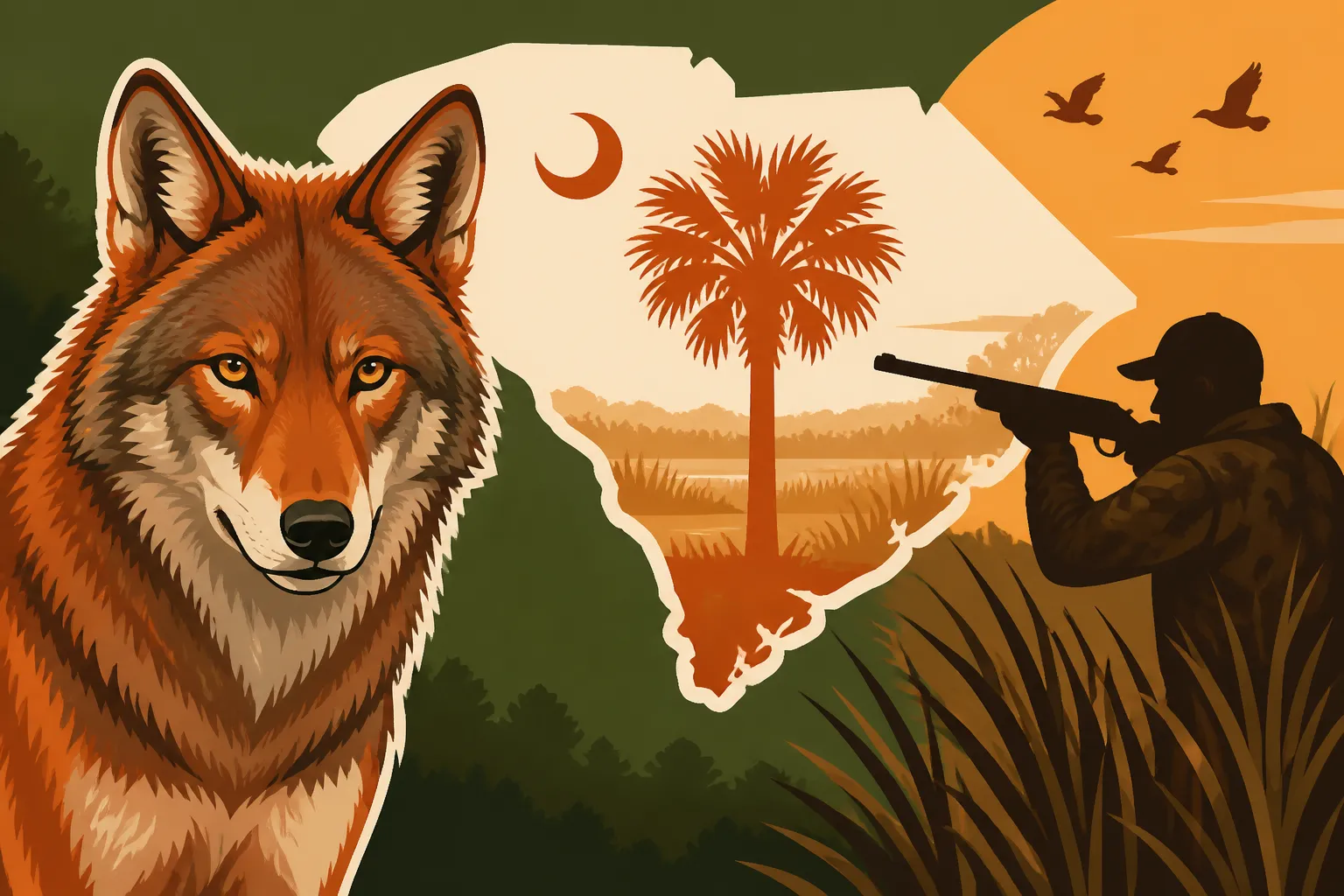
Red Wolf History in South Carolina
Many folks in South Carolina might not realize that our state was once home to a majestic native predator, the red wolf. It's easy to forget species that have vanished from our landscape, but understanding the story of the red wolf in South Carolina helps us appreciate the delicate balance of our ecosystems and the challenges wildlife faces today. This guide will delve into the rich history of red wolves in the Palmetto State, exploring their original presence, the reasons for their disappearance, and the ongoing efforts to conserve this unique American canid.
Pre-Colonial Presence and Early Interactions
Imagine the South Carolina landscape centuries ago, a tapestry of longleaf pine forests, vast swamps, and open woodlands. In this vibrant ecosystem, the red wolf (Canis rufus) roamed freely, an integral part of the natural order. These wolves weren't the colossal gray wolves of the far north; they were sleeker, smaller, and built for the warmer, denser cover of the Southeast. Their presence was a sign of a healthy, balanced environment, indicating a robust prey base of deer, rabbits, and other small game.
Historical Range Across the Southeast
Before European settlement fundamentally altered the continent, red wolves held a vast territory, stretching across much of the southeastern United States. Their historical range covered virtually all of what is now South Carolina, extending north into Pennsylvania, west into Texas, and south into Florida. Fossil records and early naturalists' accounts confirm their widespread distribution, painting a picture of a species that adapted well to diverse habitats, from the coastal marshes to the Piedmont's rolling hills. They were apex predators, playing a crucial role in maintaining the health and vigor of deer herds and other wildlife populations, culling the weak and the sick, and keeping mesopredator populations in check. Without red wolves, the ecological web was inevitably less robust.
Think about the immense amount of habitat that existed then, before the clear-cutting and development of later centuries. This provided an uninterrupted canvas for large predators to thrive. While today we celebrate the return of South Carolina's Black Bear Population to parts of the state, it's a stark reminder that our landscape once supported an even more diverse array of top-tier carnivores, including the red wolf.
Cultural Significance to Native Peoples
For the various Native American tribes who called South Carolina home for thousands of years, the red wolf was not merely an animal; it held deep cultural and spiritual significance. Unlike the European perspective that would later demonize wolves, indigenous cultures often viewed them with respect, admiration, and sometimes awe. Wolves were seen as teachers, guides, and symbols of family, loyalty, and strength. Their hunting prowess was often mimicked, and their calls were part of the night symphony of the wilderness.
Stories and legends passed down through generations frequently featured wolves, highlighting their intelligence and connection to the spirit world. They were woven into the very fabric of existence, understood as fellow inhabitants of the land, rather than pests to be eradicated. This profound connection often meant a more sustainable coexistence, where hunting was for survival and respect for all living things was paramount. The idea of deliberately wiping out a species for sport or perceived threat was largely alien.
Early European Settler Perceptions
When European settlers began arriving in significant numbers in the 17th and 18th centuries, their worldview clashed dramatically with that of the native inhabitants and the natural environment. Hailing from agricultural societies where large predators like wolves had been largely eliminated centuries prior, European settlers brought with them a deep-seated fear and animosity towards wolves. These animals were immediately seen as direct threats to their newly established livestock—cattle, hogs, and sheep—which represented their economic livelihood and security.
The notion of "taming the wilderness" often meant eradicating anything that hindered human expansion or posed a perceived danger. Wolves quickly became targets. This wasn't just a matter of individual fear; it became codified into policy. Early colonial governments, driven by the concerns of their agricultural communities, quickly instituted bounties for wolf pelts. This marked the beginning of systematic persecution, setting the stage for centuries of conflict that would ultimately push the red wolf to the brink of extinction. It was a complete shift from seeing a cohabitant of the land to seeing an enemy to be eliminated.
The Decline: Habitat Loss, Persecution, and Hybridization
The story of the red wolf's decline in South Carolina, and across the Southeast, is a tragic one, a confluence of human expansion, targeted eradication, and an unforeseen biological consequence. It wasn't a sudden event, but a steady erosion of their world over centuries.
Settlement and Habitat Fragmentation
As European settlements expanded from the coast inland, driven by agriculture, timber, and the burgeoning plantation economy, the vast, unbroken forests and wetlands that were critical red wolf habitat began to shrink and fragment. Clearcutting for farmland, building towns and roads, and the ever-present human footprint chipped away at the wilderness. Red wolves, requiring large territories to find food and raise their young, found their ranges increasingly broken up by human activity.
Imagine a single red wolf pack needing thousands of acres to thrive. Now picture that acreage being bisected by a new road, surrounded by fields, or dotted with homesteads. This fragmentation made it harder for wolves to find mates, establish new territories, and avoid human conflict. Their prey base also suffered from increased hunting pressure and habitat loss, further stressing the wolf population. The sheer scale of this land transformation in South Carolina over several centuries meant that even without direct killing, the wolves' survival was already becoming precarious. When considering the amount of Public Hunting Land in South Carolina available today, it's a fraction of the wild lands that once supported a thriving red wolf population.
Predator Control Campaigns and Bounties
The systematic persecution of red wolves was a key driver of their decline. From colonial times well into the 20th century, government-sponsored predator control programs actively sought to eliminate wolves. Bounties, initially offered by local communities and later by state and federal agencies, incentivized their killing. Hunters, trappers, and even average citizens saw wolves as vermin to be exterminated, not just for financial reward, but out of a perceived duty to protect livestock and increase game populations for human benefit.
These campaigns were incredibly effective, driven by a deep-seated fear and misunderstanding of predators. Methods were often brutal and relentless, including trapping, poisoning, and shooting. It's a sobering thought that such a magnificent native animal was deliberately targeted for extinction. This era reflects a much different approach to wildlife management than we see today, one that prioritized human expansion and economic interests above the intrinsic value of native species. Hunters and conservationists today can use tools like GoHunt to analyze historical land use or even current habitat suitability, a far cry from the unbridled exploitation of the past.
The Rise of Coyote Populations and Hybridization
Perhaps the most insidious and biologically challenging factor in the red wolf's demise was the rise of the coyote population and subsequent hybridization. As red wolves were systematically removed from their historical ranges in the East, coyotes (Canis latrans), a more adaptable and opportunistic canid from the western plains, began to expand eastward. They filled the ecological vacuum left by the absent wolves.
With red wolf numbers dwindling, particularly in their southern strongholds, individuals found it increasingly difficult to locate purebred mates. In a desperate effort to reproduce, red wolves began to interbreed with the rapidly expanding coyote population. This hybridization led to a genetic dilution, blurring the lines between pure red wolves and wolf-coyote hybrids. By the mid-20th century, truly pure red wolves were incredibly rare, making conservation efforts immensely complicated. The current widespread presence of Coyotes and Predators in South Carolina today is a direct consequence of this historical process, further highlighting the ecological ripple effects of the red wolf's disappearance. This genetic intermingling presented a unique challenge that traditional predator control couldn't solve.
Conservation Efforts and the Road to Extinction in the Wild
By the latter half of the 20th century, it became painfully clear that the red wolf was on the verge of complete extinction in the wild. The species, once a ubiquitous presence across the Southeast, had been pushed to its absolute limits. What followed was a desperate, unprecedented race against time to save what little remained.
The Last Stand: Focusing on Purebred Individuals
In the 1960s and early 1970s, scientists and conservationists realized the gravity of the situation. They understood that the red wolf was not just disappearing, but its genetic identity was being lost through hybridization. The only way to save the species was to locate and capture the last remaining purebred red wolves in the wild. This monumental task focused on a small, isolated population in the coastal marshes of Louisiana and Texas. These were often remote, challenging environments, making the identification and capture of these elusive animals incredibly difficult.
Wildlife biologists embarked on a systematic effort, using telemetry and extensive fieldwork to track down any canid that exhibited the characteristics of a pure red wolf. Once captured, these animals underwent genetic testing to confirm their purity. This was a critical step, as only genetically pure individuals could form the foundation of a captive breeding program aimed at preserving the species. The goal was to remove them from the immediate threats of the wild, especially further hybridization, and give them a chance to reproduce in a controlled environment.
Captive Breeding Programs and Survival
With the last pure red wolves captured, the focus shifted to establishing a robust captive breeding program. Beginning with only 14 founders (though not all produced offspring), these animals were transferred to zoos and specialized breeding facilities. The Tacoma Nature Center in Washington played a pivotal role, becoming the first facility to successfully breed red wolves in captivity in 1977. This was a monumental achievement, a testament to the dedication of conservationists.
The captive breeding program was meticulously managed, with careful genetic pairing to maximize diversity and minimize inbreeding, ensuring the long-term health of the small population. Each wolf became an invaluable genetic resource. This program not only saved the red wolf from complete extinction but also provided a future source of animals for potential reintroduction into suitable habitats. It demonstrated that even when a species is at its most vulnerable, intensive human intervention can offer a lifeline. The principles of managed populations, though on a much smaller scale, can be seen in practices like South Carolina's Captive Deer Farm Oversight, where genetic health and population integrity are paramount.
Official Extirpation from South Carolina
Despite these heroic captive breeding efforts, the grim reality for wild red wolves was stark. By 1980, the U.S. Fish and Wildlife Service officially declared the red wolf extinct in the wild. This wasn't just a national declaration; it meant that South Carolina, a state that once harbored a thriving population of these unique canids, had lost its native red wolves forever from its natural ecosystems. It was a profound loss, signaling the permanent alteration of the state's natural heritage.
The term "extirpated" is often used to describe this situation, meaning a species no longer exists in a specific geographic area, though it may still exist elsewhere (in this case, in captivity). For South Carolina, it meant the absence of an integral predator, an empty niche in the food web, and a silent testament to the impact of human activity on the landscape. This official declaration underscored the urgency of the captive breeding program and solidified the red wolf's status as one of America's most endangered mammals.
Reintroduction Attempts and Lessons Learned
While the loss of the red wolf from the wild was a tragedy, the success of the captive breeding program offered a glimmer of hope. The ultimate goal of any captive breeding effort is to return a species to its native habitat. For the red wolf, this led to ambitious reintroduction attempts, primarily in North Carolina, which provided invaluable lessons about the complexities of restoring a lost predator.
The Bold Plan: Alligator River NWR
In 1987, a landmark effort began: the first experimental reintroduction of red wolves into the wild. The chosen site was the Alligator River National Wildlife Refuge (NWR) in northeastern North Carolina, a vast expanse of swamp and pocosin habitat that mimicked parts of the red wolf's historical range. This was a bold and unprecedented move, marking the first time a top-level predator, declared extinct in the wild, was released back into its natural environment. The initial releases involved four pairs of captive-bred wolves, fitted with radio collars for monitoring.
The hope was that these wolves would establish territories, breed, and thrive, slowly expanding their numbers across suitable habitat. The refuge offered relative isolation from human population centers, reducing immediate conflict, and a healthy prey base. This project garnered international attention, becoming a beacon of modern conservation. It was a painstaking effort, requiring constant monitoring and intervention to ensure the wolves' survival and adaptation to the challenges of wild living. Understanding the dynamics of such reintroduction programs often requires detailed knowledge of local wildlife, similar to how hunters might study South Carolina Deer Season Structure Explained to understand population management.
Challenges in the Wild: Human Conflict and Hybridization
Despite the initial promise, the reintroduction program at Alligator River NWR faced significant and ongoing challenges. Human conflict, particularly landowner perceptions and illegal shootings, proved to be a persistent hurdle. While the refuge itself offered protection, wolves naturally ventured beyond its boundaries, encountering private lands where they might prey on livestock or simply be viewed with suspicion. Education and community engagement were, and remain, critical, but overcoming generations of ingrained fear and misunderstanding is a slow process.
Another major challenge, echoing the historical reasons for their decline, was continued hybridization with coyotes. Despite efforts to control coyote populations within the recovery area, their adaptability and prevalence meant that red wolves still occasionally bred with them. This genetic leakage threatened the integrity of the pure red wolf population and required constant vigilance, including capturing and sterilizing hybrids. Vehicle collisions also accounted for a significant number of wolf deaths, as highways dissected their territories. These challenges underscore the immense difficulty of reintroducing a top predator into a landscape already heavily influenced by humans. Information services like GoHunt offer detailed mapping which can be invaluable for identifying potential conflict zones or tracking wildlife movements in these complex landscapes.
Current Status and the Role of Zoos
Today, the wild red wolf population in North Carolina remains critically endangered, with numbers fluctuating and facing severe pressures. The captive breeding program, managed by the Red Wolf Species Survival Plan, continues to be the backbone of the species' survival. Most red wolves in existence today reside in zoos and conservation centers across the country, serving as a genetic reservoir and a source for future potential reintroductions.
These institutions play a vital role, not only in breeding but also in public education, raising awareness about the plight of the red wolf and the importance of apex predators. The lessons learned from the Alligator River NWR project are constantly being evaluated, informing discussions about future conservation strategies, including whether new reintroduction sites, perhaps even in South Carolina, could be viable. It's a testament to the dedication of countless individuals that this species, once declared extinct in the wild, still has a fighting chance, even if its presence in its native landscapes is largely limited to a single, fragile population.
The Future of Red Wolves and South Carolina's Role
The history of the red wolf in South Carolina is a cautionary tale, but it's also a story of resilience and ongoing hope. While wild red wolves are no longer found in the Palmetto State, the possibility of their return, even if distant, hinges on continued conservation efforts and a renewed understanding of their ecological value.
The Continued Importance of Genetic Purity
One of the most critical aspects of red wolf conservation is maintaining the genetic purity of the species. The hybridization crisis that played a significant role in their initial decline remains a threat today. Conservationists must meticulously manage the captive breeding population to ensure that the unique genetic markers of the red wolf are preserved. This involves careful genetic analysis of every animal in the program and strategic pairing to maximize genetic diversity within the very small founding population.
Any future reintroduction efforts would require innovative strategies to mitigate hybridization with coyotes. This might include intense coyote management in reintroduction zones, or even novel techniques like sterilizing coyotes within a certain radius to create a "hybridization buffer." The challenge is immense, but without maintaining genetic purity, the red wolf could eventually be absorbed into the coyote gene pool, effectively disappearing forever. This ongoing vigilance mirrors the state's efforts to protect the health of other wildlife, such as the meticulous tracking and prevention to ensure Why South Carolina Stays CWD-Free.
Habitat Considerations for Potential Future Efforts
For any potential future red wolf reintroduction in South Carolina, the availability of suitable habitat would be paramount. These animals require large, contiguous tracts of land with a healthy prey base and minimal human disturbance. Ideal habitats would be areas with extensive forest cover, wetlands, and relatively low human population density. South Carolina still possesses some areas that might fit this description, particularly in its vast coastal plain and swamp systems.
Areas like the extensive wetlands and bottomlands of the Lowcountry, such as those that support Hunting Lowcountry Swamp Deer, might offer potential candidates. However, simply having the physical space isn't enough. The chosen habitat would need to be able to support a viable red wolf population without leading to excessive conflict with local landowners or other human activities. This would involve extensive feasibility studies, community engagement, and careful planning to ensure long-term success. Understanding land ownership and habitat types through mapping applications like GoHunt could be an invaluable first step in any such assessment.
Public Education and Acceptance
Ultimately, the long-term success of any red wolf conservation effort, whether in North Carolina or potentially in South Carolina, rests on public education and acceptance. For too long, wolves have been portrayed as villains, and overcoming these deeply ingrained perceptions requires dedicated outreach. Landowners, hunters, and the general public need to understand the ecological role of apex predators and how their presence contributes to a healthier ecosystem.
Programs aimed at teaching about the red wolf's history, its unique biology, and the benefits of its return can help build community support. Farmers need to be equipped with non-lethal deterrents to protect livestock, and hunters need to understand how wolves fit into the broader landscape, rather than viewing them as competition. Without local buy-in and a willingness to coexist, even the most scientifically sound reintroduction plan faces insurmountable obstacles. This broader ecological understanding is a continuous effort, much like the commitment to ongoing learning found in South Carolina Hunter Education Requirements, which helps foster responsible wildlife stewardship.
| Era/Period | Red Wolf Status in South Carolina | Key Factors |
|---|---|---|
| Pre-1700s | Abundant, widespread | Apex predator, healthy ecosystems, native coexistence |
| 1700s-1800s | Declining in settled areas | Habitat loss, early European persecution, bounties |
| Mid-1900s | Critically endangered, rare sightings | Intensified eradication, habitat fragmentation, coyote expansion |
| 1960s-1970s | Near extirpation in the wild | Coyote hybridization, last capture efforts |
| 1980s-Present | Extirpated from the wild (SC) | Captive breeding program, limited reintroduction elsewhere |
Disclaimer
This article is for general informational purposes only and does not constitute professional advice. Laws, prices and regulations vary by location and change over time. Consult a qualified professional for guidance on your specific situation.