How Close a South Carolina Mentor Must Stay
It can feel like you need a law degree just to understand all the rules and regulations that come with introducing new hunters to the field, especially when it comes to supervising a young apprentice. Many of us experienced hunters remember a time when we just went out with Grandpa, and things felt a little less complicated. But the reality is, modern hunting has stricter guidelines, and knowing exactly "how close" you need to be to your apprentice hunter in South Carolina is crucial for their safety and for staying on the right side of the law. This guide aims to clear up that confusion, offering practical advice so you can confidently mentor the next generation.
Understanding South Carolina's Apprentice Hunter Program
South Carolina’s Apprentice Hunter Program is a fantastic initiative designed to get new hunters, especially youth, into the woods safely and responsibly. It recognizes that not everyone has completed or is ready for the full hunter education course, but still wants to experience hunting under the watchful eye of an experienced mentor. It's all about hands-on learning, letting the apprentice gain practical experience before they tackle the full certification. This program is a bridge, helping to preserve our hunting heritage by making it easier for newcomers to get started.
Who Qualifies as an Apprentice and Mentor
When we talk about the Apprentice Hunter Program, it's important to understand the roles clearly. An "apprentice" is generally someone who hasn't completed a hunter education course. This could be a young person eager to learn, or even an adult new to hunting. They're typically required to be accompanied by a licensed hunter who acts as their "mentor." This mentor must be at least 21 years old and hold a valid South Carolina hunting license. They're not just a chaperone; they are the primary instructor, responsible for the apprentice's safety and ethical conduct throughout the hunt. It’s a significant responsibility, but also an incredibly rewarding one, getting to pass on knowledge and passion for the outdoors. You can learn more about the specifics of South Carolina Apprentice Hunter License Rules through the SCDNR website.
The Philosophy Behind Mentored Youth Hunting
The core philosophy behind South Carolina's mentored youth hunting, and indeed all apprentice hunting, is safety first, followed closely by education. It's about more than just pulling a trigger; it's about teaching respect for wildlife, understanding habitat, ethical shot placement, and responsible firearm handling. The mentor isn't just there to keep an eye on things; they're actively teaching, guiding, and ensuring that every decision made in the field is a safe and ethical one. This program acknowledges that some of the most critical lessons in hunting are best learned by doing, with immediate feedback from an experienced hand. It's how traditions are passed down, skills are honed, and a deep appreciation for the natural world is fostered in a new hunter. It’s the foundation for responsible, lifelong hunting.
The Specifics of Mentor Proximity During a Hunt
Now, let's get down to the brass tacks: how close do you really need to be? This is the question that keeps many mentors up at night, and for good reason. No one wants to inadvertently break a rule or, worse, compromise safety. The South Carolina Department of Natural Resources (SCDNR) takes this seriously, and while the exact wording might not give you a precise number of feet, the intent is very clear.
"Direct Supervision" Defined by SCDNR
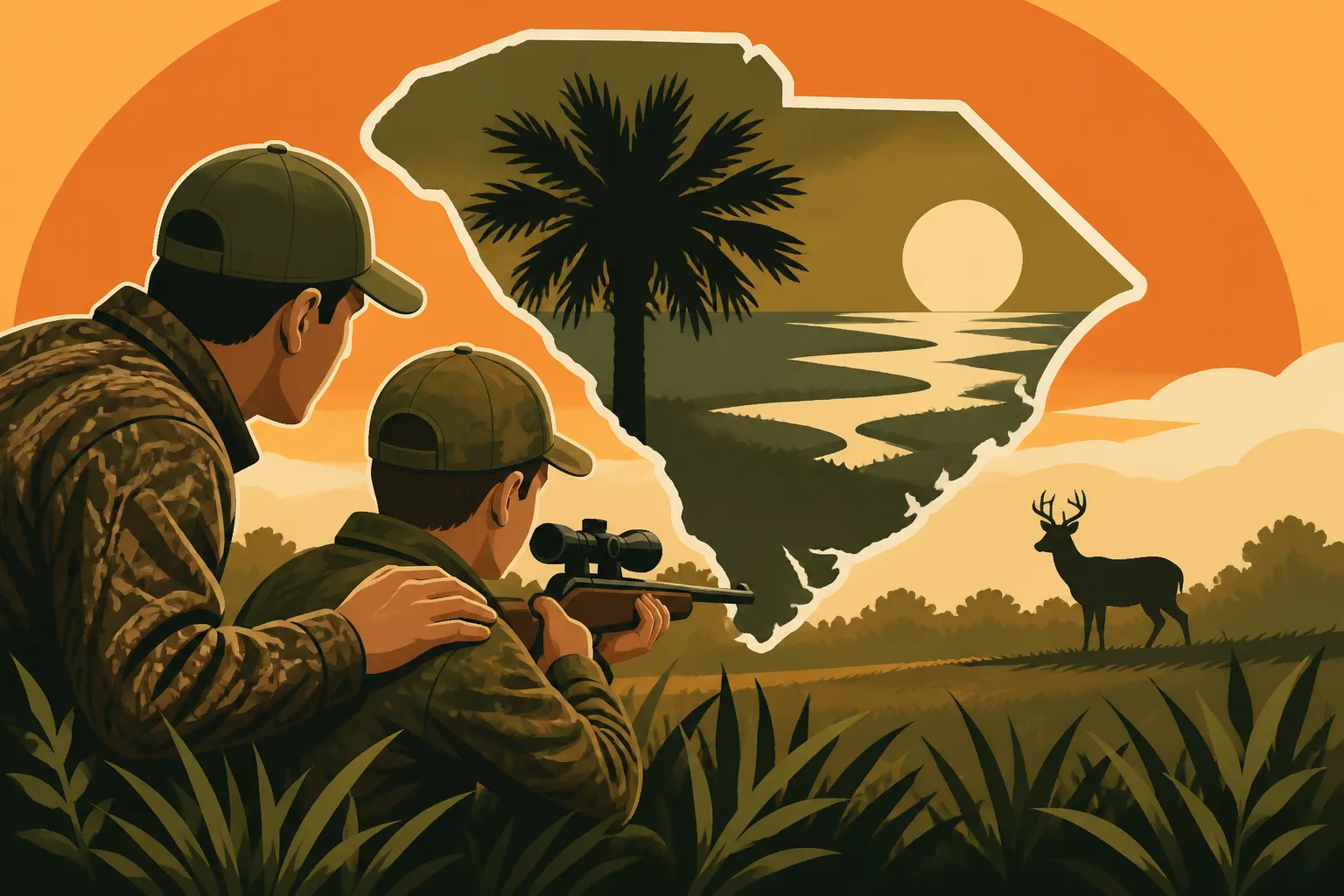
South Carolina law requires that an apprentice hunter be under "direct supervision" of a mentor. What does "direct supervision" mean in practical terms? It means the mentor must be close enough to the apprentice to have immediate, effective control and communication. This usually translates to being within sight and normal voice communication without having to shout. The mentor needs to be able to immediately intervene if a safety issue arises, provide guidance on shot opportunities, or address any ethical dilemmas. It's not enough to be "in the general area" or "on the same property." You need to be actively engaged in supervising. Imagine a scenario where your apprentice spots a deer, but you’re too far to whisper a quick reminder about shot placement or to confirm it’s a legal buck. That's not direct supervision. The spirit of the rule is that you're hunting together, with you leading the way.
Practical Scenarios for Maintaining Proximity
Maintaining that crucial proximity will look different depending on your hunting method. Let's break down a few common scenarios:
- Still-Hunting: If you're still-hunting, slowly walking through the woods, you and your apprentice should be walking shoulder-to-shoulder or, at most, a few steps apart. You should be able to communicate in a low voice, point out sign, identify game, and discuss shot angles in real-time. This is probably the easiest scenario to maintain constant "direct supervision," as you're constantly moving and interacting. It's a great way to teach subtle tracking skills and how to read the woods.
- Treestand Hunting: This is where it gets a bit trickier. You cannot have your apprentice in a stand 100 yards away while you're in another. "Direct supervision" in a treestand context means either sharing a large enough two-person stand, or having the mentor in a separate stand that is very close, perhaps within 10-20 yards, and ideally within clear line of sight. Some mentors opt for the apprentice in a stand and the mentor on the ground directly below or slightly behind, offering constant visual and verbal contact. Remember that Treestand Safety Gear for Wet Ground is paramount for both of you, regardless of proximity.
- Ground Blind Hunting: Similar to treestands, the ideal scenario is sharing a spacious ground blind. If that's not feasible, the mentor should be in an adjacent blind or position that allows for immediate visual and verbal contact. The walls of a blind can block sight and sound, so you need to be mindful of its impact on "direct supervision." A good ground blind setup allows for whispered conversations and easy hand signals, which are essential for teaching. You can find excellent advice on Using a Ground Blind on South Carolina Public Land that often includes considerations for multiple hunters.
- Deer Drives: For deer drives, the mentor and apprentice should be on the same "stand" or moving together as part of the "push." An apprentice should never be placed alone on a stand during a drive, nor should they be pushing game without a mentor directly alongside them. The chaos and unpredictable nature of a deer drive demand constant, close supervision. It’s a high-energy situation where quick decisions are often made, and the apprentice needs your immediate guidance. Safety is paramount, and a mentor's presence ensures proper firearm handling and target identification.
No matter the scenario, if you can't easily see, hear, and talk to your apprentice without raising your voice, you're likely too far apart to meet the "direct supervision" requirement. When planning your hunt, think about how you'll maintain this close contact from the moment you leave the truck until you return. Using a robust mapping app like GoHunt can help you visualize your setup, mark your planned positions, and ensure your chosen spots keep you within appropriate proximity, especially on unfamiliar public land or larger private tracts.
Ensuring Safety and Education in the Field
Beyond simply staying physically close, true mentorship in the field involves a whole lot more. The proximity rule isn't just about legal compliance; it's about fostering a safe and enriching learning environment. Your role extends to being a constant resource and a watchful guardian.
Communication and Situational Awareness
Effective communication is the cornerstone of successful mentored hunting. Before you even head out, establish clear communication methods. Will you use subtle hand signals? Will you whisper? Will you agree on certain phrases for specific situations? Even in close proximity, the environment can be noisy with wind, rustling leaves, or even the sounds of wildlife. Your apprentice needs to know they can always turn to you for clarification or guidance.
Situational awareness is equally vital. As the mentor, you're constantly scanning, not just for game, but for potential hazards. This includes observing the apprentice's body language, their firearm handling, their focus, and their understanding of their surroundings. Are they tracking game safely? Are they aware of other potential hunters? Are they positioned correctly for a safe shot backdrop? Teaching an apprentice to constantly assess their surroundings – from the wind direction to potential shooting lanes and safe zones of fire – is a critical lesson that only comes with direct, in-the-moment coaching. This proactive approach ensures you can prevent issues before they become problems. You might use mapping tools like GoHunt to discuss terrain features and potential hazards before you even step foot on the ground.
Hands-On Learning and Skill Development
The most impactful lessons aren't just told; they're shown. Being close allows you to facilitate real-time, hands-on learning. When you spot fresh deer tracks, you can immediately show your apprentice how to interpret them. When a squirrel barks, you can explain what it means. When it’s time to move, you can demonstrate silent walking techniques.
Consider these practical teaching moments:
- Reading Sign: Show them rub lines, scrape lines, and deer beds. Explain why deer use certain trails. This is often best learned right there, on the ground. When you're Scouting South Carolina Public Land Before Season, bring your apprentice along to teach them what to look for.
- Shot Placement: Before a shot opportunity arises, discuss where to aim on different animals from various angles. If a shot presents itself, you can confirm the target, assist with breath control, and guide them through the process. Afterwards, discuss what went well and what could be improved.
- Tracking and Recovery: If a shot is taken, you’ll be right there to help with blood trailing. This can be a challenging skill, and having an experienced mentor guiding them through the process of Tracking a Deer Through South Carolina Pine Straw or even Blood Trailing After Dark in South Carolina is invaluable.
- Field Dressing: When the harvest is complete, demonstrating proper Field Dressing a Deer in Warm Weather is another crucial skill. This isn't something you can just explain; it needs to be shown and practiced under supervision.
These are the moments that truly define mentorship and will create a well-rounded, responsible hunter. Being close isn't just about safety; it's about seizing every opportunity for education.
Common Misconceptions and Best Practices
Despite the clear intent of "direct supervision," some misconceptions still float around. Let's tackle those head-on and offer some best practices that go above and beyond the minimum legal requirements, ensuring a top-tier mentorship experience.
What "In Sight" or "Within Hearing" Really Means
Many new mentors wonder if "in sight" means they just need to see some part of the apprentice, or if "within hearing" means a shouted conversation is acceptable. Let's clarify:
- "In Sight": This generally means a clear, unobstructed view of the apprentice, allowing you to observe their actions, their firearm's orientation, and their immediate surroundings. If a thick patch of pines or a dip in the terrain breaks that line of sight for more than a few seconds, you’re likely too far apart. It’s not about seeing their blaze orange hat bobbing in the distance; it’s about seeing them and what they’re doing.
- "Within Hearing": This implies normal conversational voice. If you have to shout or use a whistle, you're probably beyond acceptable "direct supervision." The ability to whisper instructions, make quiet observations, or give subtle warnings is what's intended. Distractions, wind, and ambient woods noises can all impact hearing, so err on the side of being closer. While a two-way radio might seem like a solution for communication over distance, it's generally not considered a substitute for the physical proximity required for direct supervision, especially for younger apprentices. Radios can be great for general coordination, but not for immediate intervention during a critical moment.
The rule isn't trying to be overly restrictive; it's designed for quick reactions and continuous teaching.
When to Be Closer, When a Little Distance is Okay (With Caution)
There are definitely times when being even closer than the minimum is a smart move, and very few times when a little more distance is acceptable, and then only with extreme caution and specific conditions.
Be Even Closer When:
- New Apprentice: When your apprentice is very new to hunting, or to a specific type of hunting (e.g., their first time in a treestand, first time using a shotgun).
- Unfamiliar Terrain: Hunting in dense cover, unfamiliar territory, or areas with tricky footing.
- Higher-Stress Situations: During a deer drive, a quick follow-up shot, or dealing with a wounded animal.
- Firearm Proficiency: If the apprentice is still developing their comfort and proficiency with their firearm. You can refer to guidelines like South Carolina Legal Firearms for Deer Hunting to ensure they are using appropriate and safe equipment.
- Younger Apprentices: The younger the apprentice, the closer you should be. A 10-year-old will need much more hands-on guidance than a 15-year-old.
A Little More Distance (With Extreme Caution):
This is almost exclusively applicable to experienced apprentice hunters who are nearing the age or experience level where they could hunt independently, and only for very specific, controlled situations. For example, on an extremely open field edge where line of sight is clear for hundreds of yards, and you are positioned to cover multiple angles, you might allow an apprentice a slightly wider berth if you have a powerful binocular (like those discussed in Binocular Choice for South Carolina Whitetails) and can communicate clearly without raising your voice. However, even then, this is pushing the spirit of the rule. The general rule of thumb is: when in doubt, get closer. It’s always better to be too close than not close enough.
Remember, the goal is to develop a safe, ethical, and confident hunter. The time you invest in close, hands-on mentorship now will pay dividends for their entire hunting career. Tools like GoHunt can help you scout and plan your hunts effectively, allowing you to pick spots that facilitate close supervision and optimal learning opportunities.
| Hunting Scenario | Recommended Proximity | Key Mentorship Actions | What to Avoid |
|---|---|---|---|
| Still-Hunting | Shoulder-to-shoulder, a few steps | Identifying sign, quiet communication, immediate guidance | Walking out of sight, losing verbal contact |
| Treestand Hunting | Same stand, or adjacent <20 yards | Shared field of view, whispered instructions, safety checks | Separate stands out of sight/hearing, leaving alone |
| Ground Blind | Same blind, or adjacent <15 yards | Shared vantage point, low-voice discussion, shared target ID | Blinds where walls block view or hearing |
| Deer Drives | Mentor and apprentice together | Constant supervision, firearm control, clear communication | Apprentice alone on a stand, pushing without mentor |
| General Rule | Within sight & normal voice contact | Continuous teaching, active supervision, immediate intervention | Relying on phones/radios as primary supervision |
Disclaimer
Always consult the official South Carolina Department of Natural Resources (SCDNR) regulations for the most current and authoritative information regarding hunting laws and apprentice hunter requirements. This guide is intended for informational purposes only and should not be considered legal advice.