Crow Hunting Seasons and Tactics in South Carolina
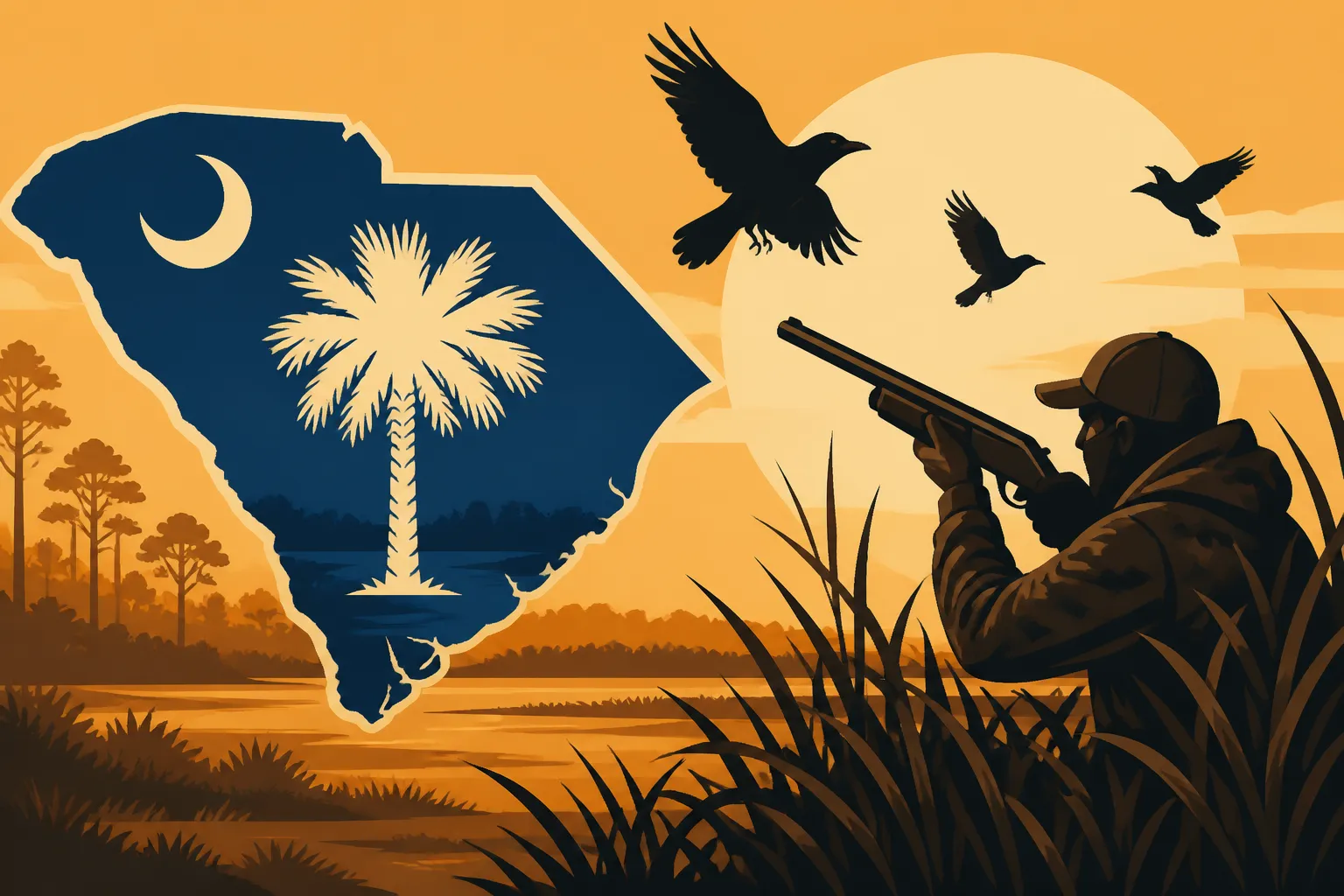
The persistent chatter of crows can be a charming part of the South Carolina soundscape, but for many landowners and farmers, these intelligent birds quickly become a real headache. From raiding bird feeders and garden patches to decimating planted crops and livestock feed, crows can cause significant frustration and economic loss. This guide is here to walk you through everything you need to know about hunting crows in our beautiful state, covering the regulations, essential gear, and proven tactics to help you manage these often-problematic avian residents.
Unpacking South Carolina's Year-Round Crow Hunting Regulations
When it comes to crows in South Carolina, things are a little different than with most other game species. While they are federally classified as migratory game birds, state regulations provide a unique and extensive opportunity for hunters to help manage their populations. It’s not just about sport; it’s often about mitigating damage.
The Nuisance Status and Year-Round Opportunity
South Carolina takes advantage of federal guidelines that allow states to establish more liberal hunting opportunities for crows when they are deemed a nuisance species. This means that, for all practical purposes, there isn't a traditional "closed season" for crow hunting here, unlike deer or turkey. As long as you have the proper licenses and adhere to ethical practices, you can hunt crows almost any day of the year.
This continuous hunting opportunity is a direct response to the real-world issues crows can cause. Think about a farmer who has just planted a field of corn, only to wake up and see hundreds of crows systematically pulling up the seedlings. Or a livestock producer dealing with crows pilfering valuable feed, increasing costs and potentially spreading disease. In these scenarios, crow hunting isn't merely a recreational pursuit; it's a vital management tool. This year-round flexibility allows hunters to respond directly and immediately to depredation problems as they arise, which is incredibly helpful for those trying to protect their property and livelihoods. However, it's crucial to remember that even with this liberal approach, there's one significant exception: you cannot hunt crows on Sundays in South Carolina. This is a statewide rule that applies to most hunting activities and extends to crows as well.
Essential Licenses and State Requirements
Even though crow hunting is available almost year-round and is often driven by nuisance control, you still need to be properly licensed. You can't just grab a shotgun and start shooting. First and foremost, you'll need a valid South Carolina hunting license. This is your foundational permit for any hunting activity in the state. Whether you're a resident or a non-resident, acquiring this license is the first step. You can easily purchase it online through the Go Outdoors SC website or from a licensed vendor.
Beyond the basic hunting license, because crows are federally designated migratory game birds, you must also possess a valid Harvest Information Program (HIP) certification. This is a federal requirement for anyone hunting migratory game birds, and even though South Carolina allows year-round crow hunting, it doesn't exempt you from the HIP certification. It's a quick, free registration process that gathers data on hunter activity, which helps wildlife agencies track harvest trends. If you plan to hunt on public lands, such as Wildlife Management Areas (WMAs), you'll also need a valid WMA permit. These permits often come with their own set of rules and specific opening/closing dates for certain activities, so always check the specific WMA regulations before heading out. For instance, while crow hunting might be year-round on private land, a WMA might have specific closures or restrictions that prohibit it during certain periods or in certain areas. Make sure to consult the rules for South Carolina WMA Turkey Rules or South Carolina WMA Permit Requirements before you go.
Understanding Federal Guidelines and State Interpretation
The seemingly contradictory status of crows – a migratory game bird with year-round hunting – stems from how federal wildlife laws are interpreted and applied at the state level. The U.S. Fish and Wildlife Service (USFWS) manages migratory bird populations, and while most migratory game birds have very specific, often short, seasons and strict bag limits, crows are given a bit more leeway. This flexibility acknowledges the potential for crows to become a significant nuisance, particularly in agricultural settings.
South Carolina leverages this federal provision to its fullest, offering hunters the most continuous opportunity possible to address crow populations. This contrasts sharply with many other states that impose short, defined crow seasons, often lasting only a few weeks. The South Carolina approach recognizes the practical need for immediate response to crow damage. For example, if a large flock of crows suddenly descends on a newly planted sunflower field, a farmer doesn't have to wait for a specific "crow season" to open; they can engage hunters to address the problem right away (provided it's not Sunday). This proactive management is a cornerstone of pest control and supports the agricultural community. It’s not about eradication, but about responsible population management and protecting resources.
Essential Gear and Setup for Successful Crow Hunts
Hunting crows effectively requires more than just a gun and some shells. These birds are incredibly intelligent and wary, with excellent eyesight. Having the right gear and setting up properly can make all the difference between a frustrating morning and a pile of successful harvests.
Shotguns, Ammunition, and Choke Selection
For crow hunting, a reliable shotgun is your primary tool. While 20-gauge shotguns are perfectly adequate, the 12-gauge is often preferred due to its versatility and the wider range of ammunition options available. Pump-action or semi-automatic shotguns are popular choices, allowing for quick follow-up shots on incoming or passing birds. The speed of a semi-auto like a Benelli or a Beretta can be a distinct advantage when a flock commits and you have multiple targets.
When it comes to ammunition, you'll want to prioritize pattern density. Crows aren't large birds, but they can be tough, and a dense pattern ensures enough pellets hit the target for a clean kill. Shot sizes typically range from #6 to #8 lead shot. For close-range decoying over your setup, a #7.5 or #8 might be sufficient, providing a dense pattern. However, for those high-flying birds that might skirt the edges of your decoy spread or simply pass by, a #6 shot offers a bit more punch and range. Many hunters find that a 2 ¾ or 3-inch shell with a good payload works best. For choke selection, a modified choke is a versatile choice, offering a good balance of spread and density for most scenarios. If you expect closer shots over decoys, an improved cylinder might open up your pattern just enough. For longer shots or to really tighten things up for high-flying birds, a full choke can be effective, though it requires more precise aiming. Consider patterning your shotgun with different choke and load combinations to see what performs best for your specific setup and typical shot distances. This practice is crucial, much like patterning a turkey gun.
Decoys and Calls for Luring Crows
Crows are highly social and incredibly responsive to both visual and auditory cues, making decoys and calls indispensable tools. The goal is to make your setup look and sound irresistible, or at least highly intriguing, to passing crows. Full-body crow decoys, positioned strategically, are excellent for creating a realistic flocking scenario. You can augment these with silhouette decoys to bulk up your spread without adding too much weight. One highly effective decoy setup involves a "distress" scenario: placing a few crow decoys around a larger, predatory bird decoy such as an owl or hawk. This creates the illusion that the crows are mobbing a predator, which often triggers an aggressive and curious response from real crows. Motion decoys, like flying crow decoys on poles, can add a crucial element of realism and attract attention from a distance.
For calling, you have two main options: mouth calls and electronic callers. Mouth calls, such as a simple crow call or a distress call, require practice but offer the flexibility and nuance of human control. Electronic callers, like those from Foxpro or other brands, are incredibly effective and can reproduce a wide array of crow sounds at high volume. Programs like "crow distress," "fight call," "assembly call," and various caws are essential. Start with softer caws to get their attention, then escalate to more aggressive fight or distress calls once birds are in sight. The sound of a crow being "attacked" or in distress is a powerful motivator for other crows to come investigate or rally. When picking a location, think about areas where crows might already be causing issues, like a field discussed in Hunting a Standing Cornfield in Farm Country or a remote logging road.
Camouflage, Blinds, and Concealment
Crows possess eyesight that rivals that of a hawk, meaning they will spot you if you're not perfectly concealed. Effective camouflage is paramount. Dark, drab patterns that blend with winter trees, shadows, and natural cover are usually best. Think deep greens, browns, and grays rather than bright, open-country patterns. Face paint or a face mask and gloves are non-negotiable; any exposed skin will reflect light and instantly give you away.
For concealment, ground blinds are a popular and effective choice. A pop-up ground blind offers a quick and portable solution, allowing you to set up on a field edge or in an open area. Ensure the blind is well-brushed in with local vegetation to break up its outline. Natural cover is often the best blind you can find. A thick fencerow, a stand of mature hardwoods, or the edge of a pine plantation can provide excellent cover. You want to be completely obscured from above and from all sides as crows approach. Positioning your blind or natural hide so that the sun is at your back can also help, as incoming crows will have to look into the glare to spot your position. Pay attention to your entry and exit routes to avoid spooking birds before or after the hunt. This meticulous attention to detail is similar to what's needed for Brushing In a Blind on a Field Edge for deer.
Proven Crow Hunting Tactics and Strategies
Once you have your gear and understand the regulations, it’s time to talk tactics. Crow hunting is often fast-paced and requires a good understanding of crow behavior and smart setup strategies.
Scouting for Roosts and Feeding Areas
Successful crow hunting starts with thorough scouting. You need to know where the birds are spending their time. Crows typically have communal roosts, often in large stands of timber, where hundreds or even thousands of birds gather at dusk and disperse at dawn. Finding these roosts is key to intercepting their flight paths. Drive rural roads around dawn and dusk, listening for their characteristic noisy chatter. You can often spot large flights of crows heading to or from these roosts.
Beyond roosts, identify key feeding areas. Crows are opportunistic feeders and will hit recently harvested crop fields for gleanings, freshly planted fields for seeds, pastures with livestock for feed, and even landfills. Using aerial maps, like those available on GoHunt mapping applications, can help you identify potential roosting cover (dense timber) and feeding areas (agricultural fields, open pastures) without having to put boots on the ground initially. Pay attention to areas with known crop damage – farmers will often welcome hunters who can help mitigate their losses. Once you've identified potential areas, a bit of reconnaissance during the week can confirm crow presence and their daily patterns. Look for heavy traffic lanes in the air, or physical signs of damage on the ground. You might also gain insights from local knowledge, asking farmers about their current crow problems.
Setting Up for Ambushes and Decoy Spreads
Your setup is critical for success. The ideal spot is often along a flight path between a roost and a feeding area, or directly within a feeding area where crows are actively causing problems. The goal is to draw them within shotgun range, typically 20-40 yards. When approaching your chosen spot, move stealthily to avoid spooking any resident crows.
Place your decoys where they are clearly visible but not too close to your hide. A common setup is to place decoys in an open area, such as a field edge, with your blind or natural cover along the timber line. If you're using an owl or hawk decoy in a distress setup, place it prominently with several crow decoys around it, facing the "predator." Ensure your decoys are facing into the wind, as crows will typically approach and land into the wind. Your hide should be downwind of your decoys if possible, as crows will often try to circle downwind to get a better look. This also puts them in a prime position for you to shoot as they commit. If hunting with a partner, ensure you both have clear shooting lanes and know your arcs of fire for safety. Communication is key, especially during the fast action when birds are coming in. The principles here are similar to those used when Setting Up on a Lowcountry Field Edge for deer, where understanding entry and exit points and visibility is paramount.
Calling Sequences and Hunter Patience
Effective calling is an art. Start your calling subtly, with basic caws, to alert distant birds. Once crows are in sight, you can increase the intensity. The distress call is incredibly effective for drawing birds in close. When a crow or two commit and begin to circle, reduce your calling or even stop entirely. Let their natural curiosity and social instincts do the rest. The sight of your decoys, especially a distress setup, should be enough to pull them the final distance.
Crows often approach cautiously, circling overhead multiple times before committing. Don't shoot at the first passing bird unless it's an easy shot. Wait until they are fully committed and within comfortable range of your shotgun spread. After the first volley of shots, the chaos often causes more crows to come in, drawn by the commotion and the distress calls of their downed compatriots. This phenomenon, sometimes called a "crow funeral," can lead to multiple shooting opportunities. Be patient, stay still, and be ready for successive waves. Even after several birds are down, keep calling. The sight of dead crows can actually draw in more birds, as they come to investigate the perceived threat or mourn their fallen kin.
South Carolina Crow Hunting Quick Reference
| Category | Details |
|---|---|
| Season Dates | Year-round, except Sundays. |
| Daily Bag Limit | None (Statewide) |
| Hunting Hours | Half-hour before sunrise to sunset |
| Licenses Req. | SC Hunting License, Migratory Bird Permit (HIP Certification), WMA Permit (if on WMA land) |
| Legal Weapons | Shotguns (12, 20 gauge most common), rifles, pistols, archery equipment. Shotguns are most practical. |
| Key Tactic | Decoys and calls (especially distress calls) are highly effective for luring in wary birds. |
| Concealment | Critical due to excellent crow eyesight. Full camo, face mask, gloves, and well-brushed blinds. |
| Private Land | Landowner permission always required. Often welcomed by landowners suffering crop/feed damage. |
| Public Land | Check specific WMA regulations, as some may have restrictions or closures. |
| Why Hunt? | Nuisance control (crop protection), predator management (nest predation on turkeys/quail), sport. |
Ethical Considerations and Local Impact
Just because crows can be hunted year-round doesn't mean ethical considerations fly out the window. Responsible hunting is always about respect for the game, the land, and other people.
Respecting Property and Wildlife
Securing proper permission for private land is not just a legal requirement; it's a fundamental show of respect. Knock on doors, introduce yourself, and explain your intentions. Many farmers and landowners are delighted to have hunters help them manage crow populations, especially if they're experiencing crop damage. Using mapping tools like GoHunt can help you identify property boundaries and landowner information, making the process of obtaining permission smoother. Always clarify the extent of your permission – where you can park, where you can hunt, and what hours are acceptable.
While there's no official bag limit, over-harvesting a localized population can still have an impact. Aim to manage the population rather than eradicate it, which is often impossible anyway. Always strive for clean, ethical kills and avoid taking reckless shots. Picking up your spent shell casings is a simple act of courtesy that goes a long way in showing respect for the land. Leaving a clean hunting area ensures that landowners remain open to future hunting opportunities. This kind of respect for the land is a core principle, whether you're hunting crows or tracking a deer through the deep pines as described in Tracking a Deer Through South Carolina Pine Straw.
The Role of Crow Hunting in Wildlife Management
Crow hunting plays a surprisingly important role in the broader scope of wildlife management in South Carolina. Crows are intelligent and adaptable, and their populations can thrive, often to the detriment of other species or agricultural interests. As mentioned, they can cause significant crop damage, impacting farmer livelihoods. By actively hunting crows, you're directly helping to mitigate these agricultural losses, making you a valuable partner to the farming community.
Furthermore, crows are known nest predators. They will predate on the eggs and young of other ground-nesting birds, including beloved game species like wild turkeys and bobwhite quail. While crow hunting alone isn't a silver bullet for increasing turkey or quail populations, it can be a contributing factor to overall predator management, potentially giving these vulnerable species a better chance at successful nesting and recruitment. This management effort fits into a larger picture of balancing ecosystems and supporting diverse wildlife populations. Understanding the impact of species like crows, and knowing how to manage them, is an important part of being a responsible steward of South Carolina's natural resources.
Disclaimer
Please note: Hunting regulations and seasons can change. Always consult the most current South Carolina Department of Natural Resources (SCDNR) regulations before heading afield. This guide is for informational purposes only and does not supersede official state regulations.