Rattling Volume in Thick Pine Cover
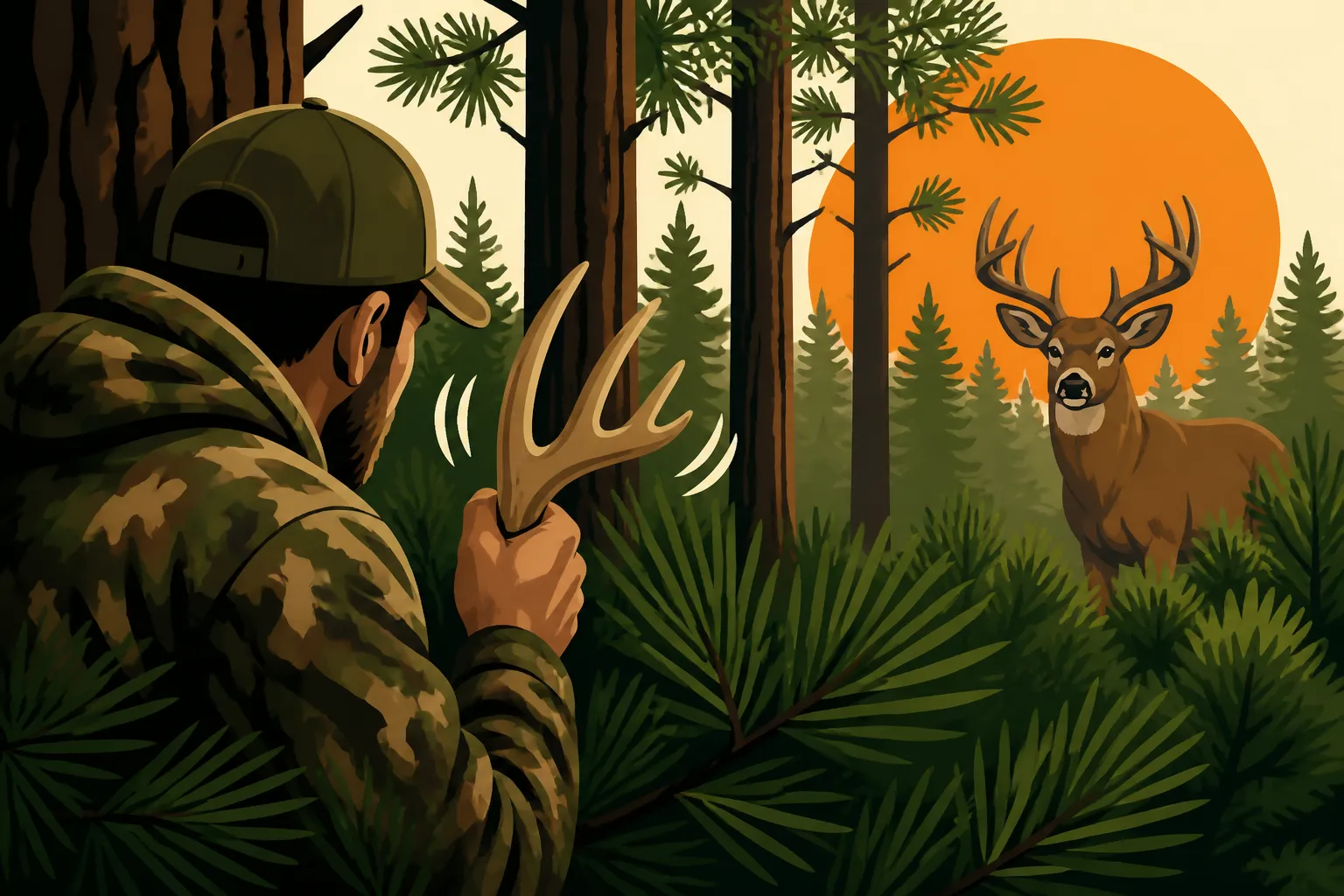
The dense pine plantations and thick swamp edges of South Carolina are absolutely beautiful, but if you're a hunter trying to coax a buck into range with rattling antlers, they can be incredibly frustrating. It often feels like your efforts are just swallowed by the forest, leaving you wondering if any deer even registered a sound. The challenge isn't just making noise, it's making effective noise that cuts through the thick cover and resonates with a wary whitetail. This guide is dedicated to helping you master the nuanced art of rattling in these challenging environments, ensuring your hard-earned knowledge doesn't get lost in the undergrowth.
Understanding the Unique Challenges of Thick Pine Cover
Rattling in open hardwoods, where sound travels freely, is one thing. Doing it successfully in a dense South Carolina pine thicket or a Lowcountry swamp is a completely different ballgame. The environment itself works against you, demanding a more thoughtful and adaptable approach.
The Acoustic Obstacle: How Pines Muffle Sound
Imagine trying to have a conversation in a room filled with heavy curtains and carpeting; that's essentially what a dense pine plantation is to sound waves. The myriad pine needles, the thick understory of gallberry and palmetto, and the trunks themselves act as natural sound dampeners. Each obstacle absorbs or deflects sound, drastically reducing how far your rattling can travel.
Unlike the crisp, far-reaching sound you might achieve in a sparse oak flat, rattling in pines often sounds muffled and localized. A buck 100 yards away might only hear a faint, indistinguishable rustle, or nothing at all, if your technique isn't adjusted. This means you need to re-evaluate what "loud" means in this context and understand that projecting sound effectively requires specific tactics. The goal isn't just raw volume, but strategic projection.
Visual Limitations: Why Bucks Might Not See You
Even if a buck hears your rattling, the visual limitations within thick pine cover present another hurdle. A deer, especially a mature buck, relies heavily on its eyesight to assess a situation before committing. In a dense thicket, a buck might be able to pinpoint the direction of the sound, but it's often impossible for him to actually see the "fight" taking place.
This lack of visual confirmation can lead to hesitation. Instead of charging in aggressively, a buck might circle downwind, attempting to get a visual or scent check before exposing himself. He might approach to within 50-70 yards, then hang up, straining to see what's happening. Your setup, therefore, becomes paramount. You need to anticipate this cautious approach and position yourself to maximize visibility into the thicket, not just for sound propagation. Hunting a funneled travel corridor or a slightly more open area within the pines, where a buck feels safer showing himself, can make all the difference.
Deer Behavior in Dense Cover
Deer that spend their lives in dense cover, whether it's the security of a sprawling pine regeneration plot or a hidden palmetto flat in the Lowcountry, tend to be inherently warier. They are masters of concealment and are less likely to expose themselves unnecessarily. A buck that is comfortable bedding and moving through thick areas might interpret an aggressive, sustained rattling sequence as a potential trap or something unnatural.
These bucks often exhibit more cautious approach patterns. They might come in slowly, stop frequently, and utilize every scrap of cover. They're looking for an advantage, an escape route, or confirmation that the sounds are authentic before committing. Understanding this behavior means you often need a more subtle approach, longer listening periods, and patience. An overly aggressive or prolonged rattling sequence might simply push them further into the sanctuary of the pines, never to be seen. It's about sounding convincing enough to pique their interest without raising their suspicion.
Strategic Volume and Cadence for Pine Thickets
The art of rattling in thick South Carolina pine cover isn't about simply crashing antlers together; it's a finely tuned symphony of volume, duration, and cadence designed to cut through the noise-dampening environment and resonate with a buck's primal instincts.
Finding the Right Loudness: The "Just Loud Enough" Principle
In thick cover, the concept of "loud" is relative. What sounds like a thunderous fight to you might be a barely audible whisper to a buck just 75 yards away. The key is to find the "just loud enough" volume—enough to penetrate the dense foliage without sounding completely unnatural or over-the-top, especially for call-shy deer.
- When to Lean into It: There are times when you need to be louder. If you're hunting particularly sprawling, dense blocks of pine, or during the very peak of the rut when bucks are aggressively seeking out fights, a louder, more aggressive sequence might be necessary to get attention. Think about short bursts of increased volume to initially grab attention, then backing off.
- When to Scale Back: More often than not, especially on pressured public land or when you suspect a buck is already relatively close, a scaled-back approach is better. A moderate, but sharp, clash of antlers can often sound more realistic. You want to mimic a quick, intense skirmish, not a protracted battle that might make a buck wary. If you're using a mapping tool like GoHunt, you can mark areas of extreme density where you might consider a slightly higher initial volume to get the message out, then switch to quieter, more subtle calls as you expect an approach.
- The Risk of Over-Calling: One of the biggest mistakes in thick cover is over-calling. A prolonged, extremely loud rattling sequence can overwhelm a buck or simply sound fake. Real deer fights are typically intense, but relatively short. By going too loud for too long, you risk sounding like a perpetual, cartoonish brawl, which can spook more deer than it attracts.
Duration and Cadence: Making It Sound Real
Beyond volume, the duration and cadence of your rattling sequence are critical to realism. You're trying to replicate a natural interaction, not just make noise.
- Short, Sharp Bursts: In thick cover, short, sharp bursts of rattling, lasting anywhere from 15 to 30 seconds, are often more effective. These mimic the quick, intense clashes that real bucks engage in. A quick, aggressive initial volley can grab attention, then you can transition to more subtle, sporadic antler ticks and scrapes.
- The Power of Silence: Equally important is the silence between rattling sequences. After each burst, put your antlers down and listen. Listen for footfalls, snorts, grunts, or even the subtle crack of a twig. Bucks often approach cautiously and silently, stopping to assess the situation. Give them time to cover ground and reveal themselves. A good rule of thumb is to rattle for 30 seconds, then wait for 2-3 minutes before considering another sequence. This allows the sounds to dissipate and for a buck to confidently move in.
- Varying the Rhythm: Don't make every rattling sequence sound exactly the same. Vary the intensity and rhythm. Sometimes it's a slow grind, other times a furious crash. This adds to the realism and suggests a dynamic interaction. Try to mimic the sounds of two bucks pushing, shoving, and occasionally locking up, followed by moments of heavy breathing and antler tickling.
Adding Grunts and Bleats to Your Rattling Sequence
Rattling is often more effective when combined with vocalizations, especially in an environment where visual cues are limited. A grunt can serve as a vital follow-up to a rattling sequence, giving a buck an extra incentive to investigate.
- Complementing the Fight: After a rattling sequence, a few aggressive Grunt Calls in Mature South Carolina Timber can simulate a buck finishing his fight and still being agitated, or even calling out to his opponent. This can provide the auditory 'confirmation' a buck needs to commit. It adds another layer of realism to the scenario you're trying to create.
- Drawing Them In: If a buck is hanging up, just out of sight, a well-placed grunt can often be the final nudge he needs. It's like saying, "Hey, the fight's over, but I'm still here." Sometimes, a quiet tending grunt can reassure a cautious buck that the area is safe to approach, particularly if he's circling downwind.
- Doe Bleats for Attracting Attention: Don't underestimate the power of a doe bleat. During the rut, if a buck hears a fight, and then hears a doe bleat, he might assume the victor is now with a receptive doe. This can trigger an instinctual response, drawing him in to investigate the potential breeding opportunity. Use bleats sparingly, though, so they don't sound out of place.
Situational Rattling Tactics Across the Season
The effectiveness of rattling volume and technique isn't static; it shifts dramatically with the progression of the deer season and the specific behaviors bucks exhibit. What works in early October might completely fail in mid-November.
Early Season and Pre-Rut Tactics
When South Carolina's archery season opens, often in warm weather, bucks are typically still in their bachelor groups, enjoying relatively peaceful lives. While they might engage in some light sparring to establish dominance, their aggression levels aren't at their peak.
- Subtle Sparring: During the early season and pre-rut (roughly September into late October, depending on the zone), focus on subtle, light rattling. Think soft tickling of antlers, short pushes, and grinding, rather than full-blown crashes. You're trying to mimic two younger bucks testing each other or older bucks establishing their pecking order without serious intent. This is not the time for an all-out brawl.
- Less Frequent, Shorter Sessions: Keep your rattling sessions brief—15 to 20 seconds, maybe two or three times over an hour. Listen intently for responses, but don't expect a buck to come charging in from a quarter-mile away. They're not yet in that mindset.
- Using Rubs and Scrapes: Target areas with fresh rubs and scrapes. These are signs that bucks are becoming more active and establishing territories. Rattling near these signposts can sometimes get a curious buck to investigate, but again, keep the volume moderate. For instance, if you're Hunting the Earliest Coastal Zone Opener in Zone 4, the rut is still some weeks away, so temper your expectations and your call volume.
Mid-Rut Aggression: When to Turn Up the Heat (Carefully)
The mid-rut is undoubtedly the prime time for rattling, particularly in areas like South Carolina where the rut can vary significantly by zone. This is when bucks are actively chasing does and are far more prone to aggression, seeing other bucks as direct competition.
- Controlled Aggression: During the peak rut, you can definitely increase your rattling volume and intensity. Longer sequences (30-60 seconds) with more aggressive crashes and grinding can be effective. You want to sound like a serious fight is going down. A useful tool like GoHunt can help you pinpoint the precise timing of the rut in your specific county or zone, optimizing when to unleash your most aggressive calling.
- Patience and Listening: Even with increased aggression, the principle of patient listening remains paramount. Bucks will often circle downwind. After a loud sequence, drop your antlers, be completely still, and scan for movement, especially downwind. A buck might approach cautiously, trying to get a visual before committing.
- Zone-Specific Rut Timing: Remember that the rut in South Carolina doesn't happen at the same time statewide. For example, Hunting the Rut in the Coastal Zones might peak in October, while Hunting the Rut in the Upstate Zone could be in November. Adjust your aggression to match the local rut phase.
Post-Rut Finesse
After the intense chasing of the rut, bucks are often worn out, have lost significant weight, and are focused on recovering and finding food. Their aggression levels plummet.
- Subtle Sounds Only: Rattling during the post-rut requires extreme finesse. Forget aggressive crashes; instead, focus on very light tickling, soft grinding, and short, non-aggressive pushes. You're trying to mimic two bucks casually interacting or a solitary buck perhaps investigating a sound out of curiosity, not looking for a fight.
- Combine with Feeding Sounds: It can sometimes be effective to combine very subtle rattling with soft grunts or even sounds of a deer foraging, suggesting a peaceful, food-focused environment. A buck that is focused on survival might be less inclined to investigate a fight but might approach if he thinks other deer are in a food source.
- Target Vulnerable Bucks: Older, worn-out bucks might still respond to a very soft, non-threatening rattling sequence if they're trying to locate the last few receptive does, or simply out of habit. However, this is usually a low-percentage tactic compared to the mid-rut.
Public Land vs. Private Land Approaches
The level of hunting pressure on a piece of land significantly impacts how deer respond to rattling.
- Public Land Caution: On heavily pressured public lands like some WMAs or sections of Francis Marion National Forest, bucks tend to be more call-shy and wary. An overly aggressive or frequent rattling sequence can quickly educate them or send them fleeing. Here, a minimalist approach—shorter, quieter sequences with long pauses—is usually best. Focus on mimicking cautious sparring rather than a full-blown battle.
- Private Land Aggression: On private lands that see less pressure, deer might be more responsive to aggressive rattling. If bucks haven't been bombarded with calls, they're more likely to investigate a convincing fight. However, even on private land, you still want to ensure your calls sound realistic.
Setup, Gear, and Environmental Considerations
Successful rattling in thick South Carolina pine cover isn't just about how you use your antlers; it's also about your strategic setup, the gear you choose, and your understanding of the surrounding environment. Every element plays a crucial role in luring a buck into shooting range.
Choosing Your Rattle: Real Antlers vs. Synthetics
The debate between real antlers and synthetic rattling devices is ongoing, but in thick pine cover, each has its distinct advantages and disadvantages.
- Real Antlers: Nothing quite replicates the authentic sound of real antlers clashing. The density and irregular shape create a natural, resonant sound that can be incredibly convincing. However, they can be bulky, noisy to carry through thick brush, and sometimes difficult to control the volume, especially if you're trying for a subtle tickle. For serious, aggressive rattling during the peak rut, real antlers are often the superior choice for their realism.
- Synthetic Rattling Bags/Devices: Brands like Rattling Bag or Rattle Bag provide a compact, quiet-to-carry alternative. They allow for much greater control over volume, making it easier to produce subtle clicks and grinds, which are excellent for pre-rut or post-rut finesse, or when you suspect a buck is already very close. While the sound might not be quite as "authentic" as real antlers, the control they offer in dense cover can be a significant advantage. The quiet transport is also a huge plus when trying to remain stealthy.
Optimal Setup Location Within the Pine Thicket
Where you position yourself is paramount when rattling in thick cover. You need a spot where your sound has a chance to penetrate, but also where you can see an approaching buck and have a clear shot.
- Edges and Funnels: Don't set up too deep in the thickest part of the pines where sound is completely muffled and visibility is zero. Instead, look for edges of clearings, logging roads, fire breaks, or natural funnels between bedding areas and food sources. These are prime spots where a buck might travel or pause.
- Slightly Open Pockets: Seek out small, slightly more open pockets within the dense cover. This allows your rattling sound to echo a bit more effectively and gives you precious extra yards of visibility.
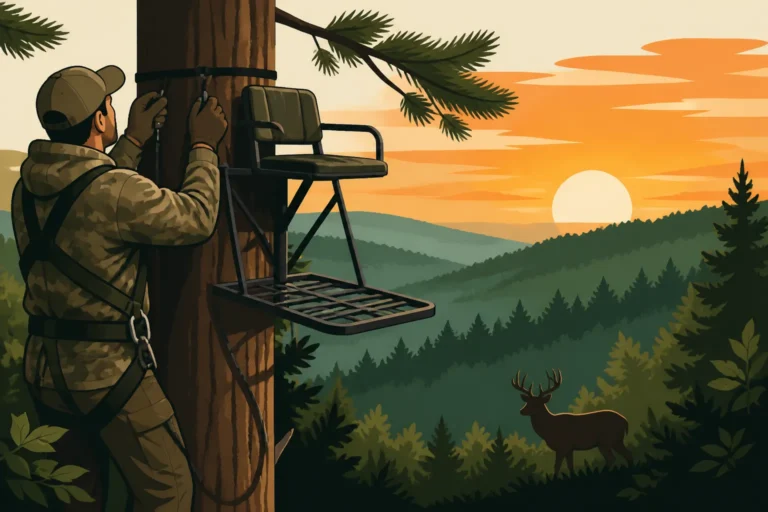
- Elevated Positions: Using a treestand can dramatically improve your visibility over the thick undergrowth, allowing you to spot an approaching buck sooner and better judge his approach. A good stand setup in a pine transition area, as discussed in Treestand Setups in Francis Marion National Forest, can be highly effective. Remember, bucks often approach from downwind, so having elevated visibility in that direction is critical. Use a reliable scouting app like GoHunt to identify these topographical features and potential ambush points during your pre-season scouting trips.
- Backdrop and Concealment: Always set up with a thick backdrop (e.g., a cluster of pines) behind you to break up your silhouette. This provides crucial concealment, especially if a buck circles to get a better look.
Wind and Thermals in Pine Forests
Wind and thermals are always critical factors in deer hunting, but they take on an added layer of importance when rattling in thick cover. A buck's nose is his primary defense, and in dense pines, he's more likely to rely on it before exposing himself.
- Play the Wind: Always, always set up so your scent is blowing away from where you expect a buck to approach. Since bucks often circle downwind to scent check a rattling sequence, try to predict their most likely approach route and set up accordingly. This might mean having your back to a thick, impenetrable section of cover, forcing the buck to approach from a more predictable direction. For more insights on this, review tactics related to Wind and Thermals on an Upstate Ridge.
- Understanding Thermals: In the morning, thermals rise, carrying scent and sound uphill. In the evening, they fall, carrying them downhill. In the rolling terrain of parts of Sumter National Forest or the Upstate, understanding these shifts is vital. If you're rattling in a bottomland pine thicket in the morning, your sound (and scent) will rise. In the evening, it will fall. Adjust your setup to account for this.
- Scent Control is Non-Negotiable: Even with perfect wind, a slight swirl can blow your cover. Meticulous Scent Control Gear for South Carolina Humidity is essential. Wear clean clothes, use scent-eliminating sprays, and avoid anything that can leave a human odor. If a buck catches a whiff of you, the game is over, no matter how convincing your rattling was.
| Rattling Type | Volume (1-5) | Duration (Seconds) | Cadence | Optimal Situation | Considerations |
|---|---|---|---|---|---|
| Light Sparring | 2 | 10-20 | Soft ticks, occasional pushes | Early season, pre-rut, pressured public land | Mimic young bucks; minimal aggression. |
| Aggressive Clash | 4-5 | 30-60 | Hard crashes, grinding, pushing | Peak rut, unpressured private land | Combine with grunts; anticipate aggressive approach. |
| Finesse Tickling | 1-2 | 5-10 | Very light, infrequent taps | Post-rut, cautious bucks, close proximity | Aim for curiosity, not challenge; listen intently. |
| Grunt & Rattle Combo | 3-4 (rattle), 2-3 (grunt) | 20-30 (rattle), 5 (grunt) | Rattle, pause, 1-2 grunts | Mid-rut, when buck hangs up | Grunt provides auditory follow-up to the "fight." |
Successfully rattling in thick South Carolina pine cover demands a blend of tactical skill, environmental awareness, and a deep understanding of deer behavior. It's about being strategic with your sound, patient with your approach, and meticulously prepared with your setup. It's a challenging environment, but with the right techniques, you can turn those frustrations into thrilling encounters.
Disclaimer
Hunting is an activity with inherent risks. Always prioritize safety, adhere to all South Carolina Department of Natural Resources (SCDNR) regulations, and ensure you have the proper licenses and permits before heading afield. This guide is for informational purposes only and should not replace proper hunter education or professional guidance. Be aware of your surroundings and hunt responsibly.