First Aid Kits for Remote Swamp Ground
There’s nothing quite like the solitude and raw beauty of hunting South Carolina's remote swamps and lowcountry bottoms. But let's be honest, that same wild, untamed nature that draws us in can turn a minor mishap into a serious emergency faster than you can say "cottonmouth." When you're miles deep in mud, water, and thick palmetto, a simple cut or sprain isn't just an inconvenience; it can jeopardize your entire hunt, or worse, your safety. This guide is all about helping you put together a first aid kit specifically tailored for the unique challenges of hunting South Carolina’s remote swamp ground, ensuring you’re prepared for whatever the wild throws your way.
Why a Specialized Kit is Essential for Swamp and Remote Hunting
When you're packing for a day in a South Carolina swamp, a basic bandaids-and-ibuprofen kit from the drug store just isn't going to cut it. The environment itself presents a host of unique challenges that demand a more robust and thoughtfully assembled first aid solution. We're not talking about a quick hike on a well-maintained trail here; we're talking about deep woods, potential for slips, cuts, bites, and heat-related issues, all far from immediate help.
Understanding the South Carolina Swamp Environment
Think about where you're hunting: dense, humid conditions, often with standing water, muddy banks, and thick vegetation. This isn't your grandfather's deer stand in the uplands. The ground can be uneven and treacherous, leading to twisted ankles or falls. Every tree branch seems to have a snag, and every briar patch a thorn that bites deep. You might be slogging through water in your Waders for South Carolina Tidal Marsh Hunting for hours, which means any cut or scrape is constantly exposed to moisture and potential infection. This isn't just uncomfortable; it can quickly escalate.
Beyond the physical terrain, you're dealing with the wildlife. We've got our share of critters that can cause trouble, from venomous snakes like the cottonmouth lurking in dark water to a myriad of biting insects. A bee sting, which might be a mild annoyance at home, could trigger a severe allergic reaction for someone in a remote area, far from an epi-pen or medical attention. You also have to consider the risk of encounters with feral hogs, which can be aggressive, or even the rare black bear if you're up near the coastal plain's swamp edges or in the mountains. Your kit needs to address these specific, regional threats.
The Critical Gap Between Minor Injury and Major Emergency
The biggest difference between an injury at home and an injury in a remote swamp is time and access. If you cut yourself in your backyard, you wash it, put on a bandage, and move on. If you do it three miles deep in the Hellhole Swamp WMA, with daylight fading and a long walk back, that seemingly minor cut becomes a significant problem. Infection is a major concern in our warm, humid climate, and a wound that isn't cleaned and dressed properly can fester.
Consider a sprained ankle. On a paved road, you might hobble to your car. In a swamp, with uneven footing and water crossings, that sprain could leave you stranded, unable to walk out. Now you're facing a potential overnight stay in the elements, dehydration, exposure, and the stress of an emergency. When you consider the vastness of some public lands, like sections of Francis Marion National Forest, where cell service can be spotty at best, every minute counts. Having the right supplies to stabilize yourself or a hunting partner, even for a few hours, could be the difference between a rough story and a genuine crisis. Tools like the mapping features in GoHunt can help you understand just how far you are from help, reinforcing the need for self-sufficiency in medical emergencies.
Essential Components of Your Remote Swamp First Aid Kit
Building a first aid kit for South Carolina's swamps isn't about throwing a bunch of stuff into a bag; it's about making deliberate choices for a challenging environment. Every item should have a purpose, and the kit itself should be durable and waterproof.
Wound Care and Trauma Management
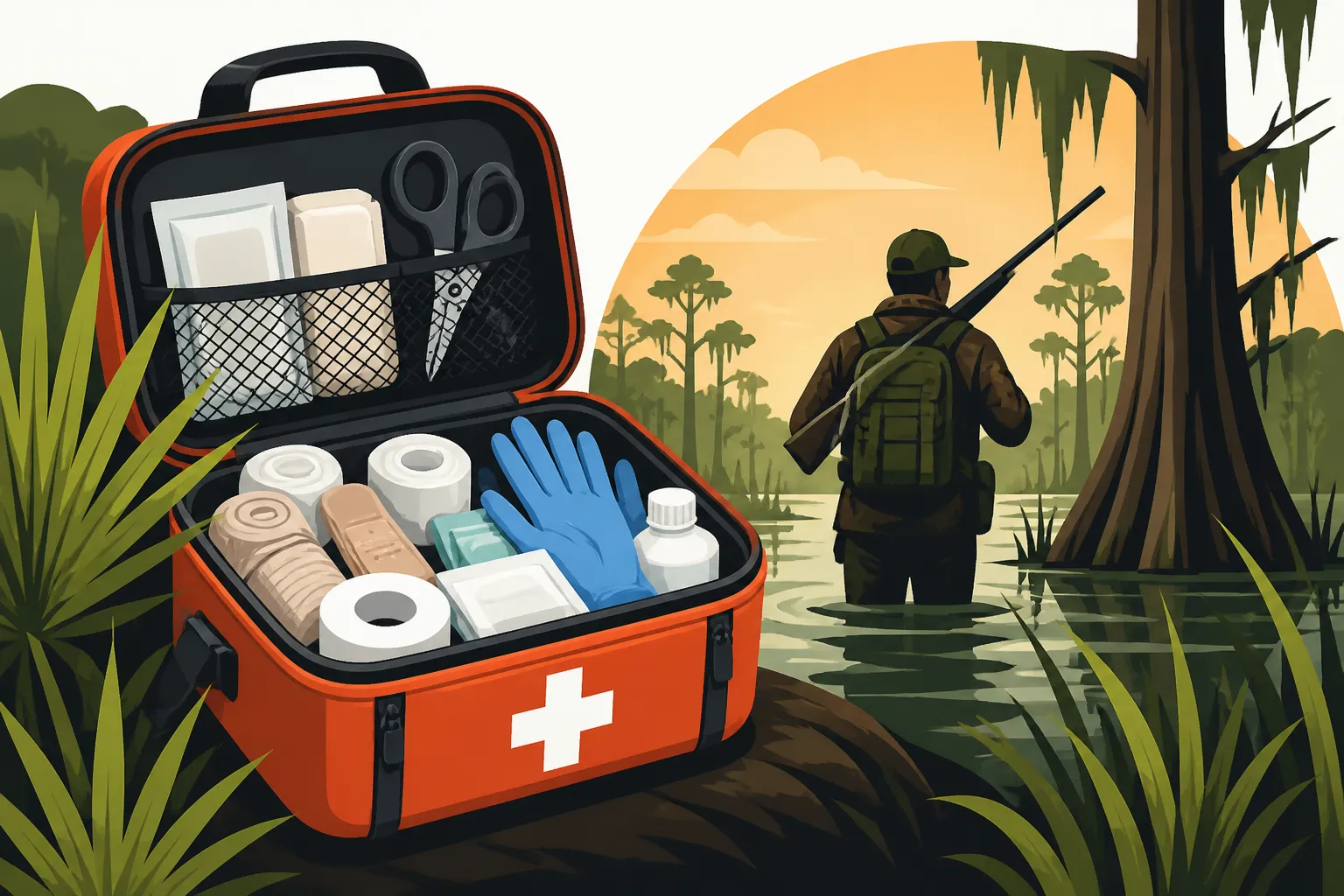
This is the core of any good first aid kit, and even more so for swamp hunting where cuts, scrapes, and deeper wounds are a real possibility. Start with a variety of bandages: adhesive bandages in various sizes for small cuts, gauze pads (sterile and non-sterile) for larger wounds, and medical tape to secure them. You'll want an ace bandage for sprains or to provide compression for a more serious bleed. A triangular bandage is incredibly versatile, serving as a sling, a tourniquet, or to hold dressings in place.
Antiseptic wipes or a small bottle of iodine solution are crucial for cleaning wounds immediately, especially with all the mud and water you're likely to encounter. Include a small tube of antibiotic ointment to help prevent infection. For more serious bleeds, consider a pressure dressing or even a small hemostatic gauze. Always have a pair of sharp, trauma shears; they're invaluable for cutting through clothing, tape, or even boot laces in an emergency. Remember that prompt and thorough wound care is paramount when you're hunting in a humid, bacteria-rich environment like a lowcountry swamp.
Environmental Protection and Personal Safety
South Carolina's swamps are beautiful but come with their own set of environmental hazards. Sunscreen and insect repellent are non-negotiable. Even on cloudy days, the sun reflects off the water, leading to burns. And the mosquitoes, ticks, and gnats? They're legendary. Bug Protection for Early Archery Season is absolutely essential, and your kit should include a strong repellent to prevent bites that can transmit diseases or simply drive you to distraction. Tweezers are a must for tick removal, which needs to be done carefully and promptly.
Beyond the obvious, think about hydration and temperature. Dehydration can creep up on you in our humid climate, even if you feel surrounded by water. Include some oral rehydration salts or electrolyte tablets. A small emergency blanket can be vital if someone gets hypothermic after a fall into cold water, or if an injury forces an unexpected overnight stay. A whistle is also a simple, yet effective, signaling device if you get disoriented or need to call for help, especially when you're deer hunting a funnel between two swamps where visibility might be limited.
Medications and Specialized Tools
Over-the-counter pain relievers like ibuprofen or acetaminophen are essential for headaches, muscle aches, or managing pain from a minor injury. Antihistamines are useful for allergic reactions to insect bites or plants like poison ivy, which is rampant in many of our hunting areas. If you or a hunting partner have known severe allergies, an EpiPen should be part of your personal gear, and everyone in the party should know how to use it.
For specific South Carolina swamp concerns, a snake bite kit (suction devices are generally not recommended, but compression bandages and a method to immobilize a bitten limb are important) can be a debated item, but understanding appropriate response is key. A small, but effective, water filter or purification tablets can also be a lifesaver if you unexpectedly run out of potable water and are forced to rely on swamp water. Finally, a small, durable headlamp with extra batteries ensures you can continue treatment or navigate even after Blood Trailing After Dark in South Carolina. When you are deep in a remote area, every specialized item can make a profound difference.
Customizing Your Kit for South Carolina's Unique Challenges
No two hunts are exactly alike, and neither should your first aid kit be. While a foundational kit is critical, fine-tuning it for the specific challenges of hunting the Palmetto State's swamps and remote areas will give you an even greater edge.
Weather and Hydration Considerations
South Carolina is known for its heat and humidity, which can be relentless from the early archery season right through the late fall. Dehydration is a constant threat, even in seemingly "wet" environments. Your kit needs to reflect this. Consider including more than just electrolyte tablets; perhaps a compact, collapsible water bottle and a high-quality personal water filter. If you're hunting in areas like the ACE Basin, where you might be exposed to brackish water, having a reliable filter that can handle different water sources is paramount. This isn't just for drinking; clean water is essential for flushing wounds effectively.
Conversely, our winters, while generally mild, can still deliver cold snaps. If you're Hunting Into the January Zone 1 Close in an upstate river bottom that resembles a lowland swamp, a fall into icy water could quickly lead to hypothermia. An emergency thermal blanket or two should always be in your pack. Layered clothing, even if not in your first aid kit, is part of your overall survival strategy. Think about quick-drying materials. Wet clothing loses its insulating properties rapidly, and being wet and cold in a remote area is a recipe for disaster.
Wildlife Encounters and Terrain-Specific Hazards
Our swamps are home to more than just deer and hogs. Venomous snakes like cottonmouths are common, and copperheads are found throughout the state. While most snake bite kits are controversial, having pressure bandages and immobilization supplies is crucial for slowing venom spread and transporting a victim. Learning basic snake identification and bite first aid is far more valuable than a "kit" that doesn't actually help. Snake Boots for South Carolina Swamp Ground are highly recommended, but even they aren't foolproof.
The terrain itself poses specific threats. Slipping on wet logs or roots is common when Dragging a Deer Out of a Swamp, leading to sprains, fractures, or deep gashes. Tough, waterproof bandages and wound closure strips that can handle moisture are essential. For those deep cuts, having a small, sterile saline wash might be better than relying on potentially contaminated swamp water to clean a wound. Remember, when you're in an environment like a lowcountry swamp, every small cut has the potential for significant infection due if not properly addressed.
Communication and Emergency Evacuation
When you're deep in the Sumter National Forest or a remote WMA, cell service often vanishes. This is where a satellite communication device or a personal locator beacon (PLB) becomes a vital part of your extended first aid and safety plan. These aren't technically "first aid kit" items, but they are absolutely critical for summoning help if you or a partner have a severe injury that requires evacuation. Even a powerful app like GoHunt, with its offline map capabilities for navigation, won't help you call for rescue if you have no signal.
Before every trip into truly remote areas, always tell someone your exact hunting location and your expected return time. Give them a detailed route, especially if you're venturing into a complex area with numerous sloughs and thickets. In the event of an emergency, clear communication and a pre-planned check-in system can drastically reduce response times. It's not just about treating an injury; it's about getting out of the situation safely, and that often means communicating effectively with the outside world, even if it's just a text message from a strong signal point after you’ve self-stabilized.
Practical Application and Maintenance of Your Kit
Having the best first aid kit in the world won't do you any good if you don't know how to use it or if it's not ready when you need it. Think of your kit as another piece of essential gear, just like your rifle or your bow; it needs regular attention and practice.
Training and Preparedness
The most comprehensive first aid kit is only as effective as the person using it. Taking a basic wilderness first aid course is invaluable. These courses teach you how to improvise, how to assess injuries when professional help is hours away, and how to manage a situation under stress. Knowing how to properly apply a tourniquet, splint a broken limb, or treat for shock can make all the difference. Many local Red Cross chapters or outdoor organizations offer such training.
Practice makes perfect, even with first aid. Familiarize yourself with every item in your kit. Know where everything is, how it works, and when to use it. Think through hypothetical scenarios: "What if I twist my ankle trying to retrieve a deer from a creek bottom?" or "What if my hunting partner gets a deep cut from a machete while clearing a shooting lane?" Visualize the steps you would take. This mental preparation, combined with actual training, builds confidence and ensures you won't be fumbling through unfamiliar supplies during a real emergency. Consider taking a class specifically focused on First Aid Kits for Remote Swamp Ground needs.
Kit Accessibility and Durability
Your first aid kit needs to be easily accessible, not buried at the bottom of your pack under a pile of gear. Many hunters keep a smaller, immediate-use kit in a pocket or on their belt, with a larger, more comprehensive kit in their main pack. Choose a bright-colored bag or case for your kit so it's easy to spot, especially in low light or stressful situations.
Durability and waterproofing are paramount for South Carolina swamp hunting. Your kit needs to withstand constant moisture, mud, and the general abuse of the outdoors. Look for a kit bag made from tough, water-resistant material, and consider using waterproof dry bags or Ziploc bags inside the main kit to protect individual items like bandages and medications from moisture. A small, dry pouch can be invaluable for items like cell phones or a small GPS unit (like the ones that integrate with GoHunt) that you might store alongside your kit for emergency communications. Regularly inspect your kit. Check expiration dates on medications and sterile supplies. Replace anything that's been used, is damaged, or has expired. A well-maintained kit is a reliable kit.
| Category | Essential Items | Swamp/Remote Consideration |
|---|---|---|
| Wound Care | Adhesive bandages (various sizes), gauze pads, medical tape, antibiotic ointment | Waterproof bandages, extra tape, saline wash for mud/water exposure, trauma shears for clothes |
| Bleeding Control | Pressure bandage, tourniquet (optional, but good to know how to use), hemostatic gauze | Rapid application for deep cuts from falls or animal encounters, especially if alone |
| Sprains/Fractures | Ace bandage, triangular bandage, small splint material (e.g., malleable splint) | Uneven terrain, slips, and falls are common; need to stabilize for long walkout |
| Environmental | Sunscreen, insect repellent, tick removers, emergency blanket, electrolyte tablets | High heat/humidity, abundant insects, potential for hypothermia if wet, dehydration risk |
| Medications | Pain relievers (ibuprofen/acetaminophen), antihistamines, personal Rx (EpiPen) | Managing discomfort for prolonged periods, allergic reactions to bites/plants |
| Tools | Trauma shears, tweezers, small water filter/purification tabs, headlamp w/ extra batteries | Cutting through gear, removing splinters/ticks, clean water for wounds, night navigation |
| Communication (Not Kit) | Whistle, fully charged phone (even if no signal, for GPS), satellite communicator (PLB) | Summoning help from remote areas, confirming location with GoHunt for rescue coordination |
Remember, your first aid kit for remote swamp ground isn't just a collection of supplies; it's a testament to your commitment to safety and preparedness.
Disclaimer
This article is for general informational purposes only and does not constitute professional advice. Laws, prices and regulations vary by location and change over time. Consult a qualified professional for guidance on your specific situation.