Hog Traps Worth the Investment
Anyone who has spent time hunting or managing land in South Carolina knows the absolute nightmare that feral hogs can be. They decimate crops, destroy habitat, and generally make a mess of everything, often seeming to multiply overnight. Trying to control them can feel like an endless battle, especially when you're just picking them off one at a time. This guide is all about tackling that problem head-on by exploring how hog traps can be a truly worthwhile investment for serious hunters and landowners, helping you get a handle on these destructive creatures.
Why Hog Traps Are Essential in South Carolina
Let's be real, the feral hog situation in South Carolina isn't just an annoyance; it's a full-blown ecological and agricultural crisis in many areas. These intelligent, prolific animals cause millions of dollars in damage annually, and their numbers seem to grow exponentially. Relying solely on hunting with a rifle or bow, while certainly part of the overall strategy, often isn't enough to make a significant dent in their population. That's where a strategic investment in hog traps comes into its own. They offer a more consistent, efficient, and often more effective way to reduce hog numbers over time.
Understanding the Feral Hog Problem
South Carolina's climate and abundant food sources create the perfect storm for feral hogs to thrive. They breed year-round, with sows often having two litters of four to eight piglets each year. Do the math, and you can see how quickly a small sounder can explode into dozens of animals. These hogs aren't native to our landscape, and their destructive rooting behavior destroys native plant life, contaminates water sources, and outcompetes native wildlife for food. Imagine walking through a pristine bottomland hardwood forest only to find it churned up like a freshly plowed field – that's the work of feral hogs. This constant devastation is a major concern for anyone invested in the health of our natural resources or the success of their crops. Understanding How Many Feral Hogs South Carolina Has truly paints a picture of the uphill battle we're facing.
Why Other Methods Fall Short
While techniques like traditional hunting, night hunting with lights, or even running dogs are valuable tools in the fight against feral hogs, they each have their limitations. Spot-and-stalk hunting, for instance, often allows only one or two hogs to be taken from a sounder before the rest scatter and become wary. This can make them even harder to hunt in the future. Night Hunting Hogs With Lights on Private Land is certainly effective, but it's often limited to private land and specific conditions, and it still relies on actively pursuing individual animals or small groups. Similarly, while Running Dogs on South Carolina Feral Hogs can be exciting and effective for locating hogs in thick cover, it's labor-intensive and not always feasible for broad, continuous population control. These methods can reduce numbers locally and provide sport, but for sustained impact on a large, reproducing population, you need something that can capture multiple animals at once, repeatedly, with less direct human presence during the capture itself.
Types of Hog Traps and Their Mechanics
When we talk about hog traps, we're not just talking about one single design. There's a variety out there, each with its own strengths and ideal uses. The "worth" of an investment often comes down to matching the right trap type to your specific situation, the size of your hog problem, and the terrain you're dealing with. The key is understanding how they work and what you can expect from each. For many, a good trap is a long-term piece of equipment that will serve you well for years, if not decades, so choosing wisely upfront matters.
Corral Traps: The Cadillac of Hog Control
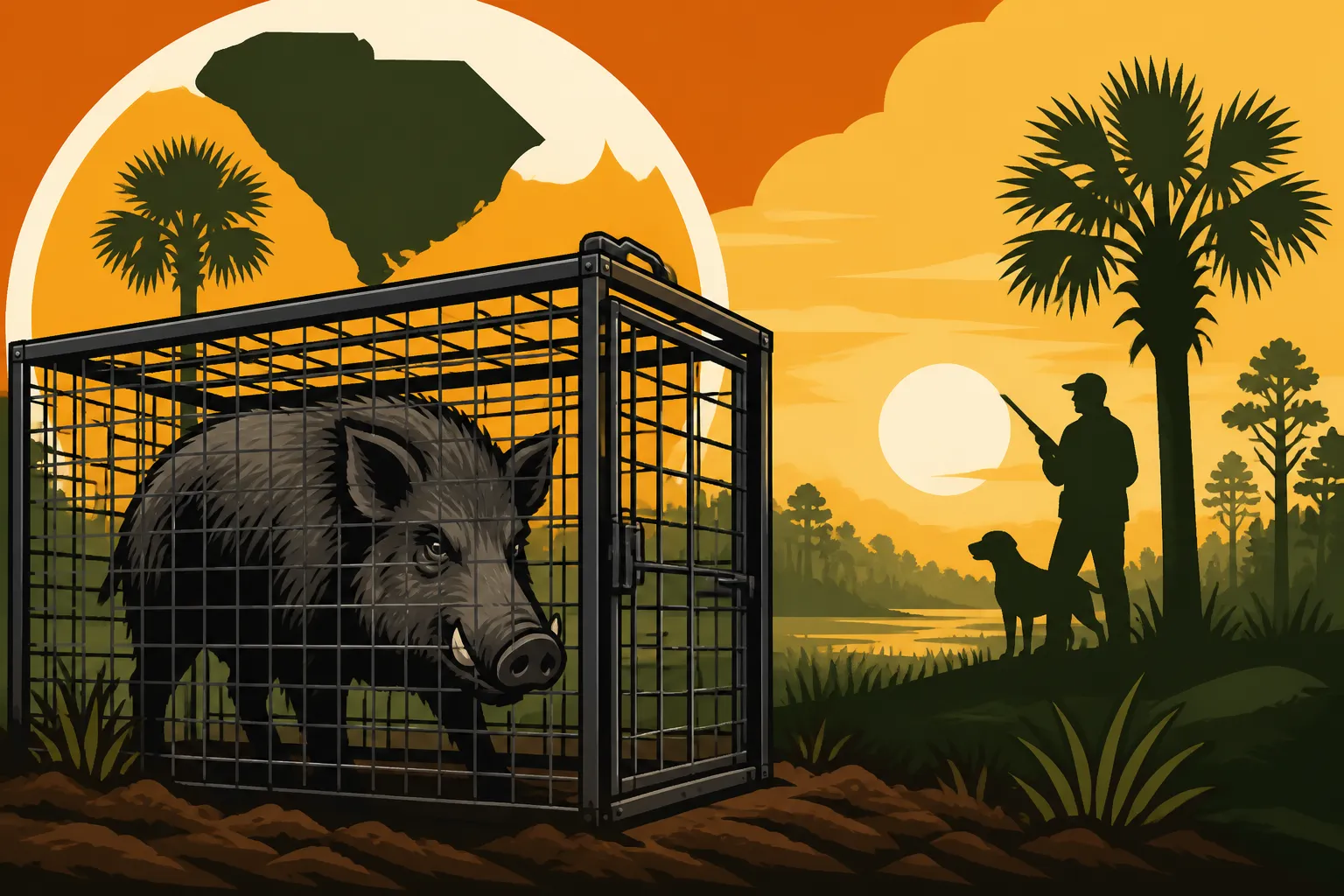
Corral traps are often considered the gold standard for serious hog control. These are large enclosures, typically round or square, made from heavy-duty hog panels or cattle fencing, often standing 5-6 feet tall. The "magic" happens with the gate mechanism, which can vary. Common designs include drop gates, rooter gates, or saloon-door style gates, all designed to allow hogs to enter freely but prevent them from exiting once triggered. The real genius of a well-designed corral trap is its ability to capture entire sounders – sometimes a dozen or more hogs at once. This multi-catch capability is what makes them such a worthwhile investment for landowners facing significant hog numbers. By setting up a large bait site within the corral, often using soured corn or specific attractants, you can draw in multiple generations of hogs, conditioning them to enter the enclosure to feed over several days or weeks before you finally set the trigger. Modern systems, like those you might find integrated with a GoHunt mapping system for optimal placement, can even include remote-triggered gates, allowing you to watch the hogs enter via trail camera and trigger the gate from your phone, ensuring you capture the maximum number.
Box Traps: Smaller Scale Solutions
Box traps, as their name suggests, are smaller, self-contained units, typically built from steel mesh or heavy lumber. They're usually around 3-4 feet wide, 6-8 feet long, and 3-4 feet high. These traps are designed to capture one to a few hogs at a time, making them a good option for smaller properties, areas with lower hog density, or situations where you might only need to target specific individuals. The mechanism is usually a trip plate or a suspended bait trigger that causes a spring-loaded or gravity-fed door to drop once a hog enters and engages it. While they don't offer the massive catch potential of a corral trap, box traps are much more portable and easier to deploy in tight spots or areas with limited access. They can be particularly effective if you're dealing with a nuisance hog that's consistently hitting a specific food plot or garden, and you can't justify the larger investment or footprint of a corral. When considering costs, remember to factor in the longevity and transportability – a well-built box trap can last for many years, making it a sound long-term buy.
Snares and Drop Nets: Specialized Tools
Beyond the more common corral and box traps, there are specialized tools like snares and drop nets. Snares, for example, are simple cable loops that are set in hog trails or fence crossings. When a hog passes through, the snare tightens around its neck or leg. While they are relatively inexpensive and easy to deploy, snares require careful placement and frequent monitoring to be effective and humane. They also typically only catch one hog at a time and are not suitable for all locations or ethical considerations. Drop nets, on the other hand, are large nets suspended over a baited area, designed to be dropped manually or remotely when a sounder is feeding underneath. This method requires a significant investment in equipment, active monitoring, and a team to quickly process the captured animals. It's often used in research or by professional hog removal teams for maximum impact on a specific spot. Neither snares nor drop nets are typically the first choice for the average landowner looking for a hands-off, continuous trapping solution, but they serve their purpose in very specific scenarios. For a more detailed look at various control methods, including trapping, check out Trapping South Carolina Feral Hogs.
Here's a quick comparison of common trap types:
| Trap Type | Key Feature | Capacity | Portability | Ideal Use Case | Pros | Cons |
|---|---|---|---|---|---|---|
| Corral Trap | Large enclosure with multi-catch gate | High (whole sounder) | Low (semi-permanent) | High hog density, large properties | Captures many hogs, highly effective | High initial cost, less portable |
| Box Trap | Self-contained, single or small group catch | Low-Medium (1-3 hogs) | Medium (movable) | Smaller properties, targeted nuisance hogs | More portable, lower cost than corral | Limited capacity, can become trap-shy hogs |
| Snares | Simple cable loop | Low (1 hog) | High (very portable) | Specific trails, cost-effective | Inexpensive, discreet | Requires constant monitoring, less humane |
| Drop Net | Large net suspended over bait | High (whole sounder) | Low (requires setup) | Research, specialized removal teams | Captures many hogs, quick removal | High cost, requires active crew to deploy |
Key Features That Make a Trap "Worth the Investment"
When you're shelling out your hard-earned money for a hog trap, you want to know it's going to perform, last, and actually solve your problem. The real value isn't just in the initial purchase price, but in its long-term effectiveness, durability, and how easy it is to manage. Skipping on quality here can lead to constant repairs, wasted time, and ultimately, more frustrated days dealing with the same old hog issues. Think of it as investing in an actual solution, not just a piece of equipment.
Durability and Construction Materials
A feral hog is a powerful, determined, and often destructive animal. Any trap you invest in must be built to withstand their attempts to escape. This means looking for robust construction materials. Heavy-gauge steel panels or welded wire mesh are far superior to thinner, lighter options that hogs can bend, break, or simply root under. Galvanized steel is excellent for resisting rust, especially in South Carolina's humid environment, which will extend the life of your trap considerably. Think about the gate mechanisms too – they should be made from thick, reinforced steel and operate smoothly without binding, even after a hog has slammed into it a few times. Don't underestimate the importance of solid anchoring systems, whether you're using rebar stakes, earth anchors, or simply burying the bottom edge of the panels. A hog that manages to lift or push its way under a weak fence will teach other hogs to do the same, making your trap ineffective. Investing in high-quality materials upfront means fewer repairs, less downtime, and a trap that genuinely lasts, which is crucial for tackling a long-term problem like hogs.
Trap Design and Efficiency
Beyond raw strength, the design of the trap plays a huge role in its efficiency. For corral traps, consider the entryway. A "walk-through" design where hogs feel comfortable entering from multiple points and the gate mechanism blends in is often more effective than a single, obvious entrance that might make hogs wary. Gates that close quickly and securely are paramount. Rooter gates, which lift when a hog roots against a bar inside, or saloon-door gates that swing inwards are common and effective. For smaller box traps, the trigger mechanism needs to be sensitive enough to be activated by a smaller pig but robust enough to hold a large boar.
Also, think about the overall footprint and how it integrates into the landscape. Can you camouflage it effectively? Can hogs approach it from all angles to become comfortable baiting? The goal is to make the trap as inviting and natural as possible during the pre-baiting phase, then as inescapable as possible once the gate drops. Some of the more advanced trap designs incorporate remote monitoring, which allows you to watch the action unfold and trigger the trap at the optimal moment, maximizing your catch. This kind of technology can be a game-changer, reducing unnecessary trips to the trap and ensuring you catch the whole sounder.
Smart Trapping Technology
In today's world, "smart" technology isn't just for our homes; it's making its way into the hunting and wildlife management sphere, and hog trapping is no exception. This is where brands like GoHunt really shine. Modern hog traps, especially the more sophisticated corral systems, can be integrated with cellular cameras and remote gate triggers. Imagine this: you've got your corral trap set up on your property near Sumter, heavily pre-baited with soured corn. Instead of checking it every morning, you get real-time alerts on your phone from a cellular trail camera positioned to watch the trap. You see a full sounder of hogs enter the trap, feeding contentedly. With a quick tap on your GoHunt app or a related trapping interface, you can remotely drop the gate, securing the entire group without ever having to set foot near the trap until it's time for dispatch. This not only saves you countless hours of travel and monitoring but also ensures you capture the maximum number of animals when the time is right. It reduces human disturbance around the trap site, keeping hogs from becoming trap-shy, and allows for precise control. This level of automation and efficiency is a significant leap forward and makes a strong case for investing in these advanced systems.
Setting Up and Managing Your Hog Trap for Success
Having a great hog trap is only half the battle; the other half is knowing how to use it effectively. A poorly placed or improperly managed trap, no matter how well-built, will yield disappointing results. This isn't just about throwing some bait in and hoping for the best; it's a methodical process that requires patience, observation, and a bit of cunning to outsmart these intelligent animals. The real return on your investment comes from consistent successful captures.
Strategic Placement and Pre-Baiting
The first crucial step to success is strategic placement. Hogs are creatures of habit, often following consistent travel corridors between bedding areas, water sources, and feeding grounds. Use your knowledge of the land, along with scouting tools and even Scouting With the Go Outdoors SC App, to identify these patterns. Look for fresh tracks, rooting, and rubs along creeks, swamp edges, and field perimeters. Placing your trap directly in one of these high-traffic areas, or at a natural funnel point, dramatically increases your chances of success.
Once your trap is in place, the pre-baiting phase begins – and this is absolutely critical. Do not set the trigger immediately. Instead, open the gate (or secure it in an open position) and begin placing generous amounts of bait, such as soured corn, inside the trap. Continue baiting for several days, or even weeks, allowing the hogs to become completely comfortable entering and exiting the trap to feed. They need to develop a routine of feeding inside the enclosure without consequence. This conditioning process builds trust and ensures that when you finally set the trigger, the entire sounder will confidently walk into the trap. Skipping this step is one of the most common reasons traps fail to perform, as wary hogs will often investigate a new structure but won't commit to entering if they sense danger.
Regular Monitoring and Maintenance
Even with the best placement and pre-baiting, a hog trap isn't a "set it and forget it" solution. Regular monitoring and maintenance are essential for long-term success. Check your trap daily, if possible, either in person or through a cellular trail camera system. This allows you to identify when hogs are consistently using the trap and when it's the opportune time to set the trigger. It also lets you check bait levels, identify any damage to the trap from hogs trying to escape, or spot any non-target animals that might have wandered in. For instance, sometimes a deer or a curious bear might investigate, and you'll want to address that without causing harm.
Maintenance is equally important. Keep the trap clean of excessive mud or debris that could impede the gate mechanism. Regularly inspect all welds, hinges, and panels for signs of wear or damage. Rust can be a real issue in our humid South Carolina environment, so consider painting or treating any bare metal. By keeping your trap in top working order, you ensure its longevity and continued effectiveness. A well-maintained trap is a safe trap for both you and the animals, ensuring your investment continues to pay off by helping you manage the pervasive feral hog problem in South Carolina. For more tips on managing hog populations, consider strategies like Hunting South Carolina's Year-Round Feral Hogs as part of a comprehensive approach.
Disclaimer
This article is for general informational purposes only and does not constitute professional advice. Laws, prices and regulations vary by location and change over time. Consult a qualified professional for guidance on your specific situation.