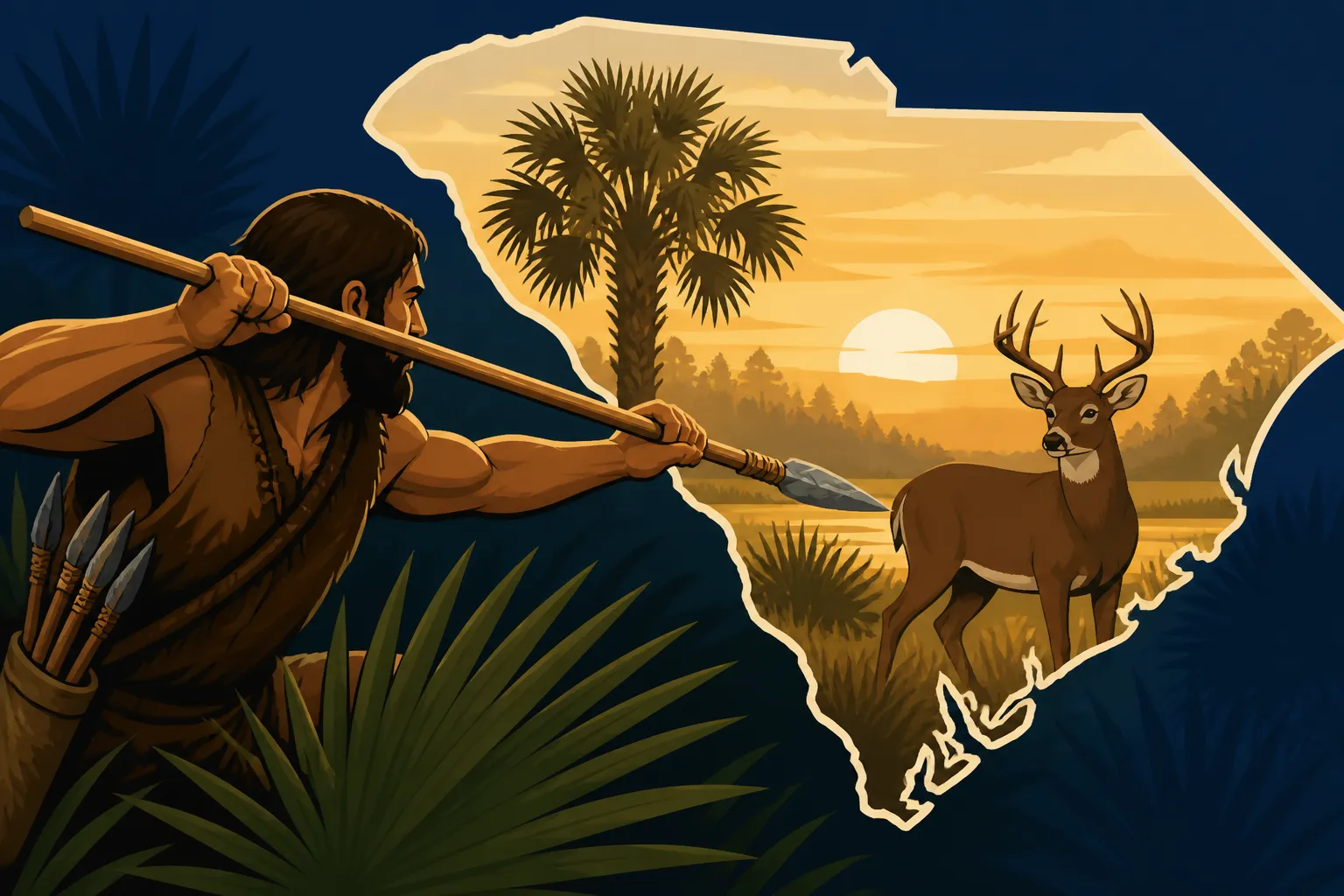
South Carolina Primitive Weapons Tactics
For many hunters in South Carolina, the primitive weapons season can feel like a high-stakes chess match against nature, where every decision matters and second chances are rare. It's a challenging but incredibly rewarding pursuit that demands patience, precision, and a deep understanding of your equipment and the local environment. This guide is here to walk you through the nuances of primitive weapons hunting, helping you maximize your success in the field.
Understanding South Carolina's Primitive Weapons Season
Stepping into the woods during South Carolina's primitive weapons season offers a unique sense of tradition and challenge that you just don't get during the general firearms season. It’s a chance to slow down, sharpen your skills, and connect with the hunting heritage in a more profound way. But before you head out, it's crucial to understand exactly what "primitive weapons" entails in the Palmetto State and how these seasons are structured.
What Qualifies as a Primitive Weapon
When we talk about primitive weapons in South Carolina, we're primarily looking at muzzleloaders and certain types of archery equipment. It’s not just any old gun or bow; there are specific rules. For muzzleloaders, we’re talking about those firearms loaded with powder and bullet from the muzzle, single-shot, and typically using an exposed ignition system like a percussion cap or flintlock. This means no breech-loading modern rifles with primitive weapon calibers, and generally, no scopes that offer excessive magnification if you’re using them during a designated muzzleloader-only portion of the season. Always double-check the latest regulations from the South Carolina Department of Natural Resources (SCDNR) to ensure your setup is compliant. It's easy to accidentally slip into a gray area, and nobody wants a citation after a successful hunt.
For archery, this covers traditional bows (longbows, recurves) and compound bows. Crossbows also fall under the archery umbrella for deer hunting in South Carolina, though some states have different rules. The key across all these is the focus on a more direct, skill-based approach to hunting. This isn't about long-range precision; it's about getting close, making a clean shot, and truly testing your woodsmanship. This requirement for proximity adds a whole new layer of excitement and difficulty, pushing you to become a better hunter overall.
Navigating Season Dates and Zones
One of the biggest advantages of hunting with primitive weapons in South Carolina is that these seasons often open earlier than the general firearms season, giving you an exclusive crack at less-pressured deer. Imagine being in the woods weeks before the rifle hunters descend, with deer still on fairly consistent patterns! However, South Carolina is divided into several South Carolina's Four Game Zones, and each zone has its own specific primitive weapons dates, which can be a bit confusing if you’re not used to it.
For example, the coastal zones typically open earlier for archery and often have a dedicated primitive weapons period before the modern gun season really kicks off. In contrast, the Upstate zone, particularly Zone 1, usually has a later start for all seasons, including primitive weapons. It's vital to know which zone you're hunting in and to check the specific primitive weapons dates for that zone. A good resource is the Go Outdoors SC app, where you can look up current regulations and season dates. Missing a prime hunting window because you misread the calendar for Zone 4 versus Zone 1 is a frustrating mistake you only want to make once. This early access means you might encounter deer still in their summer patterns, offering unique opportunities if you've done your preseason scouting diligently.
Muzzleloader Mastery for South Carolina Deer
Muzzleloader hunting is a beautiful blend of old-school tradition and modern technology, especially here in South Carolina. It demands a different kind of discipline, knowing you often only get one shot. This single-shot reality means precision in your equipment, loading, and shot placement is paramount. It’s not just about pulling a trigger; it's about executing a deliberate process that culminates in a clean, ethical harvest.
Choosing the Right Muzzleloader and Caliber
When it comes to selecting a muzzleloader for South Carolina deer, you've got options, each with its own quirks and advantages. Traditionalists might lean towards flintlocks or percussion cap rifles, appreciating the historical authenticity and challenge. These can be incredibly rewarding but demand more attention to detail, especially in humid conditions where powder can easily get damp. More commonly, you'll find hunters using modern in-line muzzleloaders, which are designed for better accuracy and reliability, often resembling a modern rifle in terms of ergonomics and sighting options. Brands like CVA, Traditions, and Thompson/Center offer excellent in-line models that are popular for their consistency.
As for caliber, the .50 caliber is overwhelmingly popular for deer hunting, offering a good balance of power and recoil. You'll also see .45 caliber, which can be very effective, especially with modern sabot projectiles. The choice of bullet is just as important. Sabots, which encase a smaller bullet (like a .40 or .45 caliber) in a plastic sleeve, offer higher velocities and flatter trajectories, making them suitable for slightly longer shots up to 150 yards with practice. Conical bullets, which are solid lead projectiles designed to fit the bore directly, typically offer greater knockdown power at closer ranges but have a more rainbow-like trajectory. Consider your typical hunting scenario: if you're in thick lowcountry swamps or dense pine forests, a heavy conical might be ideal. If you're hunting more open agricultural fields, a sabot could give you that extra reach.
Loading and Shooting Techniques
The unique loading process is what truly defines muzzleloader hunting, and mastering it is critical for consistent accuracy and safety. First, you'll need the right powder. Black powder substitutes like Pyrodex, Triple Seven, or Hodgdon 777 are popular and less corrosive than traditional black powder. Always start with the manufacturer's recommended charge; typically, deer hunters will use 90 to 120 grains by volume. Never exceed maximum loads! After pouring the powder down the barrel, seat your bullet with a ramrod. This needs to be a firm, consistent push all the way down until the bullet is seated against the powder, with no air gap. An air gap can lead to dangerous pressure spikes and is a serious safety hazard.
Practice is paramount, not just for shooting accuracy, but for familiarizing yourself with the loading rhythm. On the range, after each shot, use a bore brush and patches to clean the barrel. This prevents fouling buildup, which can make subsequent loading difficult and affect accuracy. South Carolina's notorious humidity can be a real enemy to muzzleloaders. Keep your powder and primers dry! Many hunters use waterproof containers for their powder and keep a few extra percussion caps or 209 primers (depending on your rifle) in a sealed bag. A common frustration is a misfire in the stand due to damp components, ruining a perfect opportunity. Being able to load smoothly and quickly, even with cold, shaking hands, is a skill that only comes from repeated practice.
Scouting and Stand Placement for Muzzleloaders
Because muzzleloaders are inherently shorter-range tools compared to modern rifles, your scouting and stand placement tactics need to be laser-focused on getting deer in close. Forget those 300-yard shots; you're aiming for 75 yards or less, ideally within 50. This means you need to identify bedding areas, primary food sources, and the precise travel corridors deer use between them. Look for pinch points, natural funnels created by terrain features, creek crossings, or changes in vegetation density. A saddle on a Sumter Forest ridge or a narrow strip of high ground between two lowcountry swamps can be a gold mine.
When placing your stand, think about the wind direction and thermals, especially in the mornings and evenings when deer are most active. You need the wind to carry your scent away from the deer's likely approach. Consider setting up on the downwind side of a known travel route or feeding area. If you’re hunting early season during warmer weather, remember that deer often bed in thicker cover during the day and move more slowly. Warm-Weather Sitting Strategy in South Carolina can be critical. Your goal is to be invisible and silent, allowing deer to come into your effective range without ever knowing you're there. Using GoHunt or other mapping apps to identify these natural choke points before the season can give you a significant advantage.
Archery and Crossbow Strategies for the Primitive Season
Archery hunting, whether with a compound, recurve, or crossbow, epitomizes the "primitive" challenge in South Carolina's early season. It's an intimate pursuit that demands stealth, precision, and an almost intuitive understanding of deer behavior. Getting within bow range, especially of a wary whitetail, is an accomplishment in itself, and it often provides the earliest deer hunting opportunities in the state.
Bow Selection and Setup for Success
Choosing the right bow is a deeply personal decision, but success hinges on a setup you can shoot accurately and consistently. Compound bows are the most popular, offering adjustable draw weights, let-off, and excellent accuracy. Look for a draw weight you can comfortably manage for multiple shots, as fatigue can set in quickly in the field. A common draw weight for deer is 60-70 pounds, but many hunters are highly effective with less. Traditional archers, with their recurves and longbows, face a steeper learning curve but gain an incredible sense of satisfaction from their simplified setups. Regardless of bow type, ensuring it's properly tuned by a reputable pro shop is non-negotiable.
Arrow selection is equally critical. You want an arrow that's matched to your bow's draw weight and length, striking a balance between speed and kinetic energy. Broadheads are where the magic happens; fixed-blade broadheads are known for their strength and reliability, while mechanical broadheads offer a larger cutting diameter upon impact, often leading to bigger blood trails. Practice extensively with your chosen broadheads, as they can fly differently than field points. Remember, your goal is a clean pass-through for maximum blood loss and ethical harvest. An improperly tuned bow or poorly matched arrow can lead to heartbreaking misses or, worse, wounded game.
Crossbow Specifics and Advantages
Crossbows have become increasingly popular in South Carolina, and for good reason. They offer many advantages, particularly for hunters who may struggle with the physical demands of a traditional bow or those looking for a slightly less demanding learning curve. The primary benefit is that you can cock a crossbow and then wait, ready to shoot, for an extended period, which is a huge plus when a deer might approach slowly or pause at an unexpected spot. This "hold time" can be a game-changer when targeting wary whitetails.
Legally, crossbows are allowed during the entire archery season in South Carolina, which gives hunters a lot of flexibility. If you're curious about the specifics, you can dive into the Crossbow Rules During South Carolina Archery Season for all the details. They also tend to be highly accurate out of the box, with many models offering rifle-like precision out to 50-60 yards, depending on the setup and shooter. However, don't mistake ease of use for a license to take long shots. Just like with a vertical bow, understanding your effective range and sticking to it is crucial for ethical hunting. Consider shot distances carefully, especially in the dense woods of the Lowcountry or the thick underbrush of the Midlands.
Close-Range Engagement and Patience
Whether you're slinging arrows from a compound or launching bolts from a crossbow, primitive archery hunting is all about getting close – ideally within 30 yards. This is where your woodsmanship truly shines. Every rustle of leaves, every snapped twig, every shift of the wind becomes a critical detail. You're not just waiting for a deer; you're waiting for the perfect shot opportunity. This means passing on marginal shots, even if it feels agonizing. It means being patient enough to let a deer move into a clear shooting lane, quartering away just right, exposing its vitals.
Treestand and ground blind tactics are your bread and butter here. A well-placed treestand gives you an elevated advantage, helping to keep your scent dispersed above deer and offering a better view. Ground blinds, particularly in open field edges or along dense cover, can provide excellent concealment, especially if brushed in properly. The key is to minimize movement. Even the slightest twitch can spook a deer that's within spitting distance. It’s a test of nerves and discipline, but when that moment comes, and you make a clean, ethical shot, the satisfaction is unlike any other hunting experience.
Essential Gear and Mindset for Primitive Weapons Hunting
Primitive weapons hunting in South Carolina is as much about your gear as it is about your mental fortitude. The challenges of limited range, single-shot opportunities, and often warm, humid weather demand careful planning and the right equipment to ensure a successful and ethical hunt. It’s about being prepared for anything the woods can throw at you, both before and after the shot.
Packing Smart for the Backcountry
When you’re relying on a primitive weapon, every item in your pack needs to earn its spot. You’re not just going out for a walk; you’re venturing into potentially remote areas where reliability is key. A good mapping app, like the one offered by GoHunt or the Scouting With the Go Outdoors SC App, is indispensable for navigating public lands like Francis Marion or Sumter National Forests. You'll want offline map capabilities, as cell service can be spotty. Beyond navigation, think about what's critical for that single, precious shot.
For muzzleloaders, this means having extra primers or flint, a capper, a speed loader with pre-measured powder and bullet, and a cleaning jag and patches for a quick field swab if needed. Bowhunters need extra broadheads (never know when you might ding one!), a sharp knife, and perhaps a small set of Allen wrenches for minor adjustments. Everyone should carry a first-aid kit, a headlamp for walking out in the dark, plenty of water, and some high-energy snacks. Lightweight layering clothing is also crucial given South Carolina's often fluctuating temperatures, even during the "cooler" primitive weapons seasons. Don't forget bug repellent, especially for early archery season, as mosquitoes and gnats can drive you crazy and compromise your focus.
Overcoming Challenges and Building Confidence
The primitive weapons season often comes with its own set of unique frustrations. The limited range of your weapon means you might have deer walk by just out of reach, forcing you to exercise extreme patience. A single misfire from a muzzleloader can mean your hunt is over before it truly began. And with archery, a slight deflection or misjudgment of yardage can lead to a heartbreaking miss. These moments can be incredibly disheartening, but they're part of the journey.
Building confidence in primitive weapons hunting is about embracing these challenges. It starts with relentless practice on the range, knowing your weapon's capabilities inside and out. It’s also about developing a resilient mindset – understanding that not every hunt will end with a harvest, but every hunt offers a learning opportunity. When things go wrong, don't get discouraged. Analyze what happened, learn from it, and carry that lesson into your next sit. The mental game is just as important as the physical one, and the satisfaction of overcoming these hurdles and finally making a clean, ethical shot with your primitive weapon is an unparalleled feeling.
Post-Shot Protocols and Recovery
The moment after the shot with a primitive weapon is often filled with a mix of adrenaline and anxiety. Unlike a modern rifle, where the deer's reaction can be immediate, with a muzzleloader or bow, the deer might not react as dramatically right away. It's crucial to resist the urge to immediately jump out of your stand. Give the deer time – at least 30 minutes for a good shot, and often several hours (or overnight) for a marginal shot or if you suspect a liver hit. This waiting period is agonizing but vital for a successful recovery.
Once you begin tracking, look for blood sign, broken branches, or disturbed leaves. Pay close attention to the color and consistency of the blood to help determine the type of hit. A bright, frothy blood indicates a lung hit, while dark, thick blood might suggest a liver shot. South Carolina's dense cover and humid conditions can make tracking incredibly difficult, especially as the day warms up. If you're tracking in the dark, having a powerful headlamp and a plan for Blood Trailing After Dark in South Carolina is essential. And once you recover your deer, swift action is needed for meat care, particularly in the often-warm South Carolina weather. Knowing how to efficiently perform Field Dressing a Deer in Warm Weather will prevent spoilage and ensure delicious venison for your table.
Public Land Primitive Hunting Hotspots
South Carolina offers a surprising amount of public land accessible to primitive weapons hunters, from vast national forests to numerous Wildlife Management Areas (WMAs). These lands provide incredible opportunities, but they also come with their own set of rules and unique challenges, mainly hunting pressure. Knowing where to go and how to navigate these areas can significantly increase your chances of success.
Navigating Wildlife Management Areas (WMAs)
South Carolina's Wildlife Management Areas, or WMAs, are managed by the SCDNR and offer diverse habitats across the state. They are often some of the best-managed lands for deer, but they come with specific regulations that can differ from private land and even from one WMA to another. Many WMAs, especially those with high deer populations, will have primitive weapons seasons that run concurrently or just ahead of their general gun seasons. This can include specific archery-only periods or muzzleloader-only days.
It’s absolutely critical to consult the SCDNR regulations for the specific WMA you plan to hunt. Some WMAs require special quota permits obtained through a draw system, while others are open access. For a general overview, check out South Carolina Wildlife Management Areas. For instance, parts of the Francis Marion National Forest operate under WMA rules, such as Santee WMA or Hellhole WMA, offering extensive tracts of lowcountry swamp and pine. These areas can be incredibly productive for primitive weapons hunters willing to put in the legwork and brave the thick cover. Scouting ahead of time, using mapping tools to identify access points, funnels, and potential bedding areas, is crucial to find success on these popular public lands.
National Forests Opportunities
Beyond specific WMAs, South Carolina boasts two extensive National Forests: Francis Marion National Forest in the Lowcountry and Sumter National Forest in the Upstate and Midlands. These forests offer vast tracts of land where primitive weapons hunting can be incredibly rewarding. The sheer size of these areas allows hunters to get away from the crowds and find unpressured deer, especially if you're willing to hike a bit deeper.
Francis Marion National Forest, with its sprawling swamps, dense pine plantations, and maritime forests, provides excellent opportunities for archery and muzzleloader hunters. Tactics often involve setting up near water sources, in transition zones between different timber types, or along the edges of clear-cuts where new browse is abundant. For instance, Treestand Setups in Francis Marion National Forest often involve strategically placing your stand to intercept deer moving through the dense undergrowth. Sumter National Forest, spanning the Piedmont and Blue Ridge regions, offers a different challenge with its rolling hills, mature hardwoods, and steeper terrain. Here, understanding topography is key. Tactics like Still-Hunting Sumter Forest Ridges can be very effective, slowly moving through the timber, pausing to glass, and listening for deer movement. Look for oak ridges that are dropping acorns early in the season, as these can be deer magnets.
Scouting for Success on Public Ground
Scouting is always important, but it becomes non-negotiable when primitive weapons hunting on public land. You need to identify key areas where deer are actively feeding, bedding, and traveling. This involves hitting the woods before the season starts, looking for fresh rubs, scrapes, tracks, and droppings. Use mapping applications like GoHunt to analyze aerial photos, looking for subtle terrain features like points, saddles, funnels between two swamps (a classic strategy for Hunting a Funnel Between Two Swamps), or areas of thick cover that might serve as bedding sanctuaries.
On public lands, especially during primitive weapons season, the early bird truly gets the worm. The goal is to find those less-pressured areas that other hunters overlook. This might mean walking a mile or more from the nearest access road, or it could mean focusing on overlooked pockets of cover right off a main trail. Don't be afraid to put in the miles, and remember that primitive weapons often mean shorter shot opportunities, so identifying those close-quarters ambush spots is paramount. The less pressure a deer feels, the more likely it is to move during daylight hours, offering a primitive weapons hunter the advantage they need.
Comparing Primitive Weapon Options
Choosing the right primitive weapon is a big part of your South Carolina hunting strategy. Here's a quick comparison to help you weigh your options:
| Weapon Type | Effective Range (Yards) | Learning Curve | Physical Demand | Legal Season Advantage | Best For |
|---|---|---|---|---|---|
| Muzzleloader | 50-100 | Moderate | Low-Moderate | Often opens before general gun season, more range than bows. | Hunters seeking a blend of tradition & range. |
| Compound Bow | 20-40 | Moderate-High | Moderate | Longest season, earliest opener. | Stealthy, close-range encounters. |
| Recurve/Longbow | 10-25 | High | Moderate-High | Same long season as compound bows. | Ultimate traditional challenge, very close quarters. |
| Crossbow | 30-60 | Low-Moderate | Low | Same long season as vertical bows, excellent accuracy. | Hunters needing stability, or longer hold time. |
Disclaimer
Hunting is an inherently dangerous activity. Always prioritize safety, adhere to all South Carolina Department of Natural Resources regulations, and ensure you have proper training and licensure before entering the field. This guide is for informational purposes only and does not supersede official hunting laws or safety protocols.