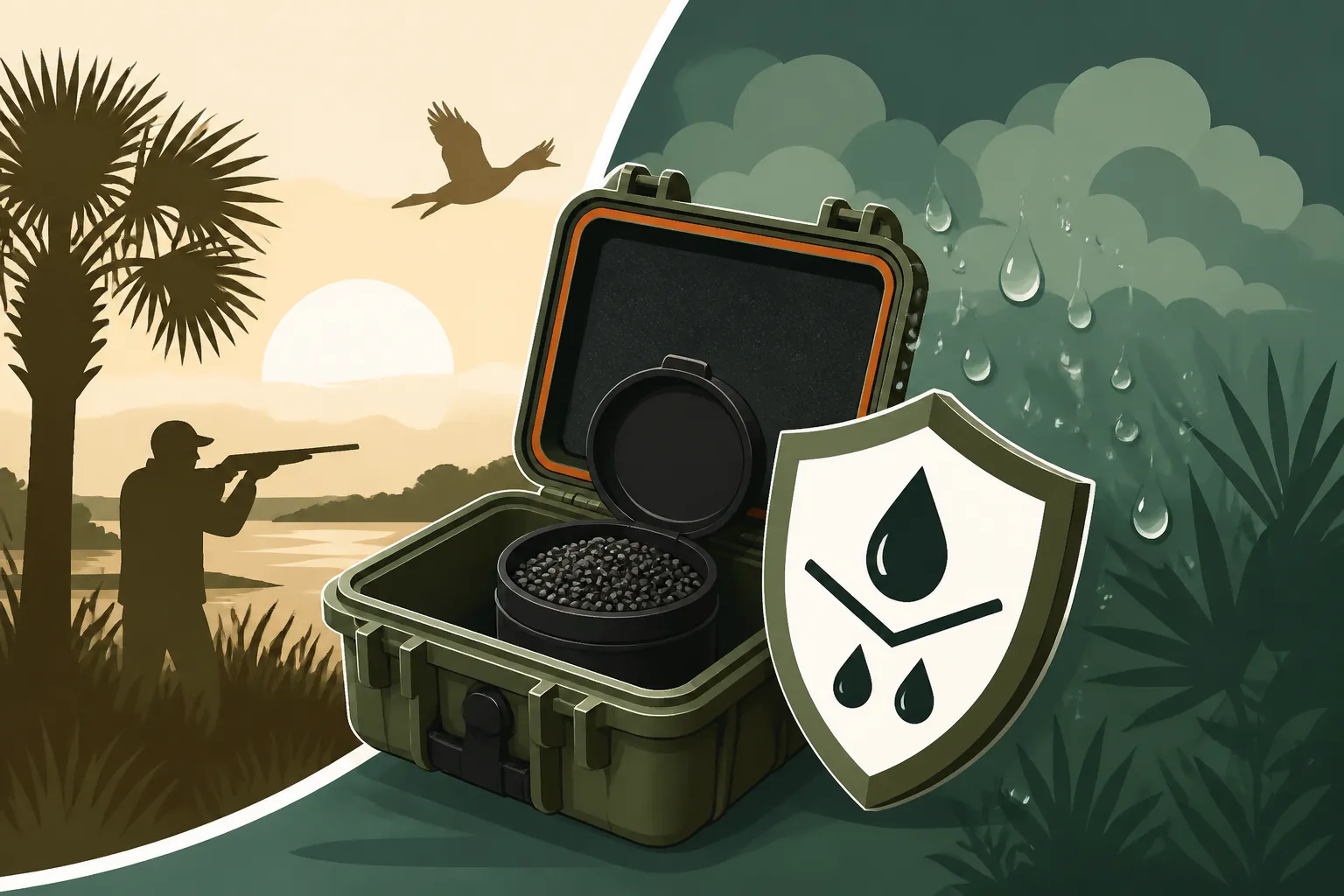
Keeping Powder Dry in South Carolina Humidity
There’s nothing quite like the feeling of pulling the trigger on your muzzleloader, only to hear a sickening click instead of the roar you expect. In South Carolina, with our notorious humidity, this isn't just a frustrating fluke; it's a very real challenge many black powder hunters face. This guide is here to walk you through practical, real-world strategies to keep your powder dry and your muzzleloader ready to fire, no matter how thick the coastal fog or how damp the upstate woods.
The Challenge of Humidity for Muzzleloaders
South Carolina's climate is beautiful, but it's no friend to black powder. From the swampy lowcountry to the misty Upstate mornings, moisture is a constant threat. Understanding why humidity is such a problem is the first step to effectively combating it. It's not just about a sudden downpour; it's the insidious, creeping dampness that can ruin your hunt before it even begins.
How Moisture Affects Black Powder
Black powder, and its modern substitutes, are inherently hygroscopic. That's a fancy word for saying they love to absorb moisture from the air. Think about leaving salt out on a humid day – it clumps, right? Black powder does the same thing, but with far more severe consequences. When powder absorbs moisture, its chemical composition changes, making it less stable and less efficient. This can lead to slow ignition, misfires, or even complete failures to ignite. A weak charge isn't just disappointing; it can result in a poorly placed shot or a lost animal, which is the last thing any ethical hunter wants.
Imagine you've been sitting patiently in a stand near a Hunting a Ridge-Top Saddle for Rutting Bucks after a heavy morning dew. The air is still, but you can feel the dampness clinging to everything. Your carefully measured powder charge inside the barrel has been slowly, almost imperceptibly, drawing in that moisture. What started as a perfectly potent load is now a compromised one, losing its punch and reliability. This silent degradation is often the culprit behind those dreaded clicks.
The Impact on Primers and FFFG
It's not just the main powder charge you need to worry about; the entire ignition system is vulnerable. Primers, whether percussion caps or 209 shotshell primers, contain their own sensitive compounds that are also susceptible to moisture. A damp primer might not spark with enough energy to ignite even a dry powder charge, leaving you with a hangfire or, worse, a complete dud. Even a slight weakening of the primer's spark can delay ignition, which can be enough to throw off your shot at a moving target.
For those using FFFG (or similar finer-grained powders) in their pan or breech for a flintlock or a percussion underhammer, the problem is even more pronounced. Finer powders have more surface area, making them absorb moisture even faster. A wet flash hole or pan powder on a flintlock means you're almost guaranteed a misfire. In South Carolina, where warm, muggy mornings are common even in the cooler hunting months, paying attention to these smaller details is paramount. You need every component of your ignition chain to be bone dry.
Pre-Hunt Preparation and Storage
Preventing moisture from reaching your powder starts long before you step foot in the woods. Proactive measures in how you store and prepare your muzzleloader and its components are critical, especially when you know the South Carolina weather can be so unpredictable. A little extra effort at home can save a lot of heartache in the field.
Airtight Containers and Desiccants
Your black powder, or substitute, should always be stored in its original, factory-sealed container until you're ready to use it. Once opened, transfer any unused powder into dedicated airtight containers. Glass jars with rubber-sealed lids or high-quality plastic containers designed for chemical storage are excellent choices. To take it a step further, consider adding desiccant packs (like silica gel packets) to these containers. These small packets actively absorb moisture from the air, creating a dry microclimate for your powder. You can often buy rechargeable silica gel packs that change color when saturated, indicating they need to be dried out in an oven before reuse.
When you're loading for a hunt, only measure out the amount of powder you expect to use. Carrying a large powder flask into the field exposes more powder to the elements than necessary. Small, individual pre-measured vials or tubes are a hunter's best friend. These can be sealed tightly and stored in a waterproof pouch, only to be opened moments before loading. This limits exposure and ensures the bulk of your powder remains pristine. Many hunters use small, child-proof plastic pill bottles for this purpose, labeling each with the exact grain weight.
Protecting Your Muzzleloader at Home
Beyond your powder, your actual muzzleloader needs attention. Store your rifle or shotgun in a climate-controlled environment, away from extreme temperature swings and high humidity. A gun safe is ideal, but even a dedicated closet in your home is better than a garage or shed where humidity can fluctuate wildly. Consider placing a dehumidifier in your gun safe or closet, or use larger rechargeable desiccant cans. Wipe down your muzzleloader, especially metal surfaces, with a silicone-treated cloth or a light coat of gun oil regularly to create a barrier against moisture.
Before a hunt, pay special attention to the bore and breech plug. Ensure they are meticulously clean and completely dry. Any residual moisture from cleaning can immediately compromise your powder. After cleaning, some hunters will run a dry patch or two down the bore, followed by a lightly oiled patch, then another dry patch to ensure no oil residue remains that could contaminate the powder. For percussion guns, removing the breech plug and ensuring the flash hole is clear and dry is paramount. You might even use a small amount of compressed air to blow out any unseen moisture. Choosing a Muzzleloader for a Warm Opener is crucial, and part of that choice is knowing how well your particular model seals against the elements.
Field Tactics for Wet Weather
Once you’re out in the South Carolina woods, the game changes. You can’t control the weather, but you can certainly control how you react to it. Protecting your muzzleloader and powder in real-time, especially during a Warm-Weather Sitting Strategy in South Carolina, becomes a constant vigilance. Every little bit of protection helps ensure that when that buck steps out, you’re ready.
Protecting the Muzzle and Breech
The two most critical points on your muzzleloader for moisture intrusion are the muzzle and the breech/primer area. A simple piece of electrical tape over the muzzle is a time-tested trick. It keeps rain, dew, and condensation out of the bore without interfering with the bullet's flight if you have to shoot through it. Just be sure to test this with your specific rifle setup on the range first to confirm there's no impact on accuracy. Some hunters prefer small, elastic covers or even dedicated muzzle caps designed for this purpose. Whatever you choose, make sure it's secure but easily removed or shot through.
For the breech, especially on percussion rifles, a small piece of tape over the percussion cap can offer a surprising amount of protection. For 209 primer systems, ensure the breach plug and primer pocket are tight and sealed as well as possible. Many modern inline muzzleloaders are designed with weather resistance in mind, but even they benefit from extra care. When you’re walking through thick brush or sitting in a stand, keep your muzzleloader pointed slightly downward if possible. This helps prevent rain and condensation from running directly into the bore. Remember, even a single drop of water running down the bore can ruin your hunt.
Quick-Access Powder and Projectile Management
Efficiency and speed are key when you need to reload in damp conditions. As mentioned, pre-measured powder charges in waterproof vials are invaluable. Store these, along with your projectiles and any necessary loading tools (like a bullet starter), in a sealed, waterproof pouch that’s easily accessible in your pack or vest. The less time these components are exposed to the open air, the better. When it's time to load, find as much shelter as possible—under a dense pine tree, your ground blind, or even just turning your back to the wind and rain.
Some hunters even go a step further, carrying their pre-measured charges in sealed plastic tubes that also contain the projectile on top. This "speed loader" concept means you’re just dumping the contents down the barrel and seating the bullet, minimizing exposure. Always remember to reseal any containers immediately after use. If you're hunting with buddies on Deer Drives With Three or Four Hunters, communication about reloading in wet conditions can be vital, ensuring everyone is safe and prepared.
Post-Hunt Care and Maintenance
The hunt isn't truly over until your gear is properly cleaned and stored. This is especially true for muzzleloaders, where neglecting post-hunt care can lead to rust, corrosion, and future misfires. South Carolina's humidity means you can't just set your rifle in the corner and forget about it. Even if you didn't fire a shot, that damp air has been working on your firearm.
Immediate Field Cleaning
Even if you didn't get a shot off, or if you did, a quick field clean is a smart move. Remove the primer (if applicable) and run a couple of dry patches down the barrel to absorb any moisture. If you fired your rifle, a quick swab with a patch dampened with a black powder solvent is a good idea to neutralize corrosive powder residue, especially if you won't be able to do a full cleaning for several hours. This prevents serious pitting and damage to the bore.
Wipe down all external metal surfaces with a dry cloth, then apply a thin layer of protective oil. Pay special attention to areas like sights, the hammer, and any exposed screws. If your stock got wet, wipe it down thoroughly. Don't let your rifle sit in a damp gun case or vehicle overnight. Air circulation is key to drying it out. Many hunters use an old towel to wrap their gun temporarily for the ride home, rather than letting it sit in a sealed, wet case.
Thorough Home Maintenance
Once you're home, a full, thorough cleaning is non-negotiable for a muzzleloader. Disassemble your rifle as per the manufacturer's instructions. Pay particular attention to the barrel, breech plug, and any small internal components like the nipple or flash channel. Use a dedicated black powder solvent to remove all traces of powder fouling, which is highly corrosive when combined with moisture. Clean until patches come out completely white, then follow up with a dry patch to ensure no solvent residue remains.
After cleaning, lightly oil all metal parts, inside and out, with a good quality gun oil to prevent rust. Ensure the bore is well oiled. Reassemble your muzzleloader and store it in a dry, climate-controlled environment, ideally with desiccants, as discussed earlier. Regularly checking your stored muzzleloader, even during the off-season or South Carolina Deer Season Overlap With Small Game, is a good practice. A quick wipe-down and inspection can catch any moisture issues before they become serious problems. Taking these steps will ensure your muzzleloader is always ready for the next hunting season, free from the worries of South Carolina's persistent humidity.
| Muzzleloader Humidity Prevention Checklist | Pre-Hunt Preparation | Field Tactics | Post-Hunt Care |
|---|---|---|---|
| Powder Storage | Airtight containers, desiccant packs, pre-measured vials | Waterproof pouch for vials | Store in dry, climate-controlled area |
| Muzzleloader Storage | Climate-controlled safe/closet, dehumidifier/desiccants | Keep pointed downward if possible | Climate-controlled safe/closet |
| Muzzle Protection | N/A | Electrical tape, muzzle cap | N/A |
| Breech/Primer Protection | Clean/dry flash hole, tight breech plug | Tape over percussion cap, ensure tight seals | Disassemble, clean, oil, reassemble |
| Loading Tools | Clean & dry bullet starter, powder measure | Waterproof pouch, quick access | Clean & dry, store properly |
| External Surfaces | Light oil/silicone wipe | Wipe down any wet surfaces | Thorough clean, oil all metal |
Disclaimer
This article is for general informational purposes only and does not constitute professional advice. Laws, prices and regulations vary by location and change over time. Consult a qualified professional for guidance on your specific situation.