Practical Range in South Carolina Swamp Timber
Anyone who's spent time hunting South Carolina's dense swamp timber knows the feeling: you hear that rustle, catch a glimpse of movement, but the trees are so thick, it's like trying to see through a wall. This guide will walk you through the unique challenges of hunting in such tight quarters and help you determine your practical, ethical shooting range to make confident shots when that moment finally arrives.
Understanding the Unique Challenges of Swamp Timber
Hunting in South Carolina's swamp timber isn't like sitting over a wide-open bean field or glassing a powerline cut in the Upstate. Here, the very landscape itself dictates your strategy, your gear, and most importantly, your effective shooting range. The constant moisture, the thick undergrowth, and the winding sloughs all combine to create a hunting environment that demands a different kind of preparation and mindset.
Navigating Dense Undergrowth and Low Visibility
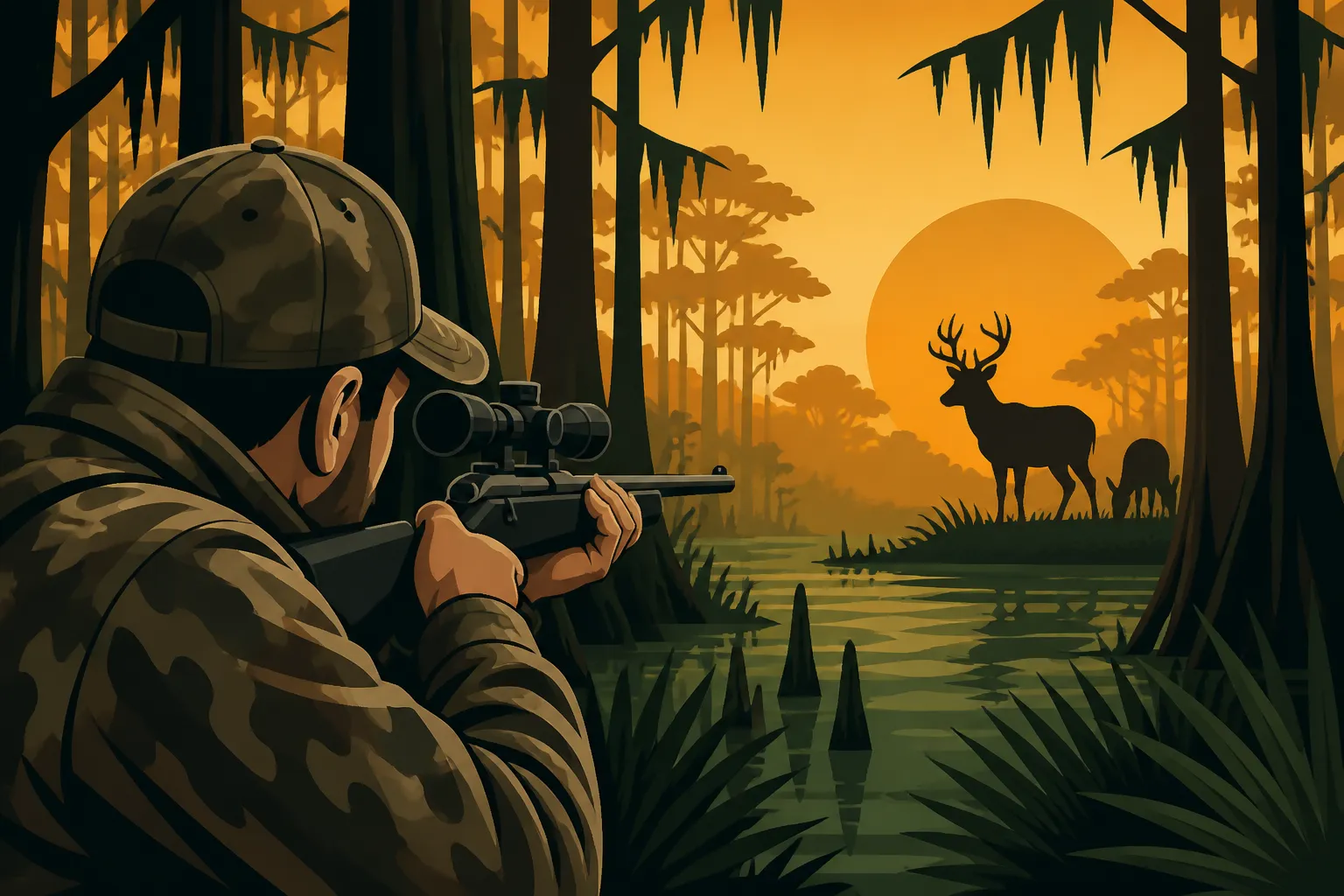
Imagine trying to thread a needle with your eyes closed, and you're getting close to what it feels like to hunt in some of our Lowcountry swamps. The palmettos are shoulder-high, the briars snag at every step, and the cypress knees seem to rise from nowhere. Visibility is often measured in yards, not dozens of yards. This isn't just about spotting a deer; it's about identifying it, ensuring a clear shot lane, and being absolutely certain of your target and what's beyond it. A mature buck might step out at 30 yards, but if there's a tangled mass of kudzu or a dense stand of young pines between you and him, that 30 yards suddenly feels like 100. It's a constant battle against the cover, and knowing your limits in these conditions is paramount.
When you're still-hunting or moving slowly through this kind of terrain, every step has to be deliberate. You're not just trying to be quiet; you're actively searching for those fleeting glimpses of open lanes. It often feels like you're hunting in a series of small, isolated pockets of visibility rather than a continuous landscape. This means your window of opportunity for a shot can be incredibly brief, and the deer might only be visible for a second or two before disappearing back into the thicket. This challenge impacts everything from your choice of weapon to the type of optics you bring, pushing you to rethink what "long range" even means in this specific context. Hunting Lowcountry Swamp Deer offers more insights into the unique challenges of this habitat.
The Impact of Water and Terrain on Sound and Scent
The prevalence of water in swamp timber adds another layer of complexity. Whether it's standing water, winding creeks, or deep sloughs, water influences everything. It mutes sound, making it harder to hear deer moving, but also making your own footsteps more noticeable if you're not careful. The soft, mucky ground can make for quieter walking, but it's also easy to get bogged down or make a splash at the worst possible moment. Recovering a deer from these areas can be an absolute nightmare, which further emphasizes the need for a clean, ethical kill. Recovering a Deer From a Lowcountry Swamp highlights just how tough that can be.
Water also affects scent. Thermals in a swamp can be unpredictable, especially with varying water temperatures and canopy cover. A gentle breeze might swirl and eddy, carrying your scent in unexpected directions, or a sudden thermal inversion could drop your scent right into a bedding area. This means you need to be even more meticulous with scent control, understanding that even the best practices might be compromised by the unique microclimates of a swamp. Moreover, the uneven, often flooded terrain dictates how you can move, where you can set up a stand, and how quickly you can react to a deer's appearance. It's not just about what you can see, but what you can hear and smell, and how the environment manipulates those critical senses.
Estimating Your Effective Range in Dense Cover
Knowing your true effective range in swamp timber is a skill developed through experience, but it starts with a realistic assessment of your capabilities and the limitations of the environment. It's not about how far your rifle can shoot, but how far you can ethically shoot when a deer steps out at a moment's notice, often partially obscured by vegetation.
Defining a "Clear Shot" in Thick Woods
What exactly constitutes a "clear shot" when you're tucked into a palmetto thicket or looking down a narrow lane in cypress timber? It's much more than just seeing the deer. A truly clear shot means having an unobstructed path to the vital organs, without any twigs, branches, or leaves that could deflect your bullet or arrow. In swamp timber, these obstructions are everywhere. A small branch that seems insignificant can be enough to send a bullet tumbling or off course, leading to a wounded animal and a difficult, if not impossible, recovery.
Before you even consider raising your weapon, you need to visually trace the entire path from your muzzle to the deer's vitals. Are there any shadows that could be small branches? Is that really a clear window, or is there a vine hanging in the way? This hyper-focus on the shot lane is critical. It's often surprising how a seemingly open path can have hidden hazards. Take your time, confirm the lane, and if there's any doubt, it's not a clear shot. Patience is a virtue here, and passing on a questionable shot is always the right call.
Practical Distances for Archery and Firearm Hunters
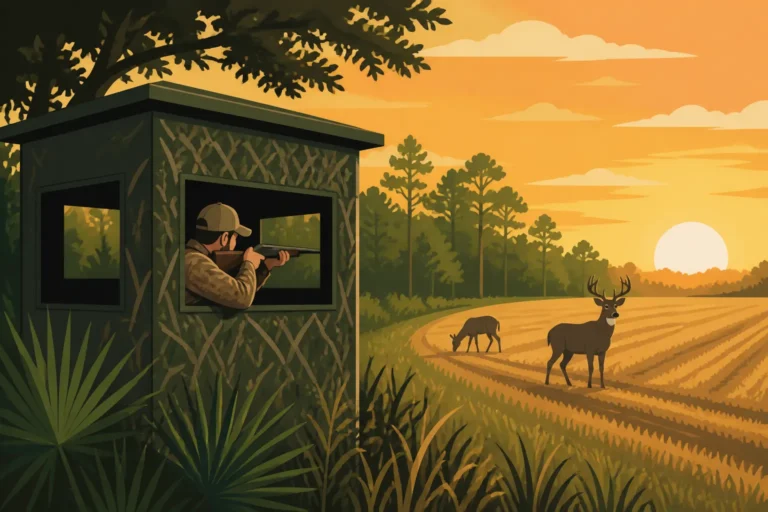
For archery hunters, the practical range in dense swamp timber is typically much shorter than in open country. While many archers can comfortably shoot out to 40-50 yards on a practice range, real-world conditions in the swamp usually limit that significantly. Expect your effective range to shrink to somewhere between 15-30 yards. That's a tight window, and it demands precision in both your setup and your shot execution. When Bowhunting South Carolina's Long Archery Season, remember that treestand height and shot angle become even more critical to find those clear lanes. Using a rangefinder in these tight spots is a must, even if it feels like overkill for such short distances. Every yard matters, especially when you're drawing a bow.
| Weapon Type | Typical Max Ethical Range (Open) | Practical Max Ethical Range (Swamp Timber) | Key Considerations in Swamp |
|---|---|---|---|
| Archery | 40-60 yards | 15-30 yards | Clear lanes, branch deflection, deer reaction time, shot angle. |
| Shotgun (Slugs) | 75-125 yards | 50-75 yards | Bullet drop, heavy cover deflection, target acquisition speed. |
| Rifle (Centerfire) | 200-300+ yards | 75-125 yards (often less) | Through-cover deflection, over-penetration risk, target identification. |
| Muzzleloader | 100-150 yards | 50-100 yards | Smoke obscuring view, loading time, similar projectile deflection. |
For firearm hunters, while your rifle might be capable of 200-yard shots, the reality of swamp timber pulls that range in dramatically. A shot beyond 100 yards in dense cover is often difficult to come by, and many experienced swamp hunters will tell you that most of their shots are within 75 yards, sometimes even closer. The risk of bullet deflection is high, and tracking a wounded deer through water and thick brush is incredibly challenging. This is why many hunters opt for calibers that perform well in brush, or stick to shotguns with slugs, especially if they are participating in Primitive Weapons Deer Hunting in South Carolina.
It's crucial to spend time practicing your shooting at these closer, more challenging distances. Don't just practice at 100 yards from a bench. Set up targets in scenarios that mimic swamp conditions: partially obscured, with narrow lanes, and from a standing or kneeling position. Practice quick target acquisition, as deer in the swamp often don't stand still for long.
Optics and Sighting Systems for Close-Quarters Hunting
The dense environment of South Carolina's swamp timber directly influences the kind of optics and sighting systems that will serve you best. What works wonders in an open field might actually hinder you when visibility is severely limited. It's about maximizing your ability to see clearly, identify targets quickly, and aim precisely in challenging light and cover conditions.
Binoculars and Rangefinders for Tight Spaces
In these tight quarters, your binoculars are your best friend for initial scouting and target identification. However, the common advice to go for high magnification often backfires in the swamp. Instead of 10x or 12x, an 8x magnification is often ideal. An 8x binocular provides a wider field of view, which is incredibly helpful for scanning through thick vegetation and quickly locating a deer that might only be visible through a small window. It also offers a brighter image in the low light that often permeates the dense canopy, especially early in the morning or late in the evening. Binocular Power for Swamp Edge Hunting delves deeper into choosing the right power.
A quality rangefinder is an absolute non-negotiable in swamp timber, even for seemingly short distances. What looks like 25 yards can easily be 40, and that makes a huge difference for an archery shot or a quick rifle shot where a branch might be in the way. Don't guess. Pull out your rangefinder, quickly acquire the distance, and then focus on the shot. Brands like GoHunt often integrate mapping and satellite imagery which can help you pre-plan lanes and distances, even if your real-time rangefinding is still crucial. Pre-ranging specific trees or landmarks can save precious seconds when a deer appears.
Rifle Scopes and Sights for Quick Target Acquisition
When it comes to your rifle scope, variable power is usually preferred, but the emphasis shifts dramatically to the lower end of the magnification spectrum. A scope that goes down to 1x, 1.5x, or 2x is far more valuable than one that starts at 3x or 4x. This low magnification acts almost like a red dot sight, allowing for incredibly fast target acquisition with both eyes open. When a deer is likely to bolt at any moment, the ability to get on target instantly is crucial.
For higher magnification, you likely won't need anything above 6x or 8x in these conditions. Forget those scopes that go up to 12x, 18x, or even higher; they just narrow your field of view too much, making it nearly impossible to track a moving animal or even find a stationary one in the thick stuff. Look for scopes with good light-gathering capabilities and a clear, simple reticle that doesn't get lost in the busy background. Some hunters even prefer red dot or holographic sights entirely for extremely close-range work, as they offer the fastest possible target acquisition without any magnification, which can be perfect for situations where a deer might appear within spitting distance.
Shot Placement and Ethical Considerations in Thick Cover
Taking a shot in dense swamp timber comes with an elevated set of ethical responsibilities. The consequences of a poor shot here are magnified due to the difficulty of tracking and recovering a wounded animal in this unforgiving environment. It's not just about making a kill; it's about making a clean, swift, and ethical one.
The Importance of a Double-Lung Shot
In any hunting scenario, a double-lung shot is generally considered the most ethical and effective for deer. It causes rapid blood loss and incapacitates the animal quickly, leading to a swift demise. In swamp timber, this shot placement becomes absolutely critical. A less-than-ideal shot – a gut shot, a leg shot, or even a single-lung shot – might mean a lengthy, arduous, and potentially unsuccessful tracking job through water, briars, and thick undergrowth.
Deer can travel surprisingly far even with a fatal wound, and in a swamp, every yard they cover makes tracking exponentially harder. You might encounter deep water, quicksand-like muck, or areas so thick that you can barely crawl through them. Always aim for that vital lung area, just behind the shoulder. Take the time to settle your aim, control your breathing, and squeeze the trigger or release your arrow smoothly. If the shot doesn't present itself perfectly, it's always better to wait for a better opportunity, even if it means going home empty-handed. Tracking a Deer Through South Carolina Pine Straw and Blood Trailing After Dark in South Carolina offer insights into the challenges of recovering game, which are amplified in swampy conditions.
What to Do After the Shot
After you take the shot, the first thing is to listen. What sounds did the deer make? Did you hear a thud, a crash, or nothing at all? Did it run off silently or crash through the brush? Mark the exact spot where the deer was standing, and where you last saw it. Pay attention to any broken branches, kicked-up leaves, or other disturbances that could indicate its escape route. Don't rush in immediately, especially if you suspect a marginal hit. Give the deer time to expire. For a solid lung shot, waiting 30-45 minutes is usually sufficient. For a questionable hit, especially if you heard a gut-shot sound or saw the deer hunching, a wait of several hours, or even overnight if conditions allow and it's not too warm, is often advisable.
When you do begin tracking, move slowly and methodically. Look for blood, broken twigs, disturbed leaves, and tracks. In wet, mucky ground, blood can be hard to spot, but tracks might be more defined. Utilize a good headlamp if it gets dark, and consider using a mapping app like GoHunt to mark your last blood sign, so you don't get disoriented in the dense cover. If you lose the trail, back out, give it more time, and come back with fresh eyes, or even bring a tracking dog if legal and available. The goal is to recover the animal, and sometimes that means calling in reinforcements or simply exercising immense patience. Losing an animal in the swamp is a heartbreaking experience, and proper post-shot protocol is your best defense against it.
Disclaimer
This article is for general informational purposes only and does not constitute professional advice. Laws, prices and regulations vary by location and change over time. Consult a qualified professional for guidance on your specific situation.