Working a Creek Bottom for Late-Season Deer
Creek bottoms provide South Carolina deer with winter thermal cover, persistent food, and safe natural travel corridors.
Close the distance.
Archery, muzzleloader, and firearm techniques — calling, stand placement, still-hunting, spot-and-stalk, and the weapon rules that change at the state line.
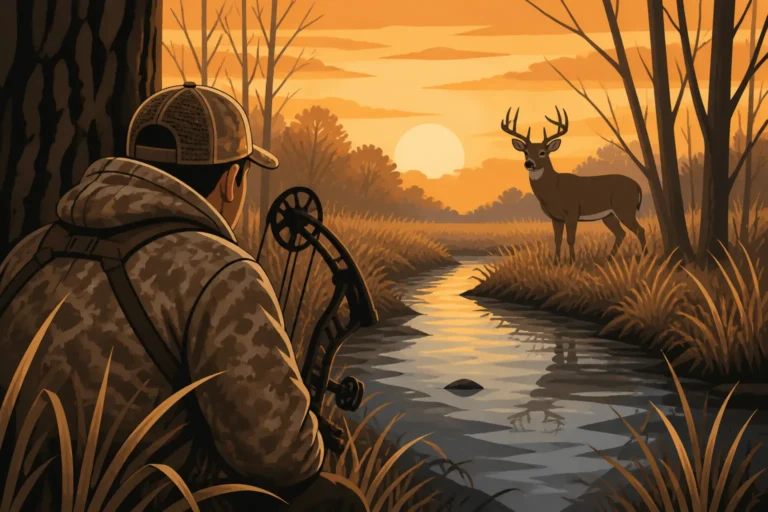
Creek bottoms provide South Carolina deer with winter thermal cover, persistent food, and safe natural travel corridors.
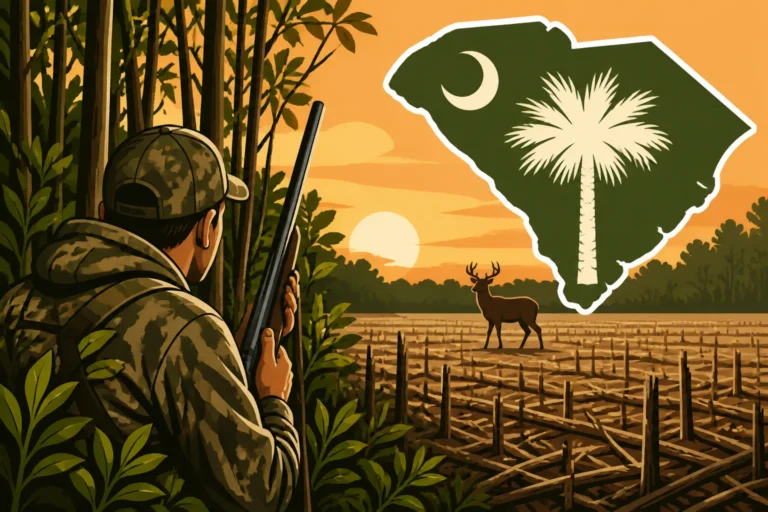
Late-season deer hunting in South Carolina standing crop fields explains how to find white-tailed deer using leftover agricultural cover.
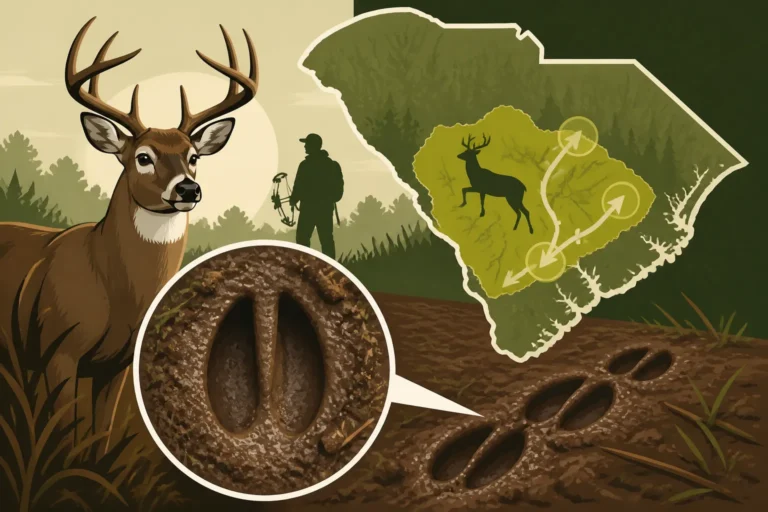
South Carolina mud reveals fresh deer tracks, travel direction, and animal size in sandy loam, clay, and Lowcountry swamp muck.
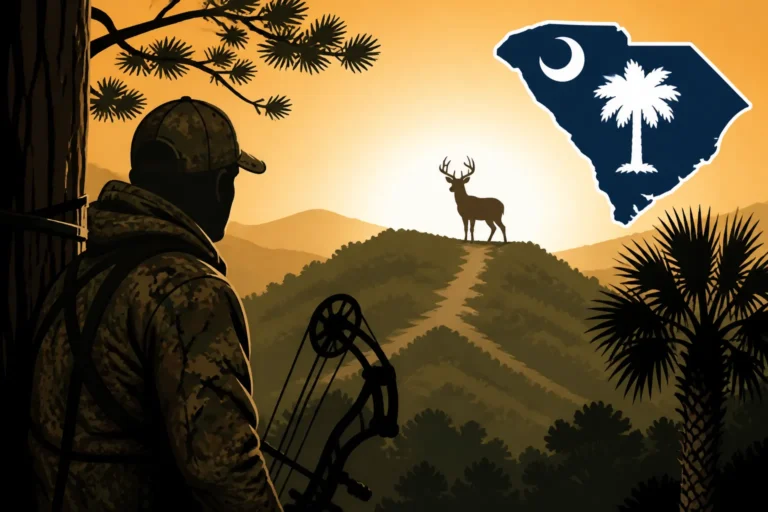
Ridge-top saddles in South Carolina act as natural travel funnels, helping hunters intercept active rutting bucks effectively.
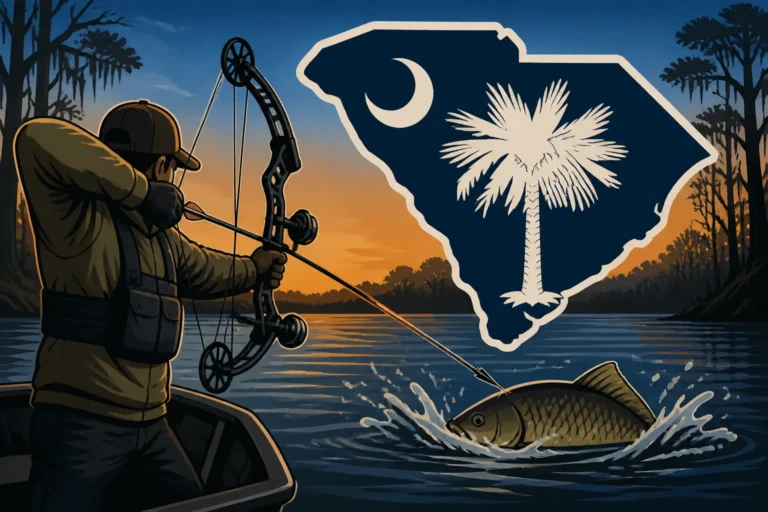
Bowfishing South Carolina rivers during the warm off-season lets hunters target carp and gar while keeping archery skills sharp.
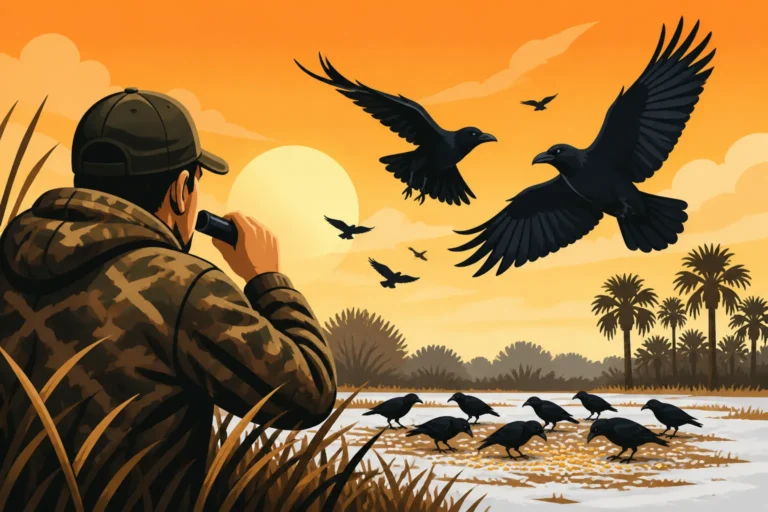
South Carolina winter crow behavior near feed sites reveals how scout birds, gear selection, and specialized calls help hunters bring wary flocks into range.
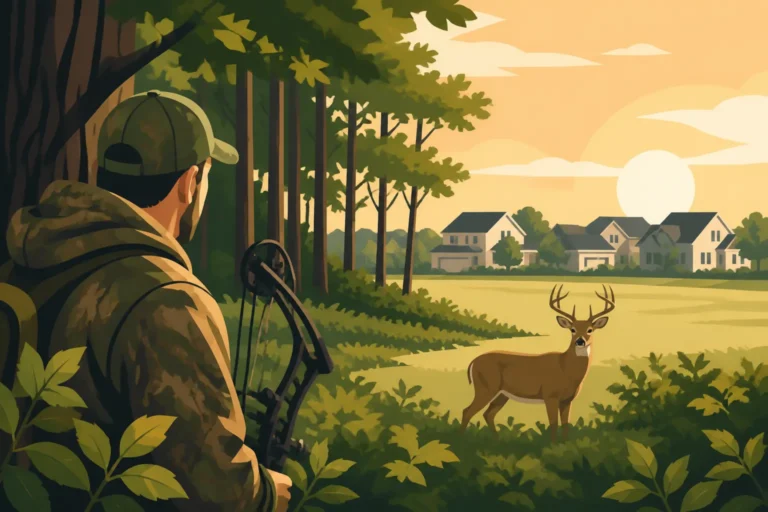
Suburban woodlots near Columbia hold hidden deer populations that require stealthy approaches and meticulous scouting to hunt successfully.
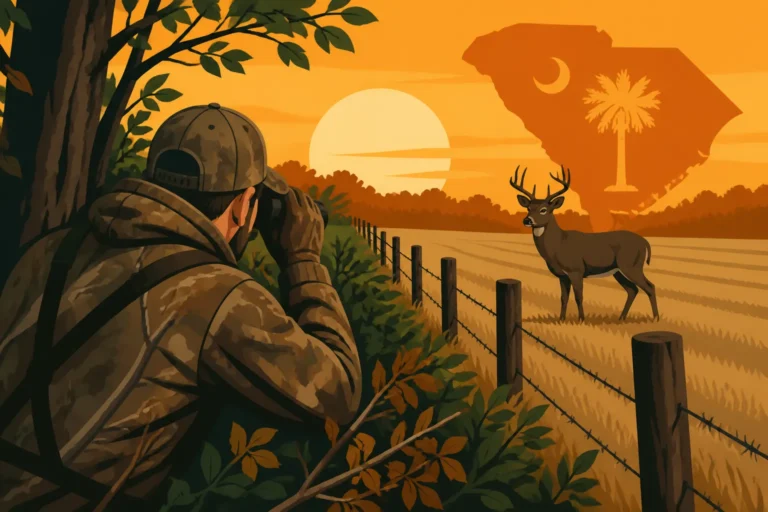
Late season fencerows in South Carolina provide deer cover and food, creating prime hunting opportunities after frosts occur.
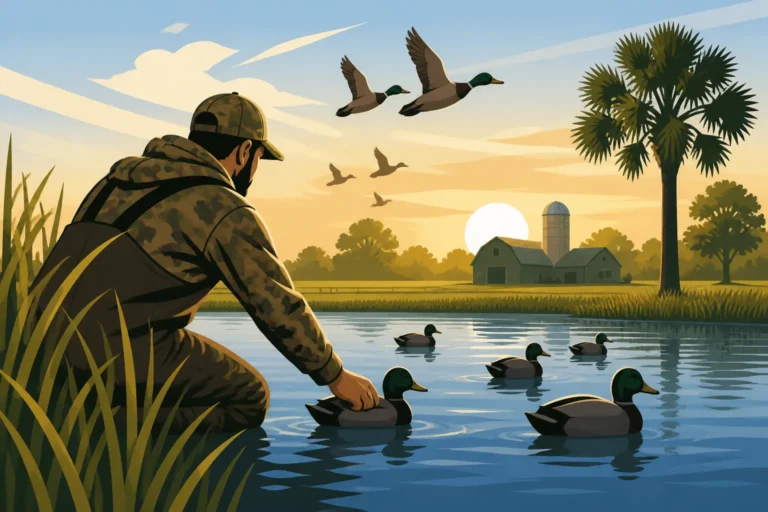
Duck decoy placement on South Carolina farm ponds requires factoring in wind direction, water depth, vegetation, and natural cover.
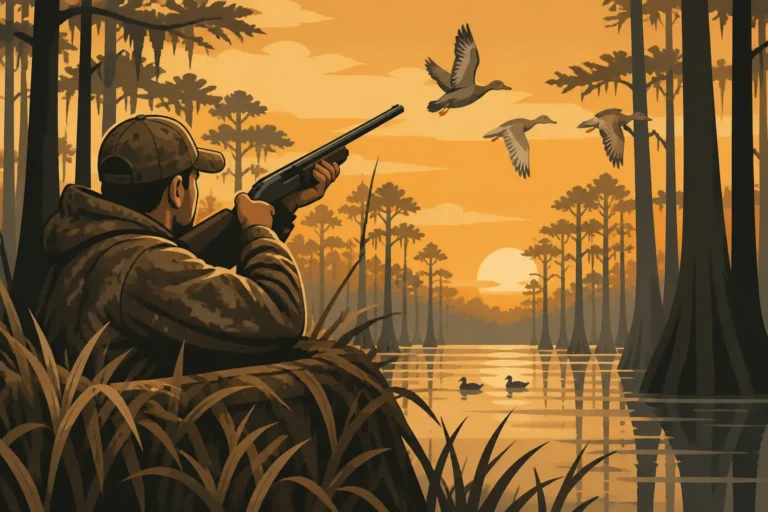
South Carolina river bottom habitats present difficult hunting challenges for white-tailed deer, feral hogs, and wild turkeys.