Santee WMA Inside Francis Marion Forest
Hunters often find themselves overwhelmed by the sheer size and diverse regulations of South Carolina's public lands, especially when trying to pinpoint specific, productive areas within vast national forests. This guide is designed to cut through that confusion, offering a deep dive into Santee Wildlife Management Area, a prime hunting locale nestled within the sprawling Francis Marion National Forest, equipping you with the knowledge and strategies for a more successful and enjoyable hunt.
Understanding Santee WMA's Unique Location and Habitat
Santee Wildlife Management Area isn't just another patch of public land; it's a distinct ecosystem within the larger tapestry of the Francis Marion National Forest, offering a unique blend of lowcountry hunting challenges and opportunities. Understanding its specific geography and the diverse habitats it comprises is the first step toward unlocking its potential.
Geography Within Francis Marion National Forest
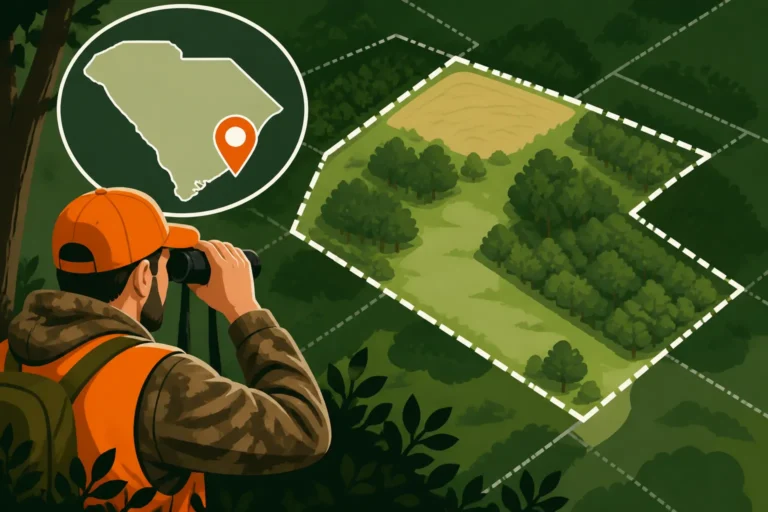
Santee WMA is situated firmly in the Lowcountry, a region defined by its flat terrain, extensive wetlands, and tidal influence, even in areas slightly removed from the immediate coast. It's an integral part of the Francis Marion National Forest, which itself stretches across parts of Berkeley and Charleston counties. Unlike some national forest lands that might be more fragmented or interspersed with private holdings, Santee WMA generally forms a cohesive block, though access points require careful planning. The WMA's boundaries often follow natural features like rivers, creeks, and old logging roads, making a good map application like onX Hunt indispensable for staying within the lines and understanding the lay of the land. You'll find yourself navigating areas that feel ancient and wild, where tall pines meet cypress-tupelo swamps, and the air hangs thick with humidity.
This geographical placement means you're dealing with all the classic Lowcountry elements: sandy soils, a high water table, and an abundance of drainages. The Santee River, a major artery, influences the hydrology of the area, contributing to the extensive network of bottomland hardwoods and cypress swamps that are characteristic of the WMA. Access can sometimes be restricted by water levels, especially after heavy rains, turning logging roads into muddy bogs or even completely submerging low-lying areas. This isn't your typical upland hunting scenario; it requires an appreciation for wet feet and the resilience to push through challenging terrain. The proximity to the coast, even indirectly, also influences the climate, ensuring longer growing seasons and milder winters, which in turn impacts wildlife behavior and food availability.
Habitat Diversity and Wildlife
The ecological richness of Santee WMA is truly remarkable, offering a smorgasbord of habitats that support a wide array of game species. You'll encounter vast stands of managed pine plantations, remnants of older longleaf pine forests, mixed pine-hardwood ridges, and, perhaps most notably, extensive bottomland hardwood forests and swamps. These varied landscapes create critical edge habitat, where different ecosystems meet, providing diverse food sources, bedding areas, and travel corridors for wildlife. Deer, for example, might bed down in the thick cover of a young pine stand during the day and move into adjacent hardwoods or swamp edges to feed on acorns in the evening.
The bottomland hardwoods and swamps are particularly significant, acting as ecological magnets for everything from white-tailed deer to wild turkeys and migratory waterfowl. During fall and winter, these areas provide crucial mast crops like acorns and cypress seeds, drawing animals in from miles around. The dense undergrowth in many of these swampy areas offers incredible cover, making deer feel secure but also making them challenging to hunt. For turkeys, these mixed habitats provide roosting sites in tall hardwoods bordering swamps, as well as insects and seeds in more open pine areas. Small game, such as squirrels and rabbits, thrive in the mature hardwoods and brushy thickets, respectively. Even waterfowl will utilize the flooded timber and backwater sloughs during their migration, particularly wood ducks. This mosaic of habitat ensures that hunters targeting different species can find suitable grounds within the WMA, provided they understand how each species utilizes these distinct zones.
Navigating Santee WMA Regulations and Access
Hunting in a Wildlife Management Area (WMA) always comes with its own set of rules and nuances that go beyond general statewide regulations. Santee WMA, being part of the Francis Marion National Forest, has specific guidelines that every hunter must understand before even stepping foot in the woods. Missing these details can quickly turn a promising hunt into a frustrating experience or, worse, a violation.
Specific WMA Rules and Seasons
One of the most critical aspects of hunting Santee WMA is understanding that its seasons and bag limits often differ from those on private land or even other public lands in South Carolina. For instance, while the statewide deer season might open earlier in Zone 4 (where Santee WMA is located), WMA-specific seasons for deer, turkey, and small game often have unique start and end dates, as well as specific weapon restrictions. You might find archery-only periods, primitive weapons seasons, or specific dates when modern firearms are permitted. It's absolutely crucial to consult the South Carolina Department of Natural Resources (SCDNR) WMA regulations booklet or their website for the most current information. Don't assume anything based on last year's calendar or what your buddy hunts on his private lease.
Beyond season dates, Santee WMA also has specific rules regarding hunter orange requirements, permissible firearms, and even stand placement. For example, some WMAs might prohibit screw-in steps or require all portable stands to be removed daily, while others have different regulations. The use of certain types of bait or attractants might also be restricted. You'll also need a valid South Carolina hunting license, a big game permit if applicable, and often a specific WMA permit to hunt on these lands. It’s an investment, but a necessary one to enjoy the public land opportunities. South Carolina WMA Permit Requirements are non-negotiable. Always double-check these details well in advance of your hunt, because these regulations are designed not just for safety, but also for wildlife management within these specific areas, ensuring sustainable hunting for everyone.
Access Points and Travel Considerations
Getting into and around Santee WMA can be an adventure in itself, and it's something you need to plan for carefully. There are designated public access points, typically off main highways or secondary roads, but once you leave the pavement, you're often on a network of unpaved forest roads, some of which are well-maintained, while others can be rough, sandy, or downright muddy. Many of these roads are seasonal, meaning they might be gated and closed to vehicular traffic during certain times of the year, particularly during wet periods or outside of hunting seasons, to protect the roadbeds and prevent illegal activities. It's not uncommon to find yourself needing to walk significant distances from your parked vehicle to get to prime hunting spots.
When planning your trip, consider the type of vehicle you'll be driving. A high-clearance 4×4 truck or SUV is often beneficial, if not essential, for navigating some of the more challenging interior roads. However, even with such a vehicle, you might encounter roads that are simply impassable. Always have a plan B, and remember that cell service can be spotty to non-existent in many parts of the Francis Marion, making reliable offline maps like those on GoHunt or onX Hunt critical. These apps can show you WMA boundaries, forest roads, and topographical features, helping you identify potential access routes and understand the terrain before you even arrive. Be prepared for potential water crossings if heavy rains have occurred, as many smaller drains can swell and block passage. Thinking through your entry and exit strategies is just as important as knowing where to hunt.
Strategies for Deer Hunting in Santee WMA
Deer hunting in Santee WMA presents a unique set of challenges and rewards, demanding tactics tailored to its lowcountry environment. It’s a far cry from open field hunting or even the steeper ridges of the Upstate. Success here often hinges on understanding how deer utilize the intricate mosaic of swamp, upland, and transitional habitats.
Locating Deer in Swamp and Upland Transitions
Deer in Santee WMA are master adapters, moving between the security of the deep swamps and the food sources found on higher, drier ground. You'll rarely find them exclusively in one habitat for long. During the warmer parts of the season, and especially after heavy rains, deer will often seek refuge and browse within the dense cover of cypress-tupelo swamps and bottomland hardwoods. These areas provide shade, water, and an abundance of green browse that stays palatable even when uplands dry out. However, they'll still venture out to higher ground for more varied food sources, especially acorns in the fall. Focus your scouting efforts on the "transition zones" – those crucial edges where the swamp gives way to pine ridges, oak flats, or even old agricultural fields if they exist nearby. These edges are natural travel corridors, providing both cover and access to food.
Look for subtle elevation changes, even just a few feet can make a difference in the Lowcountry. A slightly elevated island within a swamp, a small ridge that parallels a creek, or a finger of high ground extending into a wetland can be deer magnets. These spots become pinch points where deer traffic is funneled, making them prime locations for stand setups. During the rut, bucks will often cruise these edges, scent-checking for does without exposing themselves too much in open areas. Pay close attention to fresh tracks, rubs, and scrapes along these transitions. Don't be afraid to put on your rubber boots or waders and explore these damp areas; many hunters avoid them, which can mean less pressured deer for those willing to get a little wet. Hunting Lowcountry Swamp Deer requires patience and a good understanding of water levels.
Stand Placement and Hunting Tactics
Given the dense cover and often limited visibility in Santee WMA, careful stand placement is paramount. Treestands are popular, allowing you to get above the undergrowth and scent, offering a better vantage point. Look for mature pines or hardwoods along those aforementioned transition zones, especially where two distinct habitat types converge, creating a natural funnel. Overlooking a narrow strip of high ground between two swamps, or a trail leading from thick bedding cover to an oak flat, can be incredibly productive. Treestand Setups in Francis Marion National Forest are a common strategy. Remember to consider your entry and exit routes; minimize disturbance by approaching and leaving quietly, ideally with the wind in your face or across your body, and using existing cover to conceal your movement.
Ground blinds are also highly effective, particularly in areas with dense palmetto or thick brush that offers natural concealment. Brushing in a pop-up blind can be excellent for field edges or small openings within the timber. Still-hunting, a slow and deliberate method of stalking through the woods, can be surprisingly successful in Santee. Moving quietly with the wind, pausing frequently to scan and listen, allows you to cover ground and potentially jump deer in their beds or catch them moving. This method is particularly effective in the more open pine stands or along the edges of larger swamps. During the warmer early season, consider a Warm-Weather Sitting Strategy in South Carolina, focusing on morning and late evening hunts when deer are most active, and positioning yourself to catch any slight breeze.
Pursuing Turkey and Small Game in Santee WMA
While deer hunting often takes center stage, Santee WMA offers fantastic opportunities for wild turkey and various small game species. Each requires a different approach, but the diverse habitat found within the WMA provides suitable grounds for all.
Spring Turkey Hunting Approaches
Spring turkey hunting in Santee WMA can be an exhilarating experience, but it often demands patience and adaptability. The diverse habitat of mixed pine and hardwood forests bordering swamps provides excellent roosting and feeding grounds for gobblers. Turkeys will typically roost in the tallest pines or hardwoods overlooking open areas or water, feeling secure from ground predators. Your first step should be to locate these roosting areas, often done by listening for gobblers at dawn or dusk during scouting trips. Once a bird is located, setting up quietly within hearing distance, but not too close to the roost, is key.
Successful turkey hunting here often involves a combination of aggressive calling and careful stealth. Early in the morning, a few soft tree yelps or fly-down cackles can entice a gobbler off the roost. Once on the ground, turkeys will often move to more open areas like old logging roads, small clearings, or even pine savannahs to strut and look for hens. Having a good understanding of the WMA's terrain using your onX Hunt app can help predict their movements. Sometimes, a "run-and-gun" approach, covering ground and stopping to call, can be effective, especially if you're not getting a response from a roosted bird. However, be prepared for turkeys to be tight-lipped, especially later in the season or if they've been pressured. Patience, realistic calling, and being ready for a close shot are critical. South Carolina Spring Turkey Season Rules are essential to review, as WMA regulations can differ from private land.
Small Game Opportunities
Santee WMA is a haven for small game hunters, particularly for squirrels and rabbits. The extensive mature hardwood bottoms are prime squirrel habitat, offering an abundance of acorns, hickory nuts, and other mast crops that grey squirrels and fox squirrels depend on. Hunting squirrels here can be a relaxing and rewarding experience, often done by still-hunting through the hardwoods during cooler morning hours, listening for cuttings or chattering. Finding a good stand of mature oaks or hickories is often all it takes. You might also find good concentrations of squirrels along the edges of swamps where hardwoods are mixed with cypress.
Rabbit hunting is another excellent option, often found in the brushy clear-cuts, thickets, and fencerows that pepper the WMA. These areas provide the dense cover that rabbits need for protection from predators. Hunting with beagles can be incredibly effective and a fun social activity, as the dogs can push rabbits out of cover where they might otherwise be impossible to find. If you're hunting without dogs, still-hunting slowly through thickets, or "kicking" brush piles, can flush rabbits. Always be mindful of other hunters, especially during deer season when small game seasons might overlap. These small game pursuits offer a wonderful way to enjoy the woods and put some delicious meat in the freezer, often with less pressure than big game hunting.
Essential Gear and Preparation for Santee WMA
Hunting in the Lowcountry, especially in an environment as diverse and sometimes challenging as Santee WMA, demands specific gear and meticulous preparation. Ignoring these details can lead to discomfort, frustration, or even safety issues.
Recommended Clothing and Footwear
The climate in Santee WMA, particularly during the earlier hunting seasons (August archery, for example), is defined by heat and humidity. This means your clothing choices are paramount. Lightweight, breathable, moisture-wicking fabrics are your best friend. Forget heavy cotton; it absorbs sweat and stays wet, leading to chafing and discomfort. Opt for synthetics or merino wool base layers that pull moisture away from your skin. Even as the season progresses into fall, the days can still be quite warm, so layering is key. Start with minimal layers and be prepared to add a light jacket if the temperature drops after dark. Warm-Weather Sitting Strategy in South Carolina often dictates this type of minimalist approach.
Footwear is arguably the most critical gear item for Santee WMA. Given the prevalence of swamps, muddy roads, and wet lowlands, waterproof boots are non-negotiable. Rubber boots, preferably knee-high or hip waders, are often the best choice for staying dry, especially if you plan to venture into deeper swamp edges or cross standing water. They also offer excellent protection from snakes, which are abundant in these wet environments. Snake Boots for South Carolina Swamp Ground are a wise investment, offering peace of mind when pushing through thick brush or walking near cypress knees. Good socks, again moisture-wicking, are also vital to prevent blisters and keep your feet comfortable, even when they inevitably get wet from sweat.
Navigation and Safety Tools
With its extensive forest roads, dense timber, and often featureless swamp terrain, Santee WMA can be disorienting, even for experienced woodsmen. Reliable navigation tools are not just a convenience; they are a necessity. A handheld GPS unit or, more commonly these days, a robust mapping app on your smartphone, like onX Hunt or GoHunt, is essential. These apps allow you to download offline maps, mark waypoints (your vehicle, stand locations, sign), and see WMA boundaries, property lines, and topographical features. Always carry a portable power bank to keep your phone charged, as GPS usage drains batteries quickly. While technology is great, also carry a physical compass and know how to use it as a backup; electronics can fail.
Beyond navigation, safety is paramount. The Lowcountry's abundant insect population, especially mosquitoes and ticks, can be relentless, particularly during the early archery season. Carry strong insect repellent, and consider permethrin treatment for your clothing to ward off ticks. Bug Protection for Early Archery Season can literally save your hunt from misery. A well-stocked first-aid kit is also a must, containing essentials for cuts, scrapes, snake bites (though prevention is best), and allergic reactions. Always let someone know your hunting plan – where you're going, when you expect to return, and what vehicle you're driving. Hunting alone in a remote swamp can be dangerous, so never take unnecessary risks. A whistle, a headlamp, and a small fire-starting kit can also be invaluable in an emergency.
Seasonal Considerations and Adapting to Conditions
Hunting in Santee WMA isn't a static experience; it changes dramatically with the seasons and environmental conditions. Being able to adapt your strategies to these shifts is a hallmark of a successful Lowcountry hunter.
Impact of Weather and Water Levels
The Lowcountry's weather, particularly rainfall, has a profound impact on hunting in Santee WMA. Heavy rains can swiftly raise water levels in the swamps and flood low-lying forest roads, making access difficult or even impossible. What was dry ground one day might be knee-deep water the next. This not only affects hunter access but also forces wildlife to shift their patterns, moving to higher ground or concentrating on less flooded areas. Deer may become more confined to smaller islands or ridges, making them easier to locate but also potentially more alert due to pressure. Conversely, during periods of drought, swamps can dry out significantly, changing travel patterns and food availability.
Humidity is another constant factor, affecting scent control and human comfort. The high humidity can make scent linger, making meticulous scent elimination even more important. It also means you need to stay hydrated and be mindful of heat exhaustion during warmer months. Beyond the immediate impact on hunting, prolonged wet periods can create challenges for tracking wounded game, as scent trails can wash out, and blood trails can be harder to follow in muddy water. Always check local weather forecasts and gauge recent rainfall before heading out. Understanding these dynamics and adjusting your plans, perhaps by targeting higher ground after a flood or focusing on water sources during a dry spell, can significantly improve your odds.
Understanding Hunting Pressure
As with any popular public hunting land, Santee WMA experiences varying degrees of hunting pressure. This pressure tends to be highest on opening weekends for deer and turkey, especially at easily accessible points along main roads. Opening Weekend Crowds on South Carolina Public Land are a reality, and Santee is no exception. More hunters in the woods generally mean more disturbed game, pushing animals deeper into cover or making them more nocturnal. If you're heading out on an opening day, be prepared to encounter other hunters, and always practice good hunter etiquette and safety.
To counter this pressure, smart hunters employ several strategies. One of the most effective is to simply walk further than others. Many hunters will stick close to roads or well-worn trails. By venturing a mile or two deeper into the WMA, especially into areas that require navigating tougher terrain like swamps or dense clear-cuts, you significantly reduce the competition. This is where onX Hunt or GoHunt comes in handy, allowing you to scout potential routes to less-pressured areas. Another strategy is to hunt during weekdays rather than weekends, or during less popular seasons like the tail end of archery. Deer and turkeys often adjust their patterns to avoid high-traffic areas, so finding those quieter pockets of habitat where they feel secure is key to success on pressured public land.
| Season Type (Illustrative) | Key Focus | Typical Gear | Tactics |
|---|---|---|---|
| Early Archery (Aug-Sep) | Deer Movement, Food Sources | Lightweight camo, bug spray, rubber boots, hydration pack | Still-hunting, morning/evening sits near food/water, transition zones |
| General Deer Season (Oct-Dec) | Acorn production, Rut activity | Layered clothing, snake boots, binoculars, scent control | Stand placement near mast, rattling/grunting (rut), still-hunting |
| Spring Turkey (Apr-May) | Gobbler activity, Roosting sites | Full camo, mouth calls, slate/box calls, decoys | Locating roosts, calling sequences, run-and-gun (adapt) |
| Small Game (Fall-Winter) | Squirrels in hardwoods, Rabbits in thickets | Brush pants, comfortable walking boots, shotgun/rimfire | Still-hunting hardwoods for squirrels, dog hunting/brush beating for rabbits |
Disclaimer
This article is for general informational purposes only and does not constitute professional advice. Laws, prices and regulations vary by location and change over time. Consult a qualified professional for guidance on your specific situation.