South Carolina Mentored Youth Hunting Rules
It can feel a little overwhelming, can't it? You want to share the incredible tradition of hunting with the next generation, get your son or daughter out in the woods, but you're constantly worried about all the rules. Is my child too young? Do they need a license? What about hunter education? South Carolina's Mentored Youth Hunting program is designed to make that transition smoother, and this guide is here to break down every detail, ensuring you foster a lifelong love for the outdoors safely and legally.
Understanding South Carolina's Mentored Youth Hunting Program
Bringing a new hunter into the fold is one of the most rewarding experiences an outdoors enthusiast can have, but the legalities, especially for younger kids, can feel like a maze. South Carolina's Mentored Youth Hunting program cuts through some of that initial complexity, creating a clear pathway for young aspiring hunters to gain hands-on experience under the watchful eye of an experienced adult. It's truly a fantastic initiative that prioritizes safety and education while introducing them to the deep traditions of the Lowcountry and Upstate wilds.
The Philosophy Behind Mentored Youth Hunting
At its heart, the Mentored Youth Hunting program in South Carolina is built on a few core principles: safety, education, and recruitment. The state understands that formal hunter education, while crucial, can sometimes be a barrier to entry for very young children who might not yet have the attention span for a multi-day course. This program allows them to skip the initial hunter education requirement, getting them out into the field with a seasoned mentor much sooner. Think of it as an apprenticeship. Instead of learning solely from a textbook or online module first, they're learning directly from you, hands-on, about ethics, wildlife identification, shot placement, and, most importantly, firearms safety. This direct, experiential learning often solidifies good habits and respect for the game and the environment in a way a classroom never could. It's about preserving our heritage and ensuring future generations connect with the natural world, rather than just seeing it through a screen.
Who Qualifies as a Mentored Youth Hunter?
So, who exactly can participate as a mentored youth hunter in South Carolina? The rules are pretty straightforward. Any person under the age of 16 years old can participate in this program. That's the key age bracket. What's particularly important to note is that for the youngest participants – those under 10 years of age – there are specific, stricter supervision requirements, which we'll dive into shortly. But generally, if your child or a child you're mentoring is under 16, they don't need to have completed a hunter education course to hunt under the direct supervision of a qualified mentor. Residency status isn't a barrier here either. While a non-resident youth might face different licensing costs down the road when they're ready to hunt independently, the core principles of mentored hunting apply equally. This removes a significant hurdle for families visiting South Carolina who want to give their kids an authentic outdoor experience.
Who Qualifies as a Mentor?
Now, let's talk about the adult in the equation – the mentor. This role comes with significant responsibility, and rightfully so, as you'll be shaping a young hunter's foundational understanding of hunting. To qualify as a mentor in South Carolina, you must be 21 years of age or older. Crucially, you also need to hold a valid South Carolina hunting license. This isn't just about having the paperwork; it ensures the mentor themselves is legally able to hunt and presumably has a baseline understanding of hunting regulations. Furthermore, the mentor must have completed a hunter education course or be exempt from it (for example, if they were born before July 1, 1979). This ensures that the person doing the teaching has a solid grasp of firearm safety, game laws, and ethical hunting practices. Remember, you're not just guiding them to a potential harvest; you're instilling a respect for wildlife and the land, and that requires an ethical, knowledgeable guide.
Specific Rules and Requirements for Mentored Hunts
Navigating the specifics of any hunting regulation can feel like trying to untangle a fishing line after a tough day on the water. But for mentored youth hunting in South Carolina, understanding the precise rules for licenses, supervision, and equipment is absolutely vital. This isn't just bureaucratic red tape; these regulations are in place for the safety of the young hunter, the mentor, and the public. Let's make sure you're squared away before you head out into the pine thickets or along a Lowcountry swamp edge.
Carrying Licenses and Permits
When you're out in the field with a mentored youth, it's important to remember whose licenses and permits need to be on hand. For the mentored youth hunter themselves, if they are hunting under the direct supervision of a qualified mentor who meets all the requirements, they generally do not need to possess a hunting license or a big game permit. The idea is to remove these initial barriers while they are learning. However, it's always a good idea to confirm the latest regulations each season as rules can occasionally be updated.
For you, the mentor, it's a different story. You must have all the necessary licenses and permits for the hunting activity you are undertaking. This includes your valid South Carolina hunting license, any required big game permits if you're pursuing deer or turkey, and a WMA permit if you're hunting on any designated Wildlife Management Area. Having everything purchased and easily accessible, perhaps through the Go Outdoors SC app or printed copies, is crucial. If you're planning on deer hunting, make sure you understand the nuances of the South Carolina Deer Season Structure Explained, which can vary significantly by zone. For waterfowl, you'd also need the appropriate federal and state migratory bird stamps. Platforms like GoHunt can be invaluable for organizing and accessing this information, even assisting with license purchases through their integrated systems, ensuring you're always compliant.
Direct Supervision and Proximity Rules
This is perhaps the most critical aspect of the Mentored Youth Hunting program: the "how close" rule. South Carolina wisely has different proximity requirements based on the age of the youth, acknowledging that younger children need much closer supervision.
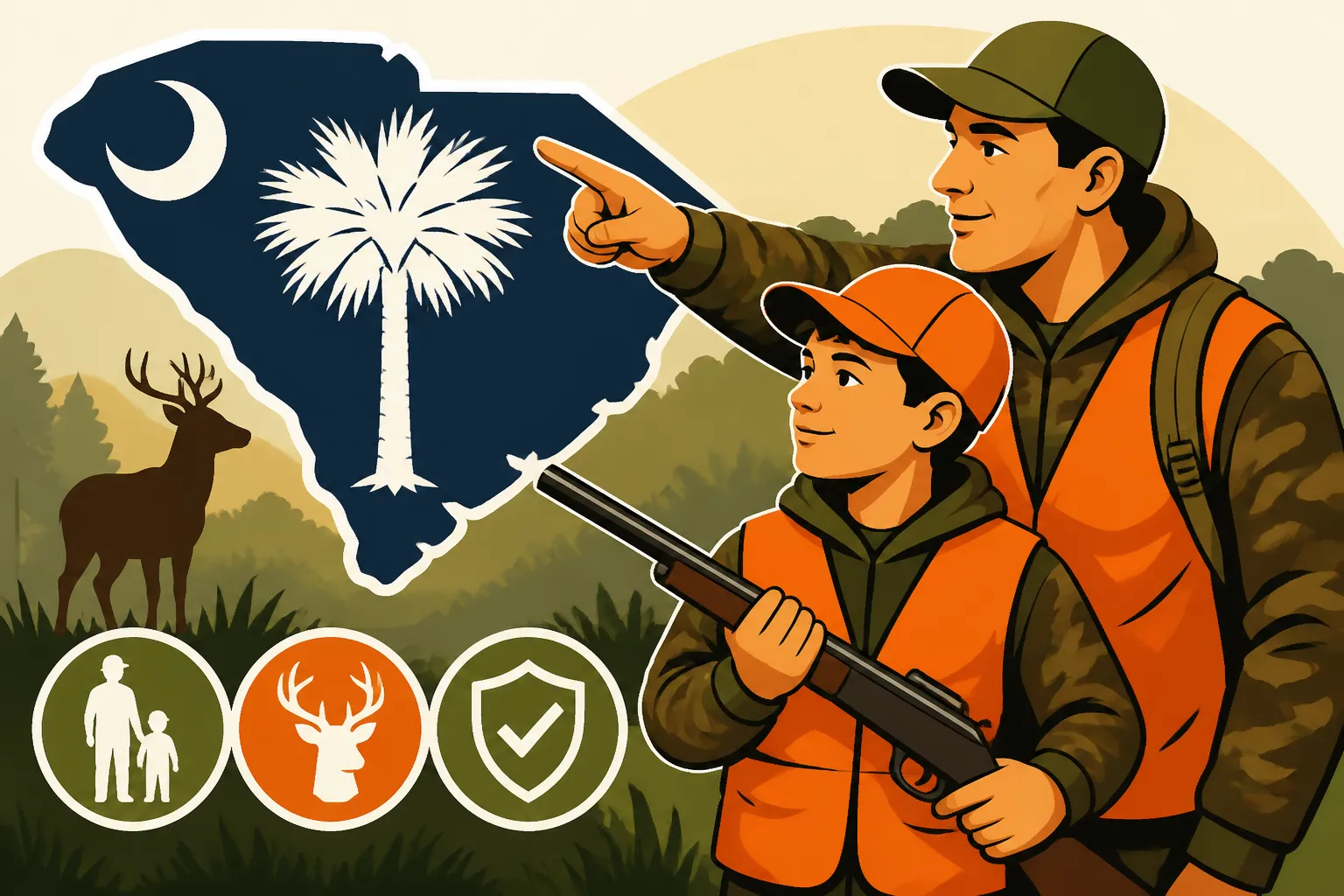
For mentored youth who are under 10 years of age, the mentor must be in direct control of the hunting device. This often means being within an arm's reach of the child, ready to take control of the firearm or bow at a moment's notice. Imagine walking through a thick patch of Palmetto or waiting quietly in a ground blind; your hand should be close enough to guide their aim, stop an unsafe shot, or assist with the physical handling of the weapon. This level of supervision is paramount, especially when handling firearms, where proper muzzle control and understanding of the target and its surroundings are still developing. It's about protecting the child and everyone else in the field.
For mentored youth who are 10 to 15 years of age, the supervision requirements are slightly less restrictive, but still very specific. The mentor must be within sight and audible voice of the youth. This means you need to be able to see them clearly and communicate with them effectively without yelling. This allows for a bit more independence, perhaps if the youth is positioned in a separate treestand just a short distance away, or moving slowly through a dense section of timber. However, it still emphasizes constant awareness. You're still responsible for their actions, and you need to be able to intervene quickly if a dangerous situation arises or if they need guidance on identifying game or making a safe shot. You might be watching them from a nearby position, using hand signals or quiet verbal cues to help them maintain situational awareness.
Firearm and Archery Equipment Guidance
When it comes to the actual hunting equipment, South Carolina's Mentored Youth Hunting rules don't impose specific restrictions on the type or caliber of firearm or draw weight of a bow that a mentored youth can use, provided the mentor is meeting the direct supervision requirements. However, this is where a mentor's judgment and experience truly come into play.
While a legal adult could use a .30-06 rifle for deer, it's highly unlikely to be appropriate for a small, recoil-sensitive child. The focus should always be on safety and accuracy, which often means selecting equipment that fits the youth's size, strength, and comfort level. For firearms, this might mean starting with a .22LR for small game practice, graduating to a .243 or 7mm-08 for deer with reduced recoil loads, or even a smaller gauge shotgun like a 20-gauge for birds. The most important thing is that the youth can comfortably hold, aim, and safely operate the chosen equipment. Teach them about the fundamentals of marksmanship before ever stepping foot in the woods. Ensure they understand the mechanics, the safety features, and the importance of trigger discipline. For archery, a compound bow with adjustable draw weight and length is ideal, allowing you to start them light and increase as they grow stronger. Remember, the goal is a safe, ethical harvest, not just pulling a trigger or releasing an arrow. Building confidence with their equipment in a controlled environment, like a shooting range, before heading out is absolutely critical.
Benefits and Best Practices for Mentored Youth Hunting
The Mentored Youth Hunting program is so much more than just a way to legally get kids into the woods. It's an opportunity to build character, instill ethics, and pass down a cherished way of life. When done right, it creates memories that last a lifetime and fosters a genuine connection to nature that few other activities can provide. But like any good endeavor, it requires thought and intentionality to get the most out of it.
Fostering a Love for the Outdoors
The true success of mentoring a young hunter isn't measured in the size of the buck they bag or the number of turkeys they call in. It's measured in the twinkle in their eye when they spot a deer track, the quiet awe they feel watching a sunrise from a treestand, or the excitement of identifying a new bird call. The focus should never be solely on the harvest. Instead, emphasize the entire experience. Talk about conservation, the role hunters play in managing wildlife populations, and the intricate web of life you observe in the forest.
Teach them how to scout for sign, how to read the wind, and how to identify different trees and plants. Take them out before the season starts, maybe for a hike in Sumter National Forest or a walk along a Lowcountry WMA, and spend time Scouting South Carolina Public Land Before Season. Show them where the deer bed, what they're eating, and how they move through the terrain. Let them help set up a blind or choose a treestand location. These moments, often without a gun in hand, are where the deepest connections are formed. Make it fun, keep it positive, and don't push them too hard. If they get bored, tired, or cold, call it a day. A positive first experience is far more valuable than a forced one.
Safety First: A Mentor's Primary Role
As a mentor, safety isn't just a best practice; it's your paramount responsibility. Your vigilance is the first and last line of defense. Before you even leave the truck, review the four basic rules of firearm safety:
- Treat every firearm as if it's loaded.
- Always point the muzzle in a safe direction.
- Keep your finger off the trigger until ready to shoot.
- Be sure of your target and what is beyond it.
Go over these rules repeatedly, not just as a lecture, but in practical application throughout your hunt. Discuss shot placement and the importance of waiting for an ethical shot. Emphasize the need to clearly identify the target and ensure no other hunters or non-target animals are in the line of fire. Proper attire is also critical; ensure both you and your youth are wearing the required amount of hunter orange or blaze pink, as outlined in the South Carolina Blaze Orange Requirements, especially during gun seasons. This simple step can dramatically increase visibility and safety in the woods. Always carry a well-stocked first-aid kit, a communication device, and have a plan for emergencies. This meticulous attention to safety instills confidence in the youth and lays the foundation for responsible hunting for years to come.
Graduating to Independent Hunting
The Mentored Youth Hunting program is a fantastic springboard, but it's not a permanent solution for every hunt. At some point, when your youth hunter feels ready and is within the eligible age range, they will need to complete their formal hunter education course. In South Carolina, any hunter 16 years of age or older must possess a valid hunter education certificate to purchase a hunting license (unless they were born before July 1, 1979). The mentored program allows them to gain practical experience before this step, which can make the formal course much more meaningful.
Once they've completed the course, which is readily available online or through in-person classes, they can then pursue their own licenses and permits. You can find detailed information on the process, including how to enroll, by looking into Taking South Carolina Hunter Education Online. This transition from mentored to independent hunting is a huge milestone. It signifies their growth, their understanding of the responsibilities involved, and their readiness to carry on the tradition themselves. Even after they've "graduated," your role as a guide and resource will continue, just perhaps from a slightly different vantage point.
Practical Scenarios and Common Questions
Even with a clear understanding of the rules, real-world hunting situations can throw curveballs. What if you're hunting public land? What game can they pursue? And what happens after a successful harvest? Anticipating these questions and having clear answers will make your mentored youth hunting experience in South Carolina smoother and more enjoyable for everyone involved.
Hunting on Public vs. Private Land with a Mentored Youth
The location of your hunt can introduce different layers of rules, especially when mentoring a youth. If you're fortunate enough to have access to private land, the primary concerns will be ensuring you have explicit permission from the landowner (you can read more about Getting Private Land Permission in South Carolina) and adhering to statewide hunting regulations. On private land, you often have more control over the hunting environment, which can be ideal for teaching a new hunter. You might be able to set up a ground blind in a familiar food plot or hang a treestand in a known travel corridor, reducing variables and increasing comfort for the youth.
However, if you're hunting on public land, such as a Wildlife Management Area (WMA) or within the Francis Marion National Forest or Sumter National Forest, additional rules often apply. For instance, specific WMAs might have quota hunts, special season dates, or restrictions on equipment or hunting methods. You, as the mentor, will likely need to possess a South Carolina WMA Permit, and you'll need to be intimately familiar with the specific WMA rules for that location. These rules are easily found on the SCDNR website or through resources like GoHunt, which can often overlay public land boundaries and WMA specifics right on their mapping application. Always check the specific WMA regulations for the area you plan to hunt before you go, as they can sometimes differ from general statewide rules.
What Game Can a Mentored Youth Hunt?
One of the great things about South Carolina's Mentored Youth Hunting program is its broad applicability across various game species. A mentored youth can hunt any game species that the mentor is legally licensed and permitted to hunt, provided the mentor adheres to all supervision requirements. This means if you have a deer tag, your mentored youth can accompany you and participate in deer hunting. If you're after spring gobblers, they can join in Spring Turkey Hunting in South Carolina.
This flexibility extends to small game like squirrels and rabbits, and even waterfowl, provided the mentor has their Federal Duck Stamp and HIP certification. So, whether you're planning a trip for Squirrel and Small Game Hunting in South Carolina in the fall or a duck hunt along the coast (check South Carolina Waterfowl Zones and Seasons for specific dates), your mentored youth can be right there with you. The key is that the youth is participating under your license and bag limits, and you are actively supervising them according to their age group's requirements.
Handling the Harvest and Reporting
A successful harvest is an exciting moment for any hunter, but it also comes with responsibilities, especially when a mentored youth is involved. In South Carolina, all harvested deer and turkeys must be reported through the SCDNR's Game Check system. When a mentored youth makes a successful harvest, it is the mentor's responsibility to tag and report that animal. The harvest counts towards the mentor's bag limit, not the youth's, since the youth is hunting under the mentor's license and supervision.
Ensure you understand the South Carolina Deer Reporting Requirements, which typically involve reporting the harvest online or via phone within 24 hours. Teach your youth about the ethical handling of game after the shot – how to properly tag the animal, field dress it, and care for the meat. This isn't just a legal requirement; it's a vital part of respecting the animal and understanding the full scope of hunting. Even if they don't get a shot, teaching them about tracking, blood trailing, and the process of recovering an animal is incredibly valuable. This program is about building responsible, ethical hunters from the ground up, and that includes understanding the full cycle from the field to the table.
| Age Group | Hunter Education Required | License/Permit Required (Youth) | Mentor Age | Mentor License/Permit | Supervision Requirement |
|---|---|---|---|---|---|
| Under 10 | No | No | 21+ | Yes (Valid SC + Permits) | Direct control of device (arm's reach) |
| 10-15 | No | No | 21+ | Yes (Valid SC + Permits) | Within sight and audible voice |
| 16+ | Yes | Yes (Valid SC + Permits) | N/A | N/A | N/A |
Disclaimer
Please remember that hunting regulations can change. While every effort has been made to provide accurate and up-to-date information, it is your responsibility to verify all rules and requirements with the South Carolina Department of Natural Resources (SCDNR) before engaging in any hunting activity.