South Carolina Deer Reporting Requirements
One of the most common headaches for deer hunters in South Carolina, especially those new to the state or just getting back into it, is navigating the deer reporting requirements. It's not just a minor detail; incorrectly reporting your harvest can lead to unnecessary stress, potential fines, and a lot of confusion. This comprehensive guide will walk you through everything you need to know about reporting your deer in the Palmetto State, ensuring you stay legal and contribute to vital conservation efforts.
Navigating South Carolina's Deer Reporting Mandate
For many years, deer hunting in South Carolina involved a system of paper tags that you’d attach directly to your harvest. While familiar to seasoned hunters, this system could be cumbersome and didn't provide wildlife managers with real-time data crucial for effective conservation. Today, the process has largely moved into the digital age, bringing both convenience and a new set of responsibilities. Understanding this shift and why accurate reporting is so crucial is the first step in being a responsible hunter in South Carolina.
Why Every Harvest Needs to Be Recorded
Every single deer you harvest in South Carolina, whether it's a magnificent buck or a management doe, must be reported to the South Carolina Department of Natural Resources (SCDNR). This isn't just bureaucratic red tape; it's a fundamental pillar of modern wildlife management. The data collected from hunter reports provides SCDNR with invaluable insights into the health, distribution, and overall population trends of White-Tailed Deer Across South Carolina. Without this information, it would be incredibly difficult for biologists to make informed decisions about season lengths, bag limits, and other regulations that directly impact your hunting opportunities for years to come.
Think about it: when you accurately report the sex of the deer, the county it was harvested in, and the date, you're essentially providing a data point that helps paint a larger picture of the deer herd's status. This collective information is used to estimate the South Carolina Deer Population Estimate annually, track success rates, and identify areas where the population might be thriving or struggling. Your compliance directly impacts the long-term health and sustainability of this incredible natural resource. Beyond the scientific aspect, it's also a legal obligation. As hunters, we have a profound ethical responsibility to participate in these conservation efforts, ensuring our passion can be enjoyed by future generations.
The Shift to Digital: Go Outdoors SC and Game Check
The days of physically punching out dates on a paper tag and mailing in a harvest card are largely behind us in South Carolina. The SCDNR, like many state agencies, has embraced digital technology to streamline the reporting process. This means that instead of carrying a stack of paper tags, you'll primarily be using the "Go Outdoors SC" platform, which includes both a website and a dedicated mobile application. This transition was designed to make reporting easier for hunters while simultaneously providing SCDNR with more immediate and comprehensive data.
The core of this digital system is what's known as "Game Check." Once you harvest a deer, Game Check is the specific function within the Go Outdoors SC system that allows you to submit all the necessary information about your take. This instantaneous reporting mechanism ensures that data is captured quickly, reducing delays and improving the overall accuracy of harvest statistics. While it might have been a learning curve for some initially, the digital system, once understood, offers a level of convenience and data richness that paper tags simply couldn't match. It's a modern approach to managing a cherished traditional pursuit.
Your Step-by-Step Guide to Reporting a Deer in South Carolina
The thought of reporting a deer after a successful hunt can sometimes feel like a daunting task, especially if you're excited or maybe a little flustered after the shot. But with a clear understanding of the requirements and the process, it becomes a smooth and quick step in your hunting journey. It's all about being prepared and knowing what information you need before you even pull the trigger.
Essential Information You'll Need at the Ready
Before you even head into the woods, or certainly immediately after you've harvested a deer, make sure you have access to specific pieces of information. The SCDNR reporting system requires precise data to ensure your harvest is accurately recorded. First and foremost, you’ll need your personal identifier: your Customer ID or Hunter ID, which is found on your hunting license. If you're a South Carolina resident, this would be tied to your South Carolina Resident Hunting License Options, and non-residents would have their own ID as well. You also need to confirm that you have a valid big game permit, as this is what allows you to harvest deer in the first place.
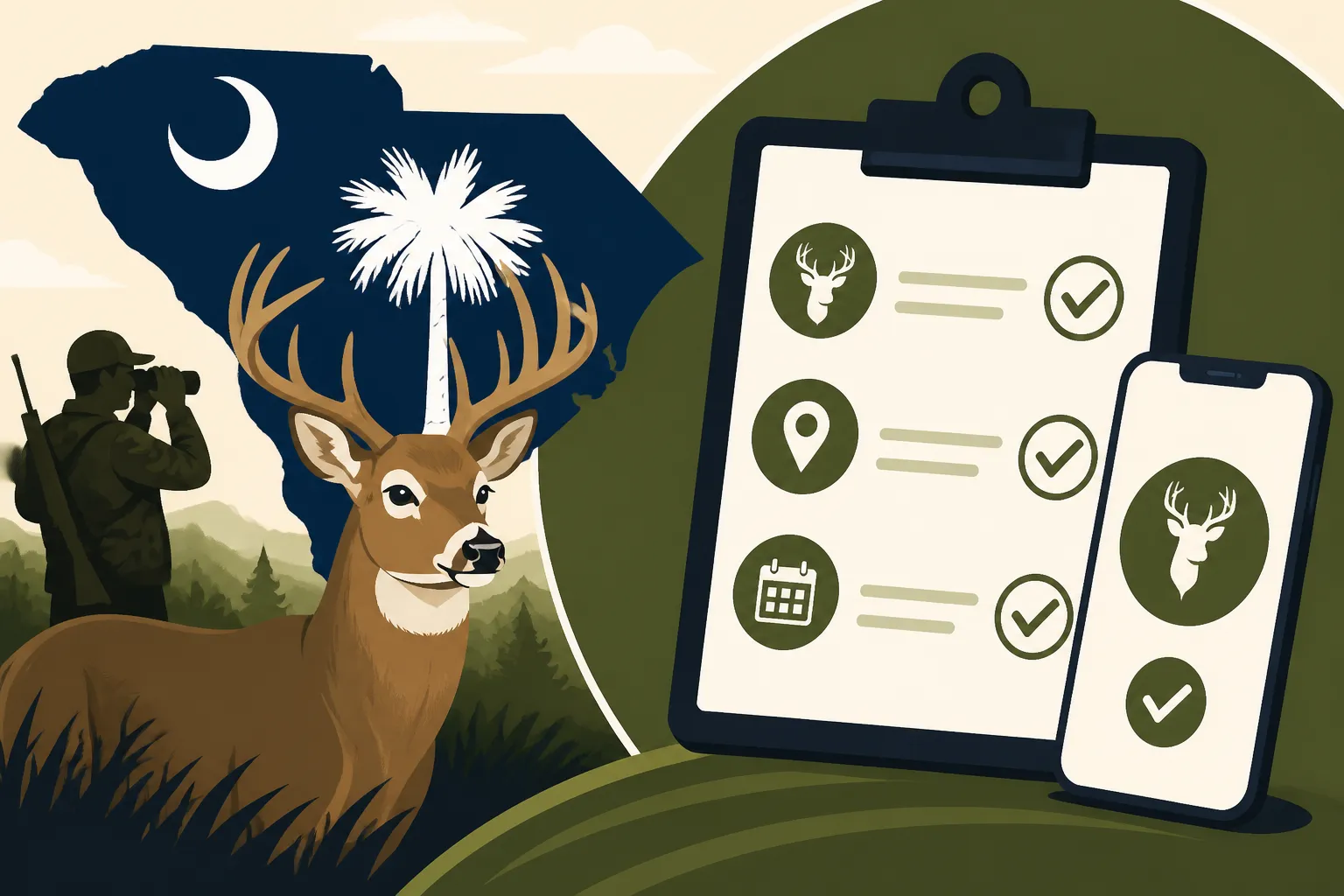
Next, you need to be able to accurately describe the harvest event itself. This includes the precise date and time the deer was taken. Then, you'll need the location details: the county where the harvest occurred, and importantly, the specific game zone. South Carolina is divided into South Carolina's Four Game Zones, and knowing which one you're hunting in is critical for proper reporting. If you were hunting on public land, you'll also need to identify the specific Wildlife Management Area (WMA), as these areas often have specific rules and require a South Carolina WMA Permit Requirements for access. Lastly, you’ll need to describe the deer itself: its sex (buck or doe) and, if it's an antlered deer, the exact number of points that are at least one inch long. Having these details handy, perhaps noted on a field card or even a quick note on your phone, will make the reporting process much smoother.
Mastering the Go Outdoors SC App and Website
Once you have all your essential information gathered, it's time to actually report your harvest. The primary method for doing this is through the Go Outdoors SC platform. Many hunters find the Go Outdoors SC app to be the most convenient option, as it allows for real-time reporting directly from the field, provided you have cell service. After logging into the app with your Customer ID and password, you’ll navigate to the "Game Check" section. Here, you'll be prompted to enter all the details we just discussed: date, time, county, game zone, WMA (if applicable), sex of the deer, and antler points.
The app is designed to be user-friendly, with clear fields for each piece of information. Take your time to double-check every entry before submitting. Once submitted, the system will immediately provide you with a unique confirmation number. This confirmation number serves as your legal tag and must be written down, screenshot, or otherwise noted and kept with the deer until it reaches its final destination (e.g., your home, a processor). If you're in an area with no cell service, or you simply prefer using a larger screen, you can also report your harvest via the Go Outdoors SC website once you return to an area with internet access. The website interface is very similar to the app, guiding you through the same data entry points. Some hunters find external mapping tools like GoHunt invaluable for pinpointing their exact location and confirming county lines before reporting, making the process even more precise when using the Go Outdoors SC system. Remember, this confirmation number is your proof of legal harvest, so treat it with the utmost importance.
Understanding Location and Deer Specifics for Accurate Reporting
Getting the basics right is crucial for deer reporting. Beyond just knowing you shot a deer, the SCDNR wants to know where it was taken and exactly what kind of deer it was. These specifics are not just minor details; they are fundamental data points that directly feed into the agency's ability to manage the deer herd effectively and ensure the long-term health of our wildlife. Skipping over these elements or being careless with them can unintentionally skew important management statistics.
Pinpointing Your Harvest Location
South Carolina's unique geography and diverse habitats are reflected in its game zone system, which directly impacts deer seasons and bag limits. When reporting your harvest, you absolutely must identify the correct county and game zone. This is critical because How South Carolina's Four Zones Split the Calendar can mean vastly different hunting regulations. For example, a deer harvested in the coastal plains of Zone 4 will have different season dates and potentially different management implications than one taken in the mountainous terrain of Zone 1. If you're unsure which zone a particular county or hunting spot falls into, a quick check of the SCDNR website or the official hunting guide will clarify this.
Furthermore, it's essential to differentiate between private land and public land, specifically Wildlife Management Areas (WMAs). If you were fortunate enough to harvest a deer on a WMA, you'll need to select that specific WMA from a dropdown list during the reporting process. This helps SCDNR track harvest pressure and success rates on public lands, informing future management decisions for these critical areas. For private land, simply selecting the correct county is sufficient. Utilizing a GPS device or a mapping application, such as the GoHunt app or the Using the Go Outdoors SC Map Tool on the SCDNR website, can be incredibly helpful in confirming your precise location, ensuring you select the correct county and zone. Being exact here prevents data corruption and ensures your harvest contributes meaningfully to the overall picture.
Describing Your Harvested Deer Accurately
Beyond location, the characteristics of the deer itself are vital for accurate reporting. The most fundamental distinction is between an antlered and an antlerless deer. An antlered deer is typically a buck with visible antlers, while an antlerless deer is usually a doe or a fawn. This distinction is crucial for population management, as SCDNR needs to track the buck-to-doe ratio and overall fawn recruitment. If you've harvested an antlered deer, you must accurately count the number of antler points. For reporting purposes, a point is generally defined as any projection of the antler at least one inch long, measured from the base of the point to its tip. Do not count points that are less than one inch.
Taking a moment to carefully count each point before submitting your report ensures accuracy. This data helps SCDNR track the age structure of the buck population and the success of various management strategies designed to promote older, healthier deer. Remember, the harvest report is not just a formality; it's a contribution to science. The accuracy of the data directly affects how effectively SCDNR can manage our deer herd for both conservation and sustained hunting opportunities. It’s also imperative to report your deer promptly after the harvest. While there's a grace period for certain situations, generally, the expectation is to report as soon as practically possible. Familiarize yourself with the exact rules, including the South Carolina Deer Reporting Deadline, to avoid any issues.
Troubleshooting Common Issues and Ensuring Compliance
Even with the best intentions and preparations, sometimes things don't go exactly as planned in the field. South Carolina's diverse terrain, from dense Lowcountry swamps to remote Upstate mountains, means hunters often encounter situations where immediate digital reporting isn't feasible. Knowing how to handle these common challenges and understanding the importance of compliance is key to a stress-free hunting season.
What to Do in Low-Service Areas
One of the most frequent frustrations hunters face when trying to report a deer is encountering areas with little to no cell service. It’s a common scenario: you’ve just tracked a deer deep into the Francis Marion National Forest, you make a successful shot, and then realize your phone has no signal to use the Go Outdoors SC app. Don't panic. The SCDNR understands that South Carolina's wild places aren't always covered by strong cellular signals. The most important thing is to document everything at the kill site. Take detailed photos of the deer, noting key characteristics and landmarks. Write down all the required information (date, time, county, game zone, sex, antler points) on a physical note pad or even a piece of paper in your wallet.
The legal requirement is to report your harvest "immediately upon removal from the field," but this is understood to mean as soon as practical, especially when connectivity is an issue. Your responsibility is to report the deer as soon as you regain cell service or internet access. This might mean waiting until you're back at camp, in your vehicle, or even home. The critical part is that you do not delay once service is available. Having your notes and photos ensures you can accurately complete the report without relying on memory once you're able to submit it. This proactive approach helps you stay compliant even in the most remote corners of the state.
Correcting Errors and Avoiding Penalties
Nobody wants to make a mistake when reporting their harvest, but sometimes errors happen. Maybe you miscounted antler points in the fading light, or accidentally selected the wrong county in a rush. If you realize you've made an error in your submitted report, the first step is to not ignore it. Attempting to correct it proactively is always the best course of action. Generally, minor errors can sometimes be amended directly through the Go Outdoors SC system, but for more significant discrepancies, or if you're unsure how to proceed, your best bet is to contact the SCDNR directly.
You can usually find contact information for their licensing or wildlife management division on the SCDNR website. Explain the situation clearly, provide your Customer ID and the confirmation number from your original report, and they will guide you through the correction process. Avoiding penalties is all about being upfront and responsible. Failing to report a deer, or submitting a deliberately false report, can lead to fines, loss of hunting privileges, and other legal consequences. The SCDNR takes harvest data very seriously for the sake of conservation. By understanding the South Carolina Deer Season Structure Explained and diligently following all reporting requirements, you contribute to the integrity of the system and ensure you remain in good standing as a South Carolina hunter.
The Broader Impact: Data-Driven Conservation for South Carolina's Future
When you take the time to accurately report your deer harvest, you're doing far more than simply checking a box. You're actively participating in a grander scheme of wildlife conservation that directly benefits the deer population and ensures that South Carolina remains a premier hunting destination. Every data point you provide, no matter how small it seems, contributes to a robust understanding of our state's most popular game animal.
How Your Report Shapes Wildlife Management
Your individual deer harvest report is a vital piece of a much larger puzzle that wildlife biologists at SCDNR meticulously assemble. The collective data helps them monitor critical aspects of the deer herd, such as population density in different regions, the overall health of the animals, and key demographic details like the South Carolina Deer Antler Growth Timeline and age structure of harvested bucks. For example, if reports consistently show a decline in antlerless deer harvests in a certain game zone, it might signal a need to adjust doe tags to help the population rebound. Conversely, if harvests are robust, it could indicate a healthy, thriving population that can support current or even expanded hunting opportunities.
This information also allows the SCDNR to track broader trends and respond to challenges. Data on harvest locations can help identify areas where diseases like EHD might be impacting the herd, or where habitat changes, such as extensive timber harvesting, are influencing deer movement and numbers. Without accurate, timely reports from hunters, SCDNR would be largely operating in the dark, making it difficult to implement effective management strategies. So, when you punch in those details after your hunt, know that you are directly contributing to the scientific framework that governs hunting in South Carolina, ultimately sustaining the very resource you pursue.
Contributing to a Legacy of Ethical and Sustainable Hunting
Beyond the scientific impact, your commitment to accurate deer reporting also bolsters the ethical foundation of hunting in South Carolina. In an age where hunting often faces scrutiny from the non-hunting public, demonstrating responsible self-regulation and adherence to conservation principles is paramount. When hunters diligently follow reporting requirements, it reflects positively on the entire hunting community, showcasing our commitment to ethical practices and the sustainable use of natural resources. It shows that we are not just taking from the land, but actively contributing to its management and well-being.
Moreover, consistent and accurate reporting ensures that the system remains fair and equitable for all. It helps SCDNR enforce bag limits and season structures, preventing overharvesting and ensuring that every hunter has a reasonable chance at a successful outing. By participating in this fundamental aspect of wildlife management, you become a steward of the land and its creatures. You’re helping to safeguard the tradition for future generations, ensuring that young hunters starting out, perhaps with their first Bowhunting South Carolina's Long Archery Season opportunity, will have a thriving deer population to pursue. It's a legacy of responsibility, ensuring that South Carolina remains a fantastic place to hunt for decades to come.
| Information Category | Required Details | Importance | Common Errors to Avoid |
|---|---|---|---|
| Hunter ID | Customer ID/Hunter ID, License Info | Identifies the hunter and validates license/permit | Forgetting your ID or having an expired license |
| Harvest Date/Time | Exact date and time of kill | Critical for season compliance and data tracking | Estimating or forgetting to note immediately |
| Location | County, Game Zone, WMA (if applicable) | Essential for localized population management | Misidentifying the county or game zone, forgetting WMA name |
| Deer Type | Antlered or Antlerless | Tracks buck-to-doe ratios and herd structure | Incorrectly classifying based on small antler nubs |
| Antler Points | Exact number of points (>= 1 inch) | Helps assess buck age structure and herd health | Miscounting, including points < 1 inch, or broken points |
| Confirmation | Receiving and noting Confirmation Number | Legal proof of harvest, temporary tag | Forgetting to record, losing the number, not confirming submission |
Disclaimer
The information provided in this guide is for general informational purposes only and is not intended as legal advice. Hunting regulations, license requirements, and reporting procedures can change. Always consult the most current South Carolina Department of Natural Resources (SCDNR) regulations, official hunting guides, and their website before engaging in any hunting activities. Hunters are responsible for knowing and adhering to all applicable laws and regulations.