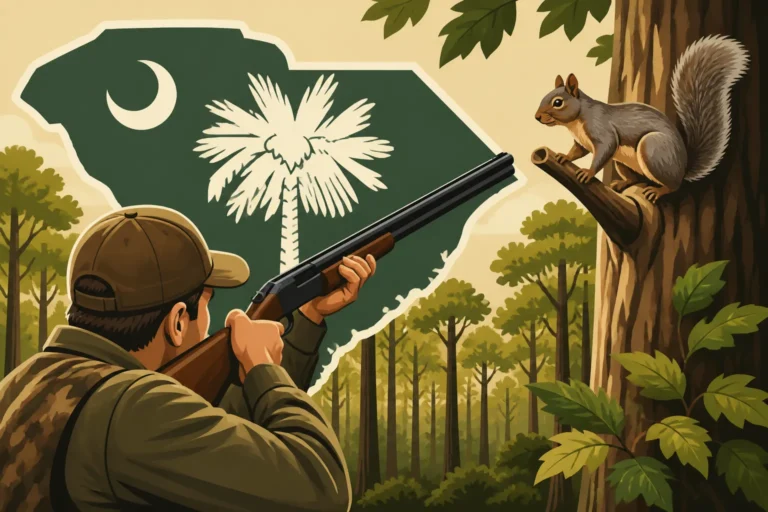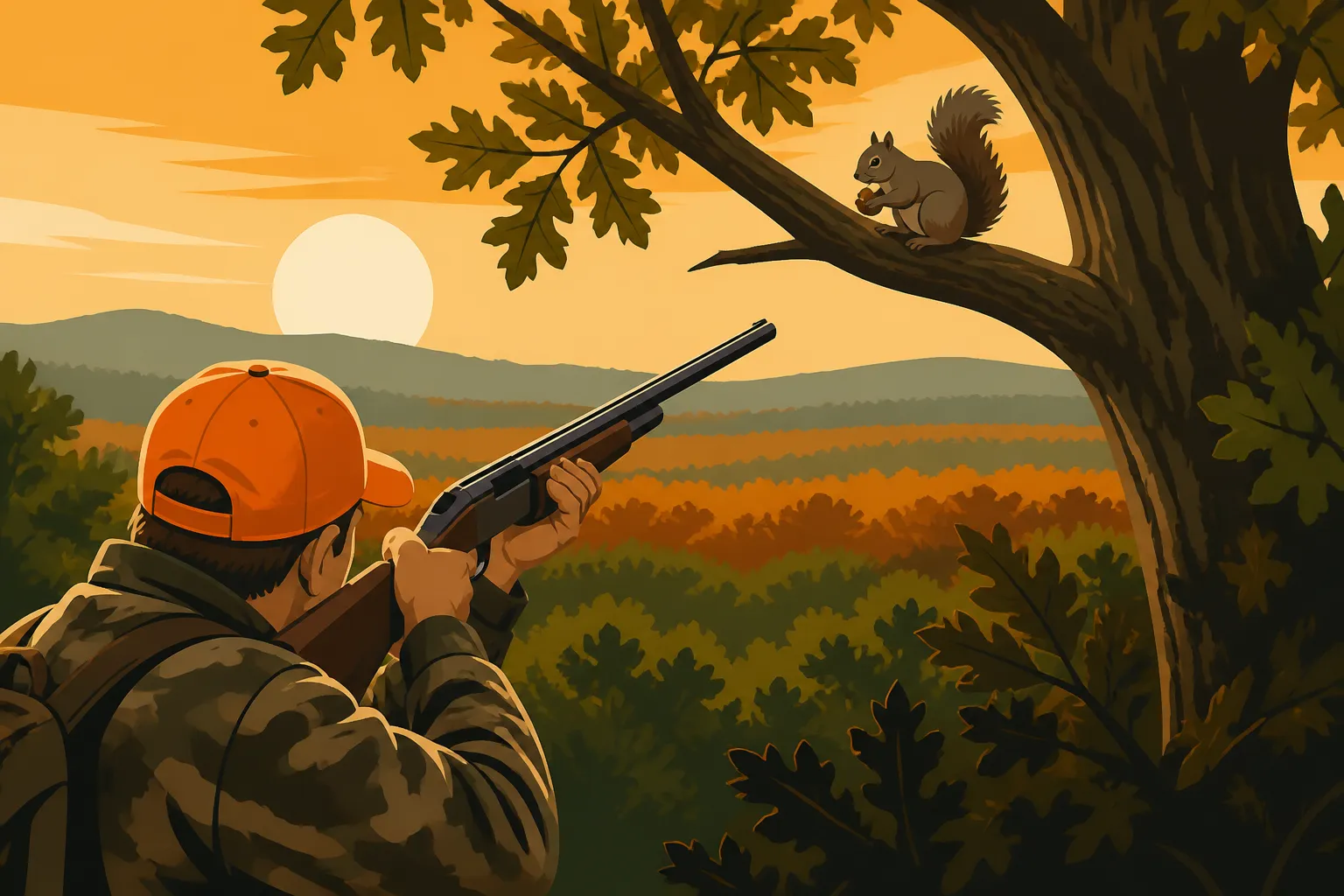
Squirrel Hunting a South Carolina Oak Ridge
There's nothing quite like the crisp air of a South Carolina autumn morning, especially when you're perched on an oak ridge, eyes peeled for the flick of a bushy tail. But finding those wily gray squirrels, let alone getting a clean shot, can be a real test of patience and woodcraft. This guide is all about honing those skills, from pinpointing the best habitat to executing the perfect stalk, so you can fill your game bag and your freezer with delicious wild game from the heart of the Palmetto State.
Understanding South Carolina Oak Ridges for Squirrels
When you think about squirrel hunting in South Carolina, especially for gray squirrels, those rolling oak ridges are prime real estate. These areas are ecological magnets, drawing in all sorts of wildlife, but particularly squirrels who rely heavily on the bounty of acorns. Understanding why these ridges are so productive and how to identify the best ones is your first step to consistent success.
Why Oak Ridges are Squirrel Superhighways
Oak ridges aren't just random patches of trees; they're vital food sources and travel corridors for squirrels. The elevation often means better drainage, which encourages robust oak growth, leading to prolific acorn crops. Squirrels are hardwired to seek out these nutritional powerhouses. When the acorns start dropping in late summer and fall, these ridges become bustling hubs of activity. You’ll find squirrels not just feeding, but also burying caches for winter, chasing rivals, and generally carrying on their squirrelly business. These ridges also often provide better visibility than dense bottomland, allowing squirrels to spot predators (and you!) more easily, which means you need to be extra stealthy.
Consider a typical oak ridge in, say, the Sumter National Forest. You might find a mixture of white oaks, red oaks, and perhaps some water oaks or willow oaks depending on how close you are to lower, wetter ground. Each species drops its acorns at slightly different times, creating a prolonged buffet for squirrels. White oaks tend to drop earlier, often starting in September, while red oaks hold their acorns later, into late fall and even winter. This staggered mast drop means that if you can locate a diverse stand of oaks, you'll have a consistent food source to hunt throughout the season. Paying attention to these subtle differences can make a huge impact on your hunting strategy, especially if you're out Hunting After a Poor Acorn Year.
Identifying Productive Oak Stands
Not all oak ridges are created equal. You want to look for areas with mature trees, as they produce the most acorns. Beyond that, consider the surrounding habitat. Are there dense thickets nearby where squirrels can escape pressure or bed down? Is there a water source, even a small seep or creek, that attracts other wildlife and provides a vital resource? Overgrown logging roads or old farm paths often run along these ridges, offering easier access for you, but also serving as natural travel lanes for squirrels.
Before you even step foot in the woods, a good mapping application can be your best friend. Services like GoHunt allow you to scrutinize aerial photos, identifying those tell-tale oak clusters and ridge lines from the comfort of your home. You can mark potential feeding areas, travel corridors, and even likely perching spots, giving you a huge leg up. When you're out scouting, look for fresh cuttings under the trees – these are the tell-tale signs that squirrels are actively feeding. A chewed-up acorn cap or a pile of shell fragments confirms that you've found a productive spot. Learning to identify these signs is crucial, and you can get more tips on Reading Cuttings Under an Oak. Don't forget to check for old den trees, too, indicated by large holes high up in the trunk or limbs.
Essential Gear and Setup for Oak Ridge Squirrel Hunting
Having the right gear makes all the difference when you're pursuing squirrels on an oak ridge. It’s not just about the gun; it’s about being comfortable, quiet, and effective in the South Carolina woods. From your firearm choice to your footwear, every piece of equipment plays a role in your success.
Firearms and Ammunition Choices
For squirrel hunting, especially on oak ridges where shots can sometimes be longer or require more precision, most hunters lean towards a .22 caliber rimfire rifle. The venerable .22 LR is hard to beat for its accuracy, low recoil, quiet report, and affordability of ammunition. It allows for headshots, which is key to preserving meat if you plan on eating your harvest. A good bolt-action .22, topped with a low-power scope (like a 1-4x or 2-7x), is an ideal setup for picking off wary squirrels from a distance.
However, shotguns also have their place, particularly if you’re hunting in thicker cover or prefer the challenge of shooting moving targets. A 20-gauge or even a .410 loaded with small shot (like 6s or 7½s) can be deadly accurate at closer ranges, especially for quick shots at squirrels darting through branches. The choice between a rifle and a shotgun often comes down to personal preference and the specific conditions of your hunting area. If you anticipate more close-range, fast-action shots in dense spots, a shotgun might be better. If you’re planning on methodical still-hunting with longer, more precise shots, the .22 rifle shines.
| Firearm Type | Caliber/Gauge | Typical Ammo | Pros | Cons | Ideal Scenario |
|---|---|---|---|---|---|
| Rifle | .22 LR | Solid/Hollow point | Accurate, quiet, cheap ammo, meat preservation | Slower follow-up shots, requires precision | Still-hunting, longer shots, open timber |
| Shotgun | 20 Gauge | #6 or #7.5 shot | Fast follow-up, effective on moving targets, wider pattern | More meat damage, louder, shorter effective range | Dense cover, quick shots, group hunting |
| Shotgun | .410 | #6 or #7.5 shot | Very light, less recoil, less meat damage than 12/20 | Very limited range, tight pattern requires skill | Beginners, close-range hunting, nostalgic hunting |
Clothing and Other Essential Gear
South Carolina weather can be notoriously fickle, even in the fall. Early season hunts might be quite warm and humid, while late season can bring chilly mornings. Lightweight, breathable layers are your best friend. A good pair of comfortable, quiet pants (think fleece or soft cotton blends) and a long-sleeved shirt will serve you well. You don’t need full camo for squirrels, but natural, muted tones that blend into the woods are always a good idea. Consider durable, snake-resistant boots, especially in areas with thick underbrush where you might encounter snakes even in cooler weather.
Beyond your firearm, a few other items are non-negotiable. A good pair of binoculars (8x or 10x power) can save you countless steps, allowing you to scan distant branches and identify squirrels before they see you. A small daypack for water, snacks, extra ammo, and a small game bag is always a good idea. Don't forget a sharp knife for field dressing, and if you’re using a .22, a game call can sometimes bring curious squirrels closer. If you're using a public land mapping tool like GoHunt, make sure your phone is fully charged and consider downloading offline maps, as cell service can be spotty in remote areas of the Sumter National Forest. You can also learn about Using Go Outdoors SC Without Cell Service for navigation.
Effective Tactics for Hunting Squirrels on an Oak Ridge
Hunting squirrels on an oak ridge isn't just about walking into the woods with a gun. It requires a blend of stealth, patience, and understanding squirrel behavior. You’re trying to outwit a creature that has evolved to survive in a predator-rich environment, so tactics matter.
The Art of Still-Hunting
Still-hunting is arguably the most effective method for oak ridge squirrels. It involves moving incredibly slowly, pausing frequently, and using your eyes and ears far more than your feet. The goal is to move through the woods so deliberately that you blend into the background, allowing you to spot squirrels before they detect you. Imagine taking only a few steps, then freezing for several minutes, scanning every branch, every tree trunk, and listening intently.
When still-hunting, pay close attention to the wind direction. Squirrels, like deer, rely on their sense of smell. While not as critical as for deer, playing the wind helps reduce your scent signature. More importantly, minimize noise. Dry leaves on an oak ridge can be incredibly loud. Try to step on bare ground, moss, or fallen logs. If you must step on leaves, do so slowly, placing your foot heel-to-toe and rolling your weight to minimize crunch. Look for the tell-tale flick of a tail, the subtle movement of a branch, or even the glint of an eye. Don't just look at the trunks; scan the canopy, especially where branches meet. Squirrels often bask in the sun on horizontal limbs or hide on the opposite side of a tree trunk. If you hear gnawing or cutting, freeze. It means a squirrel is feeding, and if you're patient, it will eventually present a shot. This slow, methodical approach is also excellent for Scouting South Carolina Public Land Before Season for other game.
Stalking and Ambush Techniques
Sometimes, you’ll spot a squirrel at a distance, or hear one, and need to get closer. This is where stalking comes in. Once you’ve located a squirrel, use natural cover to your advantage. Move from tree to tree, using their trunks as concealment. Keep low and take advantage of any dips in the terrain. If the squirrel is on the opposite side of a tree, try to circle around it, keeping the tree between you and the squirrel, slowly closing the distance. Remember, squirrels often climb higher to get a better view if they sense danger, so be prepared for an upward shot.
Ambush techniques can also be very effective, especially if you've scouted a particularly active feeding area. Find a comfortable spot with good visibility, preferably with your back against a large tree for concealment and stability. Sit down and wait. This can be particularly productive during the peak feeding times of early morning and late afternoon. If you’re hunting public land, you might find that other hunters have pushed squirrels around. Setting up an ambush along a known travel route between a dense bedding area and an oak flat can be a smart move, especially in areas that see more Hunting Pressure on South Carolina Public Land. A good pair of binoculars, like a quality 10×42, can really help you stay still and observe a wide area without making unnecessary movements.
Timing Your Hunt and Post-Harvest Tips
Timing is everything in squirrel hunting. Knowing when to be in the woods and what to do after the shot can greatly increase your chances of success and ensure you get the most out of your harvest.
Best Times to Hunt South Carolina Squirrels
The South Carolina squirrel season typically opens in early fall, aligning perfectly with the peak acorn drop in many areas. While you should always check the South Carolina Squirrel Season Dates each year, you'll generally find good hunting from September or October through late winter. Early season hunts can be a bit warmer, requiring lighter clothing and vigilance against snakes and insects. As the season progresses into colder months, squirrels often spend more time on the ground foraging as other food sources become scarce.
Within the season, the best times of day are usually the first few hours after sunrise and the last few hours before sunset. During these periods, squirrels are most active, scampering from their dens to feed, bury acorns, and socialize. Mid-day can be slower, especially on warm days, as squirrels might retreat to their dens or lay out on branches to bask. If you're targeting the earliest acorn drops from white oaks, focus your efforts in September and early October. For red oaks, you can often find activity well into November and December. Remember, the South Carolina Squirrel and Rabbit Season Rules apply, so always be aware of legal shooting hours.
Tracking, Field Dressing, and Enjoying Your Harvest
So, you've made a good shot. Now what? Even with a solid hit, a squirrel can sometimes cling to a branch or fall into thick cover. Mark the spot where you saw the squirrel last, and if it was a headshot, it'll likely drop straight down. If it ran or fell into thick brush, search meticulously. Squirrels are small and can be incredibly difficult to find in dense foliage. Use landmarks to orient yourself and grid-search the area. Patience here is key; a few extra minutes searching can mean the difference between recovering your game and leaving it.
Once recovered, prompt field dressing is important, especially in warmer South Carolina weather. A quick method is to make a cut across the back, then pull the skin down over the squirrel like a sweater from both ends. Remove the guts and get the squirrel on ice as soon as possible. Squirrel meat is delicious and versatile. It can be fried, stewed, or used in a variety of other recipes. Many hunters consider it a delicacy, a testament to the effort and skill involved in acquiring it. Knowing you harvested it yourself, from a beautiful South Carolina oak ridge, only makes it taste better.
Disclaimer
Hunting is an activity with inherent risks. Always prioritize safety, understand and follow all South Carolina hunting regulations, and ensure you have the appropriate licenses and permits. This guide is for informational purposes only and does not replace official SCDNR regulations or professional safety instruction.