Grouse Hunting Upstate Cover
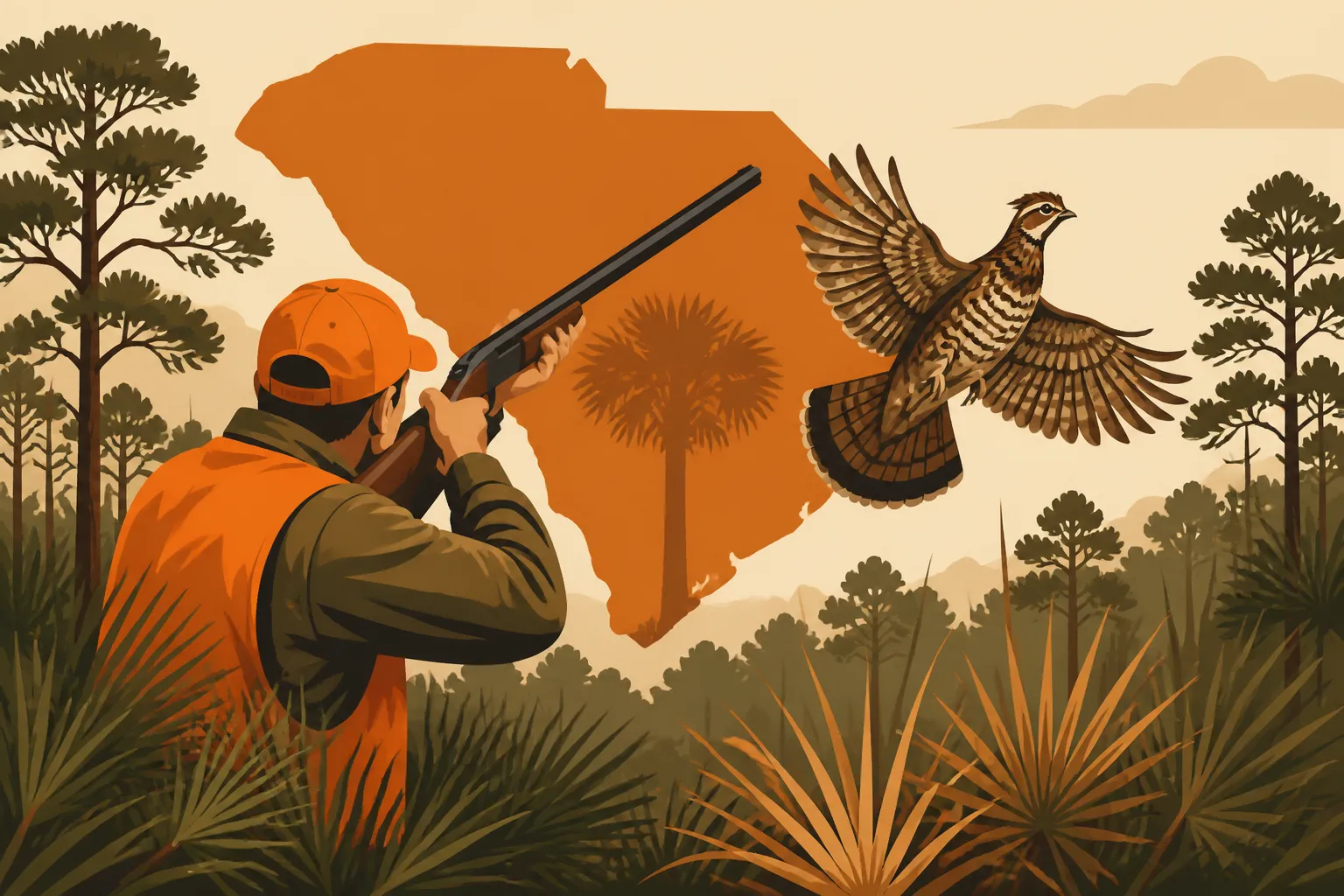
For many hunters, the idea of chasing ruffed grouse in South Carolina feels like a distant dream, a ghost of hunting lore whispered among old-timers. The reality is that these tenacious upland birds are incredibly challenging to find in the Palmetto State, demanding a unique blend of skill, patience, and knowledge of very specific habitats. If you've been wondering if grouse hunting is even possible here, or how to even begin, this guide will walk you through the nuances of pursuing these elusive birds in the rugged Upstate.
The Elusive Upstate Ruffed Grouse
South Carolina sits at the very southern edge of the ruffed grouse's natural range. This means that unlike the booming populations found in states like Michigan, Wisconsin, or Pennsylvania, our grouse are a rare and precious commodity. Hunting them here isn't about filling a limit; it's about the profound satisfaction of locating and flushing one of the most challenging upland birds in the country. Their scarcity, combined with the dense, rugged terrain they call home, makes every successful flush and shot a truly memorable event.
Understanding South Carolina's Grouse Population
The ruffed grouse population in South Carolina has seen a significant decline over the last several decades, a trend mirrored in many parts of the species' southern range. This isn't due to overhunting, but primarily to habitat loss and fragmentation. Grouse thrive in early successional forest, which means young, regenerating woods—the kind that typically follows timber harvests or natural disturbances like wildfires. As our forests mature and active timber management practices change, these critical habitats become less common, pushing grouse into smaller, more isolated pockets within the Blue Ridge Mountains.
You won't find large coveys of grouse like you might pheasants or quail. Instead, grouse are typically encountered singly or in very small family groups. Their incredible camouflage and penchant for thick cover make them masters of disappearing, often flushing with an explosive wing beat that can startle even the most seasoned hunter. For current specifics on their numbers and conservation efforts, understanding the general trends is key.
South Carolina Grouse Season Status and Regulations
Despite their rarity, ruffed grouse do have a hunting season in South Carolina, albeit a short one with restrictive bag limits. Typically, the season runs for a few weeks in the fall, overlapping with other small game seasons in the Upstate. The daily bag limit is usually very small, reflecting the conservation-minded approach to managing this precious resource. It's crucial to consult the latest regulations published by the South Carolina Department of Natural Resources (SCDNR) each year before you head out, as dates and limits can change. These regulations are often part of the broader South Carolina Small Game Season Rules. For the most up-to-date details on dates and bag limits specifically for these birds, always check the official guide for South Carolina Grouse Season Status.
It's also important to remember that general hunting license and WMA permit requirements still apply. If you're planning to hunt on public lands, you'll need the appropriate licenses and permits, which are outlined in resources like South Carolina WMA Permit Requirements. Always carry proof of your license, either physically or digitally through the Go Outdoors SC app, which is a fantastic tool for managing your hunting credentials.
Identifying Prime Upstate Grouse Habitat
Finding ruffed grouse in South Carolina is almost entirely about finding the right habitat. They are extremely particular about where they live, preferring specific types of dense, protective cover that offer both food and escape from predators. This means you won't find them just anywhere in the mountains; you need to know what to look for.
Key Cover Types and Forest Structure
In the South Carolina Upstate, ruffed grouse are primarily found in the higher elevations of the Blue Ridge Escarpment, often in areas with dense understory growth. Think of places where young hardwood regeneration mixes with thickets of rhododendron, mountain laurel, and even some scattered pines or hemlocks. These areas provide the perfect blend of cover—something thick enough to hide in, but also offering open ground underneath for foraging. They love areas where different age classes of timber meet, creating what's often called "edge habitat." A patch of clear-cut timber that's 5-15 years old, growing back into a mature hardwood stand, is often prime grouse territory. Look for areas with a mosaic of young growth and more mature trees, often near water sources or rocky outcroppings. The slopes and ridges of the Hunting the Blue Ridge Escarpment Ridgelines are certainly where you should focus your efforts.
Using mapping tools like GoHunt or onX Hunt is invaluable for identifying these areas. You can often spot recent timber cuts, dense vegetation, and elevation changes that indicate prime grouse habitat. Look for transitions in forest type, dense clusters of rhododendron, and areas that haven't been heavily disturbed by human activity in recent years.
Reading the Landscape for Grouse Sign
While grouse don't leave sign as obvious as deer rubs or scrapes, there are subtle clues if you know what to look for. One of the most famous signs is a "drumming log"—a fallen log or rock where a male grouse will stand and beat his wings to attract a mate. These logs will often have worn-down spots where the bird has repeatedly stood. You might also find dusting bowls, small depressions in soft dirt or leaves where grouse have taken dust baths.
Food sources are another key indicator. Grouse feed on a variety of buds, catkins, berries, and even some insects. In late fall and winter, they often rely on the buds of aspen, birch, and apple trees (if found in old farmsteads), though in South Carolina, they'll adapt to native dogwood, wild grape, and various evergreen buds. Learning to identify these food sources will guide you to potential hot spots. When you're scouting, use aerial photographs to pinpoint these areas. The same skills you use for Reading Aerial Photos for Upstate Deer are directly transferable here; look for the densest cover, areas with varied tree species, and proximity to water. Focusing on these less-traveled spots often helps with Finding Ground That Sees Fewer Hunters.
Tactical Approaches for Flushing These Ghosts
Hunting ruffed grouse is a demanding endeavor, both physically and mentally. These birds are renowned for their cunning and explosive flushes, often leaving hunters startled and empty-handed. Success often comes down to employing the right tactics for the thick cover they inhabit.
Working With a Bird Dog
For many upland hunters, chasing grouse is inextricably linked with the companionship and expertise of a well-trained bird dog. Breeds like English Setters, Brittanys, and various Pointers are popular choices. A good grouse dog is a specialist, trained to work close in the incredibly dense cover, using their nose to pinpoint the bird's location and then locking up on point. This allows the hunter to move into position, ready for the flush.
The advantage of a dog is immense in the South Carolina Upstate's briar patches and rhododendron thickets. Without a dog, you'd likely walk right past many birds. The dog's ability to scent and hold a bird, even briefly, gives you those precious few seconds to be ready. Training a dog for grouse is a significant commitment, focusing on obedience, scent work in heavy cover, and steadying to flush. It's a partnership where the dog does the hard work of finding, and you provide the follow-through.
Still-Hunting and Flusher Tactics
If you don't have a bird dog, or prefer to hunt without one, still-hunting grouse is a challenging but rewarding approach. This method requires extreme stealth, patience, and a keen eye. The key is to move incredibly slowly, pausing often (think the "walk-stop-listen" method) to scan the cover ahead and listen for the subtle sounds of a grouse. Their flush is often preceded by a nervous rustle in the leaves or a quick movement you might catch out of the corner of your eye.
Focus on working the edges of thickets, creek bottoms, and areas where cover transitions. A good strategy is to slowly work your way through dense patches, hoping to surprise a bird into flushing. Many hunters find success by walking along old logging roads or trails that run adjacent to prime cover, then dipping into the dense stuff. Be prepared for a lightning-fast shot in tight quarters. Grouse will often flush on the side of the thickest cover, attempting to put as much obstruction between you and them as possible. Areas like a Working a Creek Bottom for Late-Season Deer can also hold grouse due to the dense cover and moisture, making them good spots to explore.
Essential Gear and Preparedness for Upstate Grouse
Hunting the rugged terrain of the South Carolina Upstate for grouse demands more than just a shotgun; it requires thoughtful gear selection and a strong emphasis on safety and preparedness. The environment can be unforgiving, with steep slopes, dense undergrowth, and unpredictable weather.
Shotgun Choice and Ammunition
When it comes to shotguns for grouse in the Upstate, lightweight and fast-handling are the keywords. Most flushes will be close, quick, and in thick cover, so a heavy, long-barreled magnum won't do you any favors. Many grouse hunters prefer a 20-gauge or even a 16-gauge, though a lightweight 12-gauge can also be effective. The key is balance and swing. Shotguns like those discussed for Upland Guns for Quail Plantation Walks are often perfect for grouse, prioritizing quick mounting and maneuverability.
Choke selection is also critical. For the close-quarters flushes you'll encounter, open chokes like Skeet, Improved Cylinder, or even Cylinder are generally preferred. These spread the shot quickly, giving you a better chance of hitting a fast-moving bird in a tight window. For ammunition, 7 1/2 or 8 shot is standard, delivering enough pellets to effectively take down a grouse without over-penetrating.
Here's a quick comparison of common shotgun gauges for grouse:
| Shotgun Gauge | Pros for Grouse Hunting | Cons for Grouse Hunting | Recommended Chokes |
|---|---|---|---|
| 12 Gauge | Versatile, widely available ammo, ample shot spread | Can be heavy, more recoil, potentially "over-kill" for close shots | Improved Cylinder, Skeet |
| 20 Gauge | Lighter, less recoil, faster swing, ideal for tight cover | Less shot than 12ga, slightly less common ammo variety | Improved Cylinder, Skeet |
| 16 Gauge | "Sweet spot" between 12 and 20, classic upland choice | Ammo can be harder to find/more expensive to find | Modified, Improved Cylinder |
| .410 Bore | Very light, minimal recoil, ultimate challenge | Very limited range, requires precise shot placement and skill | Full, Modified |
Clothing, Navigation, and Safety
The Upstate mountains are beautiful but can be tough on gear and bodies. Your clothing needs to be briar-resistant and durable. Brush Pants for South Carolina Fencerows are an excellent choice, protecting your legs from thorns, briars, and abrasive undergrowth. Layering is key, as temperatures can vary greatly from morning to afternoon, especially during a fall hunt. A good upland vest with plenty of pockets for shells, water, and harvested birds is invaluable. While perhaps less prone to swamp hazards, durable, waterproof boots with good ankle support are essential for the uneven terrain, and even in the mountains, protective footwear like Snake Boots for South Carolina Swamp Ground offers peace of mind against occasional encounters with venomous snakes, though they are less common at higher elevations.
Navigation is paramount in the sprawling national forest lands of the Upstate. A reliable GPS unit or a smartphone app like GoHunt or onX Hunt, loaded with offline maps, is critical. Remember that cell service can be spotty to non-existent in many remote areas. Always carry a compass and a physical map as a backup. A whistle for signaling, a small first-aid kit, and plenty of water are also essential safety items. Always wear blaze orange, as required by South Carolina law, to ensure you are highly visible to other hunters. Reviewing resources like South Carolina Hunter Education Requirements can help you stay current on all necessary safety protocols for hunting public lands. The physically demanding nature of Hunting Upstate South Carolina means you need to be in good physical shape and prepared for a strenuous day.
Disclaimer
Please note: Hunting regulations and seasons are subject to change. Always consult the latest official South Carolina Department of Natural Resources (SCDNR) regulations before planning any hunting trip. This guide is for informational purposes only and does not supersede state hunting laws.