Posting a Drive Around a Lowcountry Swamp
Hunting deer in a Lowcountry swamp often feels like trying to find a needle in a haystack, especially when those wily whitetails melt into the dense cover before you even know they're there. Traditional still-hunting can be a monumental challenge in such thick, water-logged terrain, leaving many hunters frustrated and empty-handed. But there's a classic, effective strategy that many seasoned South Carolina hunters turn to when faced with these conditions: the deer drive. Specifically, knowing how to properly post standers around a lowcountry swamp can transform a hit-or-miss effort into a productive day afield, giving you a real chance at pushing deer into a manageable shot opportunity. This guide will walk you through the nuances of organizing and executing a successful swamp drive, focusing on the critical art of stander placement.
Understanding the Unique Challenges of Lowcountry Swamps
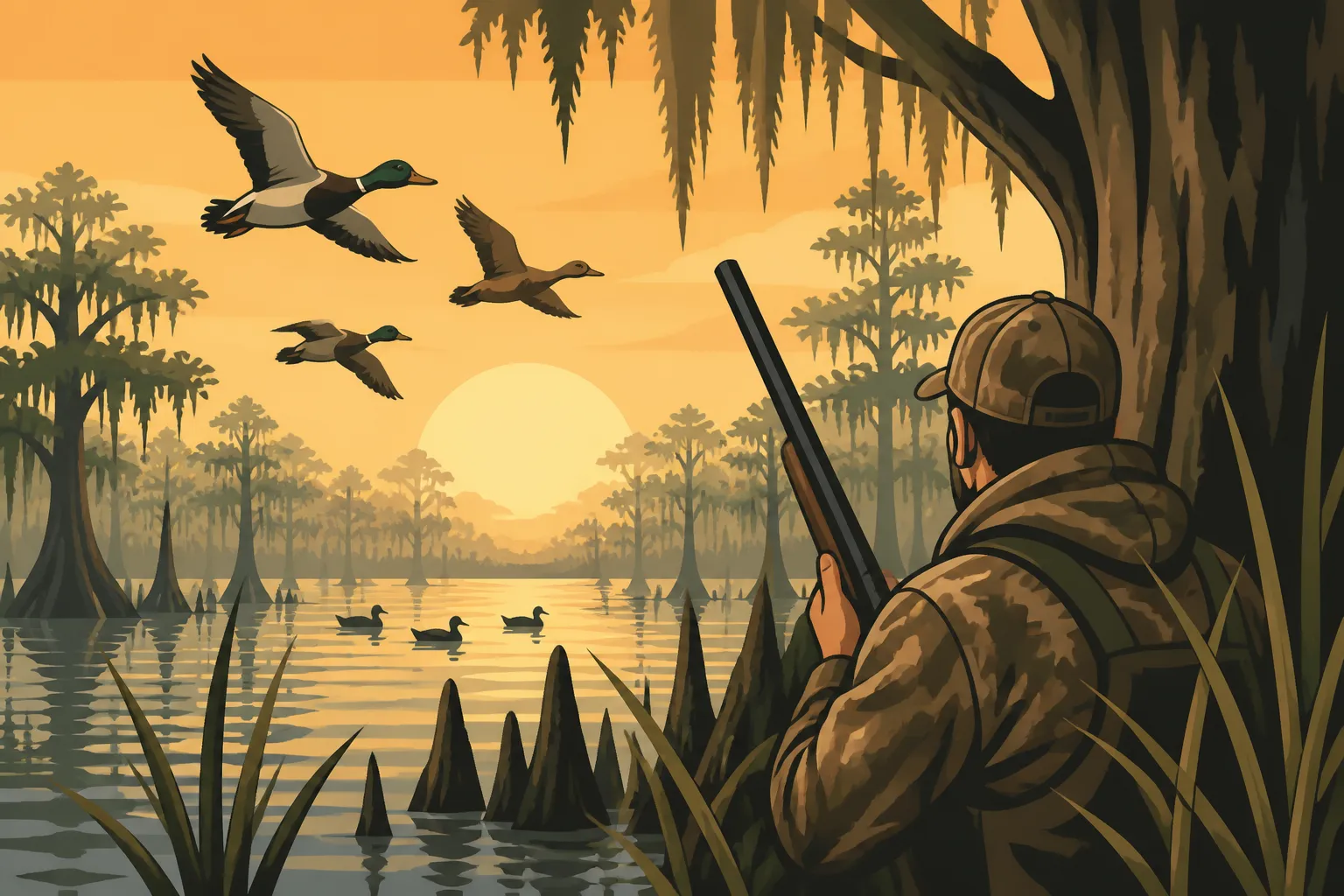
Before you even think about setting up a drive, you’ve got to deeply understand the beast you’re trying to conquer: the Lowcountry swamp itself. These aren't your typical pine plantations or hardwood ridges. South Carolina's coastal plain, with its meandering blackwater rivers and intricate networks of cypress and tupelo, creates a hunting environment unlike almost any other.
The primary challenge is the sheer density of cover. Picture impenetrable tangles of briars, switch cane, and thick underbrush, often laced with vines and thorny plants. Visibility can drop to mere yards, making it incredibly difficult to spot moving deer, let alone get a clear shot. Then there's the water – from shallow, ankle-deep muck to waist-deep sloughs that can swallow a hunter whole. This wet environment means soft ground, mucky bottoms, and constant battle against moisture. Deer often bed in the driest, thickest islands within the swamp, using the water as a natural barrier against predators and hunters alike.
Adding to the complexity are the resident deer themselves. Unlike deer in more open country, Lowcountry swamp deer are incredibly adept at navigating their watery, dense home. They don't typically run long distances through the open when pressured; instead, they'll often slink, crouch, or swim just enough to get out of sight, sometimes circling back or simply holding tight until the danger passes. This behavior means a drive isn't about making them panic and bolt, but rather about subtly pushing them along their preferred escape routes, which they use regularly. This intimate knowledge of their habitat makes them masters of evasion.
Finally, you can't ignore the environmental factors that make hunting these areas a test of endurance. Especially during the early archery season in August and September, the heat and humidity are oppressive. The air is thick, and every movement is a sweat-soaked effort. Then there are the bugs – mosquitoes, gnats, and horseflies that can drive even the most determined hunter to distraction. And, of course, the ever-present concern of snakes, particularly cottonmouths, which thrive in these wetlands. Dressing appropriately with lightweight, breathable clothing and Snake Boots for South Carolina Swamp Ground is crucial, as is a good insect repellent. All these elements combined necessitate a very specific approach to deer driving, one that prioritizes stealth, patience, and a deep respect for the terrain.
Essential Planning and Scouting for a Successful Drive
A successful swamp drive doesn't happen on a whim. It's the culmination of careful planning, thorough scouting, and clear communication among your hunting party. Think of it as a chess match against a clever opponent; you need to anticipate their moves before they make them.
Pre-Season Reconnaissance and Mapping
The groundwork for a productive drive begins long before opening day. You need to identify the areas within the swamp where deer are likely bedding, feeding, and, most importantly, where they are likely to exit when pressured. This means getting out there and putting boots on the ground, but also leveraging modern mapping tools. I often rely on platforms like GoHunt to study aerial photographs of the area. These maps are invaluable for identifying subtle topographical changes that might not be obvious from the ground: slightly elevated islands, dry ridges, old logging roads that cut through the muck, or even barely perceptible creek crossings. Deer, like us, prefer the path of least resistance. These slight changes in elevation or cover become natural travel corridors and escape routes.
Look for areas where thick cover meets a more open edge, like the transition from a dense swamp to a pine stand, a power line cut, or the edge of an old field. These transition zones are prime spots for deer to stage before moving into open areas or to escape into when disturbed. During your scouting, pay close attention to fresh sign: tracks, rubs, scrapes, and droppings. A cluster of fresh tracks leading out of a swamp onto a dry ridge is a golden indicator of an exit route. Similarly, a well-used trail along a tidal creek edge could be a natural escape route, making it an ideal place for a stander. Understanding Reading a Tidal Creek for Deer Movement can give you a significant advantage.
Don't just look for where they enter and exit; try to understand the path they take within the swamp. Are there any natural funnels created by water depth, fallen trees, or exceptionally thick vegetation that would channel deer in a specific direction? Identifying these "funnel points" is crucial for effective stander placement. Mark all these observations – bedding areas, travel corridors, exit routes, and potential stander locations – on your GoHunt app or a physical map. This visual aid will be critical when you're briefing your team.
Assembling Your Team and Assigning Roles
The size and makeup of your hunting party will dictate the scope of your drive. For most Lowcountry swamp drives, a team of three to five hunters is ideal for Deer Drives With Three or Four Hunters. More than that can sometimes lead to too much noise and confusion, while fewer might not be enough to adequately cover escape routes or provide enough pressure. You'll need at least two distinct roles:
- Standers (Blockers): These are the hunters who will be positioned quietly along the anticipated escape routes. Their job is to remain absolutely still, concealed, and ready to take a shot when deer are pushed their way. They need to understand their shooting lanes and be aware of where other hunters are located for safety.
- Drivers: These hunters enter the swamp from the opposite side of the standers and slowly, methodically push through the cover, creating just enough disturbance to move the deer. Their pace and noise level are critical – you don't want to spook deer into a blind panic, but rather encourage them to move predictably.
Before the drive begins, gather your team for a comprehensive safety briefing. This is non-negotiable. Clearly mark everyone's position on a map, discuss the plan, and reiterate safety protocols:
- Blaze Orange: Everyone, including drivers and standers, should wear sufficient blaze orange, especially in the thick cover of a drive.
- Shooting Lanes: Standers must clearly identify their safe shooting lanes. Never shoot at sound or movement you haven't positively identified as a deer. Know your background.
- Communication: Establish clear communication signals. Two-way radios are invaluable in dense swamps where cell service is often nonexistent. Designate a channel and stick to it.
- Emergency Plan: Discuss what to do in case of an injury or if someone gets disoriented. Have a first aid kit and a plan for extraction.
- No Loaded Guns While Moving: For drivers, keep firearms unloaded until in position or until a clear, safe shooting opportunity arises, especially when navigating difficult terrain.
By meticulously planning and clearly defining roles, you lay the foundation for a safe and successful drive, maximizing your chances of encountering deer in the treacherous Lowcountry swamp.
Strategic Placement: Posting Your Standers Effectively
This is where the rubber meets the road. The success of your drive hinges almost entirely on placing your standers in the right locations. It’s a delicate balance of anticipating deer behavior, understanding the terrain, and maximizing shooting opportunities while prioritizing safety.
Identifying Key Exit Routes and Funnels
Deer, especially pressured ones, are creatures of habit. They will often choose the path of least resistance or their familiar escape routes when pushed. Your job as the drive organizer is to predict these routes and cover them with standers. In a Lowcountry swamp, these key exit routes are rarely wide-open fields. Instead, they might be:
- Slightly Higher Ground: Even a foot or two of elevation can be a highway for deer moving through a swamp. Look for dry fingers of land, old ditch banks, or subtle ridges. These elevated spots provide deer with easier footing and a better vantage point, making them prime escape routes.
- Old Logging Roads or ATV Trails: These often cut through dense areas, providing clear travel lanes. Deer will frequently use these paths, especially if they offer an easier walk than slogging through deep water and thick muck.
- Natural Pinch Points: These are areas where the swamp narrows, forcing deer into a smaller corridor. This could be where two deep water sloughs come close together, or where a dense thicket funnels deer toward a more open patch. A prime example is Hunting a Funnel Between Two Swamps, where deer are naturally channeled.
- Swamp Edges: Deer will often try to skirt the very edge of the swamp, using the transition from water to dry land as their escape path. This is especially true if the adjacent dry land offers better visibility or cover, such as a thick pine stand or a field edge.
- Creek Crossings: If a smaller creek flows through or near the swamp, deer will have established crossing points. Posting a stander near one of these can be highly effective.
Before the drive, use your scouted information, possibly marked on GoHunt, to pinpoint these locations. Have the standers walk in quietly and set up well before the drivers begin their push.
Concealment, Elevation, and Shooting Lanes
Once a stander knows their general area, their specific setup is critical:
- Concealment: In dense swamp environments, blending in is paramount. Deer in these areas are used to seeing little human activity. Standers should choose a spot with natural cover – a thick palmetto clump, a large cypress base, or dense briars – to break up their outline. A simple ground blind can also be incredibly effective, especially when brushed in naturally. Using a Ground Blind on South Carolina Public Land offers some great tips for this. The goal isn't just to be out of sight from deer far away, but to be invisible to a deer that might be slipping past at close range.
- Elevation (When Possible): While climbing a tree in a swamp isn't always feasible or safe due to the soft ground and often sparse suitable trees, any slight elevation can be an advantage. Even standing on a small hump of dry ground or a slightly raised bank can improve your line of sight over the underbrush and allow for a safer shot angle. If there's a sturdy, safe tree available, a climbing stand or even a ladder stand can provide a huge advantage, offering a wider view and better shot opportunities.
- Clear Shooting Lanes: Before the drive starts, each stander must meticulously clear any small branches or vines that might impede a shot within their designated shooting zone. In thick Lowcountry cover, deer often appear and disappear quickly. You don't want a small twig deflecting a crucial shot. Identify a few key openings where a deer is most likely to pass and ensure those lanes are unobstructed.
The Importance of Communication and Safety
During the drive, communication is your lifeline. Standers should be in position and remain silent. Drivers should use radios to communicate their progress and any deer sightings. A common mistake is for drivers to move too quickly or make too much noise, which can cause deer to break wildly or circle back through the drivers rather than moving towards the standers. A slow, steady push with consistent noise (vocalizations, stick beating, etc.) is usually most effective.
Standers should be keenly aware of their surroundings, not just looking forward but listening for subtle sounds – a rustle in the leaves, a splash in the water, a snapping twig. Deer in a swamp often approach silently, slipping through the cover like ghosts. When a deer is spotted, the stander should take a clear, ethical shot if available, always being mindful of the drivers' positions. The GoHunt app can be useful here too, as hunters can share their precise GPS locations in real-time, greatly enhancing safety.
Executing the Drive and Ensuring Recovery
With standers strategically placed and roles assigned, it’s time to put the plan into action. A well-executed drive is a symphony of coordinated effort and patience, culminating in hopefully a successful harvest.
The Art of the Drive Itself
The drivers’ role is to apply steady, consistent pressure, not a frantic chase. Start your push from the opposite end of the swamp from your standers. The drivers should spread out, maintaining a visual or verbal connection with each other, covering the width of the target area. The pace should be slow enough that you’re not outrunning the deer, but steady enough to keep them moving. Think of it as a methodical sweep.
Make noise, but don’t just crash blindly. Talking, clanking sticks, or even strategically blowing a whistle or grunt tube periodically can be effective. The goal is to make the deer feel uneasy and nudge them forward, usually along their natural escape routes, towards the waiting standers. Pay attention to how deer react. If they bust out the sides, the drivers might need to adjust their spread or angle on future drives. If they circle back, the pressure might be too intense or not spread wide enough. Experience in Deer Drives With Three or Four Hunters will quickly teach you the nuances.
Patience for the standers is equally critical. Lowcountry deer are notorious for slipping out quietly or pausing just inside the thick cover before making a move. Don't be surprised if a deer doesn't come barreling through like it's being chased by hounds. It might sneak, walk, or even swim its way through the water, sometimes popping out just yards from a stander. Stay alert, motionless, and ready.
Tracking and Recovery in Challenging Terrain
Once a shot is taken, the real challenge in a swamp can begin: recovery. Lowcountry swamps are notoriously difficult for blood trailing. The soft, mucky ground can obliterate tracks, and water often washes away blood trails. This is why shot placement is absolutely paramount. Aim for vitals, and only take shots that offer a high probability of a clean, ethical kill.
Even with a well-placed shot, a deer might run a short distance into even thicker cover or water. Give the deer time, especially if it's a marginal hit, but not too much time if the weather is warm. If the temperature is high, you'll need to move quicker to prevent spoilage. However, for a solid hit, a 30-minute to an hour wait allows the deer to expire quietly. When you begin tracking, take your time. Look for bent grass, broken twigs, and disturbed leaves, not just blood. Tracking a Deer Through South Carolina Pine Straw is tough, and swamp mud is even tougher. Mark your last blood or sign with flagging tape or a piece of toilet paper so you can easily return to it if you lose the trail.
Consider bringing a tracking dog if legal in your area and available. A good tracking dog can be an absolute lifesaver in a swamp, quickly navigating the terrain and picking up the scent trail that humans would easily miss. If you recover the deer, the work isn't over. Getting a deer out of a deep, mucky swamp can be incredibly hard work. Deer carts are often useless in such terrain, so be prepared for a long, arduous drag or consider quartering the deer in the field. Recovering a Deer From a Lowcountry Swamp requires planning and often a strong back, or two. Have a plan for how you'll extract the animal before the drive even begins.
Successfully posting a drive around a Lowcountry swamp is a rewarding experience that combines skill, teamwork, and a deep respect for the unique hunting environment of South Carolina. It’s a classic method that, when done correctly, can consistently put deer in front of your standers.
Disclaimer
Hunting is an inherently dangerous activity. Always prioritize safety, adhere to all local, state, and federal hunting regulations, and ensure you have the necessary licenses and permits. This guide is for informational purposes only and should not replace proper hunter education or professional guidance.