Entry Routes Through Standing Soybeans
Hunting deer near standing soybeans in South Carolina can be incredibly productive, but getting to your stand without blowing out every deer in the field is a monumental challenge. The rustle of dry leaves, the crunch of bean pods underfoot, or simply being silhouetted against the open field can spell disaster for your hunt. This guide will help you master silent and effective entry routes, ensuring your presence goes undetected and you maximize your chances of a successful harvest.
Understanding Deer Behavior Around Soybean Fields
Soybean fields are absolute magnets for deer in South Carolina, especially from early archery season right through the primitive weapons and gun seasons, until the beans are completely harvested. But it’s not just about the food; these fields offer a complex habitat that deer utilize in several critical ways throughout the day and the season. Knowing how they use these fields is the first step to planning your stealthy approach.
First and foremost, soybeans are a high-energy food source. Deer will hit these fields hard, often at dawn and dusk, much like they would a prime acorn flat or a lush food plot. In the early season, when the beans are still green and succulent, deer will browse the leafy plants. As the season progresses and the pods begin to fill out and dry, they become an even more irresistible carbohydrate-rich meal. This consistent food source means deer are often living very close to these fields, bedding in adjacent thickets, pine stands, or swamp edges.
Beyond just feeding, standing soybeans offer surprisingly good cover. While they might look open from a distance, a mature bean field can be waist-high or taller, providing a visual screen for deer moving within it. They’ll often use the edges of the fields as travel corridors, moving from bedding areas to other food sources, or simply cruising during the rut. Bucks, in particular, will sometimes skirt the perimeters, scent-checking for does without fully exposing themselves. The transition zone where the field meets the woods is always a high-traffic area, a natural funnel point that hunters love, but also one that requires extreme caution during entry.
The impact of hunting pressure also profoundly affects how deer use these fields. Early in the season, before heavy pressure sets in, deer might be more comfortable feeding deep in the field during daylight. As soon as they feel the presence of hunters – whether it’s scent left behind, noise, or visual disturbance – they quickly adapt. They’ll become more nocturnal, hitting the fields primarily under the cover of darkness, or only venturing out into the most remote corners of a large field. This means your entry and exit strategies become even more critical to avoid educating the local deer herd. A single careless approach can spoil a field for weeks.
Key Considerations for Planning Your Entry
Before you even think about stepping foot near a soybean field, you need a meticulous plan. There are several critical factors in South Carolina that will dictate whether your entry is successful or if you inadvertently send every deer within a quarter-mile scurrying.
Wind Direction and Thermals
This is arguably the most crucial factor in South Carolina hunting, especially around agricultural fields. The prevailing wind should always be in your favor, carrying your scent away from where you expect deer to be. However, it's not always as simple as checking the forecast. Early mornings, especially in the lowcountry or river bottoms, often experience thermals – air currents that flow downhill as the earth cools. This means your scent could actually drift down into a creek bottom or swamp before the sun fully rises and reverses the thermal flow. As the sun warms the earth, thermals reverse, pulling scent up hillsides and out of low-lying areas. You need to use a tool like the wind-checker feature on the GoHunt app or a simple puff bottle to confirm the actual air movement as you approach your stand. Imagine walking along a wood line on what you think is a good crosswind, only for a thermal to eddy your scent right into the field where deer are still feeding. Disaster. Always plan your entry so that if the wind or thermals shift slightly, your scent cone still avoids the high-traffic areas.
Utilizing Natural Cover and Terrain Features
South Carolina’s landscape, even around vast agricultural fields, often offers natural pathways that can be exploited for stealthy entry. Look for ditches, creeks, drainage areas, or hedgerows that run perpendicular or parallel to your desired stand location. These natural depressions or elevated lines of vegetation can shield you from the sight of deer in the field and muffle your footsteps. A dry creek bed, even if it means a slightly longer walk, might provide the best "trench warfare" approach to your stand. Often, these features are overlooked by other hunters, offering low-pressure pathways. When using a detailed mapping application like GoHunt, you can really zoom in on aerial photos to identify these subtle terrain features that might not be obvious from the ground. Look for darker lines indicating thicker vegetation or depressions.
Timing Your Approach for Minimal Impact
The time of day directly influences deer activity and, consequently, your entry strategy. For a morning hunt, you need to be at your stand well before legal shooting light. This means navigating in the dark, which increases the challenge of being quiet and staying on your chosen path. However, the darkness also offers the most visual concealment. For an evening hunt, you'll ideally be in your stand at least an hour or two before deer are expected to enter the field. This allows the area to settle down after your presence and gives any deer already in the vicinity time to move off or relax. Avoid entering a field edge stand when deer are already actively feeding in the field. This sounds obvious, but many hunters, eager to get in the stand, will push this too far, resulting in busted hunts. Consider a Warm-Weather Sitting Strategy in South Carolina for those early season hunts when deer might move later in the evening due to heat.
Minimizing Hunter Impact: Scent, Noise, and Visuals
Every step you take, every rustle of your clothing, and every breath you exhale carries potential for detection. Your clothing should be quiet – no noisy fabrics. Wash your hunting clothes in scent-free detergent and store them in airtight containers. Use scent-eliminating sprays on your boots and lower clothing, but don't rely solely on them; the wind is your ultimate scent control.
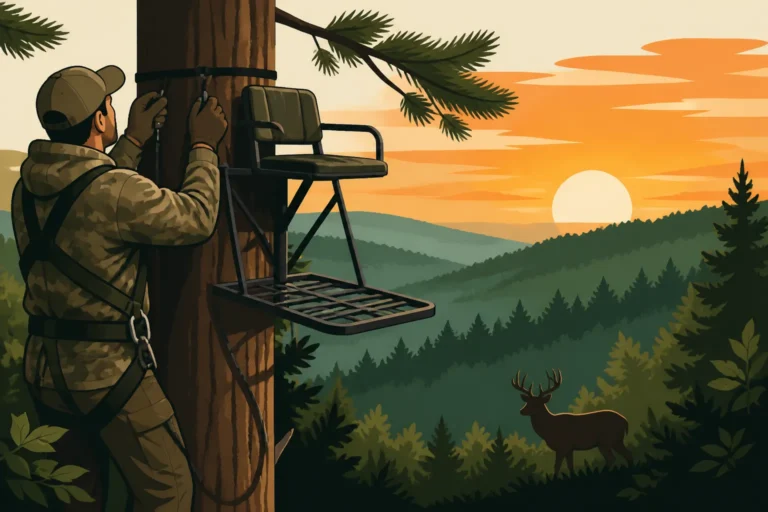
For noise, move slowly and deliberately. If you're walking through dry leaves or crunching debris, pick up your feet, don't shuffle. Consider what gear rattles or clanks on your pack. If you need to trim branches for a clear path, do it well before the season. Visually, avoid silhouetting yourself against the sky or an open field. Stay low, use the cover you've identified, and break up your outline. Walking in with a ground blind and setting it up quietly for a Using a Ground Blind on South Carolina Public Land hunt can sometimes be a more effective strategy than climbing a noisy stand.
Practical Entry Strategies for Standing Soybeans
Now that we've covered the critical considerations, let's dive into some actionable strategies for approaching those enticing soybean fields without alarming their inhabitants.
The Wood Line Creep
This is often the go-to strategy and can be highly effective if executed properly. Instead of walking directly into the field, you stay deep within the treeline or brush that borders the soybeans. The idea is to use the existing timber and undergrowth as a natural curtain. You're essentially moving parallel to the field, staying out of sight of any deer that might already be in the beans or along the edge.
- Execution: Before the season, scout the wood line for existing game trails or natural breaks in the undergrowth that are quiet to walk. Trim any low-hanging branches or noisy vines that might impede your silent progress. On hunt day, move at a snail's pace, constantly checking the wind and thermals. If the wind is blowing your scent into the field, this strategy is a no-go, regardless of how good the cover is. Your goal is to reach your stand location, usually set slightly inside the wood line, without ever being seen or smelled by deer in the field. This often works best when your stand is positioned a bit deeper into the woods, allowing you to approach from behind it, further obscuring your movement from the field.
Utilizing Ditches and Creek Bottoms
South Carolina, particularly in the Lowcountry and Pee Dee regions, is crisscrossed with drainage ditches and small creeks. These seemingly insignificant features can be a hunter's best friend. They offer excellent topographical concealment and often contain thicker vegetation than the surrounding hardwoods or pine stands.
- Execution: Study your aerial maps – GoHunt is invaluable for this – and identify any ditches or creek beds that lead in the direction of your stand. Some might run right up to the field edge, offering a perfectly hidden approach. Walk slowly in the bottom of these depressions, letting the banks and vegetation hide your movements. Be mindful of water, especially after heavy rains, as splashing can be very noisy. Also, remember that these low areas can be thermal sinks in the morning, meaning your scent might pool and drift differently than the prevailing wind. Always have a backup plan if a preferred ditch is too wet or noisy. This method is particularly effective for reaching stands set on points or peninsulas that jut out into a field, allowing a deep, concealed approach.
Deep Woods Approach
For fields that are bordered by substantial timber, a deep woods approach can be the ticket. This means you’re not skirting the immediate edge but rather penetrating 50-100 yards or more into the timber, aiming to get behind your stand location.
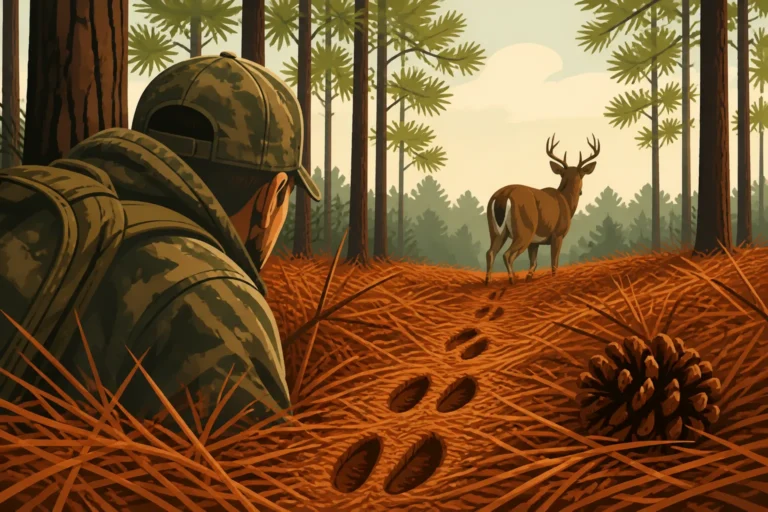
- Execution: This method requires extensive pre-season scouting to identify a clear, quiet path through the woods. Look for areas with minimal underbrush or deep pine needle beds. Your objective is to approach your stand from the side or slightly behind it, minimizing any movement that could be seen from the field itself. This can be especially useful for morning hunts where deer might still be making their way out of the field into bedding areas within the woods. By moving deeper, you avoid intercepting them on their exit routes. Always be conscious of how far your scent cone is drifting into the woods as you move. A strong headwind or crosswind is ideal for this tactic. For public land hunters, learning to read these timber stands and how deer move through them is crucial for Scouting South Carolina Public Land Before Season.
The "Edge Cut" with Extreme Caution
Sometimes, you might need to cross a short, open section of field edge to get to your stand, perhaps because a natural funnel points to a specific setup. This is inherently risky and should only be attempted under specific, highly controlled conditions.
- Execution: This is strictly for pre-dawn or post-dusk movements. Absolute darkness is your friend here. If there's any light at all, deer will pick up your silhouette. The wind must be perfect, blowing parallel to the field edge and away from any expected deer activity. Move as fast as you can silently. This isn't a crawl, but it's not a stroll either. You need to get across that exposed section quickly. This strategy is really a last resort and often used when Setting Up on a Lowcountry Field Edge where cover is minimal right up to the stand itself. The less time you spend exposed, the better.
Adapting to Conditions and Timing
Hunting soybeans successfully isn't a one-size-fits-all endeavor. The deer's behavior, and therefore your best approach, will change as the season progresses and as weather conditions shift.
Early Season vs. Late Season
In the early archery season, especially in August and September when South Carolina temperatures are still stifling, the soybeans are green and lush. Deer might feed earlier in the evening and later into the morning to avoid the midday heat. Your approach needs to account for this. Consider entering even earlier for an evening hunt, giving the woods more time to settle. Conversely, as the season transitions into late fall and early winter, the soybeans mature, dry out, and turn brown. Deer will still be hammering the dried pods for carbohydrates. The cooler weather might mean deer are more active throughout the day, so your mid-morning or mid-afternoon approaches need to be even more covert. This is when a field that saw little pressure can suddenly become prime, especially Hunting After a Poor Acorn Year, as deer shift their focus to alternative food sources.
Weather Fronts and Their Impact
A significant weather change can completely alter deer movement and feeding patterns. A cold front rolling through South Carolina after a stretch of warm weather often kick-starts deer activity. They might hit the soybean fields harder and earlier in the day. This is a prime opportunity, but it also means other hunters will likely be out, increasing overall pressure. On the flip side, a sudden rain shower can be a gift. The rain helps to muffle your footsteps and wash away your scent, making a stealthy entry much easier. Immediately after a downpour, when the ground is soft, can be an excellent time to slip into a stand overlooking a soybean field, as deer are often quick to emerge and feed after the rain stops. Always be ready to adapt your strategy to the day’s forecast.
The South Carolina Rut and Soybeans
During the peak of the rut, roughly late October through November in much of South Carolina, deer behavior around soybeans changes yet again. While does will still feed in the fields, bucks will be cruising, scent-checking for receptive females. They might follow doe trails along the field edges, cut across corners, or even venture into the open, driven by their urge to breed. Your entry during the rut might need to be even more cautious, as a buck could be anywhere, not just where you expect feeding deer. Consider placing stands in bottlenecks or funnels that lead to or from soybean fields, rather than directly on the field itself. This allows you to intercept cruising bucks without spooking the entire field. Understanding Hunting the South Carolina Rut by Zone can help you time your hunts around these fields perfectly.
By meticulously planning your entry routes, being hyper-aware of wind and thermals, and adapting to the dynamic conditions of South Carolina's hunting seasons, you significantly increase your odds of success when hunting deer around standing soybeans. Remember, the quietest hunter often fills the most tags.
| Entry Strategy | Best Conditions | Pros | Cons |
|---|---|---|---|
| Wood Line Creep | Favorable wind, dense adjacent cover | Low visual impact, natural sound dampening | Slower movement, can be noisy in dry conditions |
| Ditch/Creek Bed | Any wind (with thermal awareness), good concealment | Excellent concealment, hidden from multiple angles | Potential for water, can be noisy in rocky/leafy beds |
| Deep Woods Approach | Substantial timber bordering field, favorable wind | Least intrusive to field edge, good for morning exit traffic | Requires extensive scouting, longer walk, can be disorienting in dark |
| Open Field Edge Cut | Absolute darkness (pre-dawn/post-dusk), perfect wind | Direct route to stand, fastest movement if unexposed | High risk of detection (visual & scent), requires speed and silence |
Disclaimer
Hunting involves inherent risks, and conditions in the field can change rapidly. Always prioritize safety, understand and follow all South Carolina Department of Natural Resources (SCDNR) regulations, and be aware of local conditions. The information provided here is for educational purposes and should not replace proper hunter education or in-depth personal scouting.