Opening Weekend Tactics by Game Zone
There's nothing quite like the electric anticipation of opening weekend for deer season in South Carolina. That first crisp morning, the truck loaded, the air thick with promise… it’s what we live for. But that excitement can quickly turn to frustration if you're not prepared for the unique challenges each of our diverse game zones throws at you. From the steamy August opener in the Lowcountry to the later, cooler start in the Upstate mountains, opening weekend demands specific tactics to increase your odds. This guide will walk you through specific, zone-by-zone strategies to help you navigate the unique challenges and opportunities of opening weekend, ensuring you're ready for whatever the Palmetto State throws your way.
Navigating South Carolina's Diverse Game Zones on Opening Day
South Carolina isn't a monolithic hunting landscape; it's a patchwork of diverse ecosystems, each with its own rhythm and deer behavior patterns. Understanding these differences, particularly how they impact opening day, is paramount to success. We're not talking about subtle shifts; we're talking about vastly different environments that demand completely different approaches.
Understanding the Zone System's Impact
Our state is neatly divided into four distinct game zones, each with its own deer season structure, most notably the opening dates. Zone 4, the Coastal Plain, kicks things off earliest, often in mid-August. This is followed by Zone 3 (Central Midlands) and Zone 2 (Western Piedmont), typically opening a couple of weeks later, and finally Zone 1 (Upstate Mountains) in mid-September or even October. This staggered approach means that "opening weekend" is a moving target, and the conditions you face in Georgetown are wildly different from those in Oconee County. This means you can't just apply a blanket strategy. The deer in Zone 4 are still in summer patterns, heavily focused on food and water in scorching heat. Meanwhile, Zone 1 deer might be starting to feel the first hints of fall, but still largely focused on mast. For a deeper dive into the overall schedule, check out our guide on how South Carolina's Four Zones Split the Calendar.
The Opening Day Rush: What to Expect
Let's be real: opening weekend is often crowded. Whether you're on public land or a smaller private tract, you're going to contend with more hunters than any other time of the season. This isn't necessarily a bad thing, as pressure can move deer, but it absolutely changes how and where you should hunt. In some areas, particularly popular Wildlife Management Areas (WMAs) in the Lowcountry, the woods can feel like a carnival. Hunters who don't anticipate this pressure often find themselves walking into another hunter's setup or having their plans disrupted. The key is to either embrace the pressure and use it to your advantage or, more commonly, to find ways to escape it. Many hunters focus on easy-access areas, so finding pockets of solitude often means working a little harder, walking a little further, or simply thinking outside the box. A good scouting app like GoHunt can be invaluable here, helping you identify areas with limited access or natural barriers that might deter others.
Zone 4 Coastal Plain: Early Heat and Swamp Savvy
For many of us in South Carolina, opening weekend means the humid, mosquito-laden depths of August. The Coastal Plain, or Zone 4, kicks off the deer season earlier than anywhere else in the state, and it comes with its own unique set of challenges and opportunities. Forget crisp autumn mornings; we're talking sweltering heat and thick humidity.
Battling the August Heat and Humidity
The biggest hurdle for opening weekend in Zone 4 is undoubtedly the weather. Daytime temperatures routinely hover in the low to mid-90s, with humidity levels making it feel even hotter. This has a profound impact on deer movement. Whitetails, like us, become largely nocturnal during these oppressive conditions. Your best bet for seeing movement will be the first hour or two after daylight and the last hour before dark. Midday sits are often a bust and, frankly, can be pretty uncomfortable and even dangerous if you're not well-hydrated. Prioritize shaded areas, especially those with good air circulation. You'll want to focus your attention on areas where deer can grab a quick bite and then retreat to the cool, dense cover of a swamp or thicket. Staying comfortable and alert yourself is crucial, so consider lightweight, breathable camo and a good thermacell or bug spray. If you're looking for more tips on staying cool, check out our guide on warm-weather sitting strategy in South Carolina.
Keying in on Water and Agricultural Edges
In the scorching heat of August, water isn't just a convenience for deer; it's a necessity. Deer will be hitting water sources frequently, often several times a day. Look for trails leading directly to creek beds, small ponds, or swamp edges. These can be prime ambush points, especially during those low-light hours. Additionally, Zone 4 is characterized by vast agricultural fields – soybeans, corn, and peanuts are common. During opening weekend, deer are often still in their summer patterns, relying heavily on these abundant food sources.
Focus on the edges of these fields, especially where they meet thick cover, brushy fencerows, or the mouth of a swamp. Bucks are often found just inside the cover, peeking out into the fields before dark, or retreating into the swamp as daylight breaks. Setting up on a low-country field edge early in the morning, watching where deer disappear into the woods, or where they emerge in the evening, can be incredibly productive. Remember, these deer are accustomed to feeding in these areas and often feel relatively safe doing so before hunting pressure ramps up. Consider elevated stands or ground blinds well-brushed in to get above or blend into the thick vegetation.
Strategies for Public Land Pressure
Zone 4 has some excellent public land opportunities, particularly within the Francis Marion National Forest and various WMAs like Hellhole WMA. However, these areas can see immense pressure on opening weekend. Don't expect to walk 100 yards off the road and find unpressured deer. The deer in these areas are smart; they know where the pressure comes from, and they will adapt quickly. Your best bet is to embrace the "go where others won't" mentality. This means often walking much deeper into the woods, especially into the tougher, swampier terrain that most hunters avoid. Look for isolated islands of high ground within swamps, or thick, nearly impenetrable pine plantations that offer security cover. Scouting these areas beforehand is vital to understand deer movement through them. While other hunters might push deer through an area, those deep, secure coverts are where they'll often hole up. Learning to hunt lowcountry swamp deer can give you a significant advantage when everyone else is focused on easier-to-access field edges. Using tools like GoHunt can help you identify these overlooked pockets on large tracts of public land.
Zone 3 Central Midlands: Agriculture, Timber, and Early Action
Moving slightly inland, Zone 3 offers a blend of landscapes, from agricultural strongholds to extensive timberland. The opening weekend here typically falls a couple of weeks after the coastal opener, often in late August or early September, meaning the heat can still be a factor, but perhaps not as extreme as Zone 4.
Exploiting Edge Habitat and Crop Fields
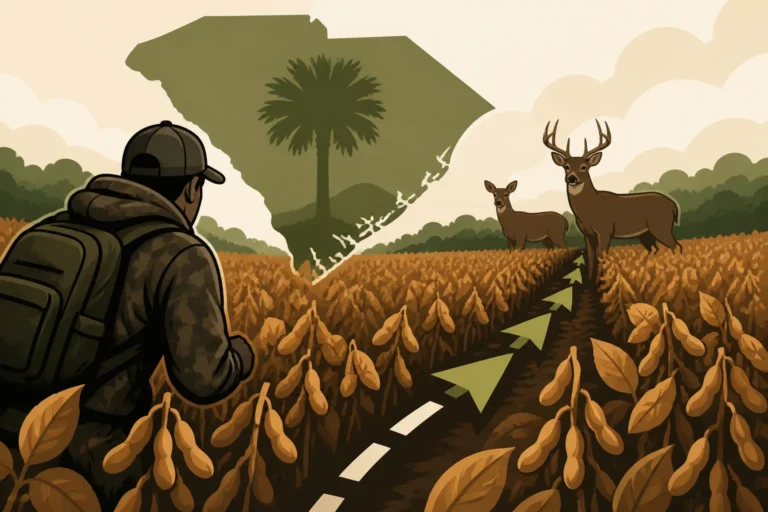
The Midlands is characterized by a mix of farming and timber operations, creating an abundance of "edge" habitat – those transitional zones where two different types of cover meet. These edges are magnets for deer, providing both food and cover. On opening weekend, deer are actively moving along these lines, particularly between standing crops (corn, soybeans, peanuts, or even harvested fields with residual grain) and adjacent timber blocks or thickets. Focus your efforts on funnel points along these edges: narrow strips of woods between two fields, creek crossings, or areas where thick briar patches neck down. Deer will use these natural travel corridors to move from bedding areas in the timber to feeding areas in the fields. A well-placed stand overlooking a crucial pinch point can be deadly. Pay attention to how the wind dictates these movements, as deer will almost always try to travel with the wind in their face or crosswind to detect danger. For more specific tactics, consider how to optimize your entry routes through standing soybeans.
Locating Early Scrape and Rub Activity
While the peak of the rut is still weeks or even months away, depending on where you are in the Midlands, you might start to see some early scrape and rub activity, especially from older, more dominant bucks. These "early bird" signposts usually aren't as intense or numerous as those you'll find during the heart of the rut, but they indicate a buck's presence and his increasing territorial awareness. Look for these along frequently used travel corridors, field edges, or near bedding areas. A few fresh rubs on smaller saplings or a newly pawed scrape under an overhanging limb can tell you a mature buck is in the area. These aren't necessarily places to set up directly, but rather indicators that can help you pinpoint nearby feeding or bedding areas. It's a clue that a mature buck is starting to feel those first urges, even if the does aren't quite ready.
Public Land Pockets and Timber Company Access
Public land in the Midlands can be a bit more scattered than in the Coastal Plain or Upstate, often consisting of smaller WMAs or tracts managed by timber companies. Access can vary greatly, with some timber company lands allowing public hunting with a permit, while others are leased privately. It's crucial to consult the South Carolina Department of Natural Resources (SCDNR) regulations and maps, or use resources like GoHunt, to identify and understand the rules for specific areas. On opening weekend, these smaller public pockets can get hit hard. As with Zone 4, the strategy often revolves around finding areas that are harder to reach or have natural deterrents to human traffic. This might mean crossing a creek, navigating a dense cutover, or finding a remote corner of a WMA that requires a long walk. Deer on these pressured lands will quickly learn to move under the cover of darkness or hide in the thickest cover available. Look for escape routes from popular hunting spots and position yourself to intercept deer being pushed by other hunters, but always be mindful of safety.
Zone 2 Western Piedmont: Rolling Hills and River Bottoms
Zone 2, encompassing the Western Piedmont, presents a different topography and habitat mix. Here, you'll find rolling hills, a blend of hardwoods and pine plantations, and significant river bottom areas. Its opening weekend typically aligns with Zone 3, often in late August or early September.
Targeting Hardwood Bottoms and Mast Crops
As you move into the Piedmont, hardwood forests become more prevalent, and with them, the potential for mast crops like acorns and various nuts. While the earliest opening days might be a bit early for a heavy acorn drop, deer will certainly be looking for any early-falling mast. These rich food sources, especially those found in creek and river bottoms, are deer magnets. River bottoms, in particular, serve as natural travel corridors, funnels, and prime bedding areas due to the thicker cover and consistent water sources.
Spend your scouting time before opening weekend identifying mature oak stands, particularly white oaks, which tend to drop earlier and are highly preferred by deer. Look for fresh droppings and disturbed leaves under these trees. Setting up between a known bedding area on a ridge and a productive mast crop in a bottom can be a very effective opening weekend strategy. Don't overlook soft mast, either, such as persimmons or wild grapes, which can be ripe and highly attractive to deer in late summer.
Leveraging Topography and Funnel Points
The rolling terrain of the Piedmont offers hunters excellent opportunities to use topography to their advantage. Deer, being creatures of efficiency, will naturally follow the path of least resistance. This means they'll often travel along ridge lines, use saddles to cross between ridges, and stick to the benches and shelves on hillsides. Funnel points created by terrain features, such as a narrow ridge connecting two larger blocks of timber or a steep hillside that forces deer into a specific creek bottom, are ideal ambush locations.
Understanding how wind and thermals work in these varied landscapes is also critical. In the mornings, as the sun warms the earth, thermals will generally rise, pulling your scent uphill. In the evenings, as the air cools, thermals will fall, carrying your scent downhill. Account for this in your stand placement to keep your scent from blowing directly into a deer's likely travel path. Reading a ridge for Upstate deer provides excellent foundational knowledge for understanding similar terrain in the Piedmont.
Hunting Mixed Ownership Landscapes
Zone 2 often features a patchwork of private land, smaller public WMAs, and larger tracts owned by timber companies or private individuals. Gaining access to private land can make a huge difference, but if you're relying on public land, be prepared for company. Tools like GoHunt or the Go Outdoors SC App can help you distinguish between public and private boundaries, and identify potential access points or isolated public parcels. Many hunters find success by identifying bottlenecks where deer are forced to travel between private sanctuaries and public feeding areas. Don't be afraid to knock on doors and ask for permission on private land, especially smaller, overlooked parcels. Even if you only gain permission for a few days, it can provide crucial insights into local deer movements.
Zone 1 Upstate Mountains: Patience for the High Country Opener
The Upstate Mountains of Zone 1 are a world apart from the rest of South Carolina. With rugged terrain, dense forests, and significantly cooler temperatures, this zone offers a truly unique hunting experience. The trade-off for this wilder landscape is a much later opening day, typically mid-September or even October, giving hunters a taste of early fall weather.
Prioritizing Remote Ridge Lines and Natural Mast
When hunting the mountains, you often have to forget about agricultural fields. Here, deer are almost entirely dependent on natural mast crops. White oaks, red oaks, and chestnuts (where they can be found) are paramount. On opening weekend, deer will be actively foraging for fallen acorns, particularly on benches, saddles, and gentler slopes of remote ridge lines. These aren't necessarily the highest peaks, but often the areas offering consistent food and secure bedding cover.
To find these hot spots, you'll need to put in serious legwork during your pre-season scouting. Look for evidence of deer feeding: fresh droppings, disturbed leaf litter, and trails leading to and from prime mast-producing areas. The further you're willing to hike into the backcountry, the less hunting pressure you're likely to encounter, and the more likely you are to find undisturbed deer. Our guide on hunting Blue Ridge Escarpment ridgelines offers more detailed advice on navigating this challenging but rewarding terrain.
Mastering Mountain Thermals and Wind Patterns
The Upstate's dramatic topography means that wind and thermals play an even more critical role than in flatter regions. As mentioned for the Piedmont, thermals rise in the morning and fall in the evening, but in the mountains, these shifts can be much more pronounced and complex. Canyons, hollows, and steep slopes can create swirling winds that make stand placement incredibly challenging.
Your best defense is to try and position yourself on the downwind side of a likely travel corridor, ensuring your scent is carried away from where deer are expected to approach. Sitting slightly off a ridge, rather than directly on top, can sometimes help mitigate swirling winds. Always pay attention to the subtle cues of leaves moving or the feel of the breeze on your face. A good wind checker is an absolute necessity here. Understanding wind and thermals on an Upstate ridge is essential for success in this demanding environment.
The Advantage of a Later Start
While it might feel like a long wait, the later opening day in Zone 1 comes with distinct advantages. By mid-September or October, temperatures are generally much cooler, meaning deer are more likely to move throughout the day, not just at dawn and dusk. This gives you a longer window of opportunity. The leaves are also typically starting to change and fall, which can improve visibility in the dense woods.
This later opener also means that deer have had more time to establish their early fall patterns, and they might even be starting to show some pre-rut behavior. While not the full-blown rut, bucks will be more active, laying down sign, and searching for the first estrous does. Patience, combined with thorough scouting and an understanding of mountain deer behavior, can lead to incredible success on the Upstate's opening weekend.
General Opening Weekend Success Factors
Regardless of which game zone you're hunting in South Carolina, a few universal principles apply to making your opening weekend a success. These aren't just good practices; they are foundational elements that can make or break your hunt, especially when hunting pressure is at its peak.
The Critical Role of Pre-Season Scouting
I cannot stress this enough: successful opening weekend hunting starts weeks, if not months, before the season even begins. Pre-season scouting is your secret weapon. This isn't just about finding deer sign; it's about understanding deer movement patterns, identifying bedding areas, preferred food sources, and travel corridors specific to the opening day conditions.
For Zone 4, this means scouting in August-like heat to see where deer are watering and feeding on agricultural crops. For Zone 1, it means hitting the mountains to find those prime mast trees before the leaves even start to fall. Pay attention to rub lines from previous years, old scrapes, and pinch points. Look for fresh tracks in soft ground near water or field edges. Use trail cameras sparingly and strategically to confirm deer activity without over-pressuring an area. A robust pre-season scouting effort on South Carolina public land before season can illuminate exactly where you need to be when the season finally arrives, minimizing guesswork and maximizing your chances.
Adapting to Unforeseen Conditions
No matter how much you scout or how well you plan, opening weekend rarely goes exactly as anticipated. A sudden cold front can increase deer movement, but a surprise heatwave or an unexpected downpour can shut it down. Hunting pressure from other hunters can push deer into entirely new areas or change their movement patterns. Your ability to adapt to these unforeseen conditions is a mark of a seasoned hunter.
Be ready to change your game plan. If your primary spot is overrun with other hunters, have a backup plan for a more remote or less obvious location. If the weather changes dramatically, understand how deer might react – will they seek more water, denser cover, or move more? Flexibility in your approach, combined with a deep understanding of deer behavior in varied conditions, will often be the difference between a frustrating bust and a memorable opening day success. Don't be afraid to put boots on the ground to re-scout if things feel off. Sometimes, a quick mid-day walk can reveal new sign or show you where deer are moving due to pressure or weather.
Disclaimer
Hunting is an inherently dangerous activity. Always prioritize safety, understand and follow all South Carolina Department of Natural Resources (SCDNR) regulations, and obtain proper licenses and permits before heading into the field. The information provided here is for educational and informational purposes only and should not replace professional guidance or personal judgment.