Hunting Lowcountry Swamp Deer
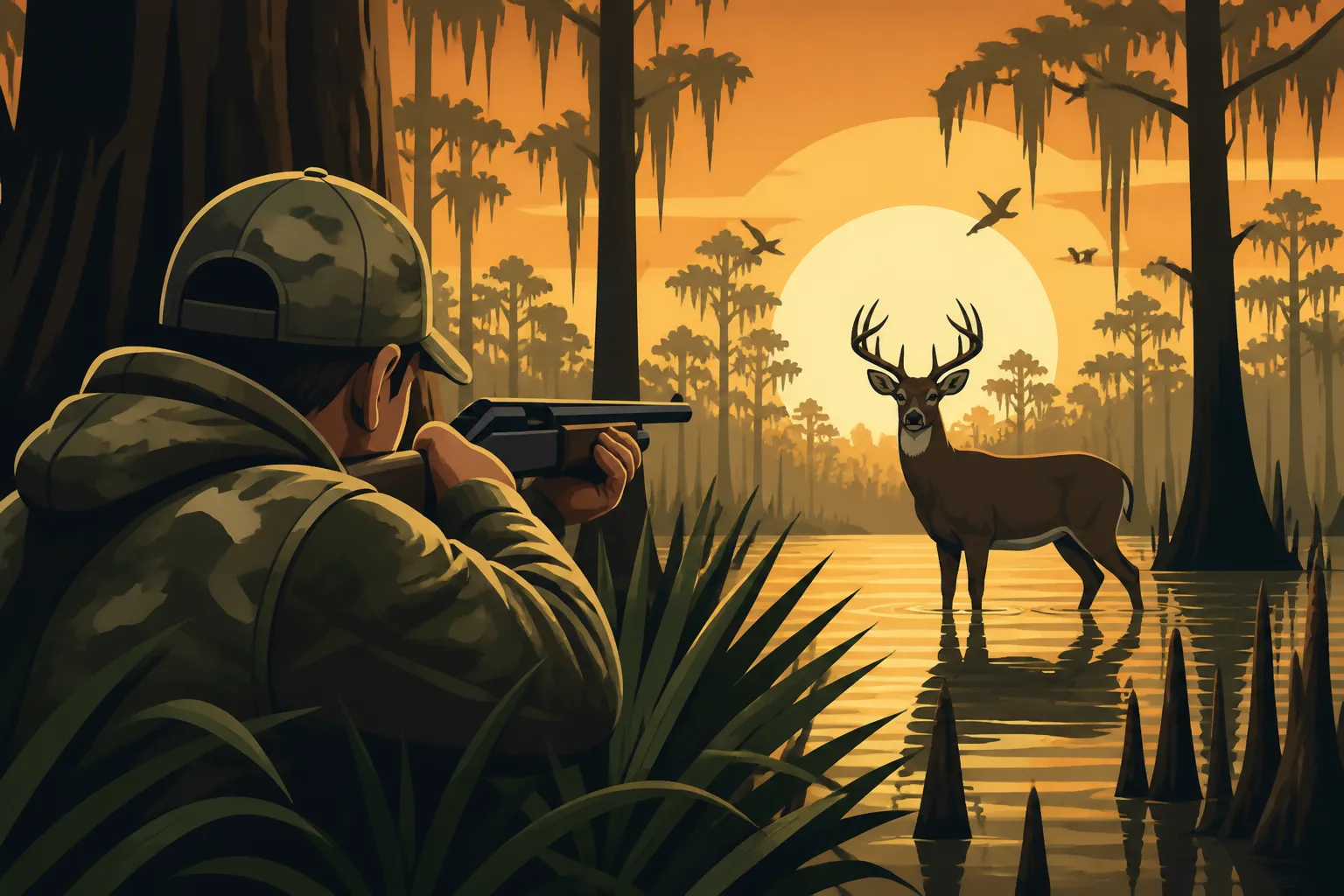
Oh, the Lowcountry swamp. Just the words themselves conjure images of Spanish moss dripping from ancient cypress, the smell of dark, damp earth, and the constant hum of mosquitoes. If you've ever tried to pursue a whitetail in this unique South Carolina landscape, you know it's a world unto itself – a beautiful, frustrating, and incredibly rewarding challenge. This guide is all about equipping you with the knowledge and strategies to navigate the watery labyrinths and thick cover, helping you truly understand how to hunt lowcountry swamp deer.
Understanding the Lowcountry Swamp Environment
Hunting in the Lowcountry isn't like chasing whitetails in an open agricultural field or even the dense pine plantations of other regions. The swamp environment dictates everything, from deer movement patterns to the tactics you can effectively employ. It's a land shaped by water, and to be successful, you have to embrace that reality.
Unique Challenges of Swamp Hunting
The first thing anyone notices when stepping into a Lowcountry swamp is the sheer effort required for every single step. Mud, often knee-deep, can suck your boots right off your feet. Water, ranging from ankle-deep to waist-high, transforms seemingly simple walks into strenuous wading expeditions. This isn't just an annoyance; it dictates your pace, your stealth, and even your ability to pack in and out. Then there's the relentless insect population – mosquitoes, gnats, and every other biting bug known to man, especially during the early archery season. It's a mental game as much as a physical one, battling the elements while trying to remain still and focused. The thick cover, a mix of cypress, tupelo, palmettos, and dense undergrowth, means visibility is often limited to mere yards, making spotting deer at a distance a rare luxury.
Key Habitat Features for Deer
Despite its challenges, the swamp is incredibly rich in resources for deer. They thrive in this environment by utilizing its unique features. Look for subtle rises in elevation, often referred to as "islands" or "hammocks," even if they're only a foot or two above the normal water line. These are critical bedding areas, especially when water levels are high. Sloughs and smaller creeks act as natural travel corridors, funneling deer movement through otherwise impenetrable tangles. The edges where the swamp meets higher ground, like agricultural fields, pine ridges, or old logging roads, are prime locations for intercepts. Deer browse on a variety of wetland plants, from tender shoots to the leaves of water oaks and other swamp hardwoods. Understanding these micro-habitats within the larger swamp system is paramount to finding where deer are spending their time.
The Impact of Tides and Water Levels
One of the most defining characteristics of Lowcountry swamps, particularly those closer to the coast, is the influence of tides. Even miles inland, rivers and creeks can experience noticeable tidal fluctuations, leading to constantly changing water levels. Deer movement is heavily impacted by this. High tides can push deer out of lower-lying areas and concentrate them on higher ground. Conversely, falling tides might open up new feeding areas or expose travel routes that were previously underwater. You'll often find deer moving just ahead of rising water or retreating as it recedes. Paying close attention to tide charts and recent rainfall can give you a significant advantage. This dynamic environment means that a spot that was unproductive last week due to high water might be a gold mine today if the water has dropped, making new browse accessible. To truly master hunting in the Lowcountry, you need to be constantly aware of how water is affecting the landscape and, by extension, the deer.
Scouting Strategies for Swamp Deer
You can't just stumble into a Lowcountry swamp and expect success. Scouting, even more than in other terrains, is the foundation of a productive hunt. It's about piecing together a puzzle where many of the pieces are hidden by water and dense vegetation.
Reading the Water and Terrain
Before you even step foot in the water, spend significant time studying maps. Aerial photographs and detailed topographic maps, especially those found on apps like GoHunt, are your best friends. Look for subtle elevation changes, even just a foot or two, that denote those crucial high-ground islands or ridges within the swamp. Identify fingers of high ground that extend into the lowlands – these are often natural travel corridors. Pay attention to the patterns of creeks, sloughs, and abandoned rice field dikes, which can act as highways for deer. By virtually "walking" the landscape with your map, you can pinpoint potential bedding areas, bottlenecks, and crossing points long before you ever get your boots muddy. Remember, water itself can be a funnel; where dry land narrows between two bodies of water, expect deer traffic. Learning to recognize these subtle features can save you countless hours of busting through muck.
Interpreting Deer Sign in Wet Conditions
Finding deer sign in a swamp requires a keen eye and an understanding of how wet conditions affect it. Tracks are often more prevalent and easier to distinguish in soft mud, but they can also fill with water or become distorted. Look for fresh, clear prints near water edges or on slightly higher, firmer ground. Rubs and scrapes might be less obvious on saplings constantly exposed to water, but mature cypress and tupelo trees often bear rubs high on their trunks as bucks work them when water levels are up. Focus on the edges of islands, along sloughs, and on any raised pathways. A valuable piece of information comes from understanding how deer utilize existing game trails. These aren't always dry, obvious paths, but rather slight depressions in the mud or areas where vegetation is worn down. If you find a series of fresh tracks heading in a consistent direction along a water's edge or a subtle rise, you've likely found a primary travel route. This careful inspection helps you understand the immediate movement patterns of deer, offering clues that might be missed in a drier environment.
Leveraging Technology for Swamp Scouting
Modern technology has been a game-changer for hunting, and nowhere is this more true than in the challenging terrain of a Lowcountry swamp. As mentioned, mapping applications like GoHunt provide invaluable satellite imagery, topographic overlays, and property boundary information. You can drop pins on potential bedding areas, mark observation points, and trace out suspected travel corridors from the comfort of your home. Many hunters utilize GPS devices or the GPS functions on their phones (ensuring they have downloaded offline maps, as cell service can be spotty). This is crucial for navigating through seemingly endless, featureless swamps. You can precisely mark where you parked, where you want to set up a stand, or where you found hot sign. Trail cameras, though challenging to deploy in wet conditions, can be incredibly effective when placed on small dry islands or along subtle rises that funnel deer. Just be sure they are waterproof and securely mounted, and consider using solar panels if you can't check them frequently.
Effective Hunting Methods and Tactics
Once you've done your scouting homework and understand the unique nuances of the swamp, it's time to choose your hunting method. Lowcountry swamps lend themselves to a few specific approaches that maximize your chances of success.
Stand Hunting Over Travel Corridors
Given the limited visibility in most swamps, ambushing deer from an elevated position is often the most productive strategy. Think about those subtle travel corridors you identified during scouting – the edges of islands, lines of slight high ground, or where two sloughs merge. These are prime locations for treestand setups. Portability is key on public lands like Francis Marion National Forest, so lightweight climbing sticks and hang-on stands, or even saddle hunting setups, are preferred. When scouting for these spots, look for trees that offer natural concealment and a clear shot lane along the expected path of travel. In areas where suitable trees are scarce or prohibited, a ground blind brushed in on a slightly elevated, dry spot can be equally effective, provided you have good wind coverage. Remember, deer will use the path of least resistance, and that often means following the slightest bit of higher, drier ground through the swamp.
Still-Hunting the High Ground and Edges
Still-hunting is a classic method that can be incredibly effective in Lowcountry swamps, especially if you move at a snail's pace. This involves slowly, methodically moving through the terrain, stopping frequently to observe and listen. Focus your efforts on the highest, driest ground available – those islands and ridges within the swamp. Deer will often bed in these spots, feeling secure in the thick cover. By moving slowly, using the wind to your advantage, and carefully scanning ahead, you can often surprise a bedded deer or catch one moving between bedding and feeding areas. The key is patience. Take two or three steps, then pause for several minutes, scanning every shadow and listening for the subtle sounds of the swamp. This is also a fantastic way to find fresh sign that might have been missed during initial scouting. For hunters looking to truly immerse themselves in the swamp's rhythm, still-hunting offers a unique connection to the environment. For more information on navigating diverse public lands, check out our guide on Still-Hunting Sumter Forest Ridges.
Deer Drives in Swampy Areas
While often associated with large hunting clubs, smaller deer drives with just a few hunters can be surprisingly effective in Lowcountry swamps, especially on private land where it's permitted. The natural funnels created by water and dense cover lend themselves perfectly to this tactic. The general idea is to have one or more "pushers" slowly move through a known bedding area or thicket, gently nudging deer towards "standers" positioned along escape routes. Safety is paramount, requiring clear communication and a thorough understanding of where everyone is located. Choose areas where the deer are likely to be concentrated, such as a large island or a peninsula of high ground. Position standers along sloughs, the edges of clearcuts, or any other natural bottleneck. A well-executed drive can push deer right past a waiting hunter, offering a high-percentage shot. However, the thick cover means you need to be ready for quick, close-range shots. Learn more about effective Deer Drives With Three or Four Hunters in diverse environments.
Essential Gear for Lowcountry Swamp Hunting
The Lowcountry swamp isn't just about strategy; it's about having the right tools for the job. Your gear choices will directly impact your comfort, safety, and ultimately, your success. Skimping here is a recipe for a miserable, or even dangerous, hunt.
Clothing and Footwear for Wet Conditions
This is where swamp hunting demands special attention. First and foremost, snake boots are non-negotiable. The Lowcountry is home to several venomous snake species, and encountering one in thick cover is a real possibility. Invest in a high-quality pair of snake boots that go at least mid-calf. Beyond that, waterproof footwear is essential. Depending on water levels, you might need anything from knee-high rubber boots to chest waders. For clothing, lightweight, breathable layers are key, especially during the warm early seasons. Materials that wick moisture away from your skin will keep you more comfortable, even when sweating profusely. Quick-drying fabrics are a bonus, as you're likely to get wet. Consider specialized insect-repellent clothing or a head net to combat the relentless bugs. Don't forget a waterproof backpack to keep your essentials dry, and learn more about Snake Boots for South Carolina Swamp Ground to choose the best protection.
Weapon Choices for Close-Quarters Hunting
Given the often limited visibility and dense cover of the swamp, your weapon choice should reflect the likely close-range encounters. Bowhunting is incredibly popular in the Lowcountry, offering an intimate challenge. A compound bow with a good sight and quiet draw cycle is ideal. For those pursuing Bowhunting South Carolina's Long Archery Season, the swamp provides ample opportunity. Shotguns, especially those loaded with slugs, are another excellent choice, providing significant stopping power at close to medium ranges, perfect for thick timber. Rifles are certainly an option, but a shorter barrel and a caliber that performs well in heavy cover, like a .30-30 or .45-70, can be advantageous. Avoid calibers that require long-range precision, as you'll rarely get that opportunity here. Whatever your choice, ensure your weapon is properly maintained and sighted in for the distances you expect to encounter. If you're considering Primitive Weapons Deer Hunting in South Carolina, muzzleloaders are also effective, offering a single, powerful shot.
Navigation and Safety Equipment
Navigating a Lowcountry swamp can be disorienting, even for experienced hunters. A reliable GPS unit or a fully charged smartphone with offline maps (like those on the GoHunt app) is critical. Always carry a physical compass and a map as a backup, just in case electronics fail. A headlamp or flashlight is essential for pre-dawn walks in or post-sunset walks out, and can be a lifesaver if you get disoriented after dark. A robust first-aid kit, equipped for everything from minor cuts to snakebites, is a must-have. Carry ample water, as the heat and physical exertion can quickly lead to dehydration. A whistle for signaling, a multi-tool, and a fire starter are also good additions. Finally, always tell someone exactly where you are going and when you expect to return. The remote nature of many swamp areas means help can be a long time coming. For warm weather, having a good Warm-Weather Sitting Strategy in South Carolina that includes hydration and bug protection is vital.
Adapting to Seasonal Changes and Rut Activity
Deer behavior in the Lowcountry, like everywhere else, is heavily influenced by the season. But in the swamp, these influences are magnified by the ever-present factors of heat, water, and food availability. Understanding these shifts is key to consistent success.
Early Season: Heat, Bugs, and Food Sources
When the South Carolina deer season kicks off in mid-August (depending on the game zone, remember South Carolina's Four Game Zones), the Lowcountry is still sweltering. Temperatures are high, humidity is oppressive, and the bugs are at their absolute worst. Deer activity will be largely nocturnal or crepuscular, with most movement occurring during the cooler hours of dawn and dusk. Focus your efforts around consistent water sources and areas with fresh, tender browse. Early-season food sources might include succulent green leaves, muscadines, and various wetland grasses. Deer will seek shade and cool bedding areas, often on small islands or along sloughs where they can stay near water. Your best bet is to sit over a reliable food source or a well-used travel corridor leading to one, especially during those first and last hours of daylight. Minimize your scent, as the warm, still air will carry it far, and be prepared for the heat and insects.
Mid-Season: Cooler Weather and Rutting Behavior
As fall progresses into October and November, temperatures mercifully begin to drop, and the swamp becomes a bit more hospitable. This is often when the Lowcountry rut kicks into gear, though the timing can vary significantly even within coastal zones. During this period, bucks become much more active, cruising for does, making rubs, and checking scrapes. Focus your scouting efforts on identifying these signs of increased buck activity on higher ground, along travel corridors, and near historical bedding areas. Rattling and grunting can be highly effective during the rut, as bucks are actively seeking out other deer. Look for areas where bucks might naturally funnel does, such as bottlenecks between two swamps or along the edges of agricultural fields adjacent to the swamp. While the primary rut activity peaks, you'll find deer more willing to move during daylight hours as cooler temperatures reduce the stress of exertion. Knowing Hunting the Rut in the Coastal Zones is key for this timeframe.
Late Season: Drier Conditions and Remaining Food
By December and January, the Lowcountry typically experiences its coolest and driest weather. Water levels in the swamp might recede significantly, opening up new areas that were previously inaccessible. Deer will shift their focus to remaining hard mast, like acorns from water oaks, or any available green browse in clearcuts or logging roads. If a mast crop was poor, deer might concentrate even more heavily on available food plots on private land or specific types of browse. This drier period often means deer can move more freely across the landscape, so trails that were once too wet may now be in heavy use. The denser cover of the swamp still provides excellent security, but cold fronts can sometimes push deer to feed more aggressively during the day to build up energy. This can be an excellent time to still-hunt or use ground blinds near persistent food sources, as deer will be trying to put on weight for the colder months. Don't forget that after a successful hunt, you'll need to know about Recovering a Deer From a Lowcountry Swamp – it's a different beast than dry ground.
Comparative Look at Swamp Hunting Stand Options
Choosing the right stand for a Lowcountry swamp hunt is a critical decision that balances concealment, stability, and safety with the unique challenges of the terrain.
| Stand Type | Pros | Cons | Best Use Case |
|---|---|---|---|
| Hang-on Stand | Lightweight, portable, versatile | Requires climbing sticks, can be tiring to set up | Targeting specific travel corridors on suitable trees |
| Climber Stand | One-piece setup, quick to move | Limited to straight, limbless trees | Hunting areas with plentiful, ideal trees |
| Ladder Stand | Very stable, comfortable, easy access | Bulky, not portable, requires flat ground | Permanent setups on private land or food plot edges |
| Saddle Hunt | Extremely portable, 360-degree shooting | Steep learning curve, not for everyone | Highly mobile hunting in diverse tree types |
| Ground Blind | Excellent concealment, weather protection | Limited visibility, deer can pattern | Dry islands, field edges, areas with no suitable trees |
Each of these options has its place, but in the Lowcountry swamp, portability and adaptability often win out. For example, Treestand Setups in Francis Marion National Forest often lean towards highly portable options due to regulations and the dynamic nature of the habitat.
Disclaimer
Hunting is a regulated activity. Always consult the current South Carolina Department of Natural Resources (SCDNR) regulations before heading afield. Seasons, bag limits, and specific rules for Wildlife Management Areas can change annually. This guide is for informational purposes only and should not replace official regulations or proper hunter education. Be safe, ethical, and responsible.