Upland Guns for Quail Plantation Walks
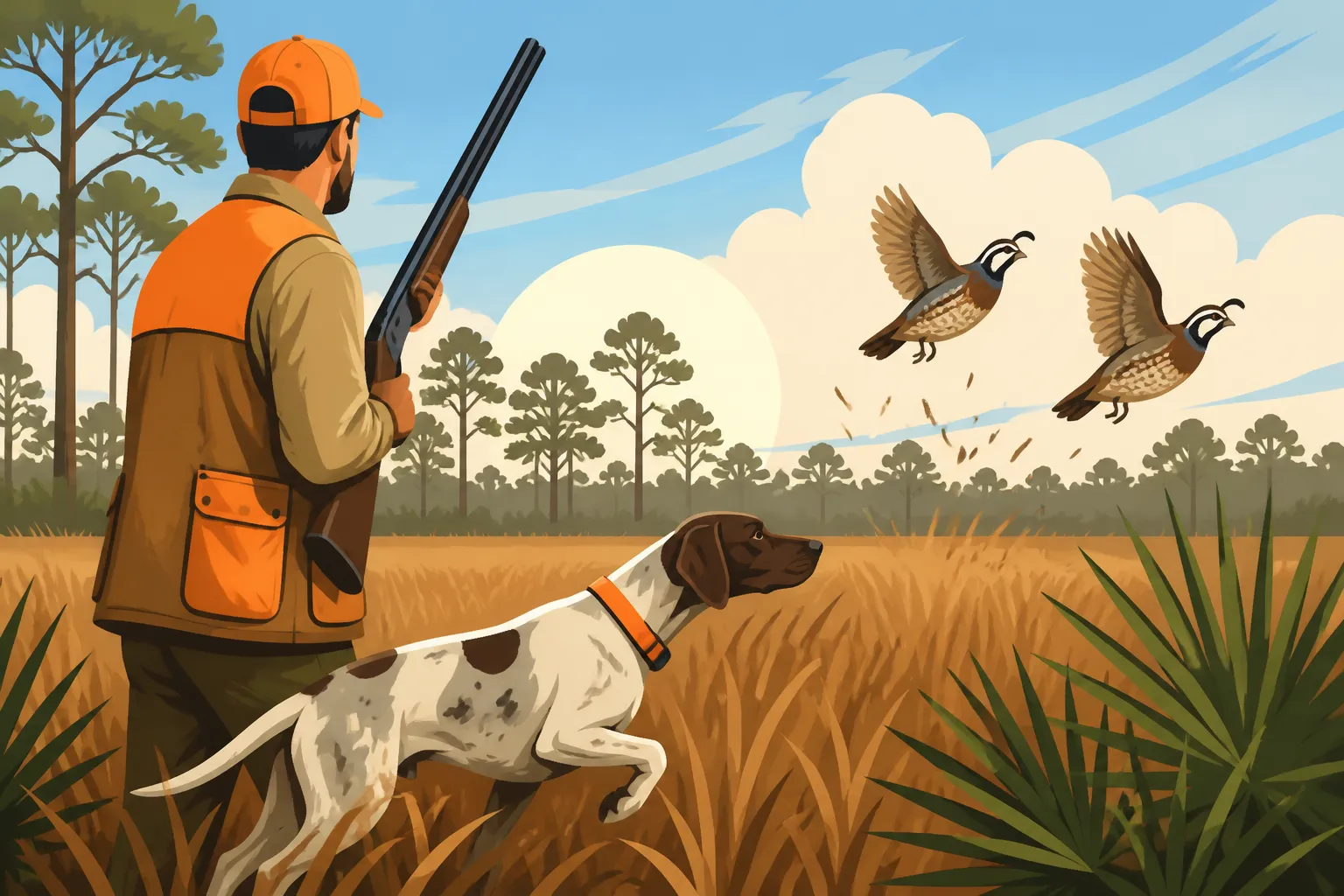
Stepping onto a sprawling South Carolina quail plantation, feeling the warmth of the early morning sun filter through the longleaf pines, there's a certain timeless anticipation. But that feeling can quickly turn to frustration if you're wrestling with the wrong scattergun when a covey explodes. This comprehensive guide is here to unravel the often-overlooked nuances of choosing the perfect upland gun for those iconic quail walks across the Palmetto State, ensuring you're ready for fast-flushing birds and long, satisfying days afield.
The Heart of a Quail Gun: What Makes it Special
When we talk about an "upland gun" for quail, we're not just talking about any shotgun you might grab from the rack. We're talking about a tool specifically designed for quick, instinctive shots on fast-moving birds in open to moderately dense cover. The characteristics that define a great quail gun are born from the unique challenges and joys of traditional quail hunting. It's about balance, nimble handling, and the ability to swing smoothly on a bird that appears and vanishes in a flash.
Lightweight and Balanced for All-Day Carrying
Imagine walking miles through pine savanna, across field edges, and into light briar patches, all with a shotgun cradled in your arm. A heavy gun quickly becomes a burden, turning a pleasant stroll into a tiresome trek. This is why weight is paramount. A good quail gun should feel light in the hands, almost an extension of your body, allowing you to carry it comfortably for hours on end without fatigue.
Beyond just raw weight, the balance of the gun is critical. A perfectly balanced shotgun feels like it pivots effortlessly at the hinge point, rather than feeling nose-heavy or butt-heavy. This allows for quick mounting to the shoulder and a smooth swing as you track a rapidly departing bird. When a covey flushes, often with little warning, that instant ability to mount and swing is the difference between a clean shot and a missed opportunity. Many hunters, myself included, spend time simply shouldering and swinging different guns in a store to feel their balance, knowing that a few ounces in the wrong place can make a world of difference when birds are on the wing.
Fast Handling for Exploding Coveys
Quail hunting isn't about long, deliberate aiming; it's about instinct and speed. When a covey bursts from cover, often within feet of your boots, you have mere seconds to react, identify a bird, mount your gun, and fire. This demands a shotgun that points naturally and swings quickly to the target. Longer, heavier barrels or cumbersome stocks can hinder this essential speed.
A quail gun should accelerate to the target without feeling like you're muscling it. This fast handling is influenced by factors like barrel length, overall weight, and the fit of the stock. For instance, a shorter barrel (often 26 to 28 inches) can make a gun feel livelier and easier to maneuver in dense brush, especially important when hunting tight spots where the birds hold close. Think of it like a finely tuned instrument; you want it to respond precisely and immediately to your intentions. This immediate responsiveness is a hallmark of truly effective upland guns.
Shotgun Actions: Matching Your Style to the Field
The type of action on your shotgun profoundly impacts its feel, reliability, and how it handles in the field. For quail, you'll primarily see over/unders and side-by-sides, though semi-autos and pumps also have their proponents. Each offers a distinct set of advantages and characteristics that might appeal to different hunters.
Over/Under Shotguns: The Modern Classic
Over/under shotguns are incredibly popular among upland hunters, and for good reason. They offer the ability to have two different chokes, one for closer shots and one for longer, and their single sighting plane provides a consistent sight picture. Many over/unders are designed with balance and aesthetics in mind, making them a joy to carry and shoot.
Their solid construction and often elegant lines make them a favored choice on South Carolina plantations. They tend to be durable and reliable, shaking off the dust and light brush that comes with a day of quail hunting. The break-action design also makes them very safe in the field, as you can visibly confirm the gun is unloaded when walking between coveys or crossing obstacles. Brands like Browning and Beretta are frequently seen in the hands of seasoned quail hunters, offering a range of models that fit various budgets and preferences.
Side-by-Side Shotguns: Timeless Tradition
For many, the side-by-side shotgun is the quintessential quail gun. Its classic profile, wide sighting plane (which some find intuitive for flying birds), and often lighter weight make it a romantic and effective choice. There's something about a double barrel, especially a vintage one, that just feels right when following a good bird dog through the pines.
Side-by-sides often carry an air of tradition and heritage, a nod to generations of upland hunters. Their sleek design, without the bulk of a receiver below the barrels, can make them feel exceptionally trim and easy to carry. While some find the wider rib takes getting used to, others swear by its ability to naturally align with a flushing bird. Like over/unders, they offer two distinct choke options, allowing hunters to adapt to varying shot distances. Barrel Length for Walking Pine Cover can be particularly important for a side-by-side, influencing both swing and maneuverability.
Semi-Automatic Shotguns: Speed and Less Recoil
While perhaps not as traditional as the doubles, semi-automatic shotguns have a strong following in the upland community. Their primary advantages for quail hunting include faster follow-up shots and reduced felt recoil due to their gas- or inertia-driven operating systems. This can be a huge benefit for hunters sensitive to recoil or for those who appreciate the ability to deliver three shots quickly if needed.
Modern semi-autos from companies like Benelli and Winchester are often quite lightweight and reliable, performing well in various conditions. They are also generally easier to maintain than older models and can handle a variety of loads without needing adjustments. While some traditionalists might balk at a semi-auto for quail, their effectiveness and comfort, especially for high-volume shooting or for hunters who want a softer shooting experience, are undeniable. Just be mindful of legal bag limits; having three shots doesn't mean you should always take three!
Pump-Action Shotguns: Robust and Economical
Pump-action shotguns, while less common on formal quail hunts, are certainly capable upland tools. They are renowned for their rugged durability and reliability, often performing flawlessly in conditions that might challenge other actions. For hunters on a tighter budget or those who prioritize sheer robustness, a pump-action can be an excellent choice.
The manual cycling of the pump requires a bit more practice for quick follow-up shots, but a skilled shooter can be incredibly effective. Their simple mechanics make them easy to field strip and clean, a real advantage after a dusty or damp day in the South Carolina woods. While they might not possess the inherent balance or aesthetic appeal of a fine double gun, their dependability and affordability make them a solid, no-nonsense option for pursuing quail.
Gauge Considerations: The Right Size for the Right Bird
The caliber of your shotgun, or "gauge," is a fundamental decision that impacts everything from recoil to pattern density. For quail, where birds are small and shots are often close to moderate range, smaller gauges frequently shine.
The Versatile 20 Gauge
The 20 gauge is arguably the most popular and versatile choice for quail hunting in South Carolina, and across the nation. It strikes an excellent balance between light weight, manageable recoil, and sufficient pattern density to cleanly take quail at typical flushing distances. For many, it's the Goldilocks gauge: not too big, not too small, but just right.
You'll find a wide array of 20 gauge shotguns, from featherlight over/unders to agile semi-autos, all designed to be carried comfortably for extended periods. Ammunition is readily available, and a good load of 7.5 or 8 shot will provide plenty of pellets for a solid pattern without excessive destruction of the bird. If you're looking for a single, do-it-all upland gun for South Carolina quail, the 20 gauge is almost always the recommended starting point. Its effectiveness, combined with lighter recoil than a 12 gauge, makes it a favorite among hunters of all experience levels.
The Classic 28 Gauge
The 28 gauge holds a special place in the hearts of many dedicated quail hunters. Often called the "gentleman's gauge," it offers incredibly light recoil and a delightful responsiveness in handling. Despite its smaller size, a 28 gauge, when properly choked and loaded with good quality shells, throws a surprisingly effective pattern for quail.
Its lighter payload means less lead in the air, but its inherent efficiency often results in very consistent patterns. The pleasant shooting experience and minimal recoil make it a joy to shoot repeatedly without fatigue, which is a real benefit during a long covey rise. While 28 gauge ammunition might be slightly less common or more expensive than 20 gauge, for the true enthusiast, the experience of hunting with a trim, well-balanced 28 gauge is hard to beat. It's truly a pleasure to carry and point.
The Nimble .410 Bore
The .410 bore is the smallest of the common shotgun gauges and is often considered a specialist's tool. It offers the lightest recoil and can be built into incredibly trim and lightweight firearms, making it a joy to carry. However, its small shot charge and tight patterns demand a higher level of shooting skill. It's generally reserved for very close-range shots or for seasoned hunters looking for an extra challenge.
While the .410 can be devastatingly effective in the right hands, it leaves less room for error. A slight lead adjustment or an imperfect mount can result in missed birds. For new quail hunters or those who prefer a wider margin of error, a 20 or 28 gauge is usually a more forgiving choice. However, for a hunter who thrives on precision and wants to truly test their abilities, a .410 can provide immense satisfaction. Remember, with any gauge, pattern testing is crucial to understand exactly how your gun and preferred ammunition perform. Shot Size for Quail and Dove can help you refine your choices.
Barrel Length and Chokes: Tailoring Your Pattern
Beyond the action and gauge, the barrel length and choke constriction are two critical factors that influence how your shotgun performs in the field. These elements directly affect the gun's swing, the density of your shot pattern, and ultimately, your effectiveness on fast-flushing quail.
Optimal Barrel Lengths for Upland Hunting
For quail hunting, most experienced sportsmen gravitate towards shorter barrel lengths, typically ranging from 26 to 28 inches. This preference isn't arbitrary; it's rooted in the practical realities of pursuing quail. Shorter barrels make the shotgun more nimble and easier to maneuver, which is a significant advantage when you're walking through thick brush, low pines, or negotiating dense cover where quail often hide. A longer barrel can feel unwieldy, snagging on branches and making quick transitions to a flushing bird more cumbersome.
Furthermore, shorter barrels contribute to the overall balance and "liveliness" of the gun, allowing for quicker mounting and faster swings on birds that explode into flight with little warning. While a longer barrel might offer a theoretical advantage in sight plane or swing momentum for distant targets, those advantages are largely negated by the close-range, snap-shooting nature of quail hunting. The focus here is on rapid, instinctive target acquisition, and a shorter, lighter barrel excels in that regard.
Understanding Choke Constrictions for Quail
Chokes are interchangeable tubes (or fixed constrictions in older guns) at the end of your barrel that control the spread of your shot pattern. For quail, choosing the right choke is paramount because it dictates how dense and wide your pattern will be at various distances. Given that quail typically flush between 15 and 25 yards, you want a pattern that is wide enough to encompass the bird quickly, yet dense enough to ensure a clean, ethical kill.
For the first shot on a flushing covey, an "Improved Cylinder" or even a "Skeet" choke is often preferred. These chokes provide a relatively open pattern, allowing for a broader spread of pellets at close range. This is incredibly forgiving when a covey flushes underfoot, giving you a larger "kill zone" to hit a fast-moving bird. For a second shot, especially on an over/under or side-by-side, many hunters will switch to a "Modified" choke. This provides a slightly tighter pattern for birds that have put a little more distance between themselves and the hunter. The key is to pattern your shotgun with your chosen loads at various distances to truly understand how your chokes perform. This is where a tool like GoHunt's mapping features can sometimes help you visualize safe patterning areas on public land. Choke Choice for Fast Covey Flushes goes into much greater detail on selecting the right constriction.
Stock Fit and Ergonomics: A Seamless Connection
It's easy to get caught up in gauges, brands, and barrel lengths, but one of the most critical, yet often overlooked, aspects of shotgun performance is stock fit. A shotgun that doesn't fit you properly is like wearing ill-fitting shoes for a marathon – it will hinder your performance and cause discomfort. For the fast, instinctive shots required in quail hunting, a perfectly fitting stock is essential for consistently hitting your target.
The Importance of a Proper Stock Fit
A properly fitted shotgun stock ensures that when you quickly mount the gun to your shoulder, your eye naturally aligns with the rib and the target. This isn't about aiming; it's about instinctively looking down the barrel at the bird. If the stock is too long, too short, or has the wrong "drop" (the angle of the stock comb relative to the barrel), you'll either shoot high, low, or struggle to get a clear sight picture quickly. In quail hunting, where fractions of a second matter, a stock that demands conscious adjustment to align your eye is a significant disadvantage.
Consider the "length of pull" (LOP), which is the distance from the middle of the trigger to the center of the buttpad. If it's too long, the gun will catch on your clothing during the mount; too short, and your head will be too far forward, resulting in poor cheek weld and recoil discomfort. The "drop at comb" and "drop at heel" dictate how high or low your eye sits relative to the rib. Ideally, your eye should align perfectly without you having to crane your neck or lift your head. Many modern shotguns offer adjustable shims or combs to fine-tune the fit, making it easier to achieve that seamless connection between you and your firearm.
Ergonomics for Quick Shouldering and Comfort
Beyond the precise measurements of fit, the overall ergonomics of the stock and forend contribute to how the gun feels and handles. A slim, well-designed forend allows for a comfortable grip, enabling you to control the gun's swing without straining your support hand. The pistol grip, if present, should feel natural in your hand, allowing you to maintain firm control and easily reach the trigger.
Consider the material of the stock as well. While traditional wood stocks offer classic aesthetics and often excellent balance, synthetic stocks can provide greater durability, weather resistance, and often weigh less. In the humid South Carolina climate, a synthetic stock might require less fuss and worry about warping or damage from moisture. Ultimately, the best ergonomic fit is highly personal. Spend time handling different shotguns, shouldering them repeatedly, and dry-firing to get a true feel for what works best for your body type and shooting style. The more natural the gun feels in your hands and against your shoulder, the more confident and effective you'll be when that covey rises.
| Shotgun Gauge | Typical Shot Charge (oz) | Effective Range (yards) | Recoil Level | Common Uses in SC Upland |
|---|---|---|---|---|
| 12 Gauge | 1 to 1 1/4 | 20-40+ | Moderate to Heavy | General purpose, waterfowl, larger upland birds |
| 20 Gauge | 3/4 to 1 | 15-35 | Light to Moderate | Ideal for Quail, Pheasant, Grouse |
| 28 Gauge | 5/8 to 3/4 | 15-30 | Very Light | Classic Quail Gun, highly enjoyable |
| .410 Bore | 1/2 to 11/16 | 10-25 | Very Light | Expert quail hunters, very close shots |
Maintenance and Care for South Carolina's Environment
Hunting in South Carolina often means dealing with warmth, humidity, and sometimes unexpected rain. These conditions are not kind to firearms, and proper maintenance is crucial to ensure your upland gun remains reliable and in top condition for seasons to come. Neglecting care can lead to rust, malfunctions, and premature wear, no matter how high-quality your gun is.
Protecting Against Humidity and Moisture
The high humidity levels in South Carolina, especially during the early quail season, are a constant threat to metal components. Moisture in the air can quickly lead to rust, particularly on blued steel finishes. It's not just rain you need to worry about; even a clear, humid day can introduce enough moisture to cause problems.
After every hunt, or at least every few days during a multi-day trip, it's essential to wipe down your shotgun thoroughly. Use a silicone-impregnated cloth or a light coating of gun oil on all metal surfaces. Pay particular attention to areas where metal meets wood, or where there are nooks and crannies that can trap moisture. Breaking down your shotgun (if it's a break-action) or performing a basic field strip (for semi-autos and pumps) allows you to access these critical areas. When storing your gun, avoid soft cases made of materials that can trap moisture; instead, opt for a breathable gun sock or a hard case with desiccant packs if storing long-term. This diligence will protect your investment and ensure your gun is ready for the next hunt. For more on preparing for the climate, check out Warm-Weather Clothing for South Carolina Hunters.
Cleaning and Lubrication After Every Hunt
Even if you don't experience a heavy downpour, your shotgun will accumulate powder residue, unburnt propellant, and debris from the field. This grime can cause malfunctions, wear down parts, and attract moisture. A proper cleaning routine is vital. Start by safely unloading and disassembling your shotgun according to the manufacturer's instructions.
Clean the bore using a bore snake or cleaning rod with appropriate brushes and patches, applying a good quality bore cleaner. Focus on removing all carbon and plastic wad fouling from the barrel. Clean the action, bolt, and trigger group, removing any residue with brushes and solvent. Once clean, apply a light coat of high-quality gun oil to all moving parts and metal surfaces to prevent rust and ensure smooth operation. Avoid over-lubricating, as excessive oil can attract more dirt and grime. Reassemble your shotgun and perform a function check to ensure everything is working correctly. This routine not only keeps your gun running smoothly but also extends its lifespan, ensuring it remains a trusted companion on your South Carolina quail walks for many years. Tools like GoHunt can help you find suitable local ranges to practice and confirm your gun is performing optimally after cleaning.
Essential Accessories for the Quail Hunter
Having the right shotgun is a huge step, but a few key accessories can significantly enhance your experience and safety when chasing bobwhites across South Carolina's varied terrain. These aren't just extras; they are practical necessities that address specific challenges of upland hunting.
Upland Vest or Game Bag
An upland vest or a well-designed game bag is absolutely indispensable for quail hunting. Unlike deer hunting where you might carry a pack, an upland vest is built for accessibility and comfort while walking. It typically features large, easy-access front pockets for shells, often with separate compartments for different shot sizes or spent hulls. This means your ammunition is always at your fingertips for quick reloading.
The most critical feature, however, is the large, blood-proof game bag built into the back. As you harvest birds, you can quickly and cleanly tuck them away without having to stop and open a backpack. This keeps your hands free, prevents game from bouncing around, and allows for air circulation to help cool the birds. Many vests also include hydration pockets or loops for water bottles, which are essential for staying hydrated during long walks in the South Carolina heat. Finding a vest that fits comfortably, distributes weight well, and offers ample storage without being bulky is key. Consider one with blaze orange panels for safety, especially on public lands or when hunting with multiple people. Upland Vests With Water Capacity can guide you to some great options.
Eye and Ear Protection
Safety should always be your top priority, and that means protecting your eyes and ears from the hazards of shooting. While a shotgun's recoil might be mild, the concussive blast from firing, especially repeatedly, can cause permanent hearing damage over time. Similarly, stray pellets, flying debris, or even an errant branch can damage your eyes.
Modern shooting glasses are not just for protection; many come with interchangeable lenses that enhance contrast, making it easier to spot birds against varied backgrounds or in different lighting conditions. Amber or vermilion lenses can be particularly helpful on overcast days or in shadowed cover. For ear protection, choose something comfortable that you'll consistently wear. Passive earplugs are compact and effective, but electronic ear protection is a game-changer for upland hunting. These devices amplify ambient sounds (like your dog's bell or a covey's flush) while automatically dampening harmful gunshot noises, allowing for better communication and awareness in the field.
Snake Boots and Durable Clothing
South Carolina is home to various venomous snakes, particularly in the lowcountry and swampy areas, and an encounter is always a possibility when walking through tall grass, brush, or pine needles. Investing in a good pair of snake boots is not an overreaction; it's a wise precaution that can save you a trip to the emergency room. Look for boots that are comfortable for walking long distances, waterproof, and offer puncture protection up to at least your calf. Snake Boots for Coastal Plain Walking offers more practical advice on this crucial gear.
Beyond snake protection, durable clothing is essential. Briars, thorns, and tough vegetation are common in quail habitat, and flimsy pants will quickly shred. Opt for brush pants or chaps made from tough, thorn-resistant materials like waxed cotton or heavy-duty nylon. Layers are also important; South Carolina mornings can be cool, but mid-day can get quite warm, even in the fall. Breathable, moisture-wicking fabrics will keep you comfortable throughout the day. Remember, comfort and protection allow you to focus on the hunt, not on discomfort or potential hazards.
Disclaimer
This article is for general informational purposes only and does not constitute professional advice. Laws, prices and regulations vary by location and change over time. Consult a qualified professional for guidance on your specific situation.