Best South Carolina Ground for Public Land Turkey
Finding prime public land for turkey hunting in South Carolina can feel like searching for a needle in a haystack, especially when you're up against seasoned hunters and limited access. Many of us know the frustration of rolling up to a promising spot only to find a dozen other trucks already there, or wandering through seemingly endless woods without hearing a single gobble. This guide is here to help you cut through the noise, offering insights into the best public lands available and how to approach them effectively for a successful spring turkey hunt.
Unlocking the Potential of South Carolina's National Forests
South Carolina is blessed with significant portions of two national forests: the Francis Marion and the Sumter. These vast tracts offer some of the most expansive public hunting opportunities, often rewarding those willing to put in the miles. While they can see pressure, their sheer size means there's always a chance to get away from the crowds and find unpressured birds.
Sumter National Forest: Upstate Hills and Diverse Habitat
The Sumter National Forest, primarily found in the Upstate, is a completely different beast from its coastal counterpart. Here, you'll encounter rolling hills, steeper terrain, and a mix of mature hardwoods, pine stands, and creek bottoms. This varied landscape provides diverse habitat for turkeys, but it also means you'll need to work harder to cover ground. Turkeys in the Sumter often follow natural contours, frequenting ridge tops in the mornings and dropping into creek bottoms later in the day.
Hunting here often means longer walks and more elevation changes, which can be a real advantage. While popular access points might see early morning traffic, simply hiking a mile or two deeper into the woods can get you into areas where other hunters won't venture. Listening for distant gobblers from a high ridge at first light is a key tactic. Don't be afraid to put your boots on the ground and cover some serious territory. A good mapping application like onX Hunt becomes invaluable here, showing you topo lines, potential bottlenecks, and areas with less road access. It's a fantastic tool for identifying those hidden pockets where a gobbler might be holding court. Sumter National Forest Hunting details specific strategies for this region.
Francis Marion National Forest: Coastal Swamps and Pines
Down in the Lowcountry, the Francis Marion National Forest presents a unique set of challenges and opportunities. Dominated by flat terrain, vast pine plantations, and cypress-tupelo swamps, it's a completely different environment for turkey hunting. Water often dictates access and turkey movement here, with birds frequently roosting on higher ground adjacent to flooded areas or within large pine blocks.
The key to hunting the Francis Marion successfully is understanding how turkeys use these distinct habitats. They often move between the security of dense pine thickets and the more open feeding areas on higher ground or along swamp edges. Scouting for sign, like tracks and droppings, along old logging roads and dike systems is crucial. You'll need to be prepared for mosquitoes, gnats, and potentially wet feet, but the rewards can be incredible. A successful hunt in these coastal swamps might involve wading through knee-deep water or navigating dense palmetto thickets to get to a gobbler's roost. These low-country birds are often less vocal than their Upstate cousins due to the thick cover, so honing your Calling a South Carolina Gobbler Off the Roost skills and patience is paramount. For more detailed information on this area, check out Francis Marion National Forest Hunting.
Wildlife Management Areas: Navigating Regulations and Pressure
South Carolina's Wildlife Management Areas (WMAs) offer some of the state's best-managed habitats, often specifically designed to support robust turkey populations. However, this also means they typically experience higher hunting pressure and come with more restrictive rules, especially concerning dates and bag limits. Understanding the nuances of WMA hunting is essential for success.
WMA Quota Hunts vs. General Access
Many WMAs operate under a quota hunt system for turkey, requiring hunters to apply for a limited number of slots. While these draws can be tough to get into, success rates are often higher because pressure is controlled. If you're fortunate enough to draw a quota hunt, you'll likely have a more exclusive experience. These hunts are often intensely scouted, and you'll need to be on top of your game. Other WMAs offer general public access during specific seasons, which means you'll share the woods with more hunters.
For general access WMAs, the key is often to find areas that are harder to reach or are less obvious. Look for parcels that require a longer walk, or that are bordered by dense, unappealing cover that most hunters avoid. Sometimes, a short walk through a thick briar patch can lead to an untouched gobbler on the other side. Always double-check the specific regulations for the WMA you plan to hunt using the Go Outdoors SC website or app. South Carolina WMA Turkey Rules are critical to review before you even step foot on the property.
Leveraging Maps for WMA Success
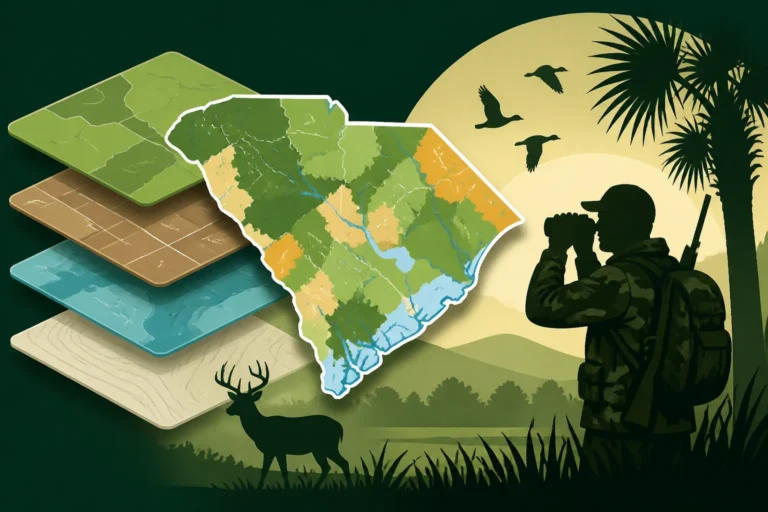
Using mapping tools like onX Hunt or GoHunt is non-negotiable for WMA hunting. These apps can overlay WMA boundaries, public access points, and topographic maps directly onto your phone, helping you identify pockets of habitat, potential roosting sites, and travel corridors. They're also vital for staying on public land and avoiding accidental trespass onto private property that often borders WMAs. I've spent countless hours looking at satellite imagery on my phone, trying to pick out subtle changes in timber type or access roads that might lead to a less-pressured area. The Using the Go Outdoors SC Map Tool is also incredibly helpful for identifying WMAs and their specific boundaries.
River Bottoms and Floodplains: Overlooked Opportunities
While national forests and WMAs are often the go-to for public land hunters, don't overlook the potential of river bottomlands and associated floodplains. These areas, particularly in the Pee Dee and central regions of the state, can be turkey havens, often holding birds that are less pressured due to difficult access or seasonal flooding.
The Allure of Pee Dee River Bottoms
The Pee Dee River system, with its expansive floodplains, mature hardwoods, and oxbow lakes, offers fantastic turkey habitat. These areas can be rugged, with dense undergrowth, but they provide excellent cover and food sources for wild turkeys. Gobblers here often respond well to calls, especially away from the main river channels where hunting pressure might be higher. Access can be tricky, sometimes requiring a small boat or a long walk through dense timber.
The biggest challenge in these bottoms is often the water itself. Spring rains can inundate large areas, concentrating turkeys on higher ground or forcing them to move to the fringes. Paying attention to water levels and scouting areas just after a flood recedes can be highly productive. Turkeys will often gravitate to freshly exposed ground for feeding. To find public access points and navigate these areas, Pee Dee River Bottomland Public Access is an excellent resource.
Other Riverine Systems: Congaree and Savannah
While perhaps not as well-known for public land turkey as the Pee Dee, river systems like the Congaree and parts of the Savannah also offer limited public hunting opportunities in their floodplain zones. These areas are characterized by similar challenges – dense vegetation, periodic flooding, and often more limited access points. However, for the adventurous hunter willing to do their homework and deal with the conditions, these spots can hold hidden populations of turkeys that see minimal pressure. Always verify the specific hunting regulations and access rules for any riverine public land you consider, as they can vary greatly.
Strategic Approach to Public Land Turkey Hunting
Regardless of where you choose to hunt, a strategic approach is essential for increasing your odds of success on public land. It’s not just about finding a spot; it’s about understanding the birds, the terrain, and how other hunters might influence the area.
Aggressive Scouting and Map Use
Pre-season scouting is your secret weapon. Before the season even opens, spend time walking the public lands you plan to hunt. Look for turkey sign – droppings, tracks, strut marks, and dusting bowls. Identify potential roosting areas, often large, mature trees near water or on high points. Pay attention to food sources like oak flats or planted fields adjacent to public land. This isn't just a physical exercise; it's a mental one. Use your digital mapping tools like onX Hunt or GoHunt to mark points of interest, plan your entry and exit routes, and identify property lines. Knowing where you are and where the boundaries are is paramount, especially when pursuing a hot gobbler. Scouting South Carolina Public Land Before Season offers more tips on this critical step.
It’s often beneficial to use layers in these apps to identify different timber types or habitat features. For instance, a clear-cut from a few years ago might now be a dense replanted pine thicket – great cover for turkeys, but tough to hunt. Conversely, older, more open pine stands or mature hardwoods might be better for listening or calling. These tools are far more than just "where am I" devices; they are strategic planning systems for your hunt.
Early Bird and Late Season Tactics
Public land turkeys often get pressured hard during the first week or two of the season. To counter this, consider varying your approach. If you're hunting during peak pressure, consider hunting later in the morning or even mid-day. Many hunters pack up by 9 or 10 AM, leaving the woods quieter for those who persist. Sometimes, a gobbler that's been roosted and called to repeatedly in the early morning will finally decide to move and respond later on.
Alternatively, focus on areas that require significant effort to reach. The further you walk, the less competition you'll generally find. This means you might need to carry more water, snacks, and gear, but it can pay off with a less pressured bird. As the season progresses into late April and May, gobblers often become less vocal and more wary. This is when run-and-gun tactics, covering lots of ground and calling sparingly, can be effective. Try Run-and-Gun Turkey Tactics on Public Land in these later weeks when birds are quieter and smarter.
Understanding South Carolina Turkey Behavior
Understanding the general patterns of South Carolina Turkey Population Trends and their behavior will greatly inform your public land strategy. While specific areas will have their own quirks, some patterns hold true across the state. Turkeys generally want food, water, and cover. In the spring, they are focused on breeding. Identifying where hens are feeding and nesting will often tell you where the gobblers will be.
Don't be afraid to experiment with different call types and volumes. Public land birds hear it all, so sometimes a soft, subtle call works better than aggressive yelps. Sometimes, no calling at all is the best call. Listening is just as important as calling. Listen for distant gobblers, subtle clucks, or the drumming sound of a strutting tom. Patience is always a virtue, but on public land, persistence often trumps everything else. This means being willing to move, to call, to listen, and to adapt to what the birds are telling you, even if it's silence.
Here’s a quick overview of some public land options for South Carolina turkey hunting:
| Public Land Type | Typical Terrain | Turkey Density | Hunting Pressure | Key Strategies |
|---|---|---|---|---|
| Sumter National Forest | Rolling hills, hardwoods, pine | Moderate | Moderate | Long walks, ridge-top calling, topo map use |
| Francis Marion NF | Flat pine flats, swamps, cypress | Moderate | Moderate | Swamp edge scouting, high ground focus, bug control |
| WMA (General Access) | Varies widely by location | Good | High | Hard-to-reach spots, mid-day hunts, regulatory checks |
| WMA (Quota Hunts) | Varies widely by location | Very Good | Low (controlled) | Intensive scouting, precise calling |
| Pee Dee River Bottoms | Floodplains, mature hardwoods, dense | Moderate | Low | Boat access, post-flood scouting, patience |
| Other River Systems | Floodplains, dense vegetation, swamps | Lower | Very Low | Extreme scouting, adaptability, legal access checks |
Remember, all Public Hunting Land in South Carolina comes with its own set of challenges and rewards. The most important thing is to do your homework, understand the regulations, and respect the land and your fellow hunters. With the right preparation and a bit of determination, you can absolutely find success chasing gobblers on South Carolina's public ground. For more general information on South Carolina's public hunting areas, be sure to explore South Carolina Wildlife Management Areas.
Disclaimer
This article is for general informational purposes only and does not constitute professional advice. Laws, prices and regulations vary by location and change over time. Consult a qualified professional for guidance on your specific situation.