South Carolina Antler Point Restriction Status
It can be incredibly confusing to keep track of deer hunting regulations, especially when you cross state lines or talk to hunters from different regions. You hear about "antler point restrictions" in some places, and it leaves you wondering if South Carolina has similar rules that dictate which bucks you can legally harvest. This guide will thoroughly explain South Carolina's approach to antlered deer regulations and clarify why a statewide antler point restriction isn't part of the system here.
Understanding South Carolina's Deer Management Philosophy
South Carolina's approach to deer management might seem a little different if you're used to the more restrictive regulations found in many other states. Here, the primary focus has historically been on hunter opportunity and maintaining a healthy, robust deer population through flexible harvest structures, rather than imposing strict antler-based limitations.
Opportunity and Hunter Choice
One of the biggest drivers behind South Carolina's deer management philosophy is providing ample opportunity for hunters. For generations, hunting has been a deeply ingrained tradition across the state, and the Department of Natural Resources (SCDNR) has worked to ensure that hunters have plenty of time afield and reasonable bag limits. This means a long season, often opening as early as August 15th in some coastal zones, and a generous statewide antlered deer limit. The idea is to allow hunters to make their own choices within the broader harvest guidelines, deciding what constitutes a "trophy" or a desirable harvest for their freezer. It’s not about growing massive antlers for everyone, but about enjoying the hunt and managing the herd effectively.
This philosophy empowers hunters to be active participants in managing the local deer herd on their land or hunting club, rather than relying solely on the state to dictate specific antler criteria. For many, the thrill of the hunt isn't about counting points, but about the experience itself, the venison for the table, and the tradition shared with family and friends. This also means that what one hunter considers a prime buck, another might pass to let it grow, showcasing the diversity of hunter goals that the current system accommodates.
Population Dynamics and Herd Health
While hunter opportunity is key, maintaining a healthy deer population is paramount. South Carolina’s deer management strategies are built on sound biological principles that consider the state's diverse habitats, from the coastal plains to the upstate mountains. The SCDNR monitors herd health, buck-to-doe ratios, and fawn survival rates through annual surveys and harvest data. The state's system relies heavily on harvest reporting and scientific data collection to assess the overall health and size of the deer herd.
Instead of focusing on antler points as a proxy for age or quality, the state tends to manage through antlerless deer harvest. Encouraging hunters to take does is a direct and effective way to control population growth, balance sex ratios, and prevent overbrowsing of habitat, which are all crucial for sustained herd health. If you're wondering how the deer population is trending, articles like "South Carolina Deer Herd Size" often provide insightful data from the SCDNR. The absence of statewide antler point restrictions doesn't mean a lack of management; it simply means the management tools employed are different, focusing more on overall population numbers and doe harvest to achieve ecological balance.
What Antler Point Restrictions Are and Why South Carolina Doesn't Use Them Statewide
Let's dive into what antler point restrictions (APRs) are and why they are not a widespread regulation in South Carolina, helping you understand the unique landscape of deer hunting here.
The Concept Behind APRs
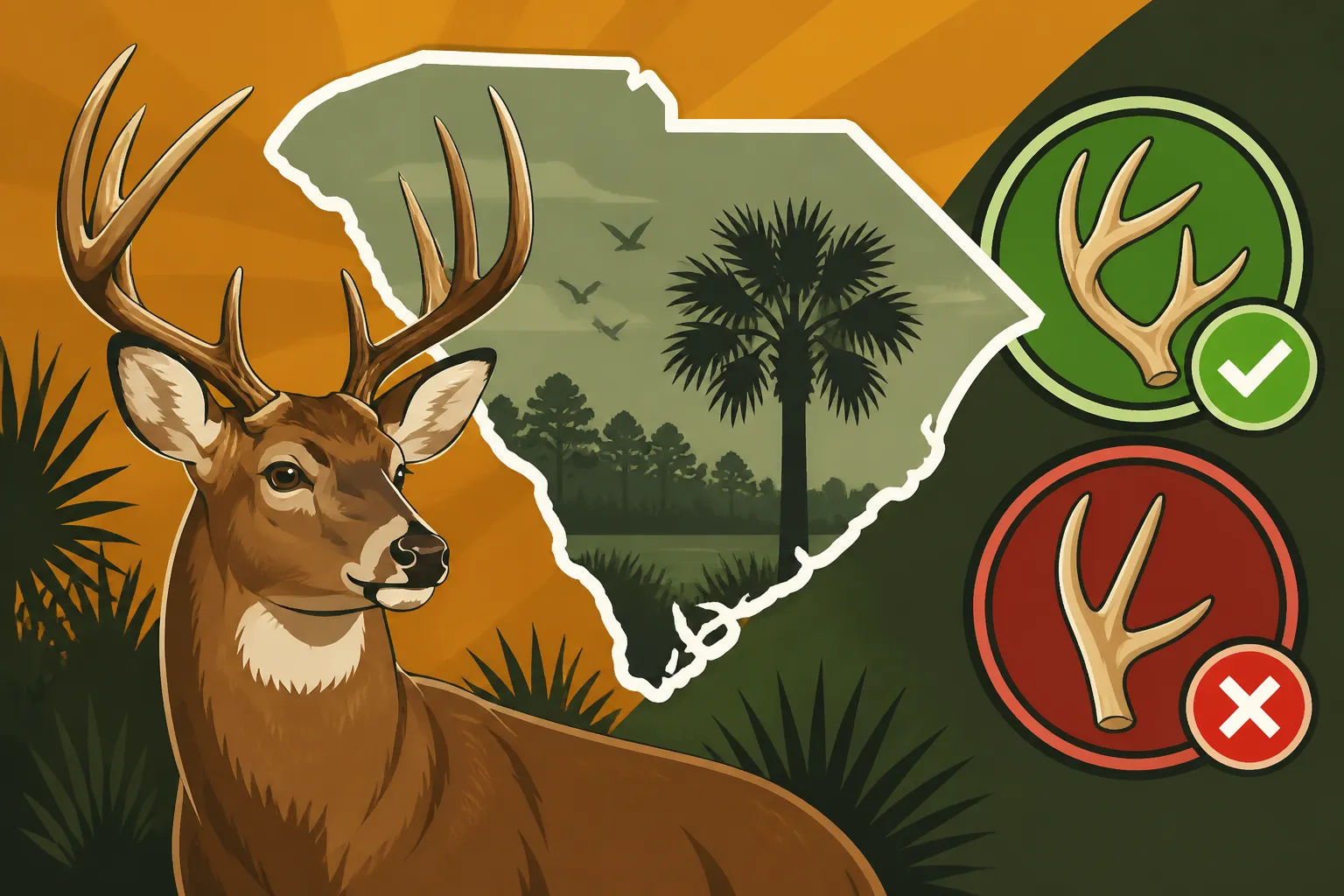
Antler Point Restrictions (APRs) are specific hunting regulations that require a harvested buck to meet a minimum antler characteristic, most commonly a certain number of points on one or both antlers, or a minimum main beam length, to be legal. For example, a state with APRs might mandate that a buck must have at least four points on one side (a 4-point rule) or have an outside spread of a certain width. The primary goal of APRs is typically to protect younger bucks, allowing them to mature into older age classes, theoretically leading to a higher proportion of larger-antlered deer in the population.
The thinking is that if more yearling bucks (often 1.5 years old) are passed up, they'll survive to become 2.5, 3.5, or even older, increasing the chances of harvesting a "trophy" class animal. APRs are often implemented in states or specific regions where deer managers aim to shift the buck age structure to create a more "quality" deer hunting experience, sometimes defined by antler size. While they can achieve this goal in some areas, they can also be controversial, as they require hunters to make quick, accurate judgments in the field, sometimes leading to misidentified deer or accidental violations.
South Carolina's Different Approach
South Carolina stands out because it generally does not employ statewide antler point restrictions. Instead of focusing on the number of points a buck has, the SCDNR manages the antlered deer harvest through a simple statewide limit on the number of antlered deer a hunter can take per season. This simplifies regulations for hunters and avoids the complexities and potential errors associated with field-judging antler points under varying conditions.
The philosophy here is that managing the overall number of antlered deer harvested, coupled with robust antlerless harvest, is sufficient to maintain a healthy and balanced deer herd. For instance, the discussion around "South Carolina Deer Antler Growth Timeline" illustrates that antler development is influenced by a multitude of factors, including age, nutrition, and genetics. Rather than legislating antlers, South Carolina trusts hunters to make responsible decisions about what they harvest, within the broader context of total deer limits. This allows for a more accessible hunting experience, where hunters don't need to be expert antler scorers to avoid violating a regulation, and it places more emphasis on the experience of the hunt itself rather than just the rack.
Current Antlered Deer Regulations in South Carolina
Since statewide antler point restrictions aren't a factor, what are the rules for harvesting antlered deer in South Carolina? It's important to understand the actual limits and requirements that do apply to all deer hunters.
Statewide Antlered Bag Limits
The cornerstone of antlered deer management in South Carolina is the statewide bag limit. Residents and nonresidents alike are subject to specific annual limits on how many antlered deer they can harvest. Currently, a resident hunter, after purchasing their base license and a big game permit, is allowed to harvest up to five antlered deer per season. Nonresidents have a slightly lower limit, usually two antlered deer per season, which helps manage harvest pressure from outside the state. If you want to know "How Many Antlered Deer Residents Can Take" or nonresidents, it's a fixed number, not based on points.
This system provides a clear, easily understandable framework for hunters. You don't need to count points from a moving deer in low light; you just need to keep track of how many antlered bucks you've already harvested against your annual limit. This simplicity allows hunters to focus on ethical shot placement and enjoying their time in the woods. These limits apply across all four of South Carolina's diverse game zones, from the earliest opening dates in the coastal zones to the later seasons in the upstate mountains, ensuring consistency for all licensed hunters.
Daily Antlerless Limits and Their Role
While antlered deer limits are set annually, antlerless deer (does) can be harvested daily, and these regulations are arguably the most critical tool for deer management in South Carolina. Hunters are generally allowed to harvest up to two antlerless deer per day when the season is open for them. This flexibility in doe harvest is a powerful mechanism for controlling the overall deer population, balancing sex ratios, and improving herd health.
Harvesting does helps prevent overpopulation, which can lead to habitat degradation and increased risk of disease outbreaks like EHD. It also helps ensure that the remaining bucks have better nutrition, which indirectly contributes to better antler growth and overall body size. This is where hunters truly contribute to the health of the herd. Knowing "How Many Antlerless Deer You Can Take Per Day" and making the most of those opportunities is a far more impactful management strategy in South Carolina than arbitrary antler point rules. It targets the reproductive capacity of the herd directly, ensuring sustainable numbers year after year.
Youth and Apprentice Hunter Considerations
South Carolina is dedicated to fostering the next generation of hunters, and its regulations reflect this commitment. The state has specific provisions for youth and apprentice hunters, designed to make it easier for newcomers to experience the outdoors and learn ethical hunting practices. For instance, there’s often a special youth deer weekend, providing an opportunity for young hunters to get out in the woods with an adult mentor before the regular season opens. This is a fantastic chance to introduce them to the sport without the added pressure of complex regulations.
Apprentice hunter licenses are also available, allowing individuals who haven't completed hunter education to hunt under the direct supervision of a licensed adult. These programs are about participation and learning, not about strict antler qualifications. The goal is to provide a positive, encouraging first experience in the field, and complicated antler restrictions would only serve to deter new hunters. For more details on these programs, you can check resources on "South Carolina Apprentice Hunter License Rules" or "South Carolina Hunter Education Requirements". The focus remains on safety, ethics, and a love for the outdoors, rather than antler scorecards.
Navigating Private Land Versus Wildlife Management Area Rules
Understanding the distinction between hunting on private land and Wildlife Management Areas (WMAs) is crucial, especially when discussing regulations like antler point restrictions or general harvest rules. While statewide APRs don't exist, local rules can vary.
The General Rule: No Statewide APRs
As we've established, the great news for most hunters in South Carolina is that statewide antler point restrictions simply aren't a thing. Whether you're hunting on your own private acreage, a leased tract, or with a hunting club, the general rule is that any antlered deer, regardless of its points, can be harvested as long as you haven't exceeded your personal statewide antlered bag limit. This simplifies hunting considerably and places the emphasis on hunting skills, ethical harvest, and the overall management goals of your property or club.
Many private landowners and hunting clubs do implement their own "quality deer management" (QDM) practices, which might include self-imposed antler criteria for their members. This is entirely at their discretion and is not mandated by the state. These clubs might require members to only shoot bucks with a certain number of points or a minimum main beam length, but this is a private agreement, not a state law. Tools like GoHunt can be invaluable for understanding property boundaries and access points, helping you to differentiate private land from public access areas where rules might change. Always clarify the specific rules of any private land you hunt.
Specific WMA Exceptions
While South Carolina doesn't have statewide APRs, it's absolutely vital to remember that Wildlife Management Areas (WMAs) often operate under their own specific, and sometimes more restrictive, rules. These rules are designed to manage hunting pressure, protect specific wildlife populations, or achieve unique management goals on public land. For deer hunting on WMAs, you might find regulations that dictate hunting days, legal weapons, or even specific permit requirements, but generally, these rarely include antler point restrictions.
For example, a WMA might have specific primitive weapons seasons, or require you to apply for a quota hunt, but it's highly unlikely to tell you that a buck needs to be an 8-point minimum. However, there could be WMA-specific bag limits that differ from the statewide limits, or certain areas might be youth-only hunts. It is always, always your responsibility to check the current regulations for the specific WMA you plan to hunt. You can find detailed information on the SCDNR website, often outlining specific WMA boundaries and their unique rules. Consulting resources like "South Carolina WMA Permit Requirements" is a crucial step before heading out onto public land.
Landowner Tags and Management Options
For landowners in South Carolina, there are additional avenues for deer management, which further underscore the state’s emphasis on localized control rather than statewide antler restrictions. Qualified landowners can apply for deer damage permits if deer are causing agricultural damage, allowing for additional harvest opportunities outside of regular season limits to mitigate crop loss. Additionally, landowners who are managing their property for specific wildlife objectives might qualify for special tags or exemptions that align with their conservation plans.
These programs are tailored to address local population issues and habitat goals, giving landowners the flexibility to manage deer on their property effectively. This might involve intensive doe harvest, habitat improvements, or even choosing to pass up younger bucks to improve the age structure of their herd. The system respects private property rights and the diverse land management goals across the state. Using tools like GoHunt to visualize your property's boundaries, analyze habitat, and understand local topography can greatly assist in developing and executing an effective management plan for your land, allowing you to optimize your harvest within state guidelines without the burden of statewide APRs.
Here's a quick reference for South Carolina's general antlered deer limits:
| Hunter Type | Base License + Big Game Permit Required | Annual Antlered Deer Limit | Daily Antlerless Deer Limit | Antler Point Restrictions? |
|---|---|---|---|---|
| Resident | Yes | 5 | 2 (when season is open) | No statewide |
| Nonresident | Yes | 2 | 2 (when season is open) | No statewide |
| Youth | No (if under 16 w/adult) | Part of adult limit | Part of adult limit | No statewide |
| Apprentice | Yes (with licensed mentor) | Varies by license type | Varies by license type | No statewide |
Note: Always consult the current SCDNR regulations guide for the most up-to-date and specific rules, as these can change annually.
Understanding Deer Season and Bag Limits Across Zones
South Carolina's deer season structure is designed to offer extensive hunting opportunities, varying across its four distinct game zones. These zones have different opening and closing dates, but the core antlered deer regulations remain consistent statewide, focusing on the bag limit rather than antler points.
South Carolina's Four Game Zones
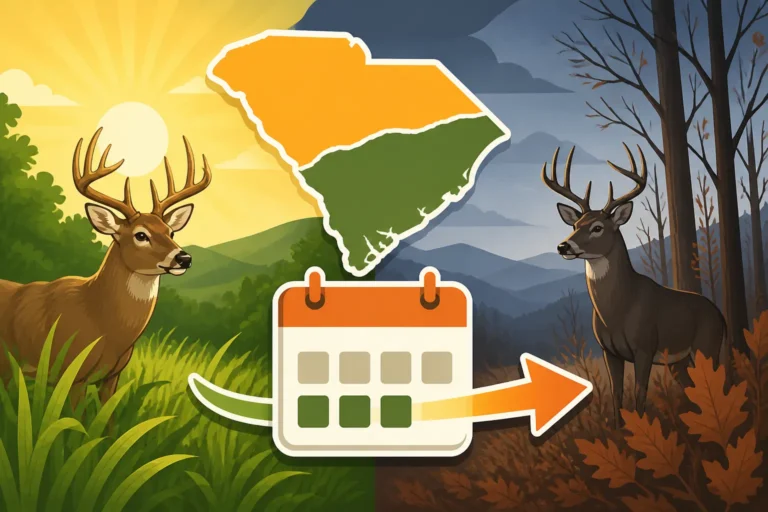
The state of South Carolina is divided into four distinct game zones: Zone 1 (Upstate), Zone 2 (Midlands), Zone 3 (Pee Dee), and Zone 4 (Coastal). Each of these zones has its own unique characteristics, habitat, and deer season dates. For example, South Carolina's Four Game Zones explains how these divisions impact when and where you can hunt. Zone 4, the coastal plain, typically boasts the earliest archery openers, sometimes as early as mid-August. This contrasts sharply with Zone 1, the Upstate, which often has a much later start, usually in October, accounting for different rut timings and hunter pressure.
Despite these variations in season length and timing, the antlered deer bag limit of five for residents and two for nonresidents applies across all zones. This consistency is a blessing for hunters who might hunt in multiple zones, as they don't have to relearn a new set of antler rules every time they cross a zone boundary. However, always double-check the specific season dates for your chosen zone and weapon type, as these are crucial. Knowing the season dates and bag limits is essential for proper trip planning, especially if you're aiming to take advantage of opportunities throughout the year, such as Hunting the Rut in the Coastal Zones or Hunting the Rut in the Upstate Zone.
Reporting Requirements and Their Importance
South Carolina has a mandatory deer harvest reporting system, which is a critical component of its deer management strategy. Every deer harvested, whether antlered or antlerless, must be reported to the SCDNR within 24 hours of harvest. This is done through the "Game Check" system, which can be accessed online or via phone. This data is invaluable for wildlife biologists to monitor harvest trends, estimate population sizes, and assess herd health across the state. Without accurate reporting, the state's ability to make informed management decisions is severely hampered. You can learn more about this process from "South Carolina Deer Reporting Requirements."
While this might seem like an extra step, it’s far less cumbersome than having to meticulously count antler points in the field and potentially make a costly error. The reporting system focuses on the quantitative data that genuinely informs management, rather than qualitative antler features. This means that every deer you harvest contributes to the larger picture of South Carolina's deer population health and helps shape future hunting opportunities. So, when you successfully fill one of your antlered deer tags, ensure you complete the reporting process promptly.
Choosing Your Approach in the Field
Without statewide antler point restrictions, South Carolina hunters have a unique level of freedom in the field, allowing them to tailor their hunting approach to personal goals and the specific conditions of their hunting area. This flexibility fosters a more enjoyable and less stressful hunting experience for many.
Personal Decisions and Ethical Harvest
The absence of APRs places a greater emphasis on a hunter's personal ethics and judgment. You are free to decide what constitutes a "keeper" for you, whether that's an older, mature buck, a younger animal for the freezer, or simply the deer that presents the best, most ethical shot opportunity. This individual choice is a hallmark of South Carolina hunting culture. For some, the goal might be to harvest prime venison for their family, making a well-placed shot on any legal deer the priority. For others, it might be about the challenge of finding a truly mature buck, regardless of its antler points.
This personalized approach is also more forgiving for new hunters or those less experienced in field judging. Instead of worrying about miscounting points on a quickly moving animal, they can focus on safe firearm handling, identifying the deer as male or female (if an antlerless season is open), and executing a clean shot. This reduced pressure contributes to safer hunting practices and a more positive introduction to the sport. As always, regardless of your personal goals, an ethical harvest means taking a clean, humane shot and prioritizing game recovery.
The Role of Habitat and Local Management
Even without statewide APRs, many hunters and landowners in South Carolina still engage in quality deer management (QDM) practices. These efforts often focus on improving habitat, controlling doe populations, and selectively harvesting bucks to achieve specific goals for their local herd. For instance, a hunting club might agree internally to pass on younger bucks to allow them to grow for another year or two, thereby increasing the average age of bucks on their property. This is a voluntary choice, driven by local conditions and preferences, not state mandates.
Good habitat management, whether on public land or private, is key to growing healthy deer with good antler potential. Nutritious food sources, adequate cover, and consistent water availability all contribute to a deer's overall health and ability to grow larger antlers. Tools like GoHunt can aid hunters in identifying areas of excellent habitat, scouting potential food sources, and understanding terrain features that deer utilize, such as creek bottoms, ridges, or powerline cuts. By understanding and influencing these factors, hunters and land managers can achieve their desired deer population characteristics far more effectively than through a simple antler point rule alone.
Disclaimer
Please remember that hunting regulations can change. It is always the hunter's responsibility to consult the most current South Carolina Department of Natural Resources (SCDNR) regulations manual before heading afield to ensure compliance with all applicable laws and rules. This article is intended for informational purposes only and should not be considered a substitute for official legal guidance.