Congaree National Park Boundary Rules
It's incredibly frustrating when you're out scouting, see prime habitat teeming with game, only to discover it's within the boundaries of a national park where hunting is strictly off-limits. Many hunters, especially those new to South Carolina's diverse public lands, often conflate national parks with national forests or wildlife management areas, leading to confusion and potential legal trouble. This guide will walk you through the precise boundary rules for Congaree National Park, clarify what you can and cannot do, and help you navigate hunting opportunities safely and legally in its vicinity.
Understanding National Park Status and Hunting Restrictions
National parks across the United States operate under a very different set of regulations compared to state wildlife management areas (WMAs) or even national forests. This distinction is crucial for any hunter looking to understand where their activities are permitted. The primary goal of a national park is often conservation, preservation, and public enjoyment in a non-consumptive manner, which fundamentally clashes with hunting.
The Fundamental Rule: No Hunting Within Park Boundaries
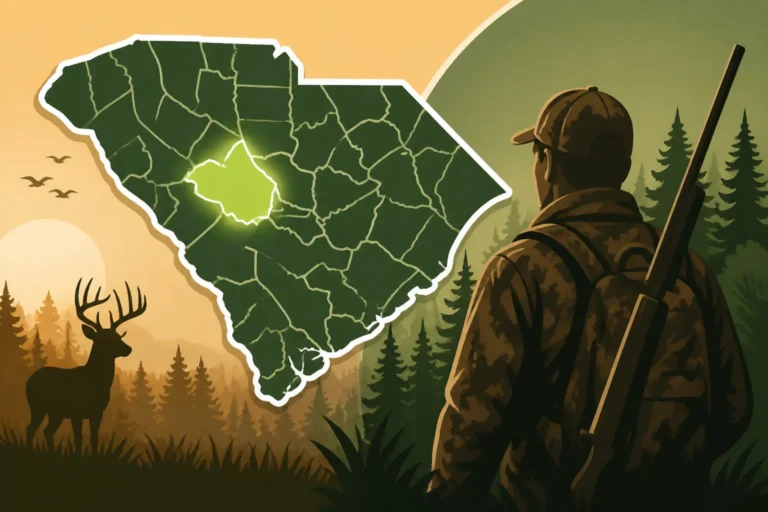
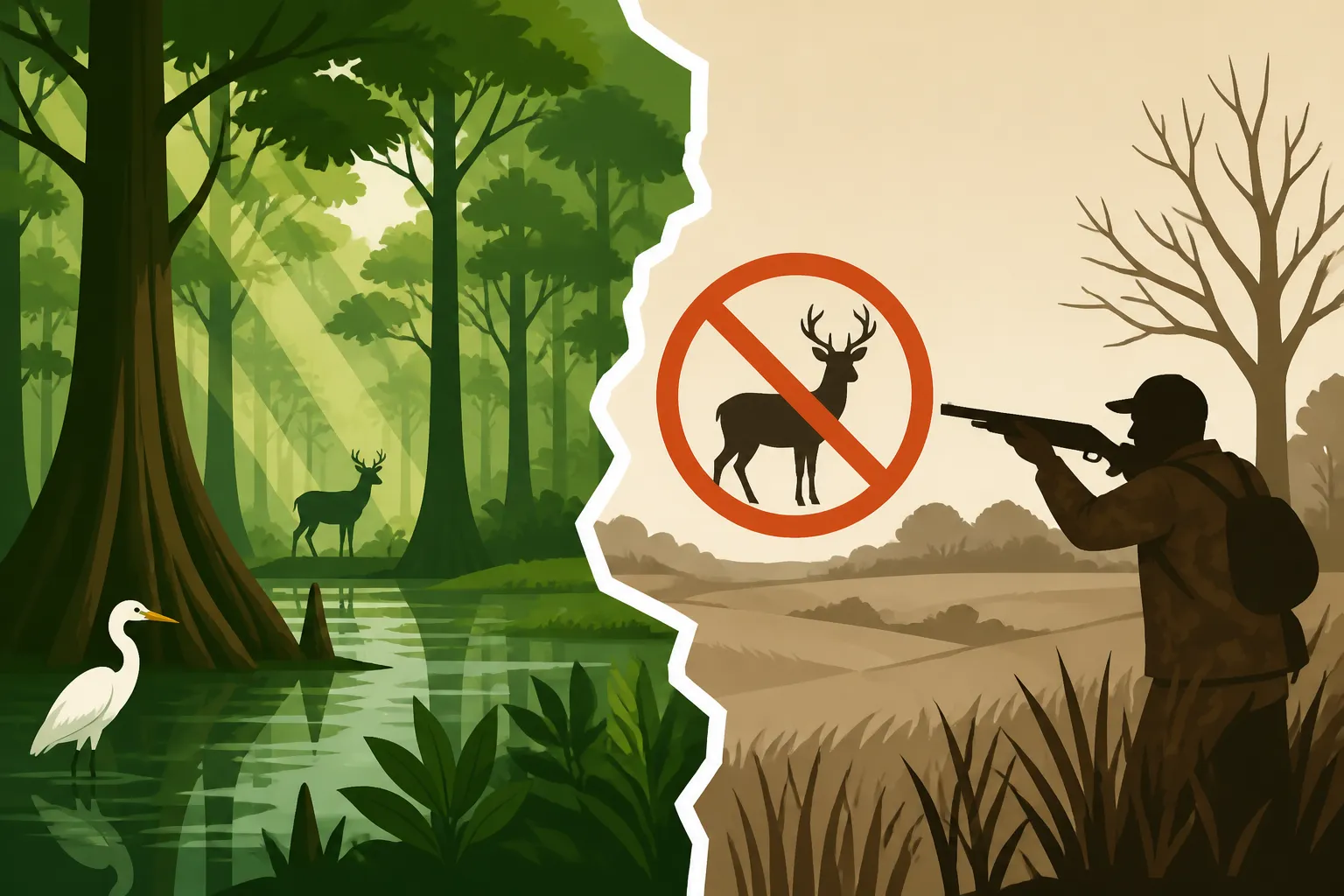
Let's be unequivocally clear: hunting is prohibited within the boundaries of Congaree National Park. This isn't a suggestion; it's a hard and fast rule enforced by federal law. Unlike national forests, where multiple-use mandates often include hunting and timber management, national parks are established to protect ecological integrity and provide recreational opportunities that don't involve harvesting wildlife. So, if you're looking at a map and see that iconic dark green national park boundary, know that your hunting rifle or bow needs to stay packed away. This applies to all game species – deer, turkey, small game, and waterfowl – without exception. The park’s unique old-growth bottomland hardwood forest, while teeming with life, is a sanctuary where animals are protected from hunting pressure.
The Rationale Behind National Park Regulations
The philosophy behind national parks, championed by figures like John Muir, centers on preserving nature in its pristine state for future generations. This means minimizing human impact, and hunting is seen as a form of impact. The National Park Service aims to maintain ecological processes without interference, allowing wildlife populations to regulate themselves naturally. This approach differs significantly from state wildlife agencies or the U.S. Forest Service, which often manage wildlife populations through hunting seasons and bag limits to achieve specific conservation goals or reduce conflicts with human interests, such as crop damage. At Congaree, the focus is on providing a unique wilderness experience, not on providing hunting opportunities.
A Brief History of Congaree National Park's Designation
Congaree National Park has a fascinating history that illustrates its purpose. It was originally established as Congaree Swamp National Monument in 1976 to preserve the largest contiguous tract of old-growth bottomland hardwood forest in North America. This designation elevated its protection status significantly. Later, in 2003, it was redesignated as a National Park, solidifying its role as a premier natural area for preservation and non-consumptive recreation. This evolution underscores the long-standing commitment to protecting this unique ecosystem, including its wildlife, from activities like hunting. Understanding this history helps contextualize why the rules are so stringent here, setting it apart from other public lands where hunting is a traditional use.
Navigating Congaree's Edge: What You Can Hunt Near
While hunting is off-limits within Congaree National Park, that doesn't mean the surrounding landscape is a complete no-go for hunters. South Carolina boasts a wealth of public and private hunting lands, and understanding where these opportunities lie, especially in relation to the park, is key. Hunters need to be incredibly diligent, however, to ensure they don't inadvertently cross into forbidden territory.
Adjoining Private Land: Permission is Key
Right up against the park's boundaries, you'll find plenty of private property. Much of this land, especially in rural areas surrounding Hopkins, Eastover, and St. Matthews, consists of timberland, agricultural fields, and large family tracts that are actively hunted. If you're lucky enough to secure permission from a private landowner whose property borders the park, you could find excellent hunting. Deer, turkey, and hogs often use the refuge of the park as a bedding or sanctuary area and venture onto adjacent private lands to feed, especially in planted food plots or agricultural fields. Remember, South Carolina Trespass and Permission Law is very clear: you must have explicit permission to hunt private land, and that usually means a signed agreement or direct verbal consent. Never assume, and always respect property lines.
Nearby WMAs and Their Regulations
South Carolina offers an extensive network of Wildlife Management Areas (WMAs) that provide public hunting opportunities. While there aren't WMAs directly adjacent to every inch of Congaree National Park, the surrounding counties (Richland, Sumter, Calhoun, Orangeburg) do host various WMA tracts. These areas are managed by the South Carolina Department of Natural Resources (SCDNR) with hunting as a primary recreational use. You'll need to consult the specific WMA regulations for each area, as seasons, bag limits, and legal weapons can vary greatly from statewide rules. Using resources like the Go Outdoors SC website or app can help you locate these areas and understand their specific rules. South Carolina Wildlife Management Areas offers a broader look at the opportunities available.
Here's a quick comparison of hunting permissions on different land types:
| Land Type | Hunting Status | Typical Governing Authority | Key Rule for Hunters |
|---|---|---|---|
| Congaree National Park | Strictly Prohibited | National Park Service (Federal) | Absolutely no hunting, no firearms for hunting. |
| National Forests | Generally Permitted with State Rules | U.S. Forest Service (Federal) | Adhere to state seasons, bag limits, and permits. |
| State WMAs | Permitted with Specific WMA Rules | SC Department of Natural Resources | Obtain WMA permit, follow specific local rules. |
| Private Land | Permitted with Landowner's Express Permission | Landowner (Private) | Always get permission, respect boundaries. |
Identifying Legally Huntable Areas with Mapping Tools
In today's hunting world, mapping apps are truly game-changers for identifying huntable land and respecting boundaries. Tools like onX Hunt and GoHunt are absolutely indispensable when you're operating anywhere near a national park. These apps provide detailed property line information, often color-coded to indicate public vs. private land, and even delineate specific land management designations like national parks or WMAs. Before you even set foot in the woods, you can use onX Hunt to overlay public land data with topographical maps, identifying potential access points and confirming boundaries. This is especially vital in areas where boundary markers might be sparse or unclear on the ground. Similarly, the GoHunt app can help you find nearby WMAs and understand their specific regulations. Always double-check your location frequently with your GPS-enabled app, especially when moving through dense cover or near what you suspect might be a boundary line. It’s far better to be overly cautious than to find yourself facing a federal citation. You can also explore onX Layers for South Carolina Land Status for more detailed information on leveraging these powerful tools.
The Perils of Boundary Violations
Hunting near a national park is a high-stakes game. The temptation to push the envelope, or even an honest mistake, can lead to severe consequences. It's not just about a friendly warning; federal law enforcement takes these violations very seriously, and the repercussions can extend far beyond a simple ticket.
Legal Ramifications: Fines and Penalties
Crossing into Congaree National Park with a weapon for the purpose of hunting, or actually harvesting an animal within its borders, is a federal offense. This isn't like getting a parking ticket; we're talking about substantial fines that can quickly climb into the thousands of dollars. Beyond monetary penalties, offenders could face confiscation of their hunting equipment, including firearms, bows, and even vehicles if they were used in the commission of the crime. In more egregious cases, or for repeat offenders, federal charges could even lead to jail time. Imagine having your prized hunting rifle seized, a hefty fine levied, and a permanent mark on your record, all because you misread a boundary or knowingly risked it. It's simply not worth it.
Losing Your Hunting Privileges
Perhaps even more devastating for a passionate hunter than fines or equipment confiscation is the loss of hunting privileges. A federal conviction related to poaching or hunting in a prohibited area within a national park often results in the suspension or revocation of your hunting license, not just in South Carolina, but potentially across multiple states under interstate wildlife compacts. This could mean years, or even a lifetime, where you're unable to legally participate in the sport you love. The long-term consequences of such a violation are profound, impacting your ability to hunt deer in the upstate, chase turkeys in the lowcountry, or pursue waterfowl on the coast. For many, hunting is a way of life, and having that privilege stripped away is a truly harsh punishment.
Recovering Game That Crosses Over
Let's consider a scenario: you make a perfect shot on a deer on private land right outside the park, but the animal, in its last burst of adrenaline, runs across the boundary and expires inside Congaree National Park. What do you do? This is a tricky and ethically fraught situation. Your first and most important step is not to pursue the animal into the park with a weapon. Doing so would constitute a direct violation of federal law and could lead to the penalties mentioned above. Instead, you need to contact the park rangers or the South Carolina Department of Natural Resources (SCDNR) immediately. Explain the situation calmly and precisely. Park staff will then assess the situation. In some cases, they may allow you to accompany them, unarmed, to recover the animal. However, this is entirely at their discretion, and they are not obligated to assist. If they determine it's not feasible or safe, you may simply have to abandon your harvest. This is a tough pill to swallow, but it's crucial to prioritize legal compliance over recovering game.
Practical Strategies for Hunting Near Congaree
Given the strict rules and severe penalties, hunting near Congaree National Park requires meticulous planning and an abundance of caution. It's all about being proactive and leaving no room for doubt when it comes to boundaries.
Meticulous Pre-Scouting and Map Study
Your hunting trip starts long before you ever step foot in the woods. When planning to hunt anywhere near Congaree National Park, an intensive map study is non-negotiable. Utilize online mapping platforms and physical topographic maps to identify the precise park boundaries. Look for natural features that might act as clear demarcations on the ground, such as creeks, roads, or changes in timber type. Print out maps, draw lines, and mark potential stand locations relative to those boundaries. Pay close attention to any small, irregular fingers or protrusions of park land that might extend into areas you plan to hunt. Think about access points, wind directions, and how deer might move between park sanctuary and feeding areas on adjacent huntable land. This detailed pre-scouting will help you formulate a solid plan and avoid surprises.
On-the-Ground Verification and Boundary Markers
Once you're actually in the field, your map study needs to be complemented by diligent on-the-ground verification. While mapping apps like onX Hunt are powerful, GPS signals can occasionally be inaccurate, especially under dense canopy, or your phone battery might die. Always look for physical boundary markers. Federal park lands are typically well-marked with signs, painted trees, or survey lines. These markers, often bright red or yellow, will usually state "National Park" or "No Hunting." If you find yourself approaching such a marker, even if your GPS says you're still on private land, exercise extreme caution and reconsider your position. Take the time to walk these lines, understand the terrain, and note any discrepancies between your map and reality. It’s always better to set up a little further away from the line than to risk an accidental encroachment.
Communication with Landowners and Local Authorities
If you're hunting private land adjacent to the park, open communication with the landowner is paramount. Ask them directly about the park boundary, any known issues with game crossing, or specific landmarks they use to delineate their property from the federal land. They often have decades of experience with the local landscape and can provide invaluable insights. Furthermore, if you encounter a situation where wounded game crosses into the park, or you observe suspicious activity near the boundary, contact the appropriate authorities immediately. This means calling the Congaree National Park Ranger station or the SCDNR local office. Being proactive and transparent with law enforcement agencies demonstrates responsibility and can often mitigate potential problems, rather than making them worse by trying to handle things on your own. For general information on hunting opportunities, you can also consult resources like Public Hunting Land in South Carolina.
Special Circumstances and Misconceptions
Hunting near a national park often brings up a unique set of questions and common misunderstandings. It's important to clarify these to ensure you're fully informed and operating within the bounds of the law.
Tracking Wounded Game into the Park
This is a scenario every hunter dreads: you make a good shot, but the animal travels further than expected, eventually crossing into the absolute no-go zone of Congaree National Park. As mentioned before, do not go in after it with your weapon. Your best course of action is to immediately mark the spot where the animal crossed the boundary, exit the area, and contact the park rangers or SCDNR dispatch. Be prepared to provide precise location details, the type of animal, and a description of the blood trail if possible. They will advise you on the next steps. There's no guarantee they will allow or assist in recovery, and the decision rests solely with the park superintendent. It’s a gut-wrenching situation, but violating federal law to recover an animal will only compound your problems exponentially. This is a harsh reality of hunting near protected federal lands.
Carrying Firearms Through the Park
You might wonder if you can simply transport your hunting firearm through Congaree National Park if it's the most direct route to another hunting spot. The answer is nuanced, but generally, it's best to avoid it if possible. While federal law, specifically the 'Credit Card Act of 2009,' allows individuals to carry firearms in national parks and national wildlife refuges if they are legally permitted to do so by the state where the park is located, there are important caveats. The firearm must be "readily available for lawful uses" and generally not for hunting within the park. It's often interpreted that the firearm must be unloaded and encased, similar to transport laws in a vehicle. However, the National Park Service also has its own specific regulations, and interpretation can vary. To avoid any potential misunderstandings or legal issues, the safest bet is to completely avoid transporting hunting firearms through Congaree National Park altogether. Find an alternative route around the park if you're headed to another hunting destination, even if it adds a few extra miles to your drive. For more on what constitutes legal firearms in the state, you can read South Carolina Legal Firearms for Deer Hunting.
Differentiating National Park from Other Public Lands
One of the biggest pitfalls for hunters is not fully understanding the critical differences between various types of public lands. It's easy to see "federal land" on a map and assume uniform rules. However, the distinction between a National Park, a National Forest, and a State Wildlife Management Area (WMA) is monumental for hunters.
- National Parks (like Congaree): These are managed by the National Park Service primarily for preservation, education, and recreation. Hunting is prohibited.
- National Forests (like Francis Marion or Sumter National Forests): Managed by the U.S. Forest Service under a multiple-use mandate. This typically includes timber, recreation, wildlife, and hunting. State hunting regulations apply, often requiring specific permits like a WMA permit to hunt certain areas within them. Francis Marion National Forest Hunting is a great example of a national forest where hunting is a staple.
- State Wildlife Management Areas (WMAs): Managed by the South Carolina Department of Natural Resources (SCDNR) specifically for wildlife conservation and public recreation, with hunting being a central component. Each WMA often has its own unique set of rules, seasons, and access requirements in addition to statewide regulations. Finding a South Carolina WMA Near You can provide more information on these opportunities.
Always verify the specific land designation before you plan any hunting trip. A simple glance at a reliable map or mapping app like GoHunt or onX Hunt will tell you exactly what kind of public land you are dealing with and prevent you from making a costly mistake. Don't assume; always confirm.
Disclaimer
This article is for general informational purposes only and does not constitute professional advice. Laws, prices and regulations vary by location and change over time. Consult a qualified professional for guidance on your specific situation.