Barrel Length for Walking Pine Cover
For anyone who’s spent time still-hunting the dense pine plantations or thick national forest bottoms here in South Carolina, you know the struggle: trying to slip through that wall of green with a long rifle can feel like wrestling a full-grown alligator. It's not just about getting tangled; it's about making noise, missing shot opportunities, and frankly, getting worn out. This guide is all about helping you figure out the ideal rifle barrel length to make those challenging South Carolina pine cover hunts smoother and more successful.
The Unique Challenges of South Carolina Pine Cover
Hunting in South Carolina often means navigating some seriously thick terrain. From the tightly planted rows of a managed pine forest to the natural regeneration after a clear-cut, or even just the dense undergrowth in many of our public lands, cover here can be relentless. This isn't wide-open prairie hunting, and your gear choices need to reflect that reality.
Navigating Dense Undergrowth
Imagine you're deep in the Sumter National Forest, slowly still-hunting a ridge line. You're trying to be as quiet as a ghost, placing each foot carefully. Suddenly, you need to turn quickly to check a rustle to your left, or pivot around a thick sapling. If your rifle barrel extends too far in front of you, it inevitably snags on vines, branches, or that ever-present briar patch. Each snag creates noise – a branch snapping, leaves rustling loudly – and every one of those sounds sends a deer bounding before you even know it's there. It's incredibly frustrating when you've done everything else right, only to be betrayed by your own equipment.
Beyond just noise, a long barrel makes it genuinely physically harder to move through dense cover. You're constantly pushing, pulling, and untangling, which adds fatigue to your hunt. This is especially true when you're hunting smaller, overlooked pockets of public land where other hunters might shy away due to the difficulty of access. If you want to penetrate those areas, your setup needs to be streamlined. This is where researching areas with tools like GoHunt, which can give you satellite imagery to visualize vegetation density, becomes invaluable before you even step foot in the woods.
Stealth and Shot Opportunities
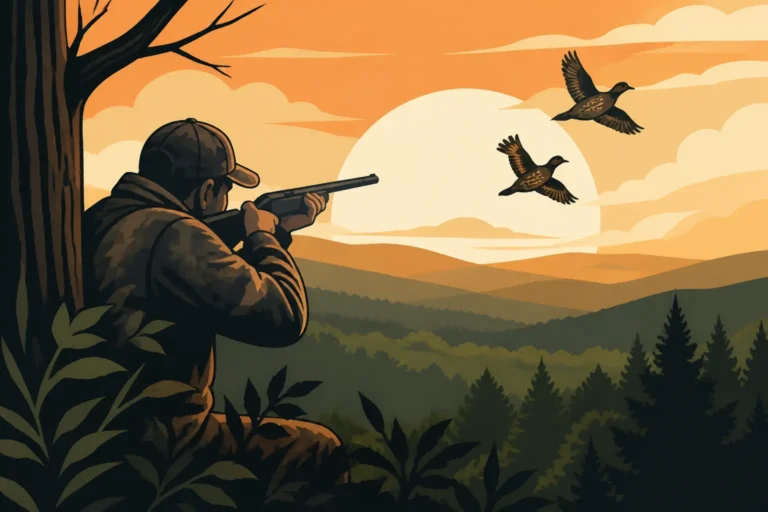
The primary goal of hunting in thick pine cover is often to get close to the deer. They live in these dense areas for security, and you're invading their sanctuary. When you finally spot that flash of a deer, it's usually at close range, moving quickly through small windows in the brush. Your shot needs to be instinctive and fast. A rifle that's cumbersome to bring to the shoulder, or one that snags as you try to swing it into position, can cost you a vital second or two.
Consider a scenario where a buck ghosts through a thick stand of pines 40 yards away. You might have only a three-foot window of opportunity to get a shot off as he passes. If your 24-inch barreled rifle bumps a pine sapling as you raise it, the deer hears it and vanishes. A shorter, more maneuverable barrel allows for quicker target acquisition and steadier aiming in tight quarters. You need to be able to react without impediment, which means having a rifle that feels like an extension of your body, not a cumbersome burden.
Understanding Barrel Length: The Basics
Before we dive into the nitty-gritty of choosing, let's make sure we're all on the same page about what barrel length actually entails and why it matters beyond just aesthetics. It's more than just inches; it influences everything from handling to bullet ballistics.
What Barrel Length Actually Means
When we talk about rifle barrel length, we're referring to the measurement from the muzzle (the end where the bullet exits) back to the bolt face when the action is closed. This dimension is crucial because it directly impacts a few key aspects of your rifle's performance and handling. First, and most obviously, a shorter barrel means a shorter overall rifle, which makes a huge difference when you're weaving through thick vegetation or climbing into a tight treestand. Imagine trying to get a 26-inch barreled rifle into position in a typical lean-to style treestand you might put up in the Francis Marion National Forest; it can be quite a struggle.
Beyond physical length, the barrel length also influences bullet velocity. Generally speaking, a longer barrel allows more time for the burning powder gases to push the bullet down the bore, resulting in higher muzzle velocity. This, in turn, can affect trajectory and energy downrange. However, the gains often diminish past a certain point, and the practical difference for typical South Carolina deer hunting ranges (often under 150 yards in dense woods) might be less significant than you think, especially with modern bullet designs.
Common Barrel Lengths for Hunting Rifles
You'll find hunting rifles commonly available with barrel lengths ranging from 16 inches all the way up to 26 inches, and sometimes even longer for specialized applications. Each length offers a different balance of characteristics, and understanding these can help you pick the right tool for your specific hunting style in South Carolina.
- Short Barrels (16-20 inches): These are the compact workhorses, often found on rifles designed for brush hunting, youth models, or those who prioritize maneuverability above all else. Think of a carbine-style rifle.
- Medium Barrels (20-22 inches): This range is arguably the most common and versatile for general hunting. It strikes a balance between portability and ballistic performance, making it a popular choice for many hunters who might encounter varied terrain, from dense woods to more open fields.
- Long Barrels (22-26 inches+): These barrels are typically favored by hunters looking for maximum velocity, flatter trajectories, and often a more stable platform for longer-range shots. They are common on magnum calibers or rifles intended for open country.
For most of us hunting deer here, especially in the thick stuff, the sweet spot often falls into the shorter or medium range. While a longer barrel might squeeze out a few more feet per second from your bullet, are those extra few feet going to matter when your shot is going to be 75 yards? Probably not as much as the ability to actually get the shot off in the first place without getting hung up on a vine.
Advantages and Disadvantages of Different Barrel Lengths in Pine
Choosing the right barrel length is a trade-off. There’s no single “best” option, but rather the best option for your specific hunting style and the terrain you frequent. In South Carolina’s diverse landscape, what works for a deer drive in the Lowcountry might be different from still-hunting the steep slopes of the Upstate.
Short Barrels: Nimble and Quick
Let's talk about those shorter barrels, generally in the 16 to 20-inch range. These are absolute game-changers when you’re hunting the kind of dense pine thickets and swamps that South Carolina is known for. The most obvious advantage is maneuverability. A rifle with an 18-inch barrel just feels incredibly agile when you’re slinking through tight saplings or slipping through a creek bottom filled with briars. You can keep the rifle pointed more easily, pivot quickly, and avoid snags that would infuriate you with a longer gun. This agility can be the difference between getting a shot off at a quick-moving buck and watching his tail disappear into the palmettos.
Beyond just the handling, shorter barrels often result in a lighter overall rifle, which is a blessing on those long, humid South Carolina hunts where every ounce feels like a pound by midday. When you’re putting in the miles, especially if you're Packs Built for a Sumter Forest Day Hunt, a lighter package means less fatigue and more focus on the hunt itself. Yes, you might lose a little bit of muzzle velocity, but for most deer calibers (like a .308 or 6.5 Creedmoor) and at typical ranges in thick cover (under 100 yards), that velocity loss is often negligible in terms of terminal performance. Your bullet will still do its job effectively. Think about the common .30-30 lever actions that have been killing deer in these woods for a century – many have 20-inch barrels or less and are incredibly effective.
Long Barrels: Reach and Stability
On the other end of the spectrum, we have longer barrels, typically 22 inches and up. These certainly have their place in South Carolina hunting, particularly if your primary hunting spots involve more open areas like powerline cuts, agricultural fields, or wider timber stands where longer shots are more common. The main draw here is ballistic performance. A longer barrel generally translates to higher muzzle velocity, which means a flatter trajectory and more energy retained downrange. This can be a real advantage if you’re trying to stretch your shots to 200, 300, or even further yards, say, across a large cut field in the Pee Dee region.
Another benefit often associated with longer barrels is a steadier swing and follow-through. The added weight further out on the barrel can help dampen movement, making it easier to hold steady on a distant target, especially when using a rest or shooting sticks. However, these benefits come with significant drawbacks when you enter the domain of dense pine cover. The added length makes the rifle much more prone to snagging, whether it's on a low-hanging branch in a pine stand or the edge of your ground blind as you try to adjust. The increased weight also adds to hunter fatigue, which, in our warm, humid climate, can make a significant difference over a full day of hunting. Trying to manage a 24-inch or 26-inch barreled magnum rifle while Still-Hunting Sumter Forest Ridges can quickly turn into a wrestling match with the brush.
Medium Ground: The All-Arounders
Many hunters find their sweet spot in the 20 to 22-inch barrel length range, and for good reason. These barrels offer a compromise that often suits the varied hunting conditions found across South Carolina. You get a good balance of ballistic performance – often retaining enough velocity for shots out to 200-250 yards with many common deer calibers – without the extreme bulk and handling issues of a much longer barrel.
A 20- or 22-inch barrel might still feel a bit long in the absolute thickest, nastiest lowcountry swamp bottom, but it's far more manageable than a 24-inch barrel. It offers enough length to provide decent sight radius (if you're using open sights) and a bit more stability than a true carbine, making it versatile for everything from a tight stand in a pine plantation to a field edge setup. This adaptability is key for many South Carolina hunters who might hunt multiple properties or different zones where conditions can vary greatly. If you’re looking for a single rifle that can handle most situations you’ll encounter here, a 20 or 22-inch barrel is a very strong contender. You can often find excellent Rifle Setups for South Carolina Deer Hunting with these barrel lengths.
Here's a quick comparison of common barrel lengths:
| Barrel Length Range | Pros in Pine Cover | Cons in Pine Cover | Ideal South Carolina Scenario |
|---|---|---|---|
| 16-18 inches | Maximum maneuverability, lightest, quick handling | Reduced velocity (minor), increased muzzle blast | Deep pine thickets, dense swamps, still-hunting heavy cover |
| 20-22 inches | Good balance of handling and ballistics, versatile | Can still snag in extreme thickets | Mixed terrain, clear-cut edges, typical woods hunting, stand hunting |
| 24-26 inches+ | Max velocity, flatter trajectory (longer range) | Very cumbersome, heavy, prone to snagging | Open fields, powerline cuts, long-range specialized hunting (less common for deer in dense SC woods) |
Making Your Choice: Matching Barrel Length to Your Hunt
Ultimately, the best barrel length for you comes down to your personal hunting style, the specific terrain you typically hunt, and the game you pursue. There’s no one-size-fits-all answer, but by considering these factors, you can make an informed decision that enhances your hunting experience.
Consider Your Primary Game Species
While this discussion focuses heavily on deer hunting, it's worth noting how barrel length might play into other South Carolina game. For instance, if you're primarily Hunting South Carolina's Year-Round Feral Hogs at night or in very dense cover, the agility of a shorter barrel (16-18 inches) is a huge asset. Hogs are often found in the nastiest, thickest places, and quick follow-up shots in close quarters are common. A short, suppressed barrel has become incredibly popular for hog hunting, enhancing stealth and protecting hearing.
On the other hand, if you're occasionally Hunting South Carolina Black Bear Without Bait in the Upstate mountains, where shot distances can vary wildly from close-range timber to longer cross-canyon shots, a medium barrel (20-22 inches) might offer a better compromise. Bears are tough, and retaining maximum energy from your chosen caliber can be important, while still being able to move effectively through the mountainous terrain. For general deer hunting in the pines, however, a shorter or medium length will almost always be the most practical.
Evaluate Your Hunting Style
Your personal hunting style is probably the most critical factor in deciding barrel length. Are you a still-hunter, constantly on the move, slowly creeping through the woods, trying to jump a deer from its bed? If so, maximum maneuverability is paramount, and a shorter barrel (16-18 inches) will be your best friend. Every foot you save in length means less chance of getting tangled, less noise, and quicker target acquisition when a deer inevitably bursts from thick cover. This is especially true for those trying to get into those secret spots others overlook.
Do you primarily hunt from a fixed treestand or ground blind, overlooking a food plot, a logging road, or a field edge? If your shots are likely to be from a relatively static position, and you're not constantly pushing through heavy brush, then a slightly longer barrel (20-22 inches) might not be as much of a hindrance. You might gain a little velocity, and the slightly increased weight can sometimes contribute to a more stable shooting platform. However, even from a stand, a compact rifle is easier to get into position, especially if you have to adjust quickly for a deer that approaches from an unexpected angle. For general versatility, even stand hunters in South Carolina might find a 20-inch barrel to be the best all-around option. This also applies when Hunting the Rut in the Coastal Zones where deer are moving more, and quick reactions can be essential.
Accessorizing for Maneuverability
No matter your barrel length, there are always ways to optimize your rifle for maneuverability in South Carolina's dense pine cover. For instance, the type of sling you use can make a huge difference. A comfortable, wide sling that allows you to carry the rifle securely across your body can prevent it from swinging wildly and snagging on brush as you walk. Many hunters prefer a two-point sling that keeps the rifle tight to their body but allows for a quick transition to a shooting position.
Another consideration is a suppressor. While adding length to the overall package, a suppressor drastically reduces muzzle blast, which is a huge benefit for hearing protection and can make follow-up shots more comfortable, especially in a group setting during a deer drive. The added weight at the end of the barrel does affect handling, so if you're running a suppressor, starting with a shorter base barrel (16-18 inches) often results in an overall length similar to a traditional 22-inch unsuppressed rifle. When Scouting South Carolina Public Land Before Season, also consider how your rifle will integrate with your pack and other gear, such as Shooting Sticks From an Upstate Ridge. Using a resource like GoHunt can help you visualize the terrain you'll be covering and better plan your gear choices for specific areas.
Disclaimer
This article is for general informational purposes only and does not constitute professional advice. Laws, prices and regulations vary by location and change over time. Consult a qualified professional for guidance on your specific situation.