Sabot Versus Conical for Deer
When you're looking to extend your deer season or simply embrace the tradition of black powder hunting here in South Carolina, choosing the right projectile for your muzzleloader can feel like a real puzzle. There's so much information out there, and opinions fly faster than a sabot through a barrel. Hunters often agonize over whether to go with a sabot or a conical, knowing that this single decision can significantly impact accuracy, terminal performance, and overall confidence when that moment of truth arrives. This comprehensive guide will dissect the nuances between sabots and conicals, offering clarity and practical insights to help you load up for success on your next South Carolina deer hunt.
Understanding Muzzleloader Projectiles: Sabots vs. Conicals
Before we dive into the nitty-gritty of performance in the field, it’s crucial to understand what distinguishes a sabot from a conical projectile. Each has a unique design philosophy and, consequently, different strengths and weaknesses when it comes to muzzleloading. This isn't just about what looks cool; it's about what performs best for your specific rifle and hunting style.
What is a Sabot?
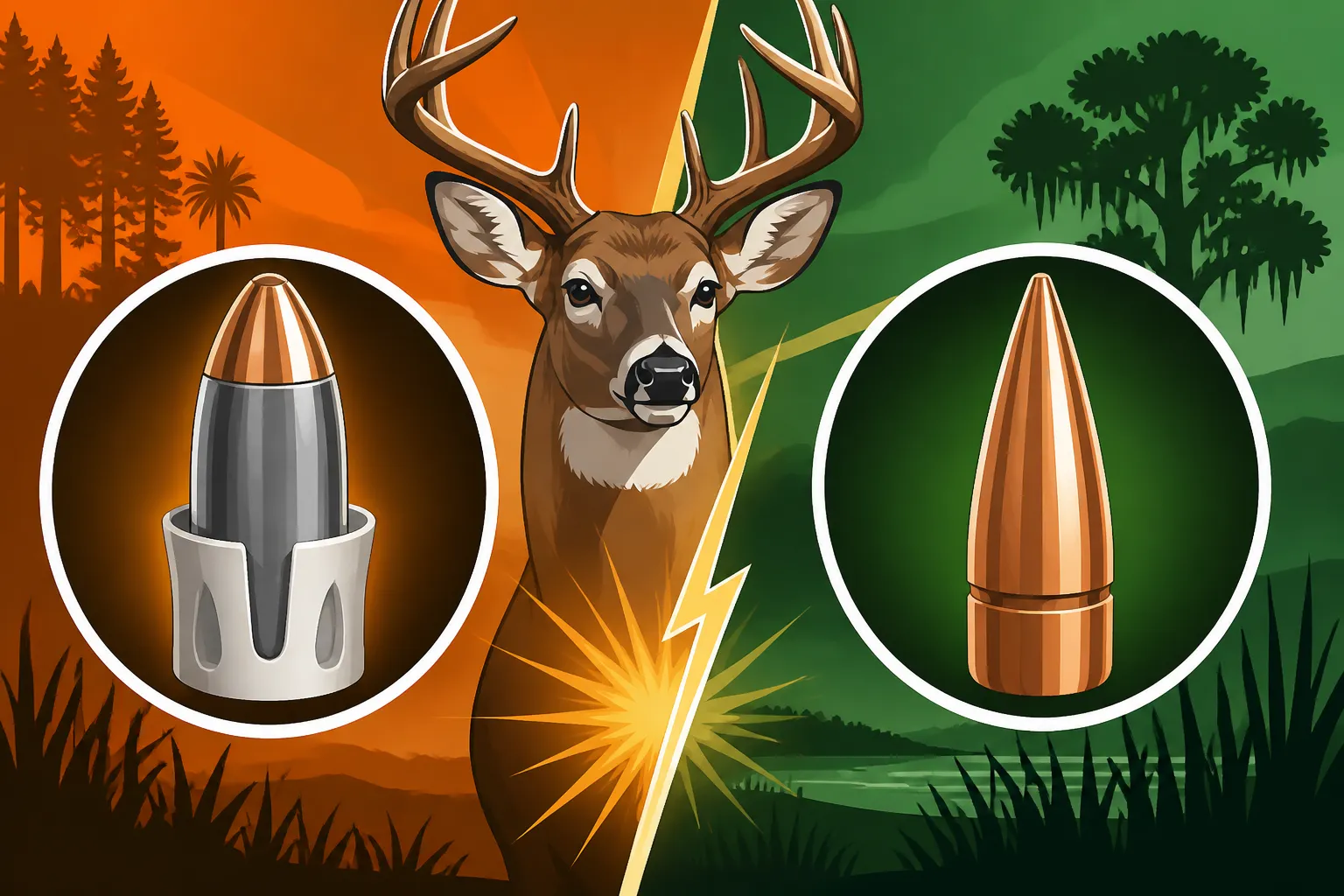
Imagine taking a modern, streamlined rifle bullet, shrinking it down, and then wrapping it in a plastic sleeve. That's essentially a sabot. The word "sabot" itself is French for shoe, and that's precisely its function: it acts as a shoe or sleeve for a smaller-diameter projectile. Most modern muzzleloaders, especially those with faster twist rates, are designed to shoot sabots extremely well.
The plastic sabot creates a gas seal against the rifling of your muzzleloader barrel. This allows you to shoot a smaller, typically jacketed, bullet that wouldn't otherwise fit snugly in the barrel. Upon exiting the barrel, aerodynamic forces cause the plastic sabot to fall away, sending the smaller, more aerodynamically efficient bullet on its way to the target. This design means you're launching a projectile that often resembles what you'd find in a modern centerfire rifle cartridge. These bullets, often from manufacturers like Hornady or Nosler, benefit from advanced designs focused on expansion and weight retention. They can achieve higher velocities and flatter trajectories, making them a favorite among hunters looking for extended range capabilities across open fields or long powerline cuts.
What is a Conical?
A conical bullet, by contrast, is a solid lead or lead alloy projectile that is typically the full diameter of your muzzleloader's bore. Think of it as a solid chunk of lead, often with a pointed or round nose, that loads directly into the barrel without a plastic sleeve. Popular examples include the traditional "Minie ball" or more modern solid lead conicals. Their historical roots tie directly back to the earliest muzzleloaders, where pure lead was cast into various shapes.
These bullets rely on their soft lead composition to deform slightly when loaded, creating a tight seal with the rifling. Because they are full bore diameter and heavy for their size, conicals typically offer excellent momentum and deep penetration. While they don't have the flat trajectory of a sabot-encased bullet, they hit with authority and often deform significantly upon impact, creating a large wound channel. They are often favored by hunters who appreciate simplicity, traditional appeal, and who anticipate shorter-range shots in thick cover where raw knockdown power and penetration are paramount, like in the dense South Carolina swamps. They are also generally easier to load and often preferred in older, slower twist rate muzzleloaders.
Performance in South Carolina Deer Hunting Scenarios
The diverse landscapes of South Carolina, from the dense swamps of the Lowcountry to the rolling hills and pine plantations of the Midlands and Upstate, present a variety of hunting scenarios. How a sabot or conical performs can drastically differ depending on where you're hunting and what kind of shot you anticipate. Understanding these differences can be the key to filling your tag.
Accuracy and Range Considerations
When it comes to accuracy, sabots generally hold an edge, especially at longer distances. Because the actual bullet inside the sabot is smaller and often more aerodynamically efficient, it experiences less drag and tends to fly flatter. This can be a huge advantage if you're hunting a sprawling agricultural field in the Pee Dee region or trying to reach across a clear-cut regrowth edge in the Midlands where a deer might be at 100-150 yards. Many modern muzzleloaders, especially those with a 1:28 or 1:32 twist rate, are specifically designed to stabilize these fast-flying projectiles, leading to impressive groups on the range. Hunters often consult ballistics data, sometimes found on specialized hunting platforms like GoHunt, to fine-tune their choice for optimal long-range performance.
Conicals, while often very accurate at closer ranges (say, within 75-100 yards), tend to drop faster and are more susceptible to wind drift due to their blunt shape and heavier weight. This isn't a deal-breaker if most of your shots are within the typical "swamp timber" range of 50 yards or less, where a deer might burst from a thicket. In such scenarios, the slight trajectory difference becomes negligible, and the sheer mass of the conical can be very forgiving. However, trying to stretch a conical beyond its effective range can lead to significant ethical challenges and missed opportunities. It's about knowing your limits and the projectile's limits. Practical Range in South Carolina Swamp Timber goes into more detail on how dense cover affects shot distances.
Terminal Ballistics and Bullet Performance
This is where the rubber meets the road—what happens when the projectile hits the deer? Sabots, carrying modern jacketed bullets, are designed for controlled expansion. This means they typically mushroom reliably, creating a wide wound channel while retaining a good portion of their weight, often leading to excellent penetration and a clean exit wound. An exit wound is a huge benefit for blood trailing, which is often crucial in the thick South Carolina woods, especially if the deer doesn't drop immediately. If you're hunting the rut in the coastal zones and get a buck on the move, a good blood trail can save you hours of searching.
Conicals, being solid lead, behave differently. They don't "mushroom" in the same jacketed bullet sense but deform significantly, flattening out and transferring a tremendous amount of energy to the animal. This can create a massive wound channel and often results in impressive knockdown power, sometimes dropping deer in their tracks. Their heavy mass also means they often achieve deep penetration, sometimes passing clean through even large-bodied South Carolina deer. However, because they deform more irregularly and may not always exit cleanly, especially on quartering shots, the blood trail might not be as consistent as with a controlled-expansion sabot. For hunters using South Carolina Primitive Weapons Tactics, this classic performance is often exactly what they're looking for.
Loading and Maintenance Differences
Beyond how they fly and how they hit, sabots and conicals also differ in the practical aspects of loading and maintaining your muzzleloader. These differences can influence your decision, especially when considering speed of follow-up shots or post-hunt cleaning routines.
Ease of Loading and Follow-Up Shots
Generally speaking, conical bullets are often easier and faster to load than sabots. Because they are full-bore diameter and made of softer lead, they tend to slide down the barrel with less resistance, especially after the first shot has "seasoned" the bore. This can be a significant advantage if you're in a situation where a quick follow-up shot might be necessary, though it's important to remember that muzzleloaders are not designed for rapid-fire. The simplicity of just pushing a single, soft lead projectile down the barrel can be very appealing, particularly when your hands are cold or you're trying to remain stealthy.
Sabots, on the other hand, are a tighter fit. The plastic sleeve needs to create a perfect seal with the rifling, which means a bit more force is usually required to seat them properly. This can be more noticeable on a cold barrel or after a few shots have built up some fouling. If you're using a tight-fitting sabot and need a quick second shot, the extra effort to ram it down might cost you a few precious seconds. Many hunters who prefer sabots develop a specific loading routine and use a quality loading jag and ramrod to make the process as smooth as possible. Some modern inline muzzleloaders are designed to make sabot loading easier, but it's still generally more involved than loading a conical. Choosing a Muzzleloader for a Warm Opener often involves considering ease of loading in potentially stressful situations.
Cleaning and Barrel Compatibility
The material of your projectile choice has a direct impact on barrel fouling and, consequently, your cleaning routine. Conical bullets, particularly those made of pure lead, can lead to lead fouling in your barrel. While not usually severe in modern muzzleloaders, it does mean a thorough cleaning is essential to maintain accuracy and prevent buildup. The softer lead can also be more susceptible to deformation if mishandled during loading.
Sabots, with their plastic sleeves, introduce a different kind of fouling: plastic residue. As the sabot travels down the barrel, friction and heat can leave behind microscopic plastic streaks in the rifling. This plastic fouling can build up over multiple shots and reduce accuracy. For this reason, many sabot users clean their barrels more frequently, sometimes even between shots on the range to maintain peak accuracy, and use specialized plastic-fouling removers. Both projectile types, of course, necessitate careful cleaning to manage black powder residue. It's especially important to know how to manage moisture to prevent corrosion, so understanding Keeping Powder Dry in South Carolina Humidity is vital regardless of your projectile.
The twist rate of your muzzleloader's barrel is also a critical factor for compatibility. Slower twist rates (e.g., 1:48 or 1:60 inches) are generally better suited for stabilizing heavier, full-diameter conical bullets. Faster twist rates (e.g., 1:28 or 1:32 inches) are designed to stabilize shorter, lighter, and more aerodynamic sabot-encased bullets. While some general-purpose barrels might shoot both adequately, optimizing your projectile to your barrel's twist rate will yield the best accuracy. If you're unsure of your rifle's twist rate, platforms like GoHunt often have user-submitted information or specifications that can help.
Making Your Choice: Factors to Consider
So, after all that, how do you decide which projectile is right for you? It boils down to a combination of your equipment, your hunting environment, and personal preference honed through practice. There's no single "best" option; only the best option for your specific situation.
Your Muzzleloader Type and Twist Rate
As mentioned, your muzzleloader's barrel twist rate is perhaps the most critical mechanical factor. Check your firearm's manual or contact the manufacturer to determine its twist rate. A general rule of thumb:
- Fast Twist (1:28" to 1:32"): These barrels are optimized for sabots. They can often shoot conicals, but not usually with the same pinpoint accuracy they achieve with sabots.
- Medium Twist (1:48"): This is often considered a "compromise" twist rate, capable of shooting both sabots and conicals reasonably well, but perhaps not excelling with either. You'll need to experiment more.
- Slow Twist (1:60" or slower): These traditional twist rates are best suited for heavier conical bullets. Sabots will often "keyhole" or tumble with these slower twists, leading to terrible accuracy.
If you are using an older, traditional side-lock muzzleloader, it likely has a slower twist rate and will perform best with conicals. Most modern in-line muzzleloaders feature faster twist rates and are designed with sabots in mind.
Hunting Environment and Shot Distance
Think about where and how you typically hunt deer in South Carolina.
- Open Fields and Powerline Cuts: If you're primarily hunting areas with longer sightlines, such as a green field planted for deer or Glassing a Powerline Cut at Last Light, the flatter trajectory and extended range of a sabot might be a significant advantage. It allows for a little more forgiveness in range estimation.
- Thick Timber and Swamps: For close-quarters hunting in the dense coastal maritime forest edges or working river cane thickets, where shots are typically 75 yards or less, the hard-hitting characteristics and ease of loading of a conical might be preferable. Accuracy differences become less pronounced at these ranges.
- Mixed Terrain: If you hunt areas that offer both long shots and short, thick encounters, you might lean towards a sabot for its versatility, or perhaps opt for a heavier, slower sabot bullet designed for better performance in timber.
Personal Preference and Practice
Ultimately, your confidence in your chosen projectile is paramount. There's no substitute for range time. Buy a few different types of sabots and conicals that match your barrel's twist rate and spend time at the shooting range. Experiment with different powder charges (always staying within manufacturer recommendations) and see what groups best out of your muzzleloader. What works for your buddy might not work for you.
Pay attention to:
- Accuracy: How tight are your groups at 50, 75, and 100 yards?
- Loading Ease: How difficult is it to get the projectile down the barrel, especially after a few shots?
- Recoil: While not usually a deciding factor, some heavier conicals might have more perceived recoil.
A good practice routine will not only build your confidence but also help you discover which projectile feels right and performs optimally for you and your equipment. Many hunters find resources and advice on their local hunt club forums or online communities like GoHunt for practical, real-world experience sharing.
Here’s a quick comparison to help you summarize the key differences:
| Feature | Sabots | Conicals |
|---|---|---|
| Projectile Type | Smaller, jacketed bullet in plastic sleeve | Full-bore, solid lead/alloy bullet |
| Accuracy | Generally superior at longer ranges | Good at closer ranges, drops faster |
| Velocity | Higher, flatter trajectory | Lower, more rainbow-like trajectory |
| Terminal Performance | Controlled expansion, good penetration | Significant deformation, deep penetration |
| Blood Trail | Often better due to clean exit wounds | Can be less consistent |
| Loading | Tighter fit, more effort required | Easier, softer lead slides easier |
| Fouling | Plastic residue and powder fouling | Lead fouling and powder fouling |
| Barrel Twist | Best with faster twists (1:28", 1:32") | Best with slower twists (1:48", 1:60+") |
| Ideal for | Open country, longer shots | Thick cover, shorter, powerful shots |
In the end, the choice between sabot and conical is a personal one, deeply tied to your hunting situation, your equipment, and your own shooting proficiency. Take the time to understand both, test them thoroughly, and head afield with the confidence that you've chosen the right projectile for the unique challenges of South Carolina Deer Season Structure Explained.
Disclaimer
This article is for general informational purposes only and does not constitute professional advice. Laws, prices and regulations vary by location and change over time. Consult a qualified professional for guidance on your specific situation.