South Carolina Firearms Discharge Setback Rules
It’s a heart-stopping moment: you’ve spent hours, maybe days, scouting and waiting, and finally, a deer steps into your shooting lane. But then, a flicker of doubt – is that a house over the ridge? A road just out of sight? The worry of accidentally violating South Carolina’s firearms discharge setback rules can cast a long shadow over an otherwise perfect hunt. This guide aims to clear up that confusion, diving deep into state laws, crucial local ordinances, and practical advice to ensure every shot you take is not only ethical but also legal and safe.
The Foundation of South Carolina's Discharge Laws: Safety First
Unlike some states that have very rigid, statewide numerical setback distances for all firearms from all dwellings, South Carolina’s approach to firearm discharge is primarily rooted in a broader principle of safety. The law isn't just about a specific number of yards; it's about the responsible conduct of a hunter and ensuring that no one is endangered. This can be a tricky concept for hunters used to simpler, concrete measurements, but understanding its nuances is absolutely critical to staying legal and, most importantly, keeping everyone safe in the woods.
More Than Just a Number: Understanding "Reckless Disregard"
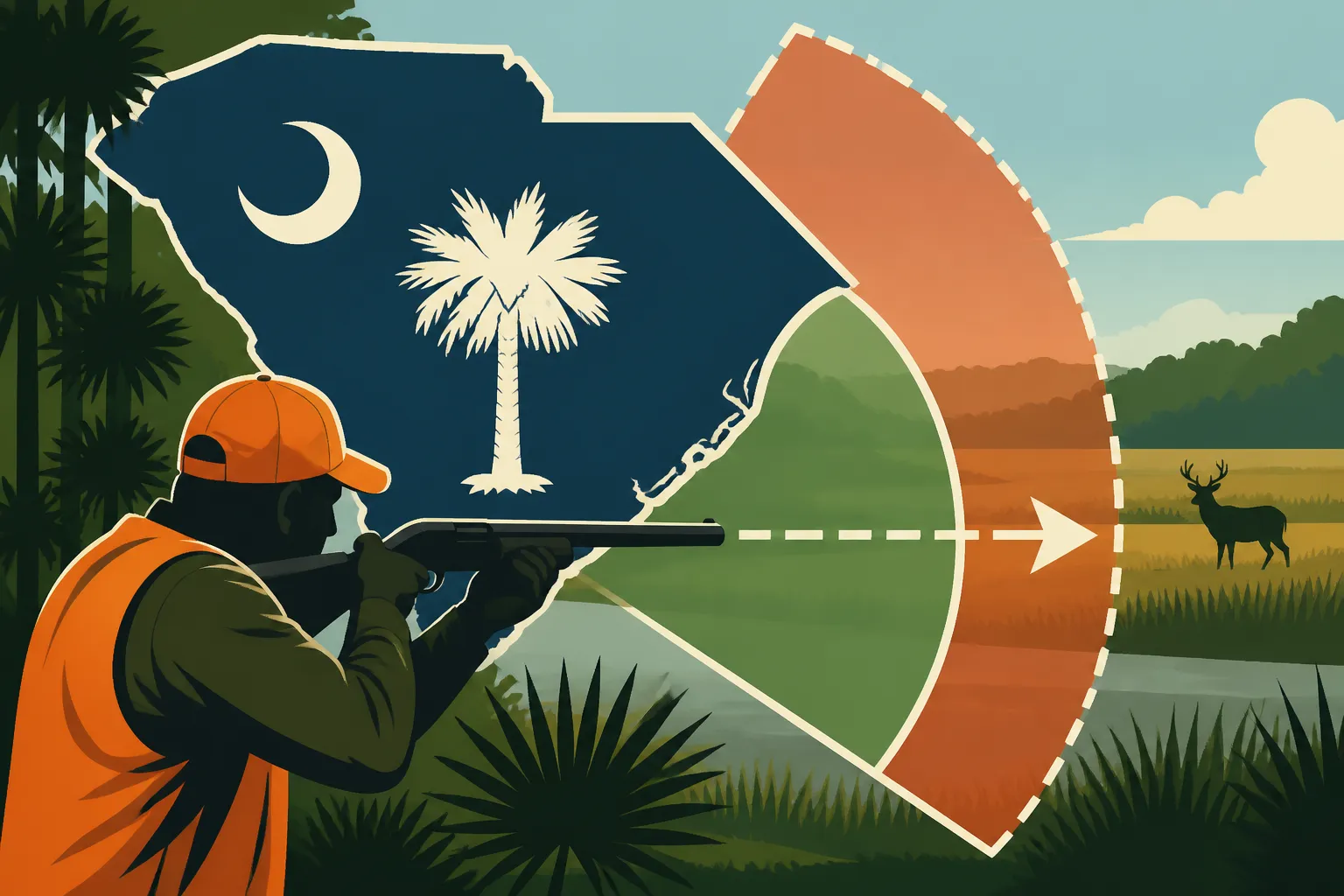
At the heart of South Carolina’s statute concerning firearm discharge (SC Code of Laws Section 50-11-730) is the idea of "reckless disregard for the safety of others." This means that even if you're technically a certain distance from a house, if you fire your weapon in a way that shows a careless indifference to the potential harm it could cause, you're breaking the law. Imagine you’re hunting a small woodlot, and you see a buck moving quickly towards a residential area. Pulling the trigger in that scenario, even if the house is 100 yards away, could easily be deemed reckless if your bullet could reasonably travel into that occupied space. The law looks at the totality of the circumstances: your angle, your backstop, the terrain, and what’s beyond your target. There's no magic yardage that absolves you of this responsibility. A safe backstop is paramount, whether it's a hill, thick woods, or open ground where you have a clear view of where your projectile will land or stop.
General Prohibitions: Roads, Dwellings, and Posted Property
While "reckless disregard" is the overarching principle, there are specific actions that are generally prohibited under state law because they inherently carry a high risk of danger. For instance, it is explicitly illegal to shoot over or across any public road or highway if it could endanger any person or property. This isn't just about shooting at a vehicle; it's about any projectile that travels over the roadway. Think about how many times a deer might cross a logging road or even a small paved county road. You must always confirm a clear trajectory that does not put any public thoroughfare at risk.
Furthermore, discharging a firearm at or in the direction of an occupied dwelling, building, or structure without lawful cause, and with reckless disregard for the safety of others, is also prohibited. This is where the intersection of state law and local ordinances often causes confusion. While the state law doesn't always mandate a 150-yard buffer, local ordinances frequently do, making it crucial to be aware of both. Hunters must also be mindful of South Carolina Posted Land Rules and ensure they are not discharging firearms over or onto private property where they do not have permission to hunt, even if no one is home at the time. Ignorance of these boundaries is no excuse, and stray bullets can have serious consequences.
Navigating the Maze: Local Ordinances and Specific Hunting Areas
This is where things can get truly complicated. While state law provides a foundational framework, many South Carolina counties and municipalities have enacted their own, often more restrictive, ordinances regarding firearms discharge. This means what's perfectly legal in one county might be a serious violation just a few miles down the road. It's a critical point that many hunters overlook, often to their detriment.
The Critical Role of County and Municipal Laws
If you’re hunting outside of designated Wildlife Management Areas (WMAs) or National Forests, it is absolutely essential to check the specific ordinances of the county and even the municipality where you plan to hunt. Many counties in South Carolina have adopted ordinances that stipulate a minimum setback distance for discharging a firearm from an occupied dwelling or a public road. These distances can vary widely – some might say 150 yards, others 300 feet, and some even greater. You might find these laws by checking the county sheriff's office website or the county's codified ordinances online. For instance, certain suburban areas near larger cities like Columbia or Charleston often have very tight restrictions or even outright bans on firearm discharge. Never assume; always verify. Relying on word-of-mouth or "how we always did it" can land you in serious trouble.
Rules on Wildlife Management Areas WMAs and National Forests
When you’re hunting on South Carolina's extensive public lands, such as Wildlife Management Areas (WMAs) or the Francis Marion and Sumter National Forests, you're subject to an additional layer of regulations. These areas often have specific rules that supersede or add to general state and local laws. For WMAs, the South Carolina Department of Natural Resources (SCDNR) publishes an annual WMA brochure that details specific regulations, including any unique firearms discharge restrictions. These might relate to certain hunting seasons, weapon types, or proximity to designated trails, campgrounds, or administrative buildings. For example, some WMAs might prohibit firearm discharge within a certain distance of an established campsite or public access point. Before you head out, make sure you've obtained the necessary South Carolina WMA Permit Requirements and thoroughly reviewed the rules for the specific WMA you intend to hunt. For National Forests, general rules usually apply, but specific sections or management areas within them might have their own local orders, so always check with the appropriate Ranger District office.
Tools for Staying Compliant: GoHunt and Other Mapping Apps
In today’s hunting world, technology is your best friend when it comes to navigating these complex rules. Mapping applications like GoHunt, onX Hunt, or even the Go Outdoors SC app are invaluable resources. These tools allow you to visualize property lines, identify occupied structures, and understand your proximity to roads, all from your smartphone or GPS device. By using features like " onX Layers for South Carolina Land Status," you can clearly see private land boundaries and avoid accidental trespassing or shooting over someone else's property without permission.
Before setting foot in the woods, spend time digitally scouting your hunting area with GoHunt. Look for any structures, roads, or property lines that could pose a challenge. Pay attention to changes in ownership or land use, especially if you're hunting near developing areas. Even in remote public lands, knowing where the WMA boundary ends and private land begins is crucial. Remember, while these apps are powerful, they rely on data, and it's always wise to cross-reference with physical boundary markers when possible. Don't forget, sometimes you might be in an area with poor cell service, so learning how to use Using Go Outdoors SC Without Cell Service for offline maps can be a real lifesaver.
Practical Application and Hunter Responsibility
Knowing the laws is one thing, but consistently applying them in the field is another. The pressure of a live animal, the excitement, and sometimes the dense South Carolina cover can make it easy to forget best practices. However, your responsibility as a hunter is paramount – not just for your own safety and legal standing, but for the reputation of all hunters.
Situational Awareness: Before You Pull the Trigger
Every single time you raise your weapon, you must engage in a full 360-degree assessment of your surroundings. It's not enough to identify your target; you must identify what's beyond it, around it, and in the general direction of your shot. Ask yourself:
- What’s my backstop? Is it a solid embankment, dense woods that will absorb the projectile, or open sky where a bullet could travel for miles?
- Are there any roads, houses, trails, or other structures in the line of fire? Even if they seem far, consider the maximum effective range of your chosen firearm. A modern rifle, for example, can send a bullet a significant distance. For most South Carolina Legal Firearms for Deer Hunting, like a .308 or a 6.5 Creedmoor, the bullet could travel well over a mile.
- What are the terrain features? Hills can act as natural backstops, but valleys can conceal dwellings or roads you can't see from your vantage point.
- What about other hunters or outdoor enthusiasts? Especially on public land, assume others are in the woods. Pay attention to public hunting hours, and be extra cautious.
Taking an extra few seconds to confirm these details can prevent a lifetime of regret. If there's any doubt about the safety of your shot, do not take it. Patience is a hunter's greatest virtue, and an un-taken shot is always better than a reckless one.
Respecting Your Neighbors and Private Property
Even when you're legally hunting on your own land or land where you have permission, it's a good idea to maintain positive relationships with your neighbors. If you're hunting near a property line, consider talking to adjacent landowners. Let them know when you'll be hunting and assure them you’ll be shooting safely away from their property. This goodwill can prevent complaints, misunderstandings, and potential legal headaches down the road. Remember, securing Getting Private Land Permission in South Carolina is also a gesture of respect and can expand your hunting opportunities while preventing issues. Being a responsible and courteous hunter benefits everyone.
Consequences of Non-Compliance
Violating South Carolina’s firearms discharge setback rules, whether due to state law or local ordinance, carries serious consequences. These can range from significant fines and civil penalties for property damage or injury, to the suspension or revocation of your hunting license. In cases of reckless endangerment or serious injury, criminal charges could be filed, potentially leading to jail time. The SCDNR takes these violations very seriously, and rightfully so. You can learn more about the broader repercussions of breaking hunting laws by looking into South Carolina Wildlife Violation Penalties. These are not just minor infractions; they are viewed as serious threats to public safety and responsible wildlife management. Adhering to these rules is not just about avoiding punishment; it's about upholding the integrity of hunting and ensuring its future for generations to come.
South Carolina Firearms Discharge Setback Rules Summary
To help clarify the multi-layered rules, here’s a quick overview of what you, as a hunter, need to understand and act upon:
| Rule Type | Primary Focus | Hunter's Responsibility |
|---|---|---|
| State Law | Preventing "Reckless Disregard" (SC Code 50-11-730) | Always ensure a safe backstop. Do NOT shoot over or across public roads. Do NOT shoot toward occupied dwellings if it endangers. Prioritize absolute safety over taking a shot. |
| County/Municipal Ordinances | Specific Numerical Setbacks (e.g., 150 yards, 300 feet) | Crucially, research and know the specific setback rules for the county and municipality you are hunting in. These often mandate minimum distances from dwellings, businesses, or public areas. Use resources like GoHunt to identify potential conflict zones. |
| WMA/National Forest Regulations | Site-Specific Rules | Always consult the current SCDNR WMA brochure or National Forest Ranger District for any unique restrictions on firearm discharge, especially around trails, campgrounds, or specific seasonal closures. Obtain all necessary permits like the South Carolina WMA Permit Requirements. |
| Private Land Rules | Trespass & Property Rights | Secure permission before hunting. Do not shoot onto adjacent private property without permission. Be aware of South Carolina Posted Land Rules and respect boundary markers. |
Remember, being a responsible hunter means always putting safety first, respecting both wildlife and people, and understanding the laws that govern our pursuit.
Disclaimer
Please remember that this guide provides general information and interpretations of South Carolina hunting laws and regulations. Hunting laws are subject to change and may be interpreted differently in specific situations by law enforcement. It is always the hunter's responsibility to consult the most current South Carolina Department of Natural Resources (SCDNR) regulations, local county ordinances, and, if necessary, seek legal counsel to ensure full compliance. This content is not a substitute for official legal advice or the official hunting regulations.