Why You Cannot Bring a Deer Carcass Into South Carolina
It's incredibly frustrating when you've had a successful hunt out of state, bagged a magnificent deer, and then realize you can't just pack up your prize and bring it straight home to South Carolina. Many hunters face this dilemma, wondering why our state has such strict rules about importing deer carcasses. The reason, while inconvenient, is critically important: protecting our precious white-tailed deer population from Chronic Wasting Disease (CWD). This guide will break down exactly why these regulations are in place, what you absolutely cannot bring across state lines, and the practical steps you need to take to legally bring home your out-of-state venison and trophies.
Understanding the Threat of Chronic Wasting Disease (CWD)
Let's get right to the heart of the matter: CWD is the primary reason for these stringent import restrictions. It’s a terrifying, fatal neurological disease that affects cervids, which include our beloved white-tailed deer, as well as elk and moose. Think of it as a silent, insidious killer that slowly, relentlessly devastates a deer's brain until it can no longer function, leading to emaciation, behavioral changes, and ultimately, death. And here’s the kicker: there is no vaccine, no treatment, and no cure.
The scariest part about CWD is its persistence. It's caused by abnormal proteins called prions, not a bacteria or virus. These prions can contaminate the environment through the bodily fluids of infected animals (saliva, urine, feces) and can remain infectious in the soil for years, even decades. This means that if an infected carcass is brought into an area, the ground itself can become a source of infection for local deer, long after the original carcass is gone. South Carolina has worked incredibly hard to remain CWD-free, and these import bans are a crucial line of defense. The long incubation period of CWD means an infected animal might look perfectly healthy for years before showing symptoms, making visual detection unreliable. This is why strict preventative measures are absolutely necessary. The South Carolina's CWD Surveillance Program is constantly monitoring our herd, but prevention is always better than trying to contain an outbreak.
South Carolina's Strict Carcass Import Regulations
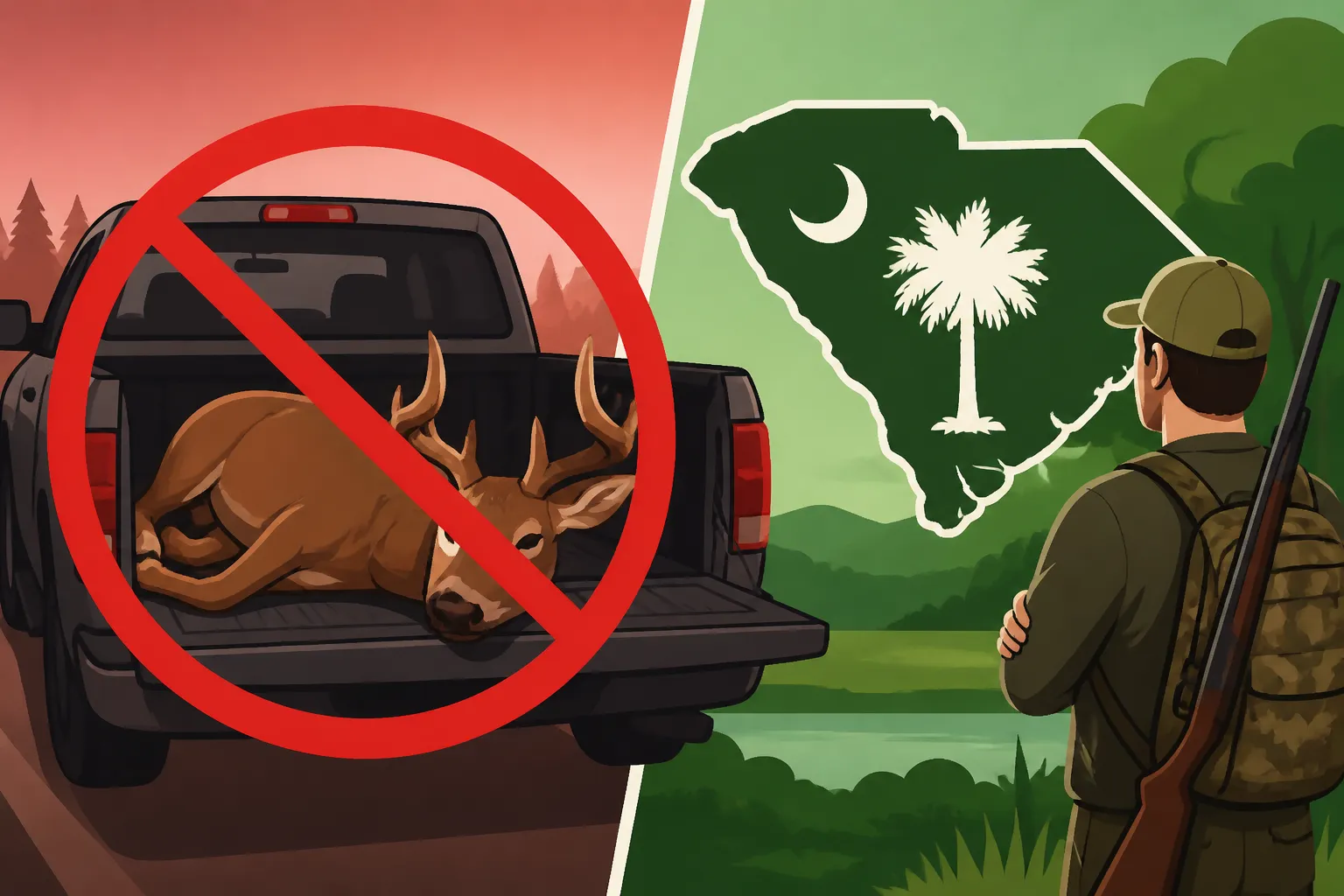
South Carolina's dedication to remaining CWD-free translates into very clear, non-negotiable laws about bringing deer parts into the state. You simply cannot bring a whole deer carcass, or even most parts of it, across the state line if that deer was harvested outside of South Carolina. This isn't about punishing hunters; it's about safeguarding our wildlife, which impacts not just hunters, but the entire ecosystem and economy of our state. The law is designed to prevent the introduction of infectious CWD prions that could be present in high-risk tissues like the brain, spinal cord, or lymph nodes.
Trying to bypass these regulations isn't just unethical; it carries legal consequences. SCDNR enforcement takes these rules very seriously because the stakes are so high for our state's deer herd. While specific penalties can vary, you could be looking at significant fines and the forfeiture of your harvested animal. It’s a tough lesson to learn, but ignorance of the law is rarely an excuse. Before you even head out on an out-of-state hunt, it's wise to consult resources like the SCDNR website or even a hunting app like GoHunt to familiarize yourself with the regulations of both the state you're hunting in and South Carolina's import rules. This diligence can save you a lot of headache and heartache later on. For broader context on how we track our local deer, you might find it useful to understand South Carolina Deer Reporting Requirements.
Permitted Carcass Parts and Crucial Exceptions
Now, don't despair! While the whole carcass is a no-go, you absolutely can bring certain parts of your out-of-state deer back home to South Carolina. The key is to understand which parts are considered low-risk for CWD transmission and how they must be prepared. This is where your field dressing and butchering skills, or a trusted processor in the state you're hunting, become incredibly important. The permitted items include:
- Boned-out meat: This is meat that has been completely deboned, with no part of the spinal column, brain, or other high-risk tissues attached. Essentially, it should be just muscle tissue.
- Cleaned skull plates: If you want to keep the antlers, the skull plate must be completely free of all brain material, membranes, and other soft tissues. It needs to be thoroughly cleaned and dried.
- Antlers: If they are separated from the skull or attached to a completely clean skull plate as described above.
- Hides: The hide must be free of any muscle or brain tissue.
- Finished taxidermy products: If the animal has been fully processed and mounted by a taxidermist, these are generally allowed because all high-risk tissues would have been removed during the preservation process.
- Upper canine teeth (ivories): These are also considered low risk once cleaned.
These exceptions are in place because the scientific consensus is that CWD prions are most concentrated in the brain, spinal cord, lymph nodes, and certain other nervous system tissues. By removing these parts before crossing the border, you significantly reduce the risk of bringing CWD into South Carolina. It's a pragmatic approach to a complex problem. For a deeper dive, check out Which Carcass Parts South Carolina Still Allows for specific details. This also applies to other cervids; if you're lucky enough to harvest an elk or moose, you'll want to review What You Can Import From an Elk or Moose Hunt.
Here's a quick reference table summarizing what you can and cannot import:
| Carcass Part | Permitted for Import? | Important Considerations |
|---|---|---|
| Whole carcass | No | High risk of CWD prion transmission. |
| Carcass with head/spinal column | No | High risk of CWD prion transmission. |
| Boned-out meat | Yes | Must be completely deboned, no spinal column, brain, or lymph nodes. |
| Cleaned skull plate with antlers | Yes | All brain, membrane, and soft tissue must be completely removed. |
| Antlers (separate from skull) | Yes | Minimal risk. |
| Hides | Yes | Must be free of any muscle or brain tissue. |
| Finished taxidermy mounts | Yes | All high-risk tissues are removed during processing. |
| Upper canine teeth (ivories, if present) | Yes | Must be clean. |
Practical Steps After an Out-of-State Harvest
So, you've successfully harvested a deer in another state, and you're thinking about those delicious venison steaks back home. Here's a realistic game plan to ensure you comply with South Carolina's import regulations:
Field Dressing and Initial Processing at the Kill Site
Your best course of action is to perform a thorough field dressing and initial processing right where you harvested the animal. This means removing the entrails, of course, but also being prepared to bone out the meat. If you're not comfortable doing a full deboning job in the field, this is where having a plan B becomes critical. Many hunters will bring a basic butchering kit, including sharp knives, a bone saw, and large game bags, especially if they anticipate hunting in a CWD-affected state.
Focus on separating the muscle tissue from all bone, especially the spine, and any visible lymphatic glands. Take your time, be meticulous, and remember that leaving even small amounts of high-risk tissue could jeopardize your ability to bring the meat home legally.
Utilizing Local Processors and Taxidermists
If you're not keen on field butchering your entire deer, or you want professional care for a trophy, your next best bet is to find a reputable, licensed processor or taxidermist in the state where you hunted. These professionals are usually well-versed in their state's export regulations and South Carolina's import requirements. They can properly debone your meat, clean your skull plate, and prepare your hide according to the necessary standards.
Always communicate your intentions clearly: tell them you're taking the deer to South Carolina, and you need it processed to meet CWD import restrictions. They'll know to ensure all high-risk materials are removed. This might incur an extra cost, but it's a small price to pay for peace of mind and legal compliance. Resources like the GoHunt app can sometimes help you locate processors in unfamiliar areas, or at least give you a starting point for local research. Before you go, it's always a good idea to refresh your memory on general state regulations, like those discussed in South Carolina Deer Season Structure Explained.
Transporting Your Permitted Parts
Once your deer parts are properly processed and prepared, you can transport them back to South Carolina. Make sure all boned-out meat is packaged appropriately, ideally vacuum-sealed or double-bagged and kept cold. Your cleaned skull plate and antlers should be dry and free of any lingering tissue.
It’s always a smart move to carry documentation of your hunt, such as your out-of-state hunting license, tags, and proof of harvest. While not always explicitly required for permitted parts, having this on hand can smooth over any questions if you happen to be stopped by wildlife officials. Remember, the goal is transparency and compliance. We want to ensure that South Carolina's Four Game Zones and their thriving deer populations remain healthy and strong for generations to come.
Disclaimer
The information provided in this guide is for informational purposes only and is not a substitute for legal advice. Hunting regulations can change, and it is the hunter's responsibility to consult the most current South Carolina Department of Natural Resources (SCDNR) regulations before engaging in any hunting activities or importing game.