Reading a Tidal Creek for Deer Movement
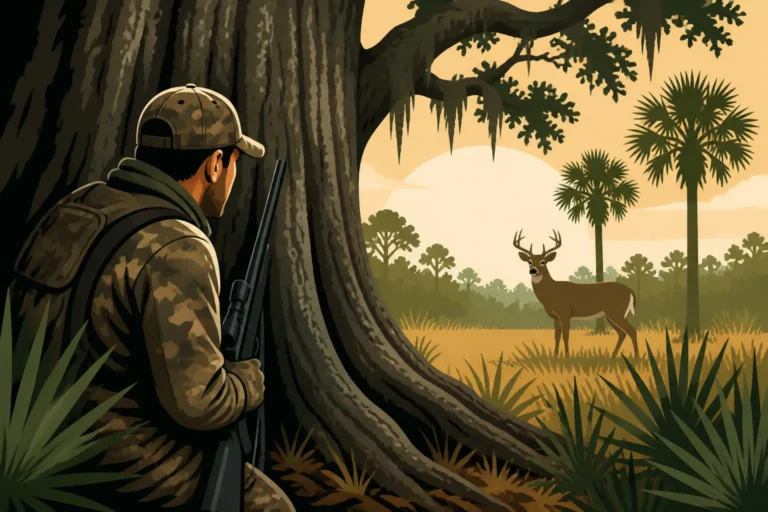
Hunting deer around the intricate network of tidal creeks in South Carolina can feel like playing chess on a shifting board. One minute, you're looking at a dry creek bed full of fresh tracks, the next it's a flowing river, completely altering where deer can and will move. It’s a unique challenge that often leaves even seasoned hunters scratching their heads, wondering where to focus their efforts. This comprehensive guide will pull back the curtain on these dynamic environments, helping you decipher the subtle clues deer leave behind and equipping you with practical strategies to consistently find deer movement in this fascinating, water-dominated landscape.
Understanding the Rhythmic Influence of the Tides on Deer Movement
When you're hunting the lowcountry, particularly areas influenced by tidal creeks, you're not just dealing with terrestrial factors like food and cover; you're contending with a force as old as the moon itself: the tides. The rise and fall of these waters drastically reshape the landscape twice a day, and deer, being creatures of habit and survival, have adapted their routines to it. Ignoring the tide chart is like ignoring the wind – you’re missing a huge piece of the puzzle.
At high tide, vast stretches of marsh grass and low-lying areas become inundated with water. This pushes deer to higher ground. Suddenly, those small hummocks, ridges, and even slightly elevated strips of land that seemed insignificant at low tide become critical sanctuaries. These become their temporary bedding areas, their only dry routes for travel, and often, where they'll seek refuge when pressured. During this time, deer movement can be surprisingly concentrated, funneling them through predictable pinch points. Conversely, when the tide is high, deer often lose access to certain low-lying food sources. They might bed down and wait for the water to recede, or they might browse higher vegetation along the edges of the swamp or forest. If you’re ever wondering about the rhythm of deer movement in these zones, understanding how South Carolina's Four Zones Split the Calendar is crucial, as the coastal Zone 4 is where these tidal influences are most pronounced.
As the tide recedes, especially during low tide, the landscape completely transforms again. Expansive mudflats are exposed, revealing fresh browse lines and new areas for deer to forage. Creek beds that were impassable become dry highways. This is often when you'll see a surge in activity, as deer can spread out, access new food sources, and utilize pathways that were underwater just hours before. They'll venture onto these newly exposed flats to browse on specific marsh grasses or sedges, or even pick through exposed mud for dropped acorns if you're near a hardwood hammock. Reading the mud at low tide for fresh tracks can give you an incredible snapshot of recent deer activity, indicating preferred crossings and feeding spots.
Deciphering the Landscape: Key Features Along Tidal Creeks
Beyond the water itself, the terrain around tidal creeks offers distinct features that savvy hunters can exploit. Deer, like us, seek the path of least resistance and safety, making certain parts of the landscape magnetic to them.
Identifying Natural Funnels and High Ground Sanctuaries
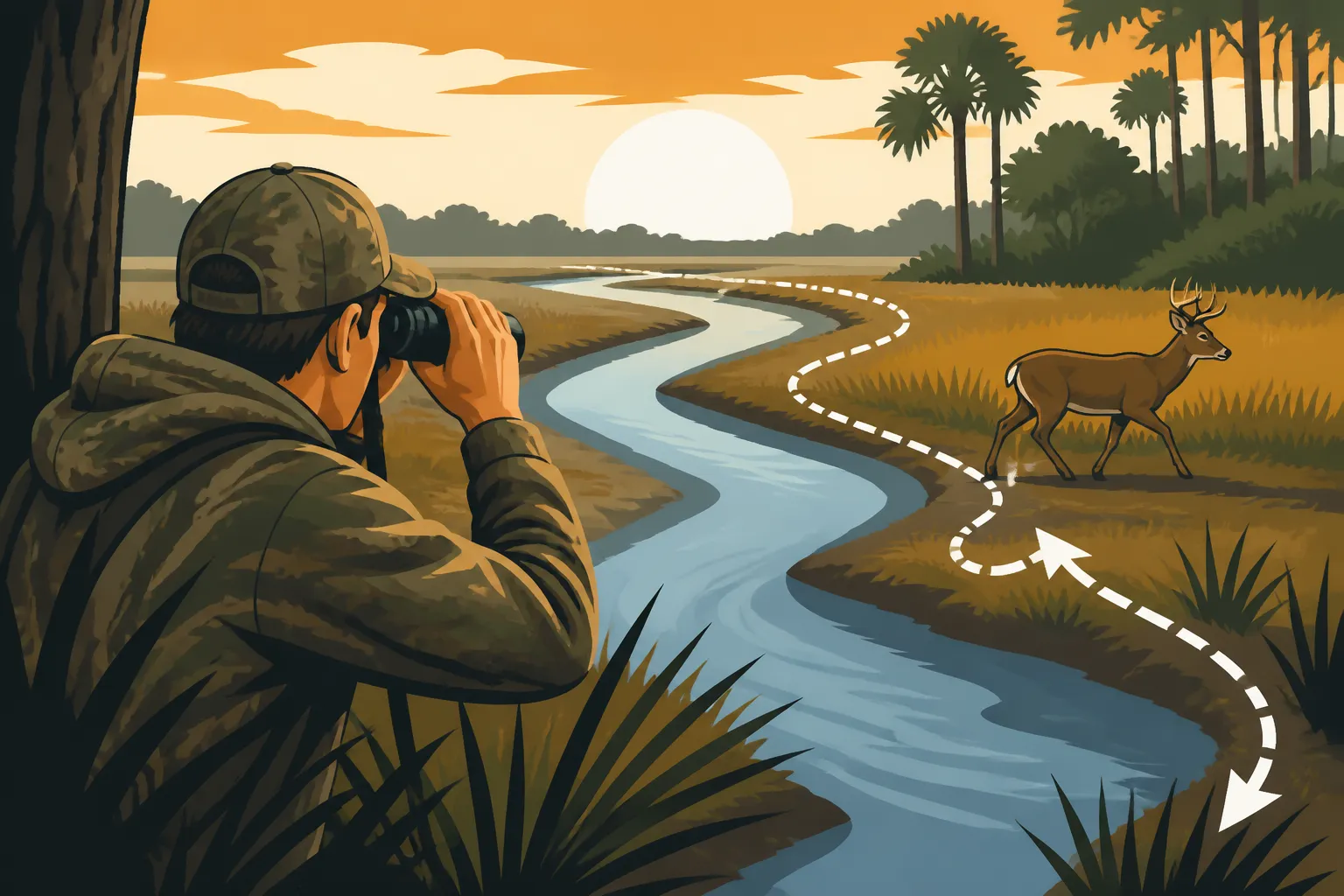
Tidal creeks naturally create funnels and pinch points. Imagine a narrow strip of dry land bordered by water on both sides – that’s a perfect travel corridor. Deer will use these consistently, especially as water levels rise. These can be small, barely noticeable hummocks or broader, more defined ridges that run parallel to a creek. I've spent countless hours glassing these areas, sometimes using a mapping tool like GoHunt to analyze topo lines and identify these subtle elevation changes before I even set foot on the ground. Islands, even small ones, surrounded by water, can also serve as critical bedding or staging areas during high tide. Deer will swim to these if necessary, feeling safe from terrestrial predators. These high-ground sanctuaries are particularly vital in areas like the Francis Marion National Forest, where water is a dominant feature. Scouting these locations carefully will often reveal rubs and scrapes concentrated in these spots, indicating consistent usage.
Recognizing Food Sources and Transition Zones
The edges of tidal creeks are rich ecosystems, offering diverse food sources. Beyond the typical acorns and browse you'd expect in higher woods, deer here will actively feed on marsh grasses, sedges, and even certain aquatic plants when they become accessible. Look for areas where the forest transitions into the marsh or where upland pines meet the swamp. These transition zones, or "ecotones," are always high-activity areas for deer because they offer a combination of food, cover, and travel opportunities. You might find them browsing along a treeline bordering a rice field edge, or picking through exposed mud for specific forage at low tide. Understanding what Late-Season Food Sources for South Carolina Whitetails exist in these specific tidal environments can be a game-changer when conditions get tough.
Practical Scouting and Hunting Strategies for Tidal Creeks
Effective hunting in tidal creek country demands a nuanced approach to scouting and stand placement, recognizing that what works at one tide level might be useless at another.
Scouting at Different Tide Levels
To truly understand deer movement, you need to scout at both high and low tide. This isn't just a suggestion; it's non-negotiable. At low tide, you can walk the creek beds and mudflats, identifying primary crossings, track densities, and feeding areas. Pay close attention to where deer are entering and exiting the exposed creek beds – these are natural funnels. You might find tracks leading from a pine island, crossing a now-dry creek, and heading into a thick, low-lying area that will be submerged at high tide. These tell a story of consistent travel. During high tide, take a boat or kayak if you can, or walk the higher edges. Observe where deer are pushed, where they congregate, and which elevated trails they use to get from one dry spot to another. This dual scouting approach, perhaps augmented by a sophisticated mapping tool like GoHunt which often integrates tide charts, allows you to build a complete picture of deer behavior. For example, if you’re looking to scout before the season truly opens, check out how to go about Scouting South Carolina Public Land Before Season.
Strategic Stand Placement and Wind Awareness
Given the constant changes, stand placement is critical. Often, the best spots are those that offer a clear view of multiple funnels or transition zones, and are equally effective at different tide levels. You might choose to hang a stand overlooking a narrow strip of high ground where deer are funneled during high tide, but that also offers shots into exposed mudflats during low tide. Always consider your entry and exit routes. You don't want to wade through waist-deep water to get to your stand in the morning, only to find the deer are using the dry creek bed you just spooked.
Wind is another huge factor, especially near water. Thermals can be tricky and shift with the rising and falling temperatures, as well as the movement of the water. Often, winds can swirl more erratically near large bodies of water. Always play the wind, but be aware that it might not behave exactly as it does in a typical upland timber stand. Sometimes, using a ground blind on South Carolina public land, especially one well-brushed into the vegetation along a high bank, can give you more flexibility to adjust to shifting winds and deer movement patterns without making a lot of noise.
Navigating the Challenges: Gear and Safety Considerations
Hunting tidal creek environments comes with its own set of gear and safety requirements. Being unprepared here isn't just uncomfortable; it can be dangerous.
Essential Gear for Wet Environments
First and foremost, quality waterproof gear is non-negotiable. Good waders are often a lifesaver, allowing you to cross shallow creeks, retrieve game, and access areas that would otherwise be impassable. Make sure they are comfortable for walking, as you’ll likely be covering some distance. Beyond waders, sturdy rubber boots are essential for those wetter days or when navigating through muddy terrain. For any significant travel across water, a small boat or a sturdy kayak can be invaluable. This allows you to access isolated islands or cross wider creeks efficiently and quietly. If you’re going deep, consider a good dry bag for your electronics, maps, and any essentials that absolutely cannot get wet.
Bug protection is another paramount concern, especially during the warmer early season hunts. South Carolina’s coastal areas are notorious for mosquitos and gnats. A good thermacell or a strong insect repellent like Sawyer Picaridin can make the difference between an enjoyable hunt and a miserable one. And never forget your snake boots. Lowcountry swamps and marshes are home to various venomous snakes, particularly cottonmouths. High, protective snake boots can offer peace of mind when you’re walking through dense vegetation or along creek banks. These are all considerations that weigh heavily when planning your hunt, especially if you’re focusing on something like Bowhunting South Carolina's Long Archery Season, which typically opens in August, right in the thick of warm, humid, and buggy conditions.
Safety Protocols for Tidal Zones
Always, always know the tide schedule for your specific hunting area. Websites like NOAA provide accurate tide charts, and many hunting apps, including GoHunt, integrate this data. Being caught off-guard by a rapidly rising tide can quickly turn a fun hunt into a perilous situation. You don't want to be stranded on a small island or find your preferred exit route underwater. Inform someone exactly where you’re going and when you expect to return. Cell service can be spotty in remote areas, so consider carrying a satellite communicator like a Garmin InReach for emergencies. It’s also wise to have a headlamp with fresh batteries, even for daytime hunts, in case you need to track a deer after dark or navigate back to your vehicle on an unfamiliar, tide-affected trail. Lastly, remember that any water travel, especially in a kayak or boat, should always include wearing a PFD (Personal Flotation Device). This isn't just good practice; it's common sense in an environment that can be unpredictable.
Disclaimer
Please remember that hunting regulations and conditions can change. Always consult the latest South Carolina Department of Natural Resources (SCDNR) regulations before heading afield. Stay safe and hunt ethically.